AsiaTechDaily – Asia's Leading Tech and Startup Media Platform


Governing the Ghost in the Machine: The Decentralized Proliferation of Shadow Agentic IT
 by
by

Why the user-driven adoption of autonomous AI agents is exposing APAC enterprise stacks to unprecedented shadow IT vulnerabilities and regulatory risk.
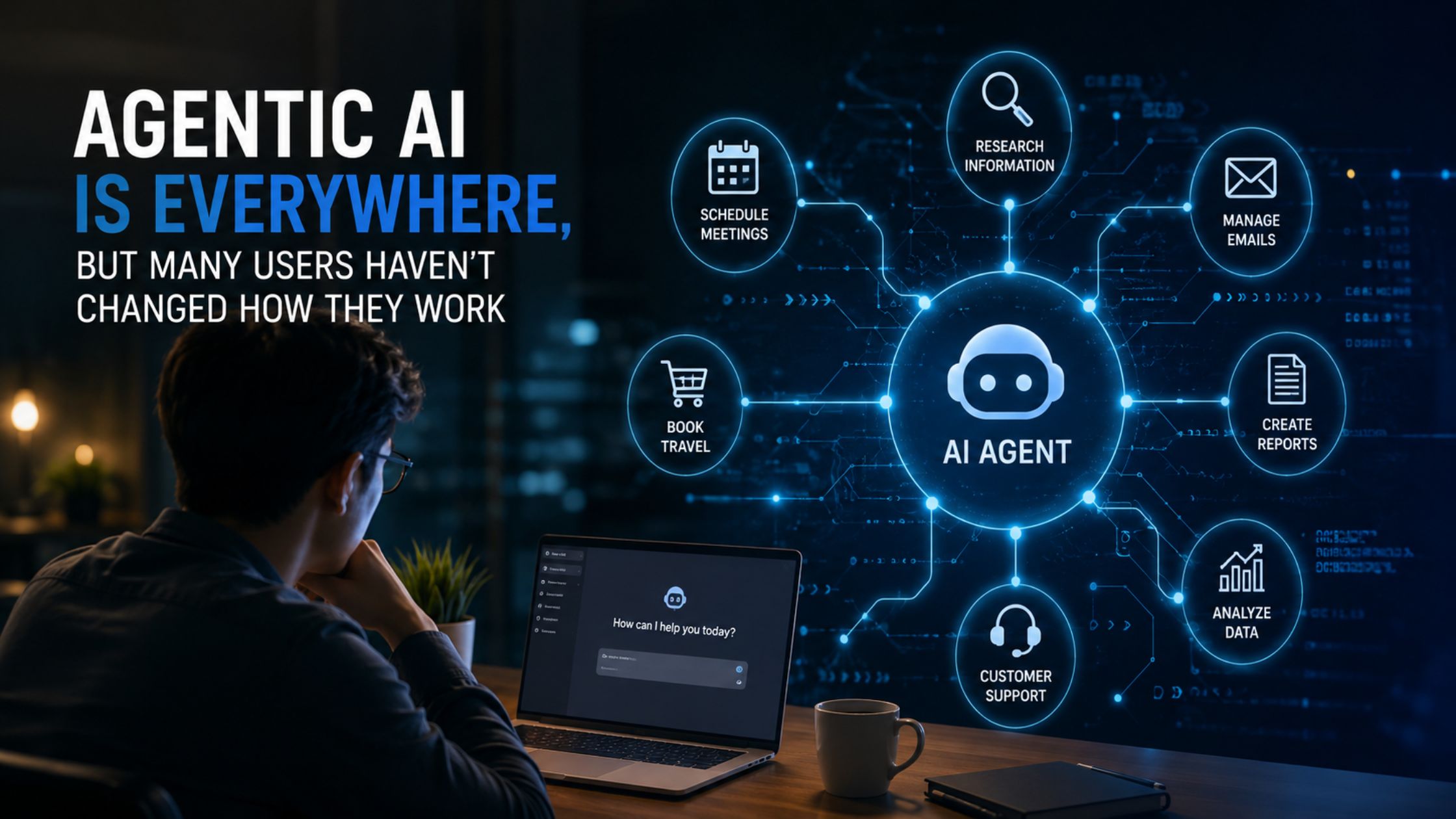
A silent operational disruption is spreading across the enterprise landscape. Unlike previous technology cycles, such as the transition to cloud computing or mobile software, which were primarily managed top-down by central information technology groups, the current wave of artificial intelligence adoption is entirely decentralized. Driven by individual employees and business units looking for immediate efficiency gains, generative AI tools and specialized large language models are being integrated into daily corporate operations without official IT authorization or oversight.
This grassroots proliferation has created a severe security crisis: the emergence of “shadow agentic IT.” Corporate telemetry from mid-2026 indicates that while a staggering 88% of organizations have already detected or reported suspected AI agent security incidents, a major governance deficit persists. Only 22% of enterprises currently treat these autonomous software layers as independent, identity-bearing entities. The rest remain structurally unmonitored. Highly paid knowledge workers are deploying automated agents to handle complex data synthesis, note-taking, and workflow automation, effectively creating a sprawling network of unaccountable, permission-heavy automated systems operating entirely outside traditional security perimeters.
For institutional investors, venture capital general partners, and enterprise chief information officers across the Asia-Pacific region, this unmapped expansion presents an immediate risk to regulatory compliance and shareholder care. As these highly specialized tools scale past simple chat boxes into autonomous entities capable of executing multi-layered backend commands, managing this hidden network has become an urgent operational necessity. True governance requires moving away from fragmented, ad-hoc software fixes and establishing unified identity control planes that treat autonomous software entities with the same rigorous visibility and lifecycle oversight as traditional human workers.
The Proliferation of the Invisible Autonomous Workforce
The fundamental risk of shadow agentic IT stems from the fact that modern AI integrations do not act merely as passive reference software. Unlike a traditional employee using a standard software-as-a-service application, autonomous agents operate with far-reaching permissions and possess the technical capacity to execute independent actions across interconnected enterprise systems. This creates an environment where automated software layers can interact with critical databases, move files between applications, and download highly sensitive corporate data completely unmonitored.
This threat is further magnified by the non-deterministic nature of advanced AI models. While conversing with AsiaTechDaily regarding this sprawling operational footprint, Dan Mountstephen, General Manager for Okta in the Asia-Pacific region, detailed how the user-driven nature of this technology creates massive visibility gaps for modern security operations centers.
“You can’t protect what you can’t see,” Mountstephen emphasized. “The big difference from the proliferation of normal technologies, whether it’s cloud or whatever, is that this one is largely being driven—this agentic or AI wave—is generally being driven by us as people and users, rather than IT organizations. And that’s leading to enormous amounts of shadow IT. Every single person that I speak to, the feedback is consistent that these LLMs are springing up all over the place in every single function, and CISOs and IT organizations are playing catch up trying to figure out how to let the organization use these tools, but do it in a way that doesn’t put them in breach of their requirements to regulators and their care of duty to shareholders.”
When business units deploy third-party AI note-takers or independent automated extensions without central IT clearing, they introduce persistent backdoors into the network. If an unmanaged agent is compromised through a prompt injection attack or a malicious lateral exploit, an external adversary can inherit the agent’s extensive permissions, gaining silent access to intellectual property, customer data records, and administrative backends.
The Compounding Permission Trap: Autonomous Sub-Agents
The structural challenge of shadow IT becomes significantly more complex as enterprises move from simple, single-purpose large language models to advanced, multi-agent orchestration frameworks. Under modern software models, such as Kimi 2.5 or open-source autonomous desktop architectures like OpenClaw, a primary agent possesses the unique capability to independently spawn teams of temporary, short-lived sub-agents to complete highly specialized analytical tasks.
This cascading architecture breaks traditional access management frameworks, creating an environment where unrecorded software nodes are constantly being generated and dismantled on the fly. Speaking with AsiaTechDaily, Mountstephen explained why the technical properties of these “super agents” make legacy service accounts completely inadequate for corporate risk management.
“Agents have a huge amount of permissions, and a little bit different from human beings, in that those permissions tend to be far reaching, and if we’re not really careful, anonymous as well,” Mountstephen observed. “An agent’s very different from an employee in that generally we hope we know who all our employees are in the organization. But if you don’t have the right infrastructure in place, the right controls in place, and you spin up an agent, and that agent spins up its own agents, then there’s no plan of record for what those agents are doing. They can potentially go off and access really sensitive data.”
Because these autonomous layers can execute deep terminal commands and maintain long-term memory across systems, treating them as basic machine-to-machine connection points is an extreme operational vulnerability. If an enterprise cannot map the absolute chain of delegation between a human user, a primary agent, and a newly spawned sub-agent, it has effectively lost control over its data perimeter.
Overcoming Technical Debt in the APAC Enterprise Stack
The hurdles associated with managing shadow agentic IT are particularly steep for legacy enterprises across the Asia-Pacific region, where modern AI platforms must be connected to decades of accumulated technical debt and highly complex, cross-border regulatory environments. Confronted with shifting compliance mandates, many regional institutions find themselves forced to completely modernize their baseline identity stacks to avoid catastrophic data exposures.
To effectively tame this decentralized sprawl without choking off business-led innovation, modern enterprise architectures are moving toward comprehensive identity security fabrics built around three non-negotiable governance questions:
- Continuous Discovery and Asset Mapping: Security operations must run automated, continuous scans across the entire hybrid cloud and on-premise infrastructure to surface unmanaged third-party plug-ins, orphaned cloud instances, and shadow AI applications.
- Mandatory Human-Owner Registration: Every detected or sanctioned agent must be brought directly into a centralized directory as a first-class, non-human identity, explicitly tethering its operational lifecycle to a designated, accountable human manager.
- Dynamic Access and Runtime Enforcement: Long-lived, static API keys must be completely removed from the ecosystem, replaced by short-lived, session-based OAuth token exchanges that dynamically restrict an agent’s permissions based on immediate risk and intent.
This structured progression transforms identity from a static list of corporate passwords into an active, real-time control plane capable of auditing and evaluating machine-speed transactions.
Establishing the Centralized Enterprise Kill Switch
The ultimate validation of an enterprise governance framework is its capacity to instantly halt an active security threat. While optimizing workflows through automated policy enforcement can handle standard day-to-day interactions, high-risk scenarios require a definitive mechanism to override autonomous behavior completely. If an unmapped shadow agent begins executing unexpected bulk data downloads, or if a validated corporate agent experiences an unpredicted behavioral deviation, security personnel must possess a reliable method to isolate the entity immediately.
This operational requirement has led to the implementation of universal logouts and centralized “kill switches” within corporate security infrastructure. Speaking with AsiaTechDaily, Mountstephen emphasized that building trust in autonomous software relies entirely on establishing a strict framework of human accountability and absolute operational control.
“Accountability is critical to governance,” Mountstephen concluded. “Those agents need to belong to somebody, and those people need to be accountable. The people that have instructed those agents what to do would definitely be held accountable. Ultimately, it’s inevitable. It’s around whether we’ve built out the right infrastructure to allow people to use AI, whatever flavor of AI they want, without being locked into any specific vendor. You’re taking this concept of just-in-time, just-enough privilege, Zero Trust forever—and we did a pretty good job across our people. We now just need to take what we know and what we’ve learned and apply it to these new identity types.”
The traditional cyber attack kill chain has not fundamentally changed; adversaries continue to focus on compromising an identity, moving laterally through corporate networks, and escalating privileges to extract valuable data assets. However, the unmanaged, user-driven proliferation of autonomous AI agents has vastly expanded the available surface area for these exploits.
Enterprise networks cannot afford to run blind in an environment where automated systems operate at machine speed. By shifting away from fragmented, bundled security tools and consolidating their infrastructure around continuous discovery, strict human-to-agent delegation trails, and dynamic token revocation, APAC enterprise leaders can successfully secure their perimeters. True technological resilience in the agentic era belongs to organizations that refuse to sacrifice visibility for velocity, ensuring that every automated whisper remains under complete human authority. This foundational technical repository documents the deployment metrics, token-exchange protocols, and Universal Directory schemas establishing baseline industry security definitions for autonomous software entities within enterprise local area networks.
Quick Takeaways
- The Shadow IT Emergency: Unlike top-down cloud migrations, the generative AI and agentic wave is completely user-driven, leaving corporate CISOs and IT groups playing catch-up against massive unmapped networks of “shadow AI”.
- Far-Reaching and Anonymous Risk: Advanced AI agents running on modern models can independently execute deep terminal commands, move files, and autonomously spawn unrecorded teams of ephemeral sub-agents, creating massive visibility blind spots.
- The Blueprint for Visibility: True governance requires answering three non-negotiable infrastructure questions: discovering where agents are running, identifying what enterprise data they can access, and monitoring what actions they execute in real time.
- Dynamic Scopes over Static Keys: Modern security architectures are actively dismantling static, long-lived API keys—which act as permanent backdoors—in favor of scoped, short-lived session tokens managed through centralized Agent Gateways.
- The Absolute Kill Switch: To contain active threats without creating bottlenecks, enterprise platforms must deploy a centralized “universal logout” or kill switch that allows the SOC to instantly revoke all active tokens and freeze an agent’s access across the entire system.
Similar Articles