AsiaTechDaily – Asia's Leading Tech and Startup Media Platform

Researchers Are Natural Founders Too: Why Startup Culture May Be Looking at Scientific Entrepreneurs the Wrong Way
 by
Gauri Ludbe
by
Gauri Ludbe

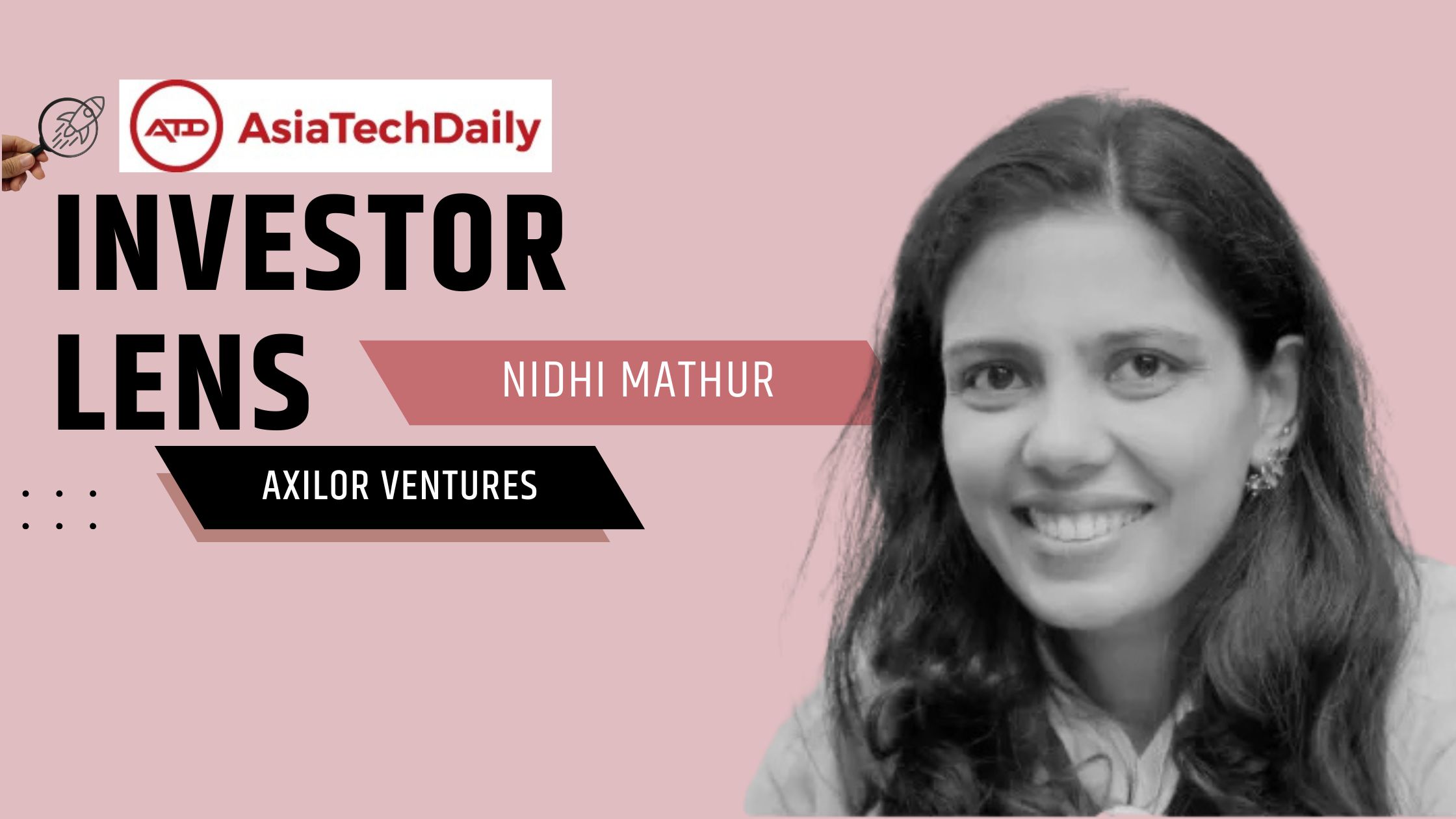
As deep-tech and research-led ventures gain momentum in India, Axilor Labs’ Nidhi Mathur argues that scientific founders bring a different but equally valuable set of strengths to entrepreneurship.
Over the last decade, India’s startup ecosystem has built a fairly recognisable image of entrepreneurship. Founders are often associated with high-visibility leadership traits such as fundraising ability, aggressive scaling ambitions, public storytelling, and strong commercial instincts. Startup events, venture narratives, and popular media formats have increasingly reinforced these characteristics as indicators of entrepreneurial potential.
The emergence of research-led ventures, however, is beginning to challenge that framework. Across healthcare, biotechnology, climate technology, space technology, and artificial intelligence, a growing number of technically driven ventures are emerging from research environments and academic ecosystems. Companies such as Pixxel, Agnikul Cosmos, and String Bio have demonstrated how scientific and engineering expertise can form the basis of globally relevant businesses.
Many of such companies were built around solving difficult scientific and technological challenges rather than addressing problems through purely digital or marketplace models. As India’s startup ecosystem expands into deep-tech sectors, a larger question is beginning to emerge. Are existing assumptions around entrepreneurship adequately capturing the strengths required to build these businesses?
During a recent conversation with AsiaTechDaily, Nidhi Mathur, Venture Partner at Axilor Labs and co-founder of Niramai Health Analytix, discussed this shift and argued that the conversation around founders may itself require re-evaluation.
Growth of Research-Led Startups in India
India’s startup ecosystem has historically been dominated by software-led businesses due to their relatively lower capital requirements and shorter development timelines. Deep-tech businesses operate under fundamentally different conditions.
Unlike conventional software startups that can test products rapidly and scale within shorter cycles, research-led ventures often involve years of product development, experimentation, regulatory approvals, and technical validation before reaching commercial readiness.
Recent data reflects that India has seen growing momentum within this segment. According to a Nasscom-Zinnov report, India is home to over 3,600 deep-tech startups, ranking sixth globally, with deep-tech funding growing 78% in 2024 to reach USD 1.6 billion. The ecosystem is supported by government initiatives, university incubators, research commercialisation programmes, and increasing investor participation.
Government programmes have also increasingly focused on supporting indigenous innovation and research commercialisation, through initiatives such as Startup India and the recently launched RDI Fund. Despite this growing momentum, research founders frequently continue to operate within startup frameworks originally designed around different business models and founder profiles.
Challenging Conventional Assumptions Around Scientific Founders
Mathur believes many assumptions around researchers and entrepreneurship stem from an overly narrow definition of what a founder should look like.
“I would not say that researchers are not natural founders. They are natural founders, actually. When we think of startup founders as we see them on Shark Tank, and assume that is how a founder needs to be, I would not agree with that. Researchers are founders of a different kind. What they have is also a key ingredient to making a successful startup. They are conventionally different from the archetype we have become used to seeing on TV, but what they bring is equally valuable.”
Founder evaluation often relies on indicators such as communication ability, investor confidence, networking capacity, and visible leadership traits. While these characteristics remain important, they may not fully capture qualities that become critical within research-driven businesses.
Scientific founders frequently operate in environments that reward different capabilities. Technical depth, long-term thinking, persistence through uncertainty, and rigorous problem solving often become central strengths. Those qualities may not always be immediately visible within traditional startup environments, but they can become essential when businesses are attempting to solve difficult technological challenges.
The Commercialisation Gap Between Research and Entrepreneurship
While Mathur argues that researchers possess many qualities needed for entrepreneurship, she also identifies recurring challenges that emerge during the transition from research environments to startup ecosystems.
“Having worked with researchers for more than 20 years, one thing that has remained consistent and unsolved across two decades is this: researchers are very passionate about what they are building, and they think that building is the end of it, that once they build it, people will come. If you build it, they will come. That is the standard fallacy.”
The issue is one of the most common gaps between technological development and commercial execution. Building a successful product and building a successful company involve different requirements. Beyond technology development, startups must address customer discovery, market education, distribution, and awareness creation.
Commercial adoption frequently requires organisations to understand not only whether a technology works, but also whether users understand its value proposition and are willing to integrate it into existing systems.
Building Complementary Leadership Structures Around Researchers
Conventional approaches frequently assume that scientific founders should become more commercially oriented in order to succeed. Mathur suggests a different approach.
“My advice to researchers, and the working style at Axilor Labs, has been to encourage researchers to play to their strengths. They can apply the same intelligence to learn marketing and all of that, but they will spend a lot of time and money doing so. My bigger worry is that it takes time away from building world-class research products, which they are best suited to build and nobody else is better positioned than them to build.”
The underlying argument is not that researchers should avoid commercial understanding. Rather, it suggests that startup structures should increasingly focus on creating complementary teams around specialised strengths. This approach has become increasingly relevant within deep-tech ecosystems where technical expertise alone may not be sufficient to build sustainable businesses.
Rather than expecting founders to operate as universal problem solvers across every function, venture-building models increasingly involve assembling leadership teams that combine scientific expertise with operational, commercial, and financial capabilities.
Evidence-Based Decision Making as a Leadership Framework
Mathur also identified evidence-based thinking as one of the most important leadership characteristics for founders operating within scientific environments.
“On the survival skill: I think the most important one, especially for a scientific co-founder, is evidence-based decision-making. How do you ensure that what you have built is truly world-class, and that it is the right answer for the problem you are solving? In a startup, everyone feels what they are doing is the best. But how do you base that on data? How do you create a culture of trust in data? A scientific co-founder has to lead with that. And this is not just for scientific founders — even when I was Chief Business Officer of deep-tech startups, I always emphasised: what is the data telling us? Even if it is not the answer we want to hear, we have to listen to it. That should determine everything else we are doing.”
The statement reflects a leadership approach that differs from many conventional startup narratives. For researchers transitioning into entrepreneurship, this mindset can become a significant advantage rather than a limitation.
Early-stage startups frequently operate with incomplete information. Founders make decisions around product direction, customer segments, pricing strategies, and market opportunities based on limited visibility. In many cases, strong conviction can help founders navigate uncertainty. However, conviction without feedback mechanisms can also create blind spots, particularly when founders become deeply attached to their original assumptions.
Scientific training introduces a different discipline. Researchers are conditioned to validate hypotheses, challenge outcomes, and accept results even when they contradict expectations. Rather than viewing changing direction as failure, the process treats iteration as part of reaching a more accurate outcome.
In sectors such as healthcare, biotechnology, and deep tech, the implications become even more significant. Incorrect assumptions can affect not only commercial outcomes but also product effectiveness, clinical validation, regulatory pathways, and real-world impact. As research-led startups continue to emerge across India, evidence-based decision-making may increasingly move from being a scientific principle to becoming a broader leadership framework.
Backing Deep Tech Founders: Raising Capital and the Next Phase of Innovation
The discussion ultimately extends beyond researchers themselves and raises broader questions for investors and startup ecosystems. Traditional venture capital models developed largely around businesses with relatively shorter development cycles and clearer market visibility. Software products can often demonstrate traction rapidly through user growth, customer acquisition metrics, and revenue indicators.
Scientific ventures frequently operate differently. Research-led businesses may require years of experimentation and validation before reaching commercially measurable outcomes. In sectors such as biotechnology, healthcare, and advanced materials, conventional startup metrics may provide limited visibility during early stages.
Mathur believes that one of the biggest challenges for scientific startups emerges much earlier than valuation discussions or ownership structures.
“For deep tech startups, death before Series A happens more often than dilution before Series A. The bigger risk is death, not dilution. I am not worrying about solving for someone’s dilution. I am thinking about how to prevent that death. Deep tech ideas require a lot of investment: R&D investment, government and private capital working together to support multiple cycles of iteration until things work.”
The observation highlights a broader challenge facing research-led ventures. Unlike software businesses that may achieve early signals through customer growth or revenue traction, scientific ventures often spend extended periods proving technical viability before commercial outcomes become visible.
Mathur believes that one of the core challenges lies in how these businesses are evaluated within existing venture structures.
“Imagine these deep-tech ideas now having to compete with an idea like a digital marketplace for a VC’s attention. The kind of commercial visibility you get for ideas where VCs have a lot of comfort and established understanding, those businesses will always have more information available, and our ecosystem has a lot of comfort with them. It is an unfair comparison, which is why we created Axilor Labs separately. We realised we have to use a different lens to look at these problems. We cannot apply the same lens we use for an e-commerce or fintech company.”
This has also led to the emergence of alternative approaches within parts of the ecosystem. Alongside conventional venture investing, there has been growing interest in venture-building models, research incubators, and sector-focused funds that work with founders at much earlier stages of company formation.
Organisations such as Axilor Labs have increasingly adopted this approach by working alongside researchers before businesses reach conventional startup maturity, focusing on areas such as team development, validation, and commercial readiness rather than relying solely on traditional startup milestones.
As India’s innovation ecosystem expands into biotechnology, healthcare, climate technology, and advanced research domains, the characteristics associated with entrepreneurship may also continue to evolve. The question may no longer be whether researchers possess the capabilities required to build companies.
Increasingly, the challenge may involve determining whether existing startup structures are equipped to recognise and support different forms of entrepreneurial potential. For years, startup ecosystems rewarded visibility, speed, and storytelling capabilities. The next phase of innovation may increasingly require equally strong emphasis on scientific rigour, technical depth, and long-term problem solving.
About Axilor Ventures
Axilor Ventures is an early-stage venture capital firm and startup accelerator co-founded by Infosys co-founders Kris Gopalakrishnan and S.D. Shibulal, along with Tarun Khanna and Srinath Batni. Through Axilor Labs, the firm works with science and deep-tech founders at the research stage and supports venture creation, team development, and commercialisation efforts across healthcare, AI, life sciences, sustainability, and emerging technology sectors.
Quick Takeaways
- Researchers may not fit conventional founder stereotypes, but they bring equally important entrepreneurial strengths. According to Nidhi Mathur, scientific founders possess deep problem-solving abilities and long-term thinking that are increasingly relevant in deep-tech sectors.
- Building technology alone does not guarantee adoption. Researchers often face a commercialisation gap where market education, awareness, and distribution become as important as product development.
- Scientific founders should focus on their strengths rather than trying to become all-purpose entrepreneurs. Complementary leadership teams can help bridge operational and commercial gaps.
- Evidence-based decision making can become a competitive advantage. Unlike traditional startup cultures that often prioritise conviction, scientific founders operate through testing assumptions and adapting to emerging evidence.
- Traditional VC frameworks may not always suit research-led businesses. Deep-tech ventures often require different evaluation approaches because conventional metrics such as early revenue or rapid customer growth may not accurately reflect long-term value creation.
- For deep-tech startups, survival before Series A is often a larger challenge than founder dilution. Long development cycles and high R&D requirements create different capital needs compared to software businesses.
- India’s next innovation phase may require a broader definition of entrepreneurship. As research-led startups expand across healthcare, biotechnology, and advanced technologies, startup ecosystems may need to rethink how founder potential is recognised and supported.
Similar Articles