AsiaTechDaily – Asia's Leading Tech and Startup Media Platform

From Followers to Founders: Why Asia’s Creators Are Building Their Own Consumer Brands
 by
Michael Tan
by
Michael Tan

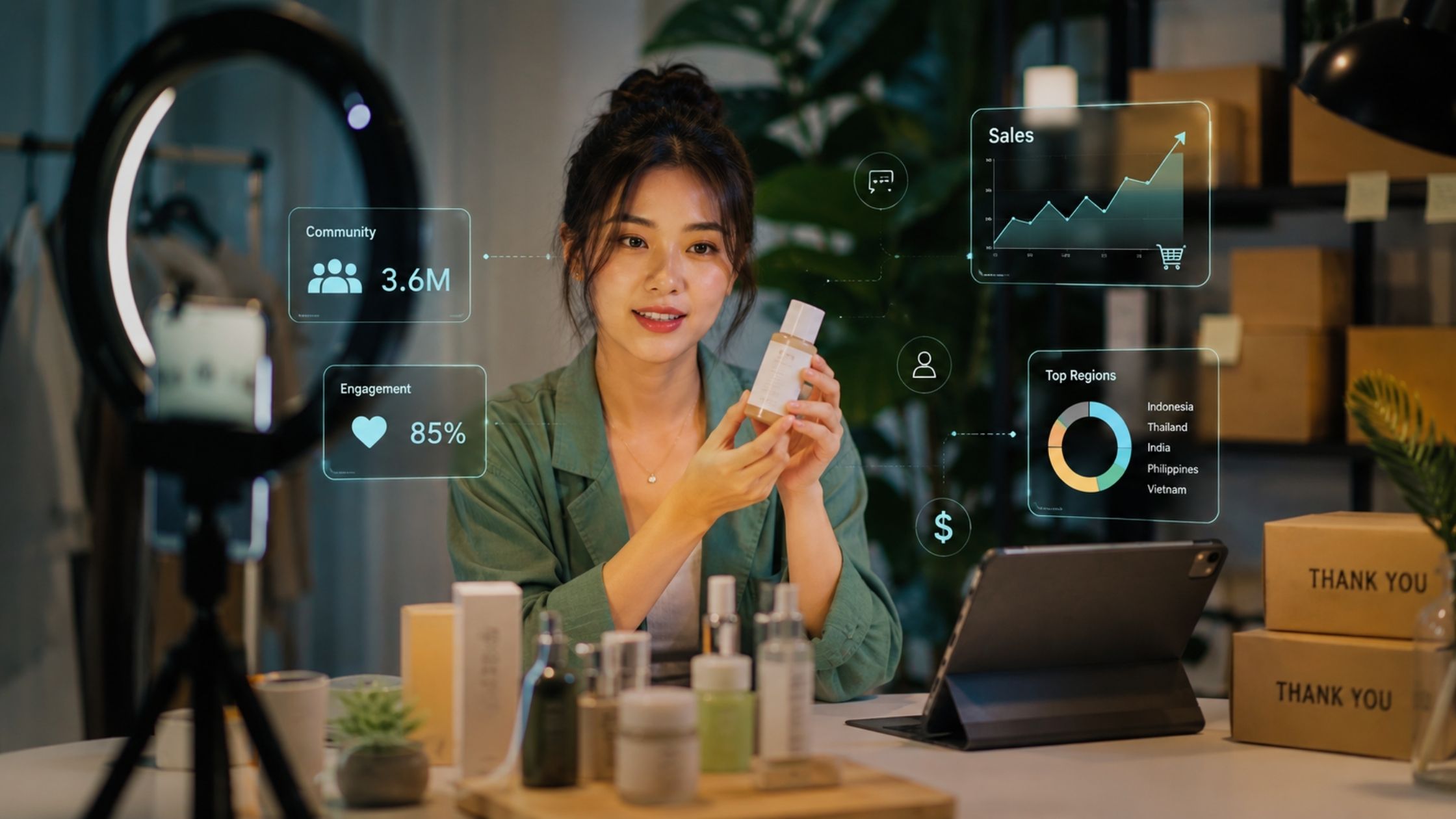
Across Asia, creators are moving beyond sponsored content and affiliate sales to build consumer companies of their own. Their advantage is not simply audience size, but the ability to combine distribution, consumer insight and trust. The challenge is turning that influence into a durable business.
The creator economy is entering a different phase. For years, creators primarily monetized attention by promoting products made by other companies. Now, an increasing number are moving further down the value chain, using their audiences to identify consumer needs, test products, acquire early customers and build brands they own. The shift is happening alongside a broader transformation in Asian commerce. AnyMind’s State of Influence in APAC 2026, based on nearly 7,000 campaigns and more than 1.1 million influencers across 10 markets, found that performance-driven campaigns accounted for 42.47% of tracked influencer activity in 2025, up from 28.24% in 2023. Influencer marketing is increasingly being measured not just by reach, but by engagement, conversion and commercial outcomes.
TikTok’s 2026 research estimates that creator commercial contribution in APAC could reach US$1.2 trillion by 2030, 1.4 times its 2025 level. The platform’s research also found that nine in 10 APAC consumers say authentic content influences their purchasing decisions. This creates a new startup proposition: instead of building an audience after creating a product, creators can begin with the audience and work backward toward the product. But followers alone do not make a consumer company.
The creator business model has evolved from sponsored posts to affiliate commerce and increasingly toward ownership. India offers some of the clearest examples. Curaa, a kitchenware startup founded by chef and content creator Sanjyot Keer and entrepreneur Neeraj Kumawat, raised ₹40 crore in August 2026 in a round led by 3one4 Capital. The company said the funding will support product development, branding, supply chain and omnichannel expansion. Curaa has served more than 300,000 households and sells through its website, Amazon, Zepto and Swiggy Instamart.
Keer’s advantage is not simply his audience of more than 3.9 million Instagram followers. His content is built around cooking, giving the company access to a community already interested in the problems its products aim to solve. A similar logic is visible in nutrition. Food creator Revant Himatsingka, known as FoodPharmer, built Only What’s Needed around ingredient transparency and community participation. The company describes its products as co-created with its audience, including product decisions and testing. The distinction is important. These creators are not simply attaching their names to products. Their audiences can function as a source of consumer research, product feedback and early distribution.
The Creator Advantage Is Bigger Than Reach
A conventional consumer startup has to build awareness, distribution, consumer trust and product feedback loops. A successful creator may already possess parts of all four. Creators interact with audiences continuously. They can see which questions people repeatedly ask, which products generate interest and where consumers believe existing offerings fall short. That can shorten the distance between identifying a problem and testing a commercial solution.
But the real advantage is not follower count.
As Sunay Kumat, an angel investor, told AsiaTechDaily, “Creator distribution can definitely be a moat, but the real advantage comes when creators build trust and community around a brand, because products themselves are always easier to replicate.”
That distinction could determine which creator-led businesses become enduring companies. A competitor can copy packaging, pricing or even a product concept. What is harder to reproduce is a community that trusts a creator’s judgment, participates in product development and remains willing to buy from the resulting brand. In that sense, the creator’s audience can become more than a marketing channel. It can become a competitive asset.
Asia Is Building the Infrastructure Around Creator Commerce
The growth of creator-founded brands is also being supported by a new layer of commerce infrastructure. Indian creator-commerce platform Wishlink raised US$17.5 million in Series B funding in February 2026, led by Vertex Ventures Southeast Asia & India. The company plans to expand its creator and brand network and build technology connecting creators, consumers and brands. Wishlink says its technology tracks creators across the funnel, including views, engagement, clicks and conversions, allowing brands to evaluate creators based on sales and traffic rather than followers alone.
This reflects a larger regional shift. AnyMind’s data shows TikTok dominating influencer campaign activity in markets including Thailand, the Philippines and Vietnam, while Instagram remains dominant in markets such as Japan and Taiwan. The fragmented platform landscape means creator-led commerce in Asia is developing differently across markets, but the underlying direction is similar: content is becoming increasingly connected to transactions.
For creators, that infrastructure makes it easier to move from influence to commerce. For startups, it creates new distribution channels that can potentially reduce the cost and time required to reach consumers. Creator distribution can solve an important early-stage problem: getting consumers to try a new product. It cannot guarantee that they will buy again.
That is where creator-led consumer companies face the same fundamental challenges as every other consumer startup. Products need to work. Unit economics need to hold. Supply chains need to scale. Customers need reasons to return. The bigger test is whether creator trust can become brand trust. If consumers buy only because a particular creator recommended something, the business remains highly dependent on that creator. If they continue buying because they trust the product and the brand itself, the company has started to build an independent asset. This is also why community can matter more than reach. A smaller, highly relevant audience may provide more commercial value than millions of passive followers. For investors, the questions therefore move beyond audience size. They include repeat purchase rates, customer acquisition outside the creator’s audience, product differentiation, margins and whether the company can eventually stand on its own brand equity.
From Creator Economy to Creator-Owned Commerce
The significance of this trend extends beyond influencers launching products. Creators increasingly sit at the intersection of media, distribution, consumer research and commerce. Their content provides demand signals, their communities provide feedback and their platforms provide direct access to customers. That changes how a consumer startup can be formed. The traditional sequence was:
Product → marketing → audience → distribution.
The creator-led sequence is increasingly:
Audience → insight → product → commerce → brand.
The second model does not eliminate the risks of building a consumer company. But it can give founders an unusually strong starting position. The next phase of Asia’s creator economy will therefore be defined less by who has the largest following and more by who can convert influence into something that survives beyond the social feed.
Followers Can Launch a Brand. They Cannot Guarantee a Company.
Asia’s creators are becoming founders because the relationship they have built with their audiences is becoming commercially valuable in ways that extend beyond advertising. The strongest creator-founded businesses may combine three advantages: direct distribution, deep consumer insight and community trust. But those advantages only become durable when they translate into products that customers want repeatedly and brands that can eventually operate beyond the founder’s personality.
That is the real dividing line. A creator can generate attention. A community can generate trust. A product can generate repeat demand. And a company must eventually turn all three into a durable business. As Kumat told AsiaTechDaily, creator distribution can become a moat, but its deeper value lies in the trust and community built around it. The creator economy may have started by monetizing followers. Its next phase could be about turning those followers into customers, and those customers into lasting consumer brands.