AsiaTechDaily – Asia's Leading Tech and Startup Media Platform

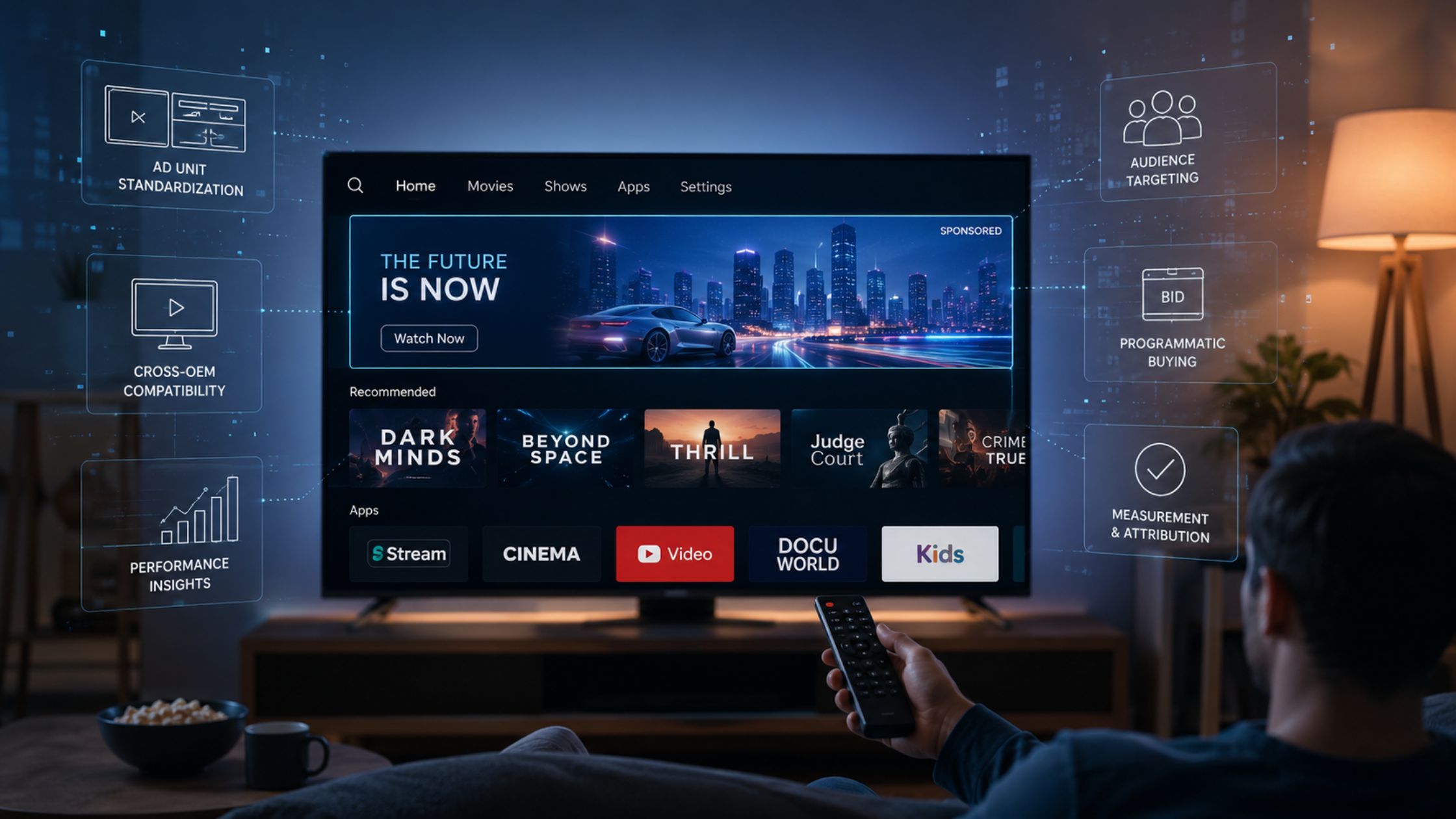
CTV Advertising Has Scaled Faster Than Its Underlying Infrastructure
 by
by

As connected TV attracts a growing share of advertising budgets, fragmentation across formats, platforms, buying systems and measurement is emerging as a constraint on the medium’s next stage of growth.
Connected TV advertising is moving deeper into the mainstream of media buying, but the infrastructure supporting it has not evolved at the same pace. US CTV upfront spending is expected to reach $17.73 billion in 2026, surpassing primetime linear TV upfront spending of $16.98 billion for the first time, according to EMARKETER. Its latest global forecast puts US CTV ad spending at $36.95 billion in 2026, more than 10 times the projected spend in the UK and China.
The shift is part of a broader movement toward digital video. The Interactive Advertising Bureau expects US digital video advertising to reach $81.9 billion in 2026, up 11% year over year, while its 2026 outlook forecasts CTV advertising growth of 13.8%. Yet the expansion of CTV has also exposed a structural problem. Unlike conventional digital advertising, where formats and buying mechanisms have been standardized over years, CTV remains a collection of streaming platforms, Smart TV manufacturers, operating systems, applications and ad-tech environments with different technical requirements.
The result is a market that can deliver television audiences at scale, but cannot always make the underlying inventory equally easy to buy, activate or measure. CTV sits between two historically different advertising systems. Television was built around relatively controlled distribution and standardized commercial breaks. Digital advertising developed around automated auctions, common technical specifications and increasingly granular targeting and measurement. CTV combines elements of both.
Advertisers can buy video inventory programmatically, but they may also encounter proprietary platforms, different data environments, application-specific integrations and multiple forms of native inventory. IAB Tech Lab maintains standards covering areas including VAST, OpenRTB, Open Measurement and CTV-specific ad formats precisely because interoperability remains an ongoing issue. As the number of CTV advertising formats expands, that problem becomes more pronounced.
The CTV ad is no longer just a commercial break
The industry’s standardization work illustrates how quickly the CTV advertising environment has diversified. In December 2025, IAB Tech Lab’s CTV Ad Portfolio defined six core formats from more than 100 submissions collected through its Ad Format Hero initiative. The portfolio included Pause, Menu, Screensaver, In-Scene, Squeeze Back and Overlay formats.
These formats extend advertising beyond traditional video interruptions. A Menu Ad, for example, can appear within the interface or home screen of a television or streaming platform, while a Pause Ad is triggered when a viewer pauses content. That creates new commercial inventory, but also new technical requirements. A format that works on one television operating system may not necessarily have the same dimensions, interaction mechanisms or technical specifications on another. For advertisers, every variation can increase creative production and campaign-management requirements. This is the problem behind Nexxen’s latest move.
Smart TV home screens highlight the infrastructure gap
Nexxen announced in August that it was standardizing Smart TV home-screen advertising inventory specifications across OEMs through its Nexxen TV Home Screen offering. The company said home-screen inventory has historically differed across manufacturers in ad sizes, formats and click actions, making it harder for advertisers and demand-side platforms to scale campaigns across multiple OEMs. Its standardized framework is designed to allow buyers to bid on this inventory programmatically through a common request structure.
The importance of the announcement lies less in the individual format than in the problem it illustrates. Home screens are increasingly valuable advertising real estate because they sit at the entry point to the connected television experience. But unlike a conventional video ad slot, the home screen is part of the device or platform interface itself. Different manufacturers therefore have greater control over how that inventory is designed and delivered.
Nexxen’s framework attempts to create a common layer between those environments and the buying infrastructure. Its current ecosystem includes DSPs and agencies such as The Trade Desk, Google Display & Video 360, StackAdapt, Basis and Brainlabs, alongside programmatic access to OEM inventory including V, TCL and TiVo Ads, according to the company.
The industry is standardizing more than just ad sizes
Nexxen’s announcement also comes as the broader CTV ecosystem works on standards for emerging advertising formats. In May 2026, IAB Tech Lab proposed standardized signals for its CTV Ad Portfolio, including Pause and Menu Ads. The objective was to allow those formats to be identified consistently in programmatic bidstreams and reduce the manual processes involved in trading them. The guidance was finalized in July. The distinction is important. Standardization is not simply about agreeing on the dimensions of an advertisement. A programmatic ecosystem also needs a common way to describe what is being bought, how the creative should be delivered and how the transaction should be interpreted.
IAB Tech Lab’s CTV work therefore spans multiple layers of the advertising process, including ad-format definitions, signaling, delivery and measurement. Its Open Measurement SDK for CTV is intended to provide more consistent viewability signals across fragmented platform environments. The direction of travel is clear: CTV needs interoperability at multiple levels, not just a common creative template.
Fragmentation has a direct economic cost
For advertisers, fragmented infrastructure creates costs that are not always visible in headline media-spending figures. Different specifications can require additional creative versions. Different buying mechanisms can require separate integrations. Different measurement signals can make it harder to compare campaigns across platforms. That undermines one of programmatic advertising’s central propositions: the ability to aggregate fragmented inventory into a market that can be purchased efficiently at scale.
The consequences extend to publishers and OEMs as well. If inventory requires bespoke integrations, fewer buyers may have the technical capability or incentive to access it. That can limit liquidity even when consumer demand for the underlying advertising environment is strong. The issue becomes particularly relevant as advertisers increasingly demand performance from CTV. EMARKETER reported that CTV upfront spending will overtake primetime linear TV in 2026, reflecting a market where buyers are looking beyond reach toward measurable outcomes. The more CTV is expected to function like digital media, the more pressure there will be to make its infrastructure work like digital media.
There is also a limit to what standardization can accomplish. OEMs, streaming platforms and publishers have commercial reasons to differentiate their advertising environments. A proprietary home-screen experience can itself be a source of competitive advantage and advertising revenue. This creates a tension between platform differentiation and ecosystem interoperability.
Standards can make it easier for buyers to transact across environments without requiring every platform to look identical. That distinction matters. The goal is not necessarily to create one universal CTV interface, but to establish enough common technical language for different environments to participate in the same buying ecosystem. The CTV Ad Portfolio reflects this approach. IAB Tech Lab has sought to define common formats while preserving the ability of publishers and platforms to implement them within their own environments.
CTV’s next challenge is making scale operational
Nexxen’s Kara Puccinelli, Chief Commercial Officer, described the objective while announcing the Smart TV home-screen initiative:
“From the beginning, our goal with Nexxen TV Home Screen has been to transform the home screen from a fragmented media environment into a scalable, performance-driven channel for the industry. By standardising these formats across OEMs, it’s another major step toward a more streamlined cross-platform ecosystem that better enables buyers, DSPs and brands alike.”
The broader industry movement suggests that this is not solely a Nexxen problem. The standardization efforts underway across CTV show that the market is gradually confronting the same infrastructure constraint from different directions. CTV has already demonstrated that it can attract audiences and advertising dollars. The next question is whether it can make those dollars as easy to transact, optimize and measure as the market increasingly expects. That will require more than another advertising format. It will require common standards across inventory, signaling, creative delivery, measurement and programmatic buying. The paradox of CTV is therefore becoming clearer: the medium has achieved scale faster than the infrastructure required to make that scale efficient. Its next phase of growth may depend less on creating new advertising real estate and more on making the existing real estate interoperableƒ”
Quick Takeaways
- CTV advertising is growing faster than its infrastructure: As connected TV attracts more advertising spend, fragmentation across platforms, OEMs, formats and buying systems remains a challenge.
- Smart TV home screens expose the problem: Different manufacturers have historically used different ad sizes, formats and technical requirements, making cross-OEM campaigns harder to scale.
- Standardization is becoming an industry priority: IAB Tech Lab and other industry players are developing common standards for CTV formats, signaling, creative delivery and measurement.
- More CTV formats also mean more complexity: Pause ads, menu ads, overlays and other native formats expand the inventory opportunity but require greater interoperability.
- Programmatic scale depends on common infrastructure: Advertisers increasingly expect CTV to offer the automation, targeting and measurement associated with digital advertising.
- The next CTV challenge is interoperability: The industry’s growth may depend less on creating new advertising formats and more on making existing inventory easier to buy, activate, optimize and measure across different platforms.