AsiaTechDaily – Asia's Leading Tech and Startup Media Platform

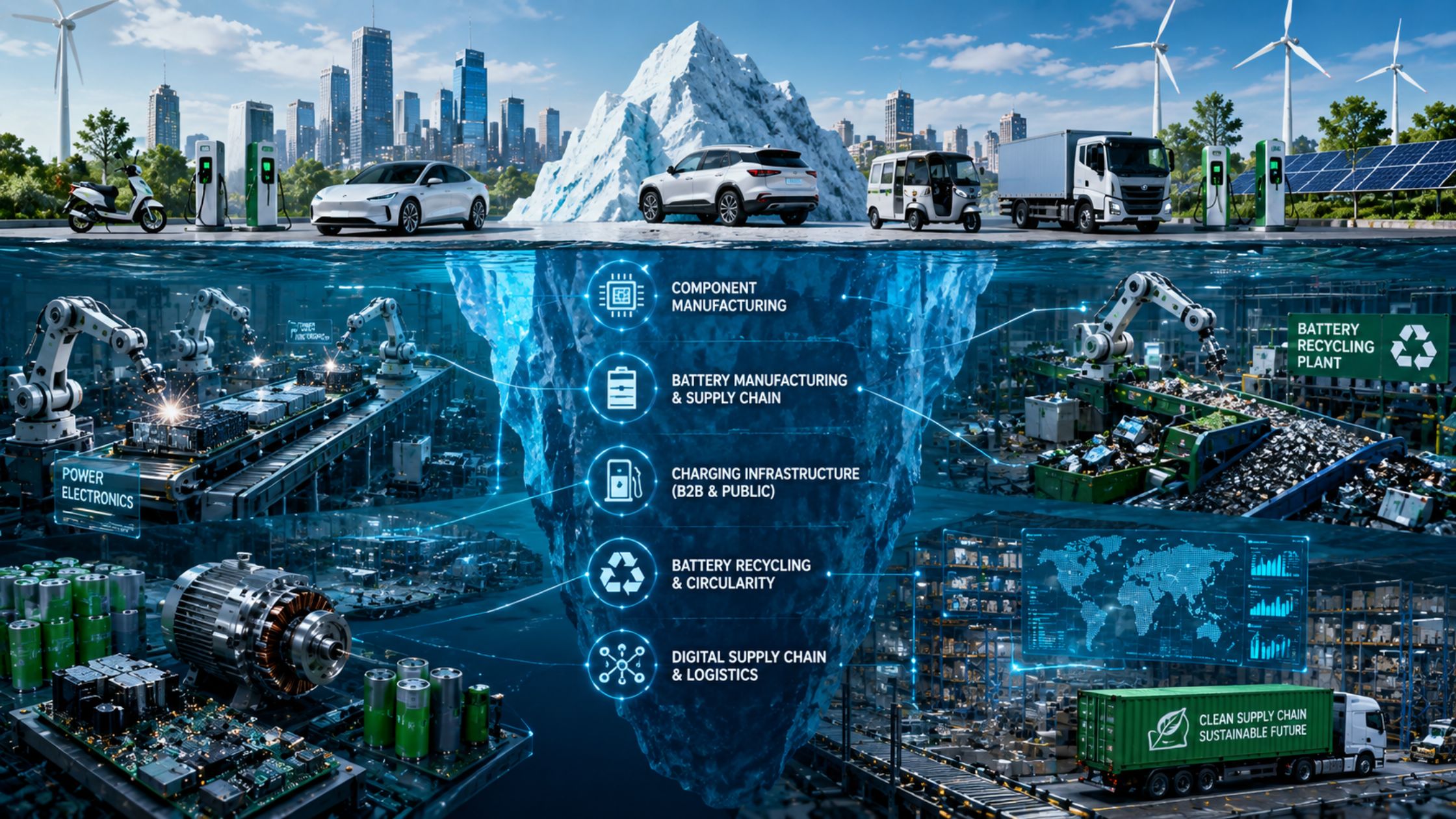
The Untapped Back-End: Why Capital Realignment Must Shift from EV Hubs to Component Localization
 by
by

Moving past the crowded original equipment manufacturer sandbox to capture the high-margin, sovereign supply chain opportunities defining South Asia’s next climate-tech cycle.
The consumer narrative surrounding the electric vehicle (EV) transition in South Asia is matching historic registration peaks. Across the region’s major developing economies, two-wheelers, three-wheelers, and commercial logistics fleets are electrifying at an unprecedented pace. However, an objective, data-driven look beneath this rapid demand curve reveals a critical structural vulnerability that the institutional investment ecosystem can no longer ignore.
While vehicle registration numbers break monthly records, the domestic value addition within these markets remains remarkably shallow. According to the April 2026 industrial analysis published by the International Institute for Sustainable Development (IISD), net localization in India for high-value core EV components, including battery cells, motors, converters, and onboard chargers, remains stuck below 20%. This massive structural gap presents a severe macroeconomic risk.
Accelerating consumer vehicle adoption without deep upstream manufacturing capacity simply shifts regional dependencies from volatile global oil markets to foreign electronic component and raw cell importers. For cross-border venture capital, sovereign wealth funds, and institutional private equity, the implication is clear. The high-alpha opportunities of the next decade no longer lie in crowded, capital-intensive vehicle assembly and branding platforms. True value has migrated upstream to specialized component localized manufacturing, deep supply chain technology, and circular material processing.
The primary factor driving this deep tech bottleneck is a persistent misalignment between investor risk profiles and industrial development timelines. Downstream mobility platforms, particularly consumer-facing original equipment manufacturers (OEMs), have historically absorbed the lion’s share of private capital due to their rapid go-to-market loops and visible customer acquisition metrics. Conversely, building the back-end of the clean mobility ecosystem requires deep hardware validation, rigorous multi-year testing cycles, and intricate, multi-tiered business-to-business (B2B) models.
While conversing with AsiaTechDaily regarding these market gaps, Vasudha Madhavan, Founder and CEO of Ostara Advisors, pointed out that investor focus remains structurally skewed away from the true building blocks of ecosystem resilience.
“While EV OEMs and battery tech get most of the attention, critical areas like component manufacturing, B2B charging infrastructure, battery recycling, and supply chain tech are still underfunded,” Madhavan observed. “These segments are essential to building a resilient ecosystem but often get overlooked due to longer gestation cycles and complex models.”
This investment blind spot has created an industrial configuration that is highly exposed to international supply chain disruptions. To resolve this, the regulatory landscape is shifting. Regional subnational governments are actively looking past baseline deployment subsidies and deploying advanced risk-sharing tools, such as targeted capital expenditure incentives and dedicated electronics manufacturing clusters.
For institutional allocators, this policy pivot offers a highly defensible entry window into tier-one component suppliers that hold massive, unmoated pricing power over a captive domestic OEM market.
Mining the Virtual Mine: The Cross-Border Play for Battery Circularity
As localized cell manufacturing plants begin to scale across Asia, access to raw material inputs represents the next major geopolitical and commercial friction point. Critical minerals such as lithium, cobalt, and graphite face massive long-term demand deficits, making resource security a top priority for economic policymakers. Rather than relying entirely on mining concessions abroad, forward-thinking institutional capital is backing technologies that treat end-of-life battery waste as a domestic, predictable resource hub, often called a virtual mine.
A clear blueprint of this structural realignment occurred in May 2026, when the Government of India and the European Union officially launched a major €15.2 million joint initiative under the India-EU Trade and Technology Council (TTC). Funded through the EU’s Horizon Europe program and India’s Ministry of Heavy Industries, the strategic initiative focuses directly on co-creating an industrial-scale, cross-continental battery recycling value chain.
The technical priorities of this initiative underscore exactly where the next wave of high-margin climate-tech innovation will be concentrated:
- High-Efficiency Cathode Recovery: Engineering chemical and mechanical processes capable of returning extracted lithium and cobalt directly to cathode-active material (CAM) purity standards.
- Mixed Chemistry Automation: Utilizing robotics-driven processing layers and AI-enabled diagnostics to safely sort, discharge, and shred highly fragmented battery packs with varying chemical profiles.
- Digitalized Closed-Loop Tracking: Deploying cloud-based logistics architectures to seamlessly aggregate battery waste from the unorganized sector, ensuring safe, certified transport and industrial transparency.
Re-Engineering Deal Architecture for Deep Tech Success
Operating successfully within the upstream component and circular recycling sectors requires a fundamental rejection of traditional consumer tech financing frameworks. Founders and investors cannot scale an advanced power electronics plant or a hydro-metallurgical extraction line using short-term, high-cost venture equity alone.
The current funding landscape is adapting through a strict, dual-track approach to deal underwriting. While early-stage venture funds and innovation-focused corporate venture capital (CVC) arms are backing asset-light, early-traction software layers like supply chain tracking and predictive mineral modeling, long-term private equity is partnering with multilateral Development Financing Institutions (DFIs). This combination pairs patient institutional debt with equity to fund heavy physical assets, safeguarding the startup’s balance sheet from unsustainable dilution during lengthy factory build-outs.
Furthermore, correcting historical blind spots within the investment ecosystem itself is emerging as a practical tool for alpha generation. The technical and financial layers of deep infrastructure have long been heavily male-dominated, which frequently results in narrow, consensus-driven risk modeling. Incorporating a broader variety of leadership perspectives and actively mentoring women executives within the climate-tech framework introduces more rigorous due diligence, broader network access, and more stable, long-term capital allocation choices.
The maturation of the South Asian climate-tech ecosystem has officially reached an inflection point where consumer adoption metrics alone no longer guarantee sustainable economic value. In an era defined by aggressive regional trade protectionism, national resource security mandates, and vulnerable cross-border logistics networks, the glamour of downstream branding has worn thin.
The next generation of tech giants in the Asia-Pacific region will not be simple vehicle assemblers or downstream asset operators. The outsized returns of this funding cycle belong to the industrial architects building the unglamorous, highly defensible back-end: the teams localizing the micro-components, engineering the power electronics, and securing the critical materials that keep the modern green economy functional. For global limited partners and general partners alike, realigning capital away from the crowded OEM sandbox and toward localized supply chain tech is no longer just a trend, it is a strategic requirement for portfolio survival.
Quick Takeaways
- The Localization Bottleneck: While consumer-facing EV registrations are breaking records across South Asia, domestic value addition is remarkably shallow. Net localization for high-value core components like battery cells, motors, and power electronics remains stuck below 20%, creating a severe trade deficit vulnerability.
- The Back-End Underfunding Gap: Downstream consumer OEMs and battery brands capture mainstream venture capital headlines. However, critical foundational layers—such as heavy component manufacturing, B2B charging grids, supply chain tech, and industrial circular recycling—remain heavily underfunded due to longer gestation cycles and complex business models.
- The “Virtual Mine” Imperative: Resource security for critical minerals like lithium, cobalt, and graphite is becoming a national priority. This shift is driving major cross-border institutional capital plays, such as the May 2026 €15.2 million India-EU joint funding initiative, to establish advanced pilot lines for battery circularity and automated electronic waste recycling.
- Advanced Deal Architecture: Operating in deep-tech climate segments requires rejecting pure, short-term venture equity models. Successful scaling demands a strict dual-track approach, using early-stage venture funds for asset-light software/AI layers, while combining growth-stage private equity with patient institutional debt to build physical factories without crippling founder dilution.
- The Realignment Mandate: The next generation of market leaders in the APAC region will not be simple vehicle assemblers. To secure outsized returns and build long-term portfolio resilience, institutional investors must move away from the crowded consumer OEM sandbox and back the highly defensible, IP-moated industrial back-end.
Similar Articles