AsiaTechDaily – Asia's Leading Tech and Startup Media Platform

The Next Telecom Shift Isn’t 6G, It’s How Security Works!
 by
Gauri Ludbe
by
Gauri Ludbe

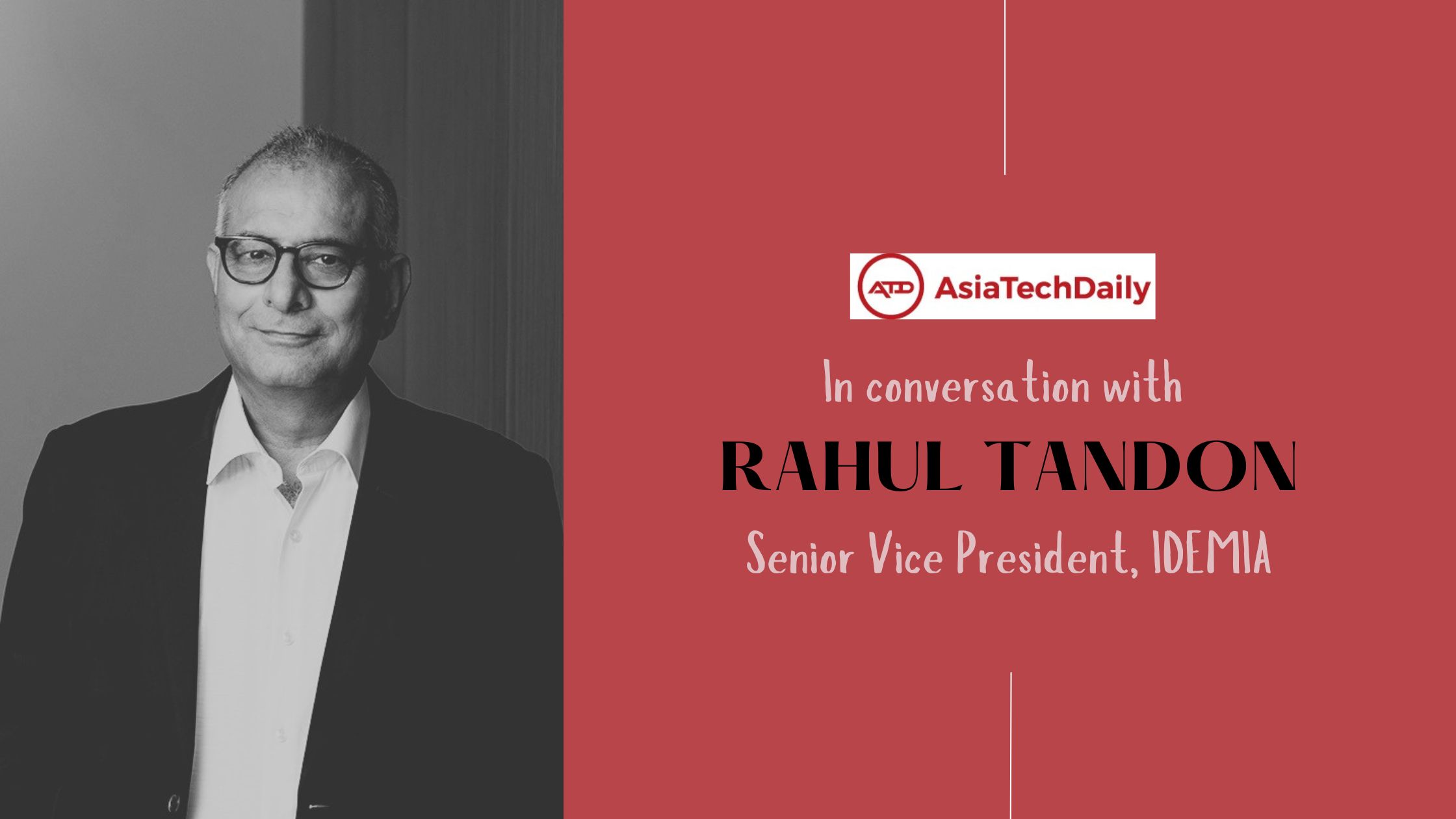
In an interaction with AsiaTechDaily, Rahul Tandon outlines how telecom operators are navigating the shift toward quantum-safe infrastructure. He explains why adoption will be phased, shaped by standards, regulatory pressure, and real-world deployment constraints.
In February 2026, India set clear timelines to transition critical infrastructure, including telecom, to quantum-safe security, indicating that the shift toward post-quantum networks is already underway. Additionally, rapid advances in 5G, eSIM, and secure connectivity are reshaping how telecom systems are being designed, not just in India, but globally.
What makes this transition significant is that it is not tied to a single technology cycle. Unlike previous shifts from 3G to 4G or 4G to 5G, post-quantum readiness is forcing changes at the architectural level, particularly in how identity, credentials, and encryption are embedded and managed across networks. Telecom infrastructure, built to operate over decades, is now being pushed to support cryptographic systems that may need to evolve within years, creating a structural shift from static to continuously adaptable security.
India’s role in this transition is expanding beyond adoption. Its scale of deployment, combined with active R&D in areas such as eSIM, 5G, and quantum-safe technologies, is turning the market into a real-world testing ground for next-generation telecom systems.
In an exclusive interview with AsiaTechDaily, Rahul Tandon, Senior Vice President – Connectivity Services (India) at IDEMIA Secure Transactions, discussed how this shift is playing out in real-world deployments. From integrating post-quantum security into current 5G networks to the industry’s push toward crypto-agile systems, he outlines both the opportunities and the structural changes underway.
Tandon notes, the country’s digital ecosystem enables innovation “at population scale,” allowing solutions to be designed, validated, and scaled in parallel.
IST recently launched the world’s first quantum-safe 5G SIM. How soon do you expect this to become the industry standard rather than a premium security feature?
In 2021, IST announced to be the world-first actor to implement a Quantum-Safe algorithm on a 5G SIM card, protecting data and subscriber privacy from quantum computers threats. Between 2026 and 2027, adoption of quantum‑safe SIMs will primarily take place in high‑assurance domains—government, defense, critical infrastructure, and sensitive IoT—where regulatory pressure and risk exposure are highest. During this period, progress will align closely with the finalization of GSMA and 3GPP standards; once these specifications are in place, operators will be able to initiate structured migration, with uptake accelerating toward the end of the cycle.
As we move into 2028–2030, advances in quantum‑safe SIM technology and greater crypto‑agility will make hybrid post‑quantum deployments increasingly viable at scale. During this period, broader uptake is expected across regulated and premium enterprise segments.
From 2031 to 2035, PQC‑only SIMs are expected to expand rapidly. As quantum capabilities mature and hardware performance improves, quantum‑safe protection will shift from a premium differentiator to a baseline requirement, especially for enterprise, government, and mission‑critical IoT deployments.
In short: quantum‑safe SIMs will remain a premium feature in the near term, but rising regulatory pressure, maturing standards, and operator readiness will make them an industry standard within roughly five to seven years.
For mobile operators, this is not just about reducing risk. It is also a chance to create differentiated offers for enterprises, governments, and critical IoT customers.
At IST, we see this as a full transition journey. Our post-quantum offer combines cryptographic assets inventory and identification of priority use cases to build a comprehensive and realistic migration plan incorporating a transition to Post-Quantum-safe and crypto-agile solutions, with post-quantum implementation embedded across our product and services roadmap.
With the ‘Harvest Now, Decrypt Later’ threat looming over sensitive data, how is IDEMIA Secure Transactions working specifically with Asian telcos to integrate post-quantum cryptography (PQC) into their 5G rollouts today rather than waiting for 6G?
The “Harvest Now, Decrypt Later” risk means operators cannot tie the post-quantum timeline to the 6G rollout expected around 2030. Encrypted data stolen today could be stored until quantum capabilities make it possible to decrypt them. While 6G will be quantum-safe by design, it faces its own challenges: standards are still ahead of us, adoption will take time, and it is unlikely to become the dominant mobile technology until well into the next decades. This timeline is too late for data and credentials that require protection now.
Our approach is therefore to bring post-quantum readiness into current 5G environments. We start by identifying the assets and interfaces most exposed to long-term cryptographic risk, then introduce hybrid security models combining classical and post-quantum mechanisms, and finally build the crypto agility needed to evolve over time. This allows operators to strengthen protection without waiting for a full generational shift.
In Asia, where many operators are still expanding 5G, private networks, and IoT, this is a real opportunity to embed post-quantum readiness during current rollout cycles instead of retrofitting later. It is also a business opportunity, enabling mobile operators to develop premium trusted-connectivity and enterprise security services.
The industry speaks about ‘crypto agility.’ How many telecom operators are realistically prepared to transition cryptographic standards without major infrastructure overhaul?
Today, only a small minority of operators are genuinely prepared to transition cryptographic standards without major impact. While some tier-one players are better positioned in software-based environments, most still depend on large installed bases of SIMs, secure elements, provisioning systems, and long-life IoT devices.
As a result, crypto agility is a real objective, but not yet an operational reality for most of the industry. The transition will therefore be gradual, hybrid, and asset by asset.
This is where IST plays a key role: not just by introducing new algorithms, but by helping operators understand where cryptography sits, define a practical migration path, manage legacy coexistence, and create new services around stronger security. Those who move early will be in the best position to reduce migration risk and monetize trusted services.
Our work with Telefónica, demonstrated at Mobile World Congress (MWC) Barcelona 2025, illustrates this approach: a groundbreaking post-quantum proof-of-concept with eSIM technology securing IoT devices in smart utility networks, with built-in crypto agility and quantum-resistant security.
You’ve successfully launched recycled PVC SIMs with Airtel in India. What are the primary logistical and economic challenges in scaling this ‘Green SIM’ model across the rest of the diverse Asia-Pacific market?
The Airtel deployment proves that recycled PVC SIMs can be industrialized at scale under the right conditions. Expanding it across Asia-Pacific introduces fragmented supply chains, uneven recycling ecosystems and adapting to local market dynamics.
The region is highly heterogeneous, with varying levels of maturity in recycling infrastructure and regulatory frameworks. This requires a country-by-country approach to sourcing and certification, which we are actively structuring to ensure consistent material quality and telecom-grade performance.
Finally, while eSIM adoption is accelerating, physical SIMs remain relevant in many APAC markets. This creates a clear window to deploy more sustainable solutions at scale, in parallel with the broader transition to digital.
Where specifically is IST investing today to prepare telecom networks for quantum-era threats
IST is investing across its entire portfolio, with a post-quantum roadmap spanning from chip design to digital platforms and services. This includes quantum-safe SIM and eSIM foundations, certified post-quantum cryptographic libraries for multiple devices and operating systems, and HSMs (Hardware Security Module) to secure key management and trust infrastructures.
We are also investing in crypto agility, legacy transition, and service design. The goal is clear: help operators identify exposed assets, protect the most sensitive layers first, manage the transition over time, and turn post-quantum security into a business opportunity.
In a world moving toward AI-driven networks, 5G, and quantum computing, what does ‘digital trust’ mean five years from now?
In five years, organizations will need to continuously demonstrate digital trust. As AI-driven systems and connected infrastructures expand, trust will rely on the ability to secure identities, data and transactions at scale, across increasingly complex environments. This means preparing today for emerging threats, including quantum computing, while ensuring systems remain adaptable over time. In practice, digital trust will be built on a combination of certified, secure technologies and operational resilience: crypto-agility to evolve encryption when needed, secure hardware foundations such as Hardware Security Modules (HSMs) to protect critical assets, and the ability to maintain devices remotely, for example through eSIM updates, without compromising security. Ultimately, trust will come from the ability to combine security, flexibility and long-term reliability in a world that is constantly changing.
Taken together, the transition toward post-quantum telecom is not just a technology upgrade but a structural shift in how trust is designed into networks. As connectivity scales across AI-driven systems, 5G infrastructure, and long-life IoT deployments, the industry is moving away from static models of security toward architectures that must remain resilient over time. This means trust can no longer be embedded once and left unchanged. It has to be continuously validated across identities, devices, and data flows, even as the underlying cryptographic landscape evolves.
As Rahul Tandon notes, digital trust over the next five years will be defined by this ability to adapt. Securing systems at scale will require a combination of crypto-agility, hardware-backed protection such as secure elements and HSMs, and the capability to update and manage devices remotely without compromising integrity.
In that sense, the industry’s focus is shifting from building secure systems to building systems that can remain secure. The operators that succeed will be those that treat trust not as a feature, but as a continuously evolving capability embedded across the entire lifecycle of their networks.
About Rahul Tandon: Rahul Tandon is Senior Vice President – Connectivity Services (India) at IDEMIA Secure Transactions, where he leads initiatives across secure connectivity, SIM and eSIM solutions, and next-generation telecom infrastructure. With over three decades of experience in telecom and digital technologies, he plays a key role in driving scalable and secure connectivity solutions in the Indian market.
About Idemia Secure Transactions: IDEMIA Secure Transactions is a global provider of secure payment and connectivity solutions, specializing in SIM and eSIM technologies, digital payments, and advanced cryptographic systems. The company is increasingly focused on enabling next-generation telecom infrastructure through innovations such as quantum-safe SIM, post-quantum cryptography, and crypto-agile security frameworks. Serving over 2,000 clients across telecom, finance, and IoT sectors, IDEMIA plays a key role in securing digital interactions at scale while supporting the industry’s transition toward more resilient and future-ready networks.
Quick Takeaways:
- Quantum-safe telecom is no longer future-facing — India’s policy push and industry activity show the transition has already begun.
- The shift is architectural, not incremental — telecom networks must move from static security models to systems that can evolve continuously.
- Quantum-safe SIM adoption will be phased — starting with government, defense, and critical infrastructure before expanding to broader enterprise use cases.
- Hybrid security models will dominate the transition — operators will run classical and post-quantum systems in parallel for years.
- Crypto agility is the real challenge — while widely discussed, most operators are not yet operationally ready to adapt cryptographic standards at scale.
- Identity and credential management are the most critical layers — securing the foundation of trust will be key to any post-quantum transition.
- India is emerging as a global testbed — its scale and ecosystem enable telecom solutions to be designed, validated, and deployed at population level.
- Post-quantum security is also a business opportunity — enabling new enterprise, IoT, and trusted connectivity services.
- Digital trust will become dynamic — defined not by how secure systems are today, but by how effectively they can adapt over time.
Similar Articles