AsiaTechDaily – Asia's Leading Tech and Startup Media Platform

From Climate Risk to Investment Opportunity: How Extreme Weather Is Reshaping Venture Capital Priorities
 by
by

As heatwaves, floods, droughts, and wildfires become more frequent and economically disruptive, investors are broadening their focus from emissions reduction to technologies that help businesses and societies adapt to a changing climate.
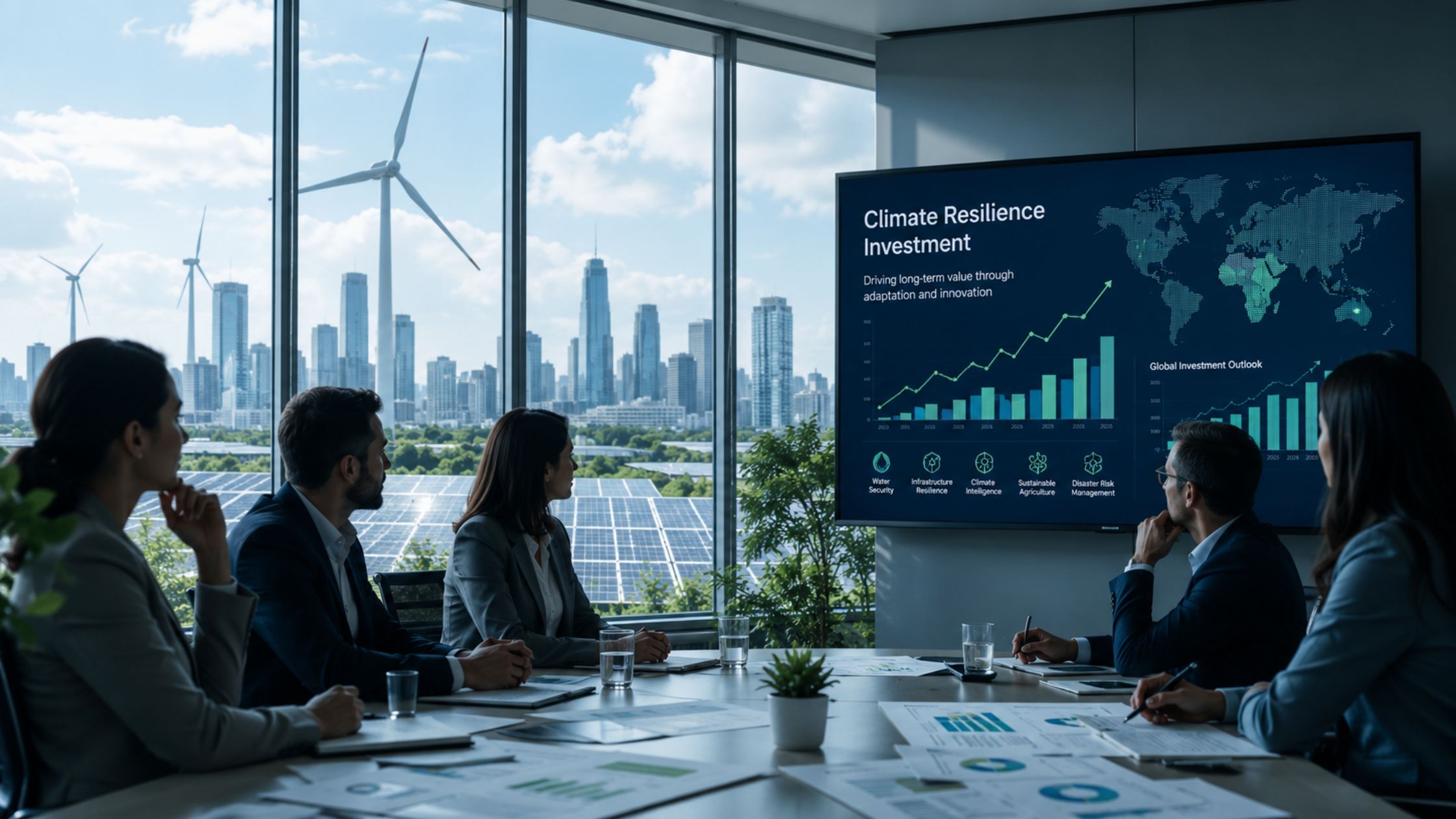
For years, climate investing largely revolved around one objective: reducing carbon emissions. Venture capital flowed into electric vehicles, renewable energy, battery storage, carbon capture, and other technologies designed to accelerate the transition to a low-carbon economy. Today, while those sectors continue to attract investment, a parallel shift is quietly taking shape. Climate adaptation is emerging as one of the next frontiers for venture capital.
The timing is no coincidence. Europe, now recognized as the fastest-warming continent, is experiencing increasingly severe heatwaves, prolonged droughts, destructive floods, and record-breaking wildfires that are disrupting supply chains, infrastructure, agriculture, energy systems, and public health. According to the European Environment Agency (EEA), Europe has been warming at roughly twice the global average since the 1980s, while weather-related disasters have caused more than €822 billion in economic losses across the European Union between 1980 and 2024, with one-quarter of those losses occurring in just the four-year period from 2021 to 2024.
The implications extend far beyond environmental policy. Climate-related disruptions are increasingly being viewed as business risks that demand technological solutions, creating new opportunities for founders building resilience-focused innovations and for investors seeking long-term growth markets.
Climate Risk Has Become an Economic Risk
Extreme weather events are no longer isolated environmental incidents. They are becoming recurring economic shocks that ripple across industries. Successive heatwaves across Europe this summer have contributed to widespread drought conditions, shrinking river levels that affect freight transport and hydropower generation, mounting pressure on water supplies, and an increase in devastating wildfires. Scientists have described the phenomenon as “flash drought,” where unusually high temperatures rapidly dry out soils and vegetation even after periods of adequate rainfall.
The effects are being felt across multiple sectors. Agriculture faces declining crop yields and greater uncertainty around food production. Manufacturers contend with production slowdowns caused by heat stress. Logistics operators must adapt to disrupted transport networks. Utilities face higher electricity demand during prolonged heatwaves while managing increasingly vulnerable infrastructure. Insurers continue to absorb growing catastrophe-related claims, prompting a reassessment of risk models.
Rather than representing isolated industry challenges, these events demonstrate how climate volatility has become embedded within the broader economy. This changing landscape is also reshaping investment priorities.
Venture Capital Is Expanding Beyond Decarbonization
The first generation of climate technology investment largely concentrated on reducing emissions through cleaner energy systems, electrification, and industrial decarbonization. Those sectors remain fundamental to achieving long-term climate goals. However, investors are increasingly recognizing that even aggressive decarbonization efforts cannot eliminate the climate impacts that are already unfolding. As a result, adaptation technologies are beginning to receive greater attention alongside mitigation solutions. These technologies address a different question: how can businesses, governments, and communities continue operating effectively in an increasingly volatile climate?
While conversing with AsiaTechDaily, Urska Vracun, investor and industry expert, described how her own investment perspective has changed as climate impacts have become increasingly tangible.
“It has evolved because I can now see myself and my family as direct end users who are impacted by these startups and their solutions. I can evaluate their solutions from my own perspective, not some fictional end user. Before, climate resilience and sustainability were on my mind as a theory but every year I find the impact of climate change more and I also get more motivation to invest in such startups.”
Her observation reflects a broader shift taking place across the investment community. Climate resilience is no longer viewed solely through the lens of environmental responsibility or ESG commitments. It is increasingly being evaluated as a response to measurable economic disruption and growing customer demand.
Unlike many technology sectors, climate resilience is not confined to a single vertical. Instead, it spans multiple industries, creating opportunities for startups across enterprise software, artificial intelligence, robotics, advanced materials, and industrial technologies. Some of the emerging areas attracting investor attention include:
- AI-powered wildfire detection and predictive risk modeling.
- Water management and drought resilience technologies.
- Precision agriculture platforms that optimize irrigation and crop management.
- Climate intelligence platforms for infrastructure and supply chain planning.
- Urban cooling solutions and heat-resilient construction materials.
- Insurance technologies that improve catastrophe modeling and climate risk assessment.
This breadth significantly expands the addressable market for climate resilience startups. Rather than selling into a niche sustainability market, many of these companies address operational challenges faced by enterprises, governments, utilities, insurers, logistics providers, and agricultural businesses.
At the same time, governments are helping accelerate demand. The European Union continues to expand climate adaptation initiatives through Horizon Europe and the EU Mission on Adaptation to Climate Change, supporting projects focused on flood management, drought resilience, wildfire prevention, and climate-resilient infrastructure. These programs are helping create early markets for innovative technologies while encouraging collaboration between startups, research institutions, and public authorities.
Adaptation Is Becoming an Investment Theme
The growing investor interest in adaptation reflects the expanding scope of climate-related risks rather than a decline in enthusiasm for decarbonization technologies. Instead of choosing between mitigation and adaptation, investors increasingly see both as complementary components of the climate innovation ecosystem.
Vracun believes this broader perspective is a natural consequence of how deeply extreme weather now affects the global economy. While conversing with AsiaTechDaily, she explained:
“It has definitely become more interesting for investors, although we can’t say that there was not much interest before. This is because extreme weather events impact all aspects of the economy, from agriculture to politics, except maybe space industry. So the solutions in climate resilience have a wide range of applications, for instance solutions fighting forest fires.”
Unlike technologies that serve a single industry, climate resilience solutions increasingly address risks shared across multiple sectors. This diversification expands commercial opportunities while making resilience technologies relevant to a much broader customer base. The opportunity is reinforced by the scale of future investment needs. The European Environment Agency estimates that making agriculture, energy, and transport climate resilient will require between €53 billion and €137 billion in annual investment by 2050, rising further by 2100 depending on future warming scenarios. Against current committed funding of just €15–16 billion per year, that leaves an annual funding gap of more than €100 billion.
A New Investment Narrative for Climate Technology
The next chapter of climate technology may not be defined solely by reducing emissions. Increasingly, it will also be shaped by helping economies adapt to a future where extreme weather is becoming more frequent and more costly. That evolution represents a subtle but meaningful change in venture capital thinking. Climate resilience is no longer viewed as a niche category within sustainability investing. It is emerging as a cross-sector innovation opportunity with applications spanning enterprise software, infrastructure, agriculture, insurance, manufacturing, and public services. For founders, this shift creates opportunities to build technologies that solve immediate operational challenges rather than distant environmental goals. For investors, it broadens the definition of climate technology beyond decarbonization and positions adaptation as a durable long-term investment theme.
As climate-related disruptions continue to reshape global economies, venture capital is increasingly recognizing that building resilience is not simply about preparing for the future. It is becoming an essential part of enabling businesses and societies to operate successfully in the present.
Quick Takeaways
- Climate resilience is emerging as a major investment theme as venture capital expands beyond emissions reduction to back technologies that help businesses and communities adapt to climate change.
- Extreme weather is becoming an economic challenge, with heatwaves, floods, droughts, and wildfires disrupting industries including agriculture, logistics, energy, manufacturing, and insurance.
- Europe’s accelerating climate risks are driving demand for innovation, creating opportunities for startups developing AI-powered climate intelligence, wildfire detection, water management, resilient infrastructure, and precision agriculture solutions.
- Investors increasingly view climate adaptation as a commercial opportunity rather than solely an ESG initiative, reflecting the growing business impact of climate-related disruptions.
- Exclusive: While conversing with AsiaTechDaily, investor and industry expert Urska Vracun said climate resilience has become more relevant to her investment strategy because she now experiences the impacts of climate change personally and sees adaptation technologies addressing real-world problems.
- Governments are helping accelerate the market, with European initiatives supporting climate adaptation through funding, public infrastructure projects, and innovation programs that create demand for resilience-focused technologies.
- The next phase of climate tech is likely to be defined by adaptation as much as mitigation, positioning climate resilience as a long-term growth opportunity for founders, investors, and enterprises.
Similar Articles