AsiaTechDaily – Asia's Leading Tech and Startup Media Platform


AI Is Blurring the Lines Between Front, Middle and Back Office in Wealth Management
 by
Byungho Lim
by
Byungho Lim

As AI agents move from assistants to operational tools, traditional organizational boundaries inside wealth management firms may begin to disappear, reshaping how investment professionals work and deliver value.
For decades, the wealth management industry has operated through a well-defined structure. Client-facing advisors and relationship managers occupied the front office. Portfolio managers, analysts, and investment committees sat in the middle office. Reporting, reconciliation, compliance, and administrative functions were handled by the back office. The model was built around the movement of information. A client request would often travel through multiple teams before resulting in a recommendation, portfolio update, or investment decision. Data had to be gathered, validated, analyzed, and reported. Each stage required specialized personnel and dedicated systems.
Artificial intelligence is beginning to challenge that structure. While much of the recent discussion around AI has focused on chatbots, copilots, and productivity tools, a growing number of financial technology providers are exploring how AI can automate operational processes that have historically connected front, middle, and back office functions. The implications extend beyond efficiency gains. They raise fundamental questions about how wealth management organizations themselves may evolve.
Speaking with AsiaTechDaily, Bob Pisani, Chief Technology Officer at Addepar, suggested that the next phase of AI adoption will be defined less by standalone assistants and more by intelligent systems embedded directly into investment workflows.
Why Wealth Management Still Runs on Organizational Silos
The separation between front, middle, and back office functions emerged for practical reasons. Wealth management firms operate in a highly regulated environment where accuracy, accountability, and risk management are critical. Different teams developed specialized expertise and responsibilities that ensured investment decisions were supported by reliable data, operational controls, and compliance oversight.
However, this structure also created friction. A typical advisor may rely on multiple systems to access portfolio information, client records, market data, performance reports, and compliance documentation. Investment operations teams often spend significant time reconciling information across platforms, while analysts and portfolio managers are tasked with synthesizing growing volumes of data before decisions can be made.
The increasing complexity of modern portfolios has amplified these challenges. According to industry research, allocations to alternative assets such as private equity, private credit, venture capital, and real estate continue to grow among high-net-worth investors and family offices. At the same time, firms are expected to deliver more personalized advice, faster reporting, and deeper portfolio insights. As the amount of data expands, traditional organizational structures are coming under pressure.
From Information Retrieval to Workflow Execution
The first wave of AI adoption in financial services focused largely on information retrieval. Professionals used generative AI tools to summarize documents, answer questions, draft reports, or surface relevant information more quickly. While valuable, these capabilities primarily accelerated existing tasks rather than changing how work was organized.
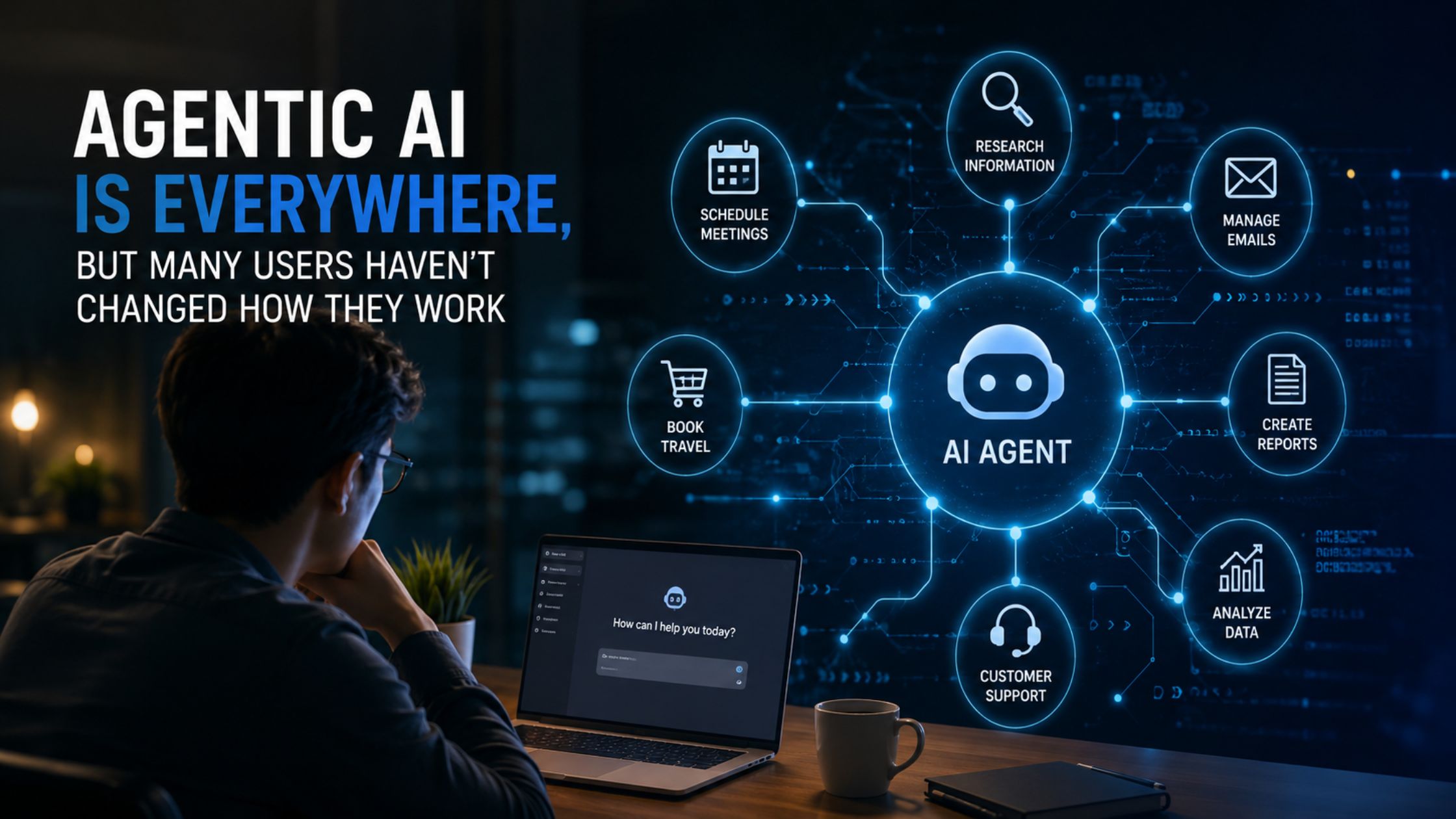
The next phase appears to be different. Instead of simply providing answers, AI systems are increasingly being designed to perform actions, coordinate workflows, and interact with multiple data sources and applications. These systems, often referred to as AI agents, are capable of handling tasks that previously required multiple employees or departments.
According to Pisani, the objective is not merely to make existing processes faster but to reduce the operational friction that exists between systems and teams. While conversing with AsiaTechDaily, he noted:
“We’re looking to really solve for that swivel chair problem that clients are dealing with where they’re going between so many different systems and they have to frankly manage that work manually.”
The phrase “swivel chair problem” has become increasingly common in enterprise software discussions. It describes situations where employees must constantly switch between applications, manually transfer information, and coordinate workflows that are not integrated. In wealth management, where firms often operate dozens of specialized systems, the problem is particularly acute. AI agents have the potential to change this dynamic by automating data gathering, initiating workflows, generating analyses, and coordinating tasks across systems without requiring human intervention at every step.
The Shift from Job Replacement to Task Replacement
Much of the public debate surrounding AI centers on the possibility of job displacement. Within wealth management, however, the more immediate impact may be task displacement. Rather than eliminating advisors, analysts, or operations professionals, AI is increasingly positioned as a tool that removes repetitive and low-value activities from their daily responsibilities. During his conversation with AsiaTechDaily, Pisani argued that the industry’s future is less about replacing roles and more about redefining them.
He pointed to growing overlap between functions that have traditionally been separated across front, middle, and back office teams. As AI systems assume responsibility for information gathering, reconciliation, analysis, and workflow coordination, professionals may spend less time managing processes and more time exercising judgment.
Investment advice remains heavily dependent on trust, context, and human relationships. Clients expect advisors to understand their goals, risk tolerance, family circumstances, and long-term objectives. Those responsibilities are difficult to automate. What can be automated are many of the supporting activities that consume significant portions of an advisor’s time, including data collection, portfolio reviews, report preparation, and routine administrative processes. As a result, AI may not eliminate organizational functions. Instead, it may compress the workflows that connect them.
What This Means for Wealth Management Firms in Asia
The implications could be particularly significant across Asia-Pacific, where private wealth is expanding rapidly and firms are managing increasingly sophisticated portfolios.
Singapore, Hong Kong, and other regional wealth hubs have seen substantial growth in family offices, alternative investments, and cross-border wealth management activities. These developments have increased the complexity of investment operations while simultaneously raising expectations for service quality and responsiveness. Many firms now manage portfolios that span multiple jurisdictions, currencies, asset classes, custodians, and regulatory environments. Under such conditions, operational efficiency becomes a competitive advantage.
AI-powered workflows may allow firms to scale without proportionally increasing headcount. Advisors could gain faster access to portfolio intelligence, investment committees could receive more timely analyses, and operations teams could focus on exceptions rather than routine processes. At the same time, firms will need to address concerns around governance, transparency, and accountability. Financial institutions operate under strict regulatory requirements, making it essential that AI-generated outputs remain explainable, auditable, and subject to human oversight. The challenge will be finding the right balance between automation and control.
The Emerging Operating Model for Wealth Management
The wealth management industry’s AI transformation is still in its early stages, but the direction of travel is becoming clearer. The first phase focused on digitizing information. The second phase connected data across systems. The emerging third phase appears centered on intelligent workflows and autonomous agents capable of coordinating work across an organization.
If that trend continues, the traditional distinctions between front office, middle office, and back office functions may become less pronounced than they are today. The future wealth management firm may not be organized around the movement of information between departments, but around AI-powered systems that deliver information, analysis, and operational support wherever it is needed.
In that environment, the competitive advantage will not come solely from adopting AI tools. It will come from redesigning workflows, organizational structures, and operating models to take full advantage of them. The next disruption in wealth management may not be the arrival of smarter AI. It may be the gradual disappearance of the boundaries that have defined the industry for decades.
Key Takeaways
- AI is beginning to blur the traditional boundaries between front, middle, and back office functions in wealth management.
- The next wave of AI adoption is shifting from chatbots and copilots to AI agents capable of executing workflows and coordinating tasks across systems.
- Wealth management firms are increasingly focused on automating repetitive activities such as data gathering, reconciliation, reporting, and operational coordination.
- According to Addepar CTO Bob Pisani, AI is more likely to transform tasks than eliminate roles, allowing professionals to spend more time on client engagement and decision-making.
- As private wealth grows across Asia, firms that successfully integrate AI into their operating models could gain a significant efficiency and scalability advantage.
Similar Articles