AsiaTechDaily – Asia's Leading Tech and Startup Media Platform

It Was Never Really About Speed: What Quick Commerce Actually Taught Indian Consumers
 by
by

As India’s rapid delivery ecosystem expands beyond groceries and convenience items, its most lasting impact may be the permanent shift it has created in how consumers evaluate speed, reliability, and service across eCommerce.
A decade ago, eCommerce companies competed primarily on product assortment, pricing, and discounts. Today, increasingly, they compete on something far less visible but equally influential: delivery experience. The rise of quick commerce has fundamentally altered how consumers think about online shopping. What began as an experiment in delivering groceries within minutes has evolved into a powerful force reshaping expectations across India’s broader digital economy. Consumers who once waited several days for deliveries now expect near-instant fulfillment, real-time tracking, proactive communication, and seamless post-purchase experiences.
This shift is happening at a time when India’s eCommerce market is entering a more mature phase. Growth remains strong, but investors and operators are increasingly focused on profitability, operational efficiency, and customer retention rather than pure scale. In this environment, logistics has moved from a backend function to a strategic business capability.
The numbers reflect the scale of this transformation. India’s quick commerce sector reached a gross order value of approximately $7.6 billion in the financial year ending March 2025 — more than double the previous year’s figure — and Bain & Company projects the sector will grow at over 40% annually through 2030. Leading the market are Blinkit, owned by Eternal Limited (formerly Zomato); Zepto; and Swiggy Instamart. Together, these three platforms command more than 90% of the sector, and their influence extends well beyond the categories they directly serve.
Quick commerce is no longer a grocery story. Non-grocery categories are now growing 1.6 times faster than grocery on rapid-delivery platforms, with fashion up 340%, mobiles up 245%, and beauty and personal care up 140% year over year. Electronics, pharmaceuticals, and premium consumer goods have become mainstream quick commerce categories. As a result, the industry’s influence on consumer expectations extends far beyond what any individual platform delivers.
The most significant legacy of quick commerce may not be 10-minute delivery itself. It may be that consumers now hold every online transaction to a higher standard of convenience.
The Speed Revolution Is No Longer About Speed
The common assumption is that quick commerce is fundamentally a race to deliver products faster. In reality, the industry’s impact runs much deeper. Consumers are not simply demanding speed. They are demanding certainty.
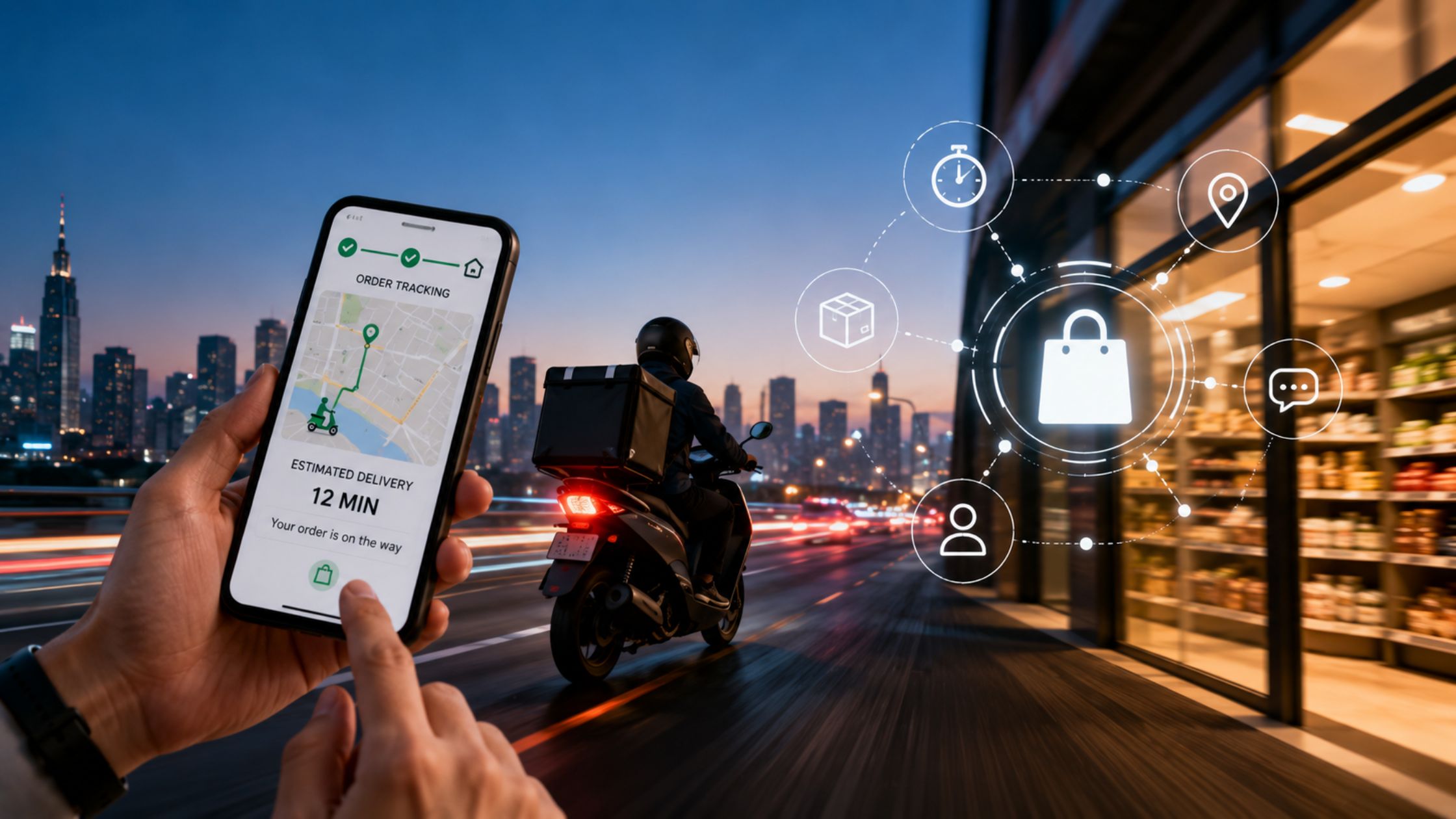
Fast delivery has become a proxy for a broader set of expectations that include transparency, reliability, visibility, and control. Customers increasingly expect to know exactly when an order will arrive, where it is at every stage of the journey, and how quickly problems will be resolved if something goes wrong.
This shift is influencing how brands evaluate logistics and fulfillment strategies. Speaking with AsiaTechDaily, Irwin Anand, CEO of NimbusPost — a logistics technology platform and wholly owned subsidiary of Xpressbees — noted that quick commerce has permanently altered consumer behavior.
“Quick commerce has fundamentally reset consumer expectations around immediacy, and that influence extends beyond groceries or essentials,” he said.
What consumers have learned from quick commerce is not simply that products can arrive faster. They have learned that technology, logistics, and inventory management can work together to create significantly better delivery experiences.
As those expectations spread, traditional eCommerce players are finding it increasingly difficult to rely on delivery timelines and customer communication practices that were considered acceptable only a few years ago.
How Quick Commerce Rewired Consumer Behavior
The influence of quick commerce extends beyond fulfillment operations and into consumer psychology. Historically, online shoppers accepted trade-offs. Lower prices often meant longer delivery times. Customers were willing to tolerate delays, limited visibility, and inconsistent communication because the convenience of eCommerce itself represented a meaningful improvement over traditional retail.
That dynamic has changed. The success of rapid delivery platforms has conditioned consumers to expect faster fulfillment and shorter delivery windows, real-time tracking and delivery visibility, immediate issue resolution and customer support, and greater predictability throughout the purchase journey. These expectations increasingly apply even when consumers are shopping outside quick commerce platforms.
A customer ordering electronics, apparel, beauty products, or household goods may not require delivery within minutes. However, they still expect the same level of transparency and responsiveness that quick commerce platforms have normalized.
This creates pressure across the broader retail ecosystem. Brands that fail to meet evolving expectations risk losing customers to competitors that can deliver more predictable and frictionless experiences.
What Quick Commerce Gets Right — and What It Breaks
The success of quick commerce has highlighted several operational principles that are influencing the wider logistics industry. Among its most transferable innovations are inventory positioned closer to customers, hyperlocal fulfillment networks, faster operational feedback loops, and more sophisticated demand forecasting. These have demonstrated how technology and logistics can work together to improve customer experience at scale.
However, quick commerce has also exposed the limits of prioritizing speed above all else. The economics of ultra-fast delivery remain genuinely challenging. Maintaining dark store networks, managing dense delivery operations, and fulfilling orders within extremely narrow time windows require substantial and sustained operational investment. As competition intensifies, with Amazon entering the segment in mid-2025 and Flipkart Minutes rapidly scaling its dark store network, questions around profitability and long-term sustainability continue to shape the sector.
Anand believes the lessons from quick commerce are valuable, but they should not be applied indiscriminately. “Not every category or geography needs 10-minute delivery,” he told AsiaTechDaily. This observation highlights an important reality. Consumer expectations have evolved, but expectations around speed vary significantly by product category, purchase urgency, and location. The challenge for retailers is identifying where speed genuinely creates value and where it simply adds cost.
Why Traditional eCommerce May Be the Biggest Beneficiary
Ironically, one of the biggest beneficiaries of quick commerce may be traditional eCommerce itself. The innovations pioneered by rapid delivery platforms are increasingly being adopted across the broader ecosystem. Retailers are investing in smarter inventory placement, more sophisticated routing systems, predictive delivery capabilities, and enhanced post-purchase communication. In doing so, they are raising the competitive baseline for the entire industry.
Logistics is no longer viewed purely as an operational necessity. It is increasingly recognized as a factor that influences conversion rates, customer retention, working capital efficiency, and brand trust.
This shift is particularly important as Indian eCommerce enters a phase where profitability matters more than growth at any cost. Brands are paying closer attention to delivery success rates, return-to-origin costs, non-delivery reports, and post-purchase engagement, because these factors directly affect margins.
The result is a broader industry movement toward logistics intelligence rather than logistics execution alone.
The Next Phase: Reliability Over Raw Speed
The future of eCommerce logistics may ultimately be defined less by how fast products move and more by how consistently expectations are met. Consumers appreciate speed, but they value predictability. A reliable next-day delivery experience that consistently meets its promised timeline can often generate greater customer satisfaction than an ultra-fast service that fails to deliver on expectations. This is where the next phase of competition is likely to emerge.
During his conversation with AsiaTechDaily, Anand argued that the industry’s long-term focus should move beyond the pursuit of maximum speed.
“The future lies in offering the right speed at the right cost, rather than defaulting to the fastest possible option,” he said.
This balance between customer experience and operational sustainability is becoming increasingly important as brands seek profitable growth. Anand also emphasized that how consistently service is delivered will matter as much as how quickly.
“Operational resilience and predictability will matter more than raw speed,” he told AsiaTechDaily.
As India’s digital commerce ecosystem continues to expand into smaller cities and new consumer segments — markets where the infrastructure realities differ sharply from metro India — the ability to deliver reliable experiences consistently across diverse geographies may prove a more powerful differentiator than delivery speed alone.
Beyond the 10-Minute Delivery Narrative
The quick commerce industry is often framed as a battle over minutes. Yet its most important contribution to eCommerce may have little to do with delivery times. By demonstrating what is possible when technology, inventory, logistics, and customer experience are tightly integrated, quick commerce has fundamentally raised the standard for online retail. It has taught consumers to expect greater convenience, more transparency, and better service at every stage of the purchase journey.
Those expectations are unlikely to disappear, even as the industry’s business models continue to evolve and competition intensifies.
The companies that succeed in the next phase of India’s digital commerce growth will not necessarily be those that deliver the fastest. They will be those that understand how to balance speed, reliability, visibility, and profitability in ways that create lasting customer trust.
In that sense, quick commerce has already achieved its most enduring legacy: it has permanently changed what consumers believe good eCommerce should look like.
Key Takeaways
- Quick commerce has evolved beyond a delivery model and is fundamentally reshaping consumer expectations across India’s broader eCommerce ecosystem.
- Consumers increasingly expect faster fulfillment, real-time visibility, proactive communication, and predictable delivery experiences, regardless of product category.
- The biggest impact of quick commerce may not be 10-minute delivery itself, but the higher service standards it has established for online retail.
- While quick commerce has introduced valuable innovations such as hyperlocal fulfillment and demand forecasting, its cost structures remain challenging to sustain at scale.
- As eCommerce matures, brands are shifting their focus from maximizing speed to balancing speed, reliability, operational efficiency, and profitability.
Similar Articles