AsiaTechDaily – Asia's Leading Tech and Startup Media Platform

What Happens When AI Starts Working With Human Memory?
 by
by

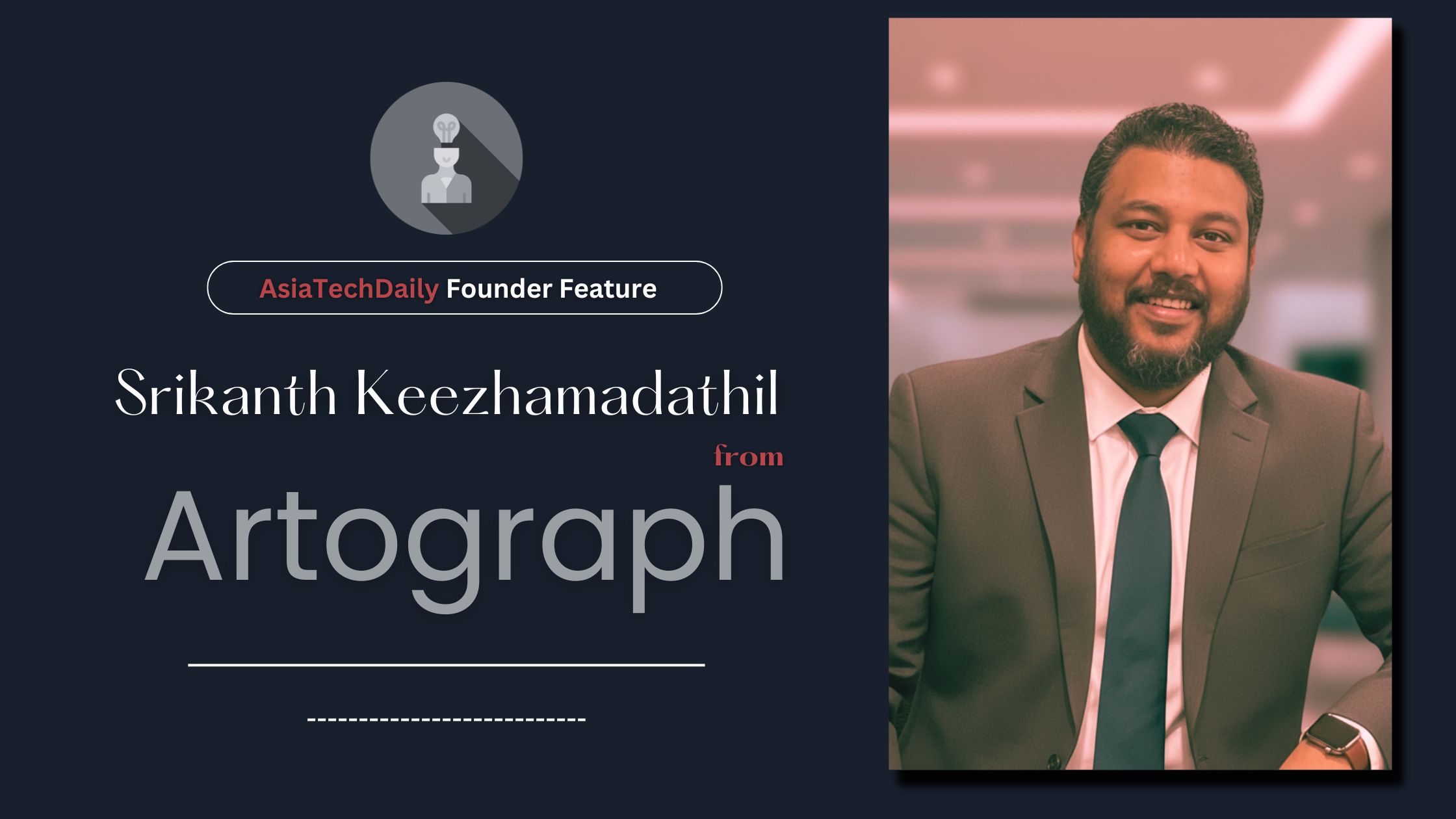
In an interview with Srikanth Keezhamadathil, the founder of AIXE Labs discusses why the future of AI in mental health lies in supporting clinicians, not replacing them.
The use of artificial intelligence in mental healthcare is scaling rapidly, but not without friction. The global AI in mental health market is already valued at over $2.7 billion in 2026 and is projected to grow significantly over the next decade, driven by rising demand for accessible care and increasingly overburdened clinical systems. At the same time, the space is facing growing scrutiny, with clinicians and regulators questioning the reliability, ethics, and risks of over-reliance on automated tools.
This reflects a broader shift in how AI is being positioned within mental health. Early applications largely focused on chatbots and self-service tools, but the industry is now moving toward assistive, clinician-centered systems that support workflows rather than replace judgment. The challenge is not just expanding access, but doing so without compromising the integrity of care, particularly in areas such as memory, trauma, and identity.
For Srikanth Keezhamadathil, founder of AIXE Labs, this shift is deeply personal. The idea for AIXE Labs emerged not from a single moment, but from years of observing how individuals slowly lose not just memory, but a sense of identity when their stories are no longer heard or recorded. As he puts it, “memory is where dignity lives,” and mental health is where that meaning is continuously shaped. In an interview with Srikanth, he discusses how this perspective led to the creation of Artograph—an AI-driven platform designed to help preserve, structure, and work with human memory without replacing the role of clinicians.
You come from operations, telecom, and business strategy rather than clinical psychology. How did that background shape the way you approached building Artograph?
Coming from operations and telecom taught me one thing very clearly: systems fail people when they are designed without empathy for real workflows. I approached Artograph the same way I would approach a mission-critical network — it must be reliable, invisible, and supportive, not demanding. My non-clinical background actually helped me listen more deeply to clinicians, because I never assumed I knew better. Instead, I focused on building infrastructure that lets clinicians do their work with less friction, not more technology in their way.
Reminiscence therapy and CBT are well-established practices. Why did you believe they could—or should—be meaningfully supported by AI?
These therapies work because they create structure around human experience. That is exactly where AI can help — not by replacing the therapist, but by handling the invisible labor: pattern recognition, documentation, continuity, and recall across time. AI is good at remembering what humans cannot consistently hold across months or years. When used carefully, it allows therapy to become more continuous, more reflective, and less interrupted by paperwork.
This highlights a broader shift in AI’s role within healthcare. Rather than acting as a replacement layer, AI is increasingly being positioned to handle continuity—tracking patterns, maintaining records, and supporting long-term engagement, particularly in areas where human memory alone may not be sufficient.
Artograph uses generative AI within structured therapeutic frameworks. Where do you draw the line between AI assistance and human judgment?
The line is very clear to us: AI can suggest, never decide. Every output in Artograph is treated as a draft. Nothing is saved without clinician review. Nothing is presented as truth without context. The therapist remains the final authority, always. We designed Artograph so that the AI whispers, and the clinician decides. That design principle is non-negotiable.
India is your base, but the problem Artograph addresses is global. Which markets do you believe are most ready for a platform like this—and which are not?
The US, UK, and parts of Europe are most ready because clinicians there are overwhelmed by documentation, insurance requirements, and burnout. They are actively seeking tools that give them time back. Markets that still lack mental health infrastructure may not yet be ready for this layer of technology, but they will be in time. Artograph is built to scale responsibly, not rush adoption.
His assessment aligns with broader industry patterns. North America and Western Europe currently lead in the adoption of AI-driven mental health tools, driven less by technological readiness and more by systemic pressure. High levels of clinician burnout, combined with increasing documentation and administrative demands, are pushing healthcare providers toward solutions that can reduce cognitive load and improve workflow efficiency. Studies show that AI-assisted documentation tools can significantly reduce this burden, with a large majority of clinicians reporting measurable improvements in both workload and efficiency.
At the same time, emerging markets such as India and parts of Asia-Pacific are seeing rapid growth in AI adoption, but from a different starting point. While demand for mental health support is rising, infrastructure gaps and limited clinical capacity mean that advanced workflow tools are not yet the immediate priority. This creates a staggered adoption curve, where markets under the greatest operational strain move first, while others follow as systems mature.
What kind of investors are best aligned with AIXE Labs—and what kinds of capital do you actively avoid?
We look for investors who respect the complexity of mental health, not those chasing quick AI narratives. We avoid capital that pushes for speed over safety or growth over care. This is not a platform where mistakes are acceptable. The right investors understand that trust compounds slower than revenue, but lasts longer.
At this stage, what milestones matter more for funding: clinical validation, institutional adoption, or user outcomes?
Clinical validation comes first. Without it, everything else is noise. Institutional adoption follows naturally once clinicians trust the platform. User outcomes are the long-term truth, but they require patience. We are building a system that will be judged over years, not quarters. We are already doing pilots with existing clinical partners.
The emphasis on clinical validation over rapid scaling signals a different approach to building in healthcare. In contrast to many AI-driven startups, where growth often precedes validation, this model prioritizes trust and long-term outcomes over speed.
If Artograph succeeds at scale, how do you hope it changes the way society thinks about memory, aging, and emotional care?
I hope we move from seeing memory loss as decline to seeing memory preservation as care. Aging does not have to mean disappearance. Emotional care should not be episodic — it should be continuous, documented, and respected. If Artograph succeeds, memory becomes something we protect, not something we lose.
While early momentum in the space was driven by the promise of automation and scale, the current phase is increasingly defined by caution, accountability, and clinical relevance. This shift is visible across the industry, where regulators and practitioners are pushing back against over-reliance on black-box systems, and where adoption is beginning to favor tools that support clinicians rather than attempt to replace them. In that sense, the next phase of AI in mental health is likely to be less about disruption and more about integration into existing care models.
About the Founder
Srikanth Keezhamadathil is the founder of AIXE Labs, where he is building Artograph, a platform focused on integrating AI into mental health workflows. With a background in operations, telecom, and business strategy, he brings a systems-oriented approach to designing human-centered technology for care environments.
About the Company
AIXE Labs is focused on developing AI-driven infrastructure for mental healthcare. Its flagship product, Artograph, supports therapists through memory-based workflows, combining AI with established therapeutic practices such as CBT and reminiscence therapy. The company emphasizes clinician-led decision-making, ethical AI use, and long-term care outcomes.
Similar Articles