AsiaTechDaily – Asia's Leading Tech and Startup Media Platform

Prevention Over Prescription: How Neurabody Is Reframing Corporate Wellness Through Physical AI
 by
by

Winner of the AsiaStartupExpo Q1 2026 Pitch Event, Neurabody.ai is pushing companies to rethink employee health, not as something to fix after it breaks, but as something to continuously optimize before it does.
The global corporate wellness market is projected to surpass $100 billion by 2026, yet the underlying logic powering most of that spending has changed very little. Programs still tend to activate after something goes wrong. Interventions remain episodic. And the data collected rarely connects to how employees actually move, sit, or strain through a working day.
That gap is where a new generation of health tech companies is staking its ground. Among them is Neurabody.ai, a Seoul-based startup that combines AI, embedded sensors, and ergonomic hardware into what it describes as a physical AI layer for human movement. The company recently won at AsiaTechDaily’s AsiaStartupExpo Q1 2026 pitch event. Its underlying thesis has been building for some time: that prevention, not treatment, is where the real value in workplace health lies.
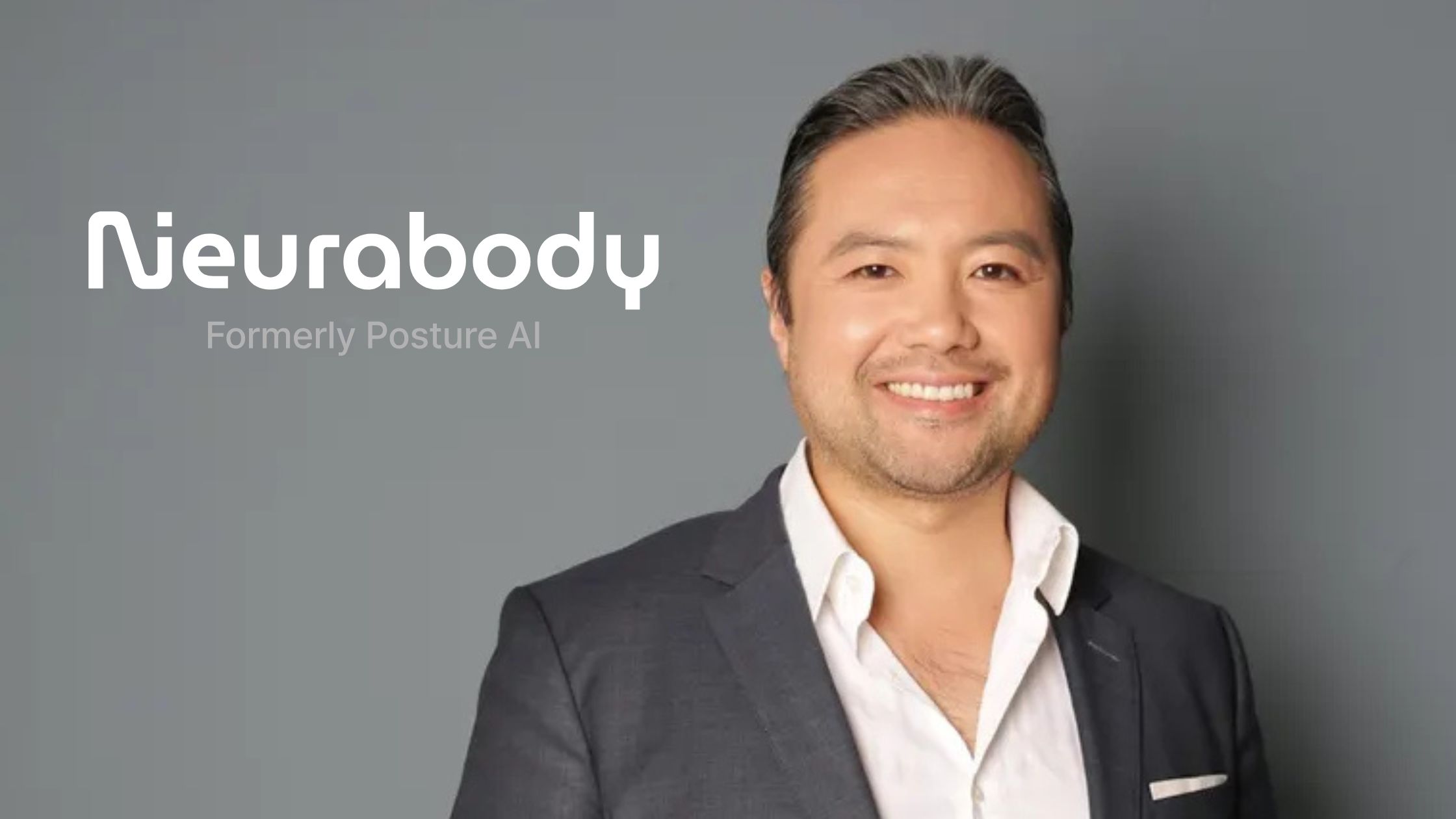
The data supports the urgency. According to the 2026 State of Work-Life Wellness Report, 89% of employees say they perform better when they engage with structured wellness initiatives. Yet 90% reported experiencing burnout within the past year. High awareness, poor outcomes. For William Choi, Co-Founder and Global CEO of Neurabody, this contradiction points to a systemic misread of the problem itself.
“Rather than being episodic, meaning reactive care after you’re in pain, we focus on presenteeism. We focus on prevention,” he told AsiaTechDaily.
The Productivity Cost Nobody Is Measuring
The case Neurabody makes to corporate clients starts with a familiar but underexamined reality. Knowledge workers spend anywhere between eight and twelve hours a day seated. The physical consequences, including poor spinal alignment, reduced lung capacity, and chronic musculoskeletal strain, are well documented. What is less often quantified is how those consequences quietly erode output long before they become a medical issue.
“When you’re sitting that long, you’re collapsing your lungs, you’re bent over, you’re hunched. You experience different neck, shoulder, and back pain, and that very silently reduces your productivity,” Choi said.
The word “silently” is deliberate. Unlike acute illness, chronic physical discomfort rarely triggers a formal response. It accumulates. It affects concentration, energy, and over time, mental health. Choi is direct about this connection: “Back pain is actually very closely linked to mental health as well.”
For finance and HR teams, the implications are measurable. Absenteeism carries a visible cost. But presenteeism, where employees show up while operating below capacity, is harder to track and arguably more damaging at scale. Neurabody’s pitch to the corporate market is built around reducing both, not through periodic wellness programming, but through continuous, data-driven intervention embedded into the working day itself.
Moving AI Off the Screen
The technology underpinning Neurabody’s approach represents a meaningful departure from how AI has typically been applied in health and wellness. Most platforms in this space are software-first: they aggregate data from existing devices, surface it through dashboards, and leave behavior change to the user. Neurabody’s model is different.
“We’re drawing AI out of the computer and the screen and into the body, so that now AI can really do its job, collect data and give you very personalized feedback about your daily behavior,” Choi explained.
In practice, this means a hardware suite that includes a sensor-embedded posture-correcting shirt, a chair-based device called Neurosit, and a smart insole. Each feeds movement data into an AI platform that analyzes patterns in real time. Critically, the devices do not just observe. They intervene, physically correcting posture and guiding movement while the user continues working.
This positions Neurabody at a point where embedded sensing, edge computing, and biomechanical AI modeling have converged enough to make continuous physical feedback commercially viable. The company is not just collecting more data. It is collecting data that has not meaningfully existed before.
“The data being collected has actually never been done before at the level we’re going after,” Choi said, pointing to capabilities like gait quality analysis as an example of what distinguishes its approach from standard activity tracking.
A Platform Strategy, Not a Product Play
Neurabody’s commercial structure reflects an awareness that no single channel will define this category. The company operates across three verticals: corporate wellness, consumer platforms, and senior care.
The corporate segment is the most direct expression of its prevention thesis. The consumer platform strategy, however, is where its partnership with Samsung becomes significant. Neurabody’s application is set to be integrated into Samsung smart TVs, extending its reach into the home environment.
“We can offer AI-powered exercises and help with mobility, really turning the home into an AI workout assistant,” Choi said.
The senior care vertical rounds out the strategy, targeting rehabilitation programs, clinics, and hospitals where movement quality has direct clinical relevance. Taken together, this is less a product business than an infrastructure play: a movement intelligence layer that operates across devices, settings, and user profiles.
An Early Category With Real Stakes
Choi acknowledges the competitive landscape with measured confidence. He is less concerned with direct rivals than with the broader question of whether Neurabody can establish a new category before adjacent players move into the space. Digital physiotherapy platforms and posture wearables exist, but most are either reactive or limited in scope.
“We complement our competitors because we are the missing link for them,” he said, pointing to the company’s 360-degree movement tracking as a differentiator against solutions that capture only partial data.
The honest challenge for any platform of this kind is not technological. It is behavioral. Systems that monitor physical movement continuously will face scrutiny around data privacy and long-term user engagement. The companies that succeed in this space will be those that integrate unobtrusively enough that compliance becomes habitual rather than effortful.
Neurabody’s win at AsiaStartupExpo 2026 is a data point in a larger pattern. Investor and industry interest is moving toward health technologies that operate continuously, not periodically. The question is no longer whether AI can analyze health data. It is whether AI can be embedded deeply enough into daily life to change behavior before problems emerge.
If that shift takes hold, corporate wellness will look less like a program and more like an environment. One built into the chair, the shirt, the insole, and the living room screen. Whether Neurabody leads that transition or becomes part of a broader ecosystem is an open question. What is harder to argue with is the direction.
About Neurabody.ai:
Neurabody.ai is a physical AI company focused on transforming how human movement is understood, tracked, and improved. Headquartered in Seoul, the company develops a suite of sensor-enabled ergonomic devices, including smart posture wearables, chair-based systems, and insoles, all connected to an AI-powered analytics platform.
Quick Takeaways
- Neurabody.ai is positioning itself as a “physical AI layer”, moving AI from screens into real-world human movement.
- The company focuses on prevention over treatment, targeting presenteeism and long-term productivity rather than episodic care.
- Its platform combines sensor-enabled devices and AI analytics to track not just activity, but the quality of movement.
- Neurabody operates across corporate wellness, platform partnerships, and senior care, with a growing B2B and B2B2C strategy.
- A key partnership with Samsung highlights its push to embed movement intelligence into everyday environments like the home.
- The broader shift reflects an emerging category of movement intelligence, where continuous data and real-time feedback shape behavior, not just measure it.
- Challenges remain around data privacy, accuracy, and user adoption, especially for systems that continuously monitor the human body.