AsiaTechDaily – Asia's Leading Tech and Startup Media Platform

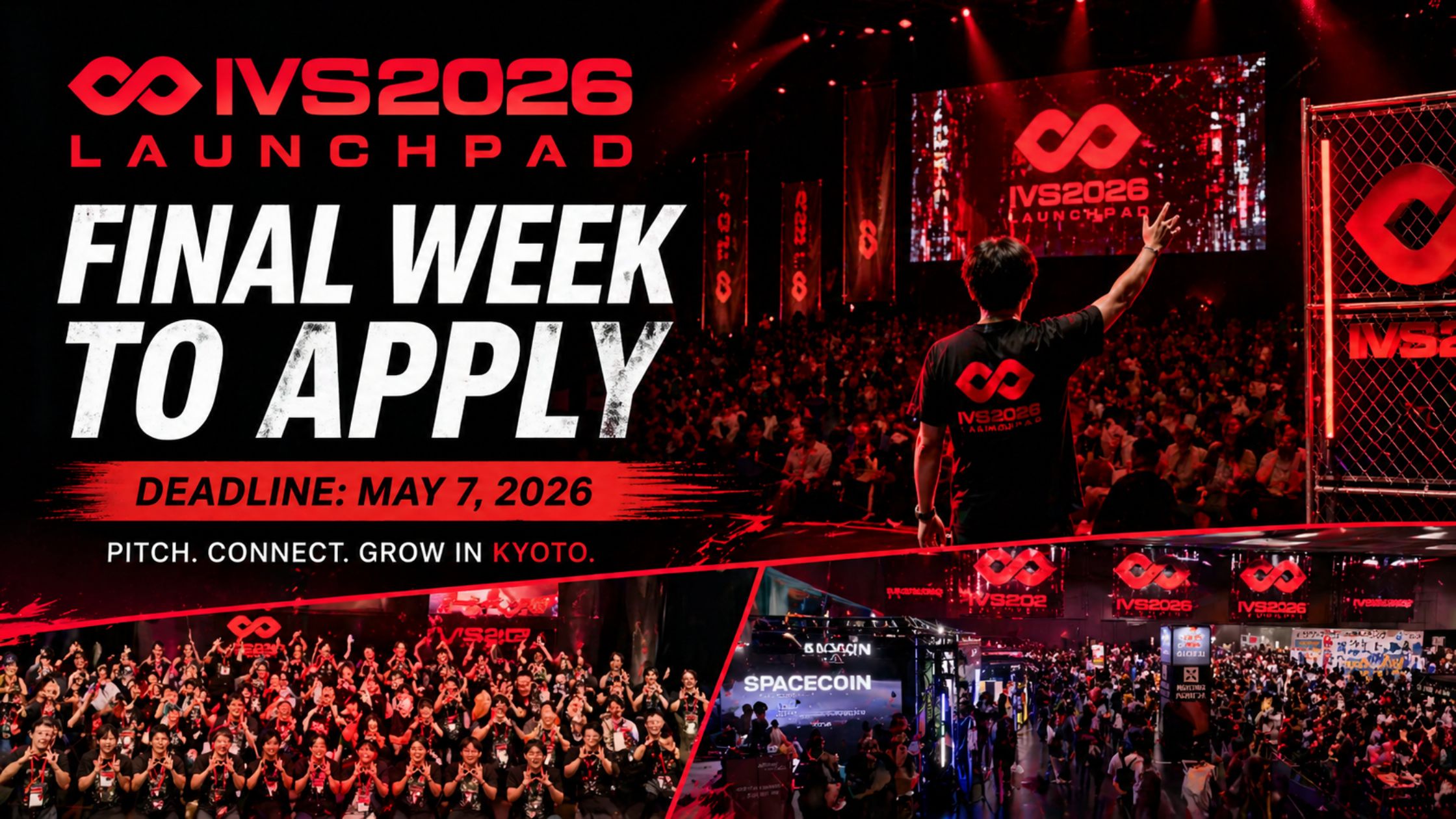
IVS2026 LAUNCHPAD Enters Final Week as May 7 Deadline Nears
 by
by

Applications close May 7, with selected startups entering a multi-stage evaluation process ahead of IVS Kyoto in July, one of Japan’s largest startup gatherings.
With the application deadline approaching, IVS2026 LAUNCHPAD has entered its final week, marking the closing phase for startups seeking to join this year’s cohort ahead of July’s event in Kyoto. Applications remain open until May 7, 2026, after which selected startups will move into a structured evaluation process leading up to presentations at IVS Kyoto 2026, scheduled from July 1 to 3. The program operates on a fixed annual cycle, meaning there are no rolling admissions or late entries—once the deadline passes, the intake for 2026 is effectively closed.
This timing is central to how LAUNCHPAD functions. The period immediately following the deadline is not administrative; it is the start of a compressed selection pipeline that determines which startups move forward into the ecosystem surrounding IVS.
Unlike open-ended accelerator programs, LAUNCHPAD runs on a tightly defined timeline that connects application, evaluation, and stage presentation within a two-month window.
For the 2026 cycle, that process is expected to unfold as follows:
- May 7: Final application deadline
- May 15–16: First-round interviews with shortlisted startups
- May 27–28: Final interviews and selection of presenting companies
- July 3: Main stage pitch at IVS Kyoto
This sequencing compresses multiple stages of evaluation into a short period. Startups are not only assessed on written applications but are also required to articulate their business models, product positioning, and market relevance during interviews with investors and ecosystem participants. By the end of May, the final group is effectively determined, leaving several weeks for preparation ahead of the July stage.
What the Selection Process Actually Does
The selection process serves a dual function. On one level, it filters applicants based on criteria such as scalability, clarity of business model, and potential relevance to Japan or broader regional markets.
At the same time, it acts as an early engagement layer. During interview rounds, startups interact directly with individuals who are already active in venture investment, corporate partnerships, and ecosystem development. These interactions often shape how companies are perceived before they reach the stage, creating a degree of familiarity within a relatively small group of decision-makers.
As a result, by the time finalists present in Kyoto, they are not entering the ecosystem cold. They have already been evaluated, discussed, and in some cases informally tracked by participants involved in the process.
The Pitch Within a Larger Interaction Environment
The six-minute pitch at IVS Kyoto is the most visible element of LAUNCHPAD, but it is only one part of a broader interaction cycle.
The session typically takes place in front of an audience of approximately 3,000 attendees, with additional online viewership exceeding 10,000. However, the significance of the pitch lies less in the format itself and more in the environment in which it occurs.
Presentations are delivered to an audience composed largely of investors, corporate representatives, and operators who are actively engaged in evaluating opportunities. This means that the pitch is not an isolated presentation, but part of an ongoing set of interactions that often continue in meetings, follow-ups, and side discussions during and after the event.
IVS Kyoto as a Multi-Layered Startup Gathering
The LAUNCHPAD program is embedded within IVS Kyoto 2026, which is expected to bring together between 10,000 and 13,000 participants from across Japan and international markets.
The event is structured across multiple venues, including Miyakomesse and ROHM Theatre Kyoto, and is designed to accommodate different types of engagement.
At one level, IVS functions as a large-scale conference, with stage sessions, exhibitions, and open networking opportunities accessible to a broad audience. At another level, it includes more selective environments where investors, founders, and corporate executives engage in smaller, focused discussions.
These interactions—often centered around fundraising, partnerships, and strategic collaboration—are less visible but form a significant part of how business decisions are initiated during the event.
Within this structure, LAUNCHPAD positions startups at the intersection of both layers, combining visibility with access to more targeted conversations.
Who Evaluates—and Why That Matters
The individuals involved in evaluating startups during LAUNCHPAD reflect the composition of Japan’s startup and investment ecosystem.
Participants typically include venture capital investors, corporate venture teams, founders with experience in scaling companies, and professionals involved in IPOs, M&A, and financial advisory. Their role is not limited to judging presentations; many are actively deploying capital, forming partnerships, or supporting companies through growth stages.
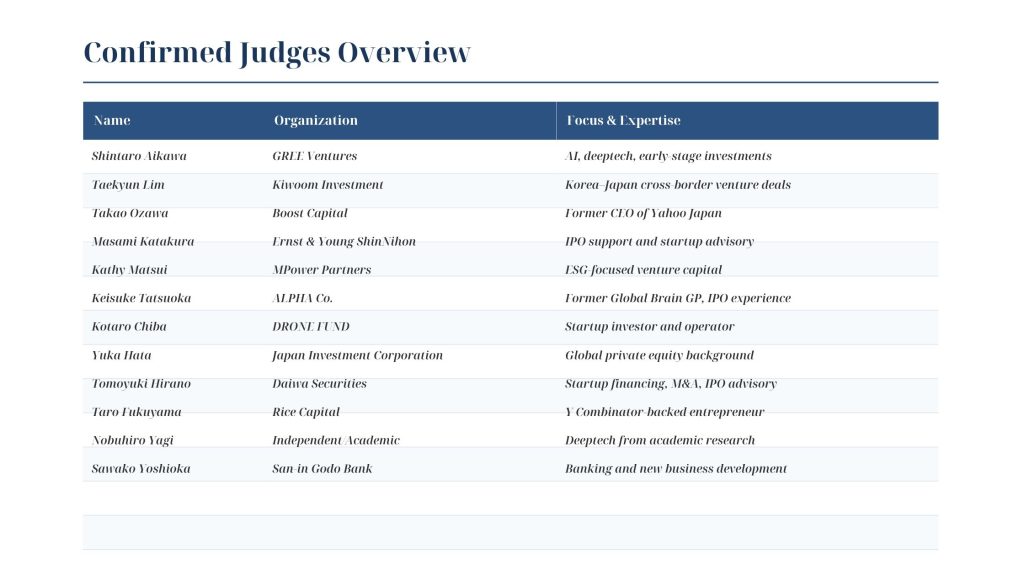
This has practical implications for how startups are assessed. Evaluation is not based solely on presentation quality, but also on how a company fits within existing investment theses, partnership opportunities, or broader market trends.
Positioning Within Japan’s Market and Regional Dynamics
Japan continues to be one of Asia’s largest startup markets, supported by a combination of corporate participation, institutional capital, and government-backed initiatives.
However, entry into the ecosystem has traditionally been shaped by networks and long-term relationship-building. For international startups, this has often translated into extended timelines before gaining access to relevant stakeholders.
In recent years, cross-border activity has increased, particularly across Japan, Korea, and Southeast Asia. Venture firms and startups are operating more fluidly across these markets, creating new pathways for collaboration.
Within this context, structured platforms like LAUNCHPAD provide an additional mechanism for engagement—offering startups a defined entry point into an ecosystem that otherwise requires gradual access.
What Applicants Are Expected to Demonstrate
The program is open to startups globally, with no nationality restrictions. Applicants are expected to present a product that is ready for demonstration, along with a business model that can be evaluated for growth potential.
During the selection process, emphasis is placed on:
- clarity of the product and its value proposition
- scalability and market opportunity
- coherence of the business model
- ability to communicate positioning within a limited timeframe
For startups without prior exposure to Japan, the ability to articulate how their offering could align with the market can influence evaluation outcomes.
At the same time, participation in LAUNCHPAD does not guarantee funding or partnerships. The program provides access and visibility, while outcomes depend on how startups engage with stakeholders beyond the event.
Final Week Before Applications Close
With the May 7 deadline approaching, the remaining days mark the final opportunity to enter the 2026 LAUNCHPAD cohort. Applications are open globally through the official IVS LAUNCHPAD portal, with startups expected to submit a demo-ready product and a clearly defined business model. Selected applicants will move into interview rounds in May, leading to final-stage presentations at IVS Kyoto 2026 in July.

For startups exploring Japan, participating in LAUNCHPAD offers a structured way to engage with investors, corporates, and ecosystem operators already active in the market—within a concentrated timeframe that would otherwise take significantly longer to access independently.
As the program operates on a fixed annual cycle, missing this window means deferring participation to the next iteration. With the deadline now days away, the decision for founders is increasingly time-bound: whether to enter the current cohort or postpone engagement with one of Asia’s key startup ecosystems.
Similar Articles