AsiaTechDaily – Asia's Leading Tech and Startup Media Platform

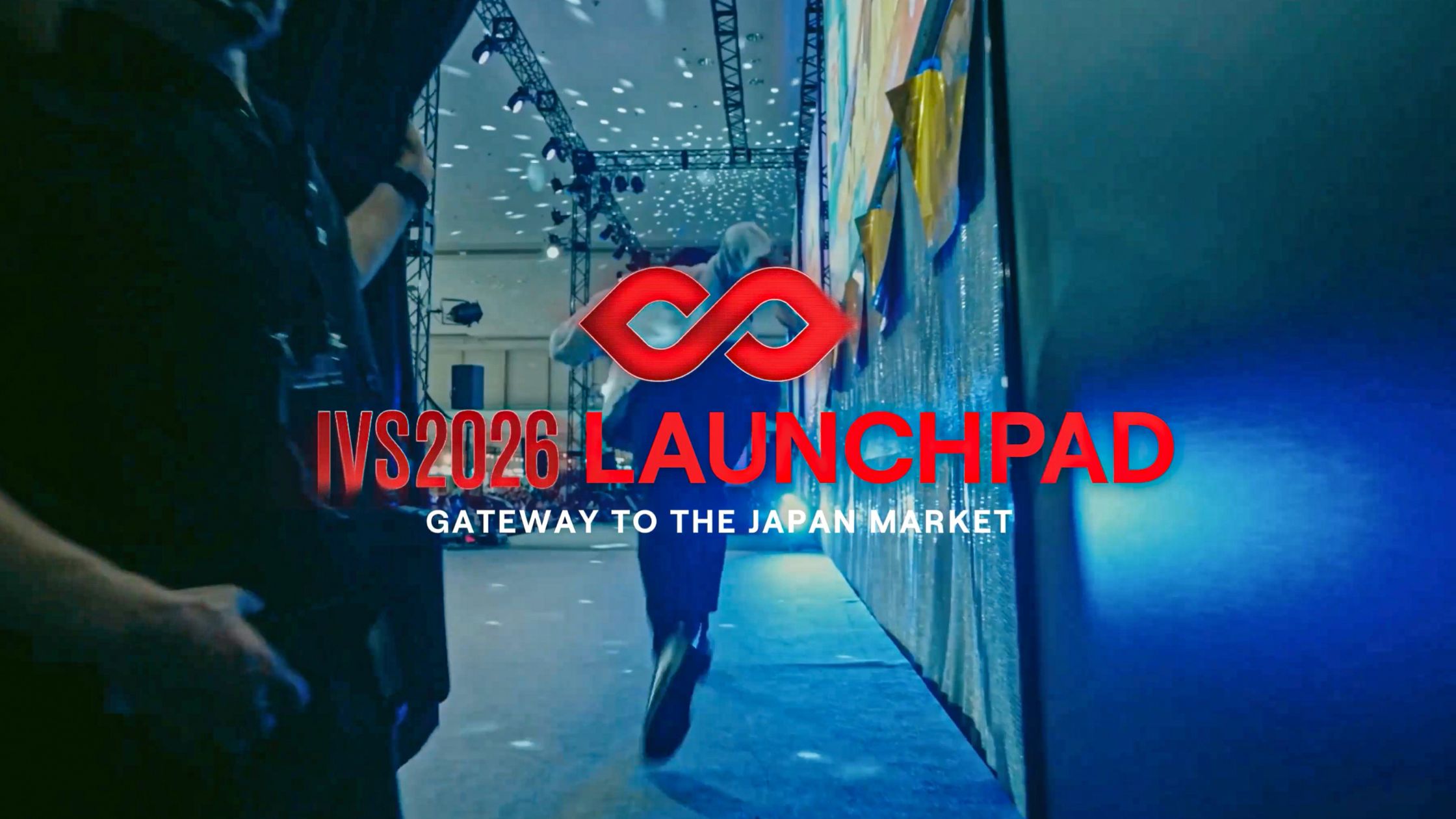
IVS2026 LAUNCHPAD Opens Applications, Creating a Clear Path for Startups Entering Japan
 by
by

Japan’s leading startup platform evolves beyond a pitch stage, offering structured access to investors, corporates, and policymakers at IVS2026 in Kyoto
IVS2026 LAUNCHPAD has opened applications, reinforcing its position as one of the few platforms offering structured access to Japan’s startup ecosystem. Scheduled to take place in July in Kyoto as part of IVS2026, the initiative extends beyond a conventional pitch format, placing selected startups within direct reach of investors, corporates, and policymakers.
This evolution is a wider shift in Japan’s approach to startup development, where the focus is moving from isolated opportunities toward more integrated and navigable pathways.
Organized by the IVS Kyoto Executive Committee (Headline Japan, Kyoto Prefecture, and Kyoto City), the three-day conference is one of Japan’s largest startup gatherings, bringing together founders, investors, corporates, and policymakers from Japan and overseas. The program includes keynote sessions, panel discussions, startup exhibitions, and curated networking opportunities designed to facilitate business matching and collaboration.
Within this framework, IVS LAUNCHPAD will take place on July 3 as the event’s flagship startup pitch stage. Participants interested in engaging with Japan’s startup ecosystem can attend IVS2026 or follow the LAUNCHPAD program to connect with emerging companies and key ecosystem players.
From Relationship-Driven Access to Programmatic Entry
Japan’s startup ecosystem has traditionally operated within a framework shaped by long-term relationships, corporate affiliations, and institutional alignment. While this has enabled stability and depth—particularly in sectors such as manufacturing, mobility, and deep technology—it has also introduced barriers to entry, especially for startups without prior exposure to the market.
In many cases, access to capital or corporate partnerships has depended less on visibility and more on network proximity. For international founders, this has often translated into extended timelines for market entry and a need for local intermediaries.
The emergence of structured platforms such as IVS LAUNCHPAD is a gradual transition. By consolidating key stakeholders within a defined environment and aligning interactions through a formal process, the platform reduces the friction associated with entering the ecosystem. It creates a setting in which startups can move more directly from introduction to engagement, without relying exclusively on informal channels. This does not replace relationship-building, which remains central to Japan’s business culture. Rather, it accelerates the initial stages of access, allowing those relationships to develop within a more organized framework.
A Track Record That Extends Beyond Visibility
Since its inception in 2007, IVS LAUNCHPAD has developed into one of the more established startup platforms in Japan, with a track record that reflects sustained engagement rather than one-time exposure.
Over 5,000 startups have applied to the platform, with a highly selective process determining which teams ultimately present on the main stage. More significantly, the broader IVS and LAUNCHPAD ecosystem has contributed to the creation of 30 IPOs and 47 buyouts, indicating that participation is often part of a longer growth trajectory rather than a standalone event.
The structure of the competition reinforces this orientation. Finalists present within a tightly constrained six-minute format, designed to emphasize clarity of business model and market positioning. However, the preparatory phase is equally important. Selected startups engage in mentoring sessions and pitch refinement, interacting with investors and advisors ahead of the final presentation. This dual emphasis on preparation and presentation positions LAUNCHPAD as both a filtering mechanism and an early-stage integration point within the ecosystem.
IVS2026 and the Emergence of a Layered Ecosystem
The broader context for LAUNCHPAD is IVS2026 which is expected to convene more than 13,000 participants across startups, corporates, investors, and policymakers.
What distinguishes IVS in its current form is not only its scale, but the way in which it structures interaction. The event has evolved from a relatively closed, invitation-based gathering into a multi-layered platform that accommodates different forms of engagement simultaneously. At one level, IVS offers open access environments—exhibitions, stage sessions, and networking opportunities—where startups can gain visibility and explore potential connections. At another level, it incorporates more curated settings designed to facilitate deeper conversations among senior stakeholders, including investors, corporate leaders, and institutional participants.
Within this architecture, LAUNCHPAD functions as a connecting layer. It provides early-stage startups with a defined pathway into both the broader ecosystem and its more concentrated decision-making spaces. The result is a form of staged access, where visibility, interaction, and engagement are progressively aligned.
Kyoto’s Role in Japan’s Innovation Strategy
The selection of Kyoto as the host city is closely aligned with Japan’s broader approach to innovation. Unlike purely commercial hubs, Kyoto represents a convergence of academic research, advanced manufacturing, and established industry.
This environment is particularly conducive to startups that require long-term collaboration with technical partners or corporate stakeholders. It reflects a model of innovation that is less centered on rapid iteration alone and more focused on sustained development and integration within existing industrial systems. For international startups, this presents a distinct opportunity. Entry into the Japanese market is not solely about accessing capital, but about aligning with a network of institutions and companies that can support growth over an extended horizon.
Why This Matters for Founders Entering Japan
For founders, particularly those exploring expansion into Japan, IVS2026 LAUNCHPAD offers a structured starting point in a market that has traditionally required time, relationships, and local alignment to navigate effectively.
The platform reduces the typical friction associated with market entry by bringing together key stakeholders—investors, corporates, and policymakers—within a single, coordinated environment. Rather than approaching the ecosystem in a fragmented manner, startups are able to engage multiple layers of the market simultaneously. This is particularly relevant for early-stage companies that may not yet have an established presence in Japan. Through the selection process, mentoring, and final-stage exposure, founders gain not only visibility but also a clearer understanding of how their product and positioning align with local expectations.
In that sense, the value of LAUNCHPAD extends beyond the pitch itself. It offers a structured pathway to:
- test market relevance,
- initiate conversations with potential partners, and
- establish early credibility within a new ecosystem.
For startups building cross-border strategies, this combination of access and alignment can significantly shorten the time required to enter and engage with the Japanese market.
Participation in LAUNCHPAD offers several layers of value. Startups gain exposure to Japan-based investors and corporates, access to structured mentoring, and the opportunity to position themselves within a concentrated ecosystem environment. The winning team will receive up to JPY 10 million (approximately USD 65,000) through the Startup Kyoto International Award, supported by Kyoto Prefecture.
While the financial incentive is significant, it is secondary to the broader opportunity: establishing a foothold within a market that has historically been difficult to access.
Why LAUNCHPAD Is a Stage Worth Watching
For investors, corporates, and ecosystem participants, IVS LAUNCHPAD serves as a concentrated view of emerging startup activity within and beyond Japan.
The platform’s selective nature means that companies presenting on stage have already gone through multiple layers of screening and preparation. As a result, the LAUNCHPAD stage functions less as a discovery platform in its raw form, and more as a curated signal of high-potential startups.
For corporate participants, this creates an efficient way to identify potential partners aligned with long-term innovation needs. For investors, it offers early access to companies that are actively positioning themselves for growth within Japan’s ecosystem.
Across the Asia-Pacific region, startup ecosystems are increasingly differentiated by how they facilitate access and growth. Some prioritize speed and scale, particularly in consumer-driven markets, while others emphasize structured government programs or regional expansion. Japan’s approach remains distinct in its reliance on corporate networks, industrial depth, and long-term collaboration. In this context, IVS LAUNCHPAD serves as a complementary pathway within the regional landscape, offering startups a route into a market that operates on different principles than many of its counterparts.
More broadly, LAUNCHPAD provides insight into how the market itself is evolving—what types of solutions are gaining traction, how startups are adapting to Japan’s business environment, and where future collaboration opportunities may emerge.
Within the larger IVS framework, attending LAUNCHPAD is therefore not only about observing pitches, but about understanding the direction of Japan’s startup landscape through a focused and highly curated lens.
How to Apply to IVS2026 LAUNCHPAD
Applications for IVS2026 LAUNCHPAD are currently open to startups globally. The platform is designed to be accessible across sectors and geographies, with eligibility centered primarily on having a demonstrable product and a clearly defined business proposition.
The selection process is structured across multiple stages, beginning with an initial application review followed by interview rounds for shortlisted candidates. Startups that progress through these stages receive guidance during the preparation phase, including mentoring and pitch refinement, before presenting on the final stage in Kyoto.
Key dates for the application process are as follows:
- Application deadline: April 21, 2026
- First-round interviews: April 28 to May 1
- Final interviews: May 20 to May 21
- Pitch preparation and filming: June 17
- Final event: July 3, 2026 (Kyoto)
Startups selected through the process will present at IVS2026 LAUNCHPAD and gain access to the broader IVS ecosystem, including networking opportunities with investors, corporates, and ecosystem stakeholders.

Further details and application submission are available through the official IVS LAUNCHPAD channels.
A Platform Reflecting a System in Transition
IVS2026 LAUNCHPAD illustrates a broader transition within Japan’s startup ecosystem—from one defined primarily by networks and proximity to one increasingly supported by structured pathways.
By integrating selection, preparation, and direct access into a single platform, it offers startups a more navigable route into a complex market. At the same time, it preserves the underlying characteristics that define Japan’s innovation environment, including its emphasis on long-term collaboration and industrial alignment.
As an official media partner for IVS2026, beSUCCESS Media Group is supporting efforts to bring greater visibility to this evolving model and its role in connecting global startups with Japan’s innovation ecosystem. For founders considering Japan as part of their expansion strategy, IVS2026 LAUNCHPAD represents not simply an opportunity to pitch, but a structured starting point for deeper market engagement.
Quick Takeaways
- IVS2026 LAUNCHPAD has opened applications, positioning itself as a structured entry point into Japan’s startup ecosystem
- The program will take place on July 3 during IVS2026 in Kyoto, one of Japan’s largest startup gatherings
- Over 5,000 startups have applied historically, with the broader ecosystem producing 30 IPOs and 47 buyouts
- Finalists go through a curated process including mentoring and pitch refinement before presenting on stage
- Open to startups globally, with no restrictions on industry or geography, provided they have a demonstrable product
- The winner will receive up to JPY 10 million (~$65,000) through the Startup Kyoto International Award
- Beyond pitching, the platform provides access to investors, corporates, and policymakers within a structured environment
- For founders, it offers a practical pathway to engage with Japan’s market; for participants, it provides a curated view of emerging startup opportunities
Similar Articles