AsiaTechDaily – Asia's Leading Tech and Startup Media Platform

Why Scene-Level AI Could Change Brand Safety in Connected TV and Live Streaming
 by

As ad-supported streaming expands, AI-powered video analysis is giving advertisers a more granular way to assess content, creating new opportunities for brand safety and contextual advertising.
Connected TV (CTV) advertising is expanding, but the information available to advertisers about the content surrounding their placements remains inconsistent. According to Wurl’s October 2026 CTV Trends Report, 89% of analysed ad requests lacked a usable programme name, while 45% had no usable channel name. More significantly, 35% of analysed inventory carried a declared genre that did not match the actual programme. The report also identified more than 3,600 different genre labels in a two-hour prime-time window.
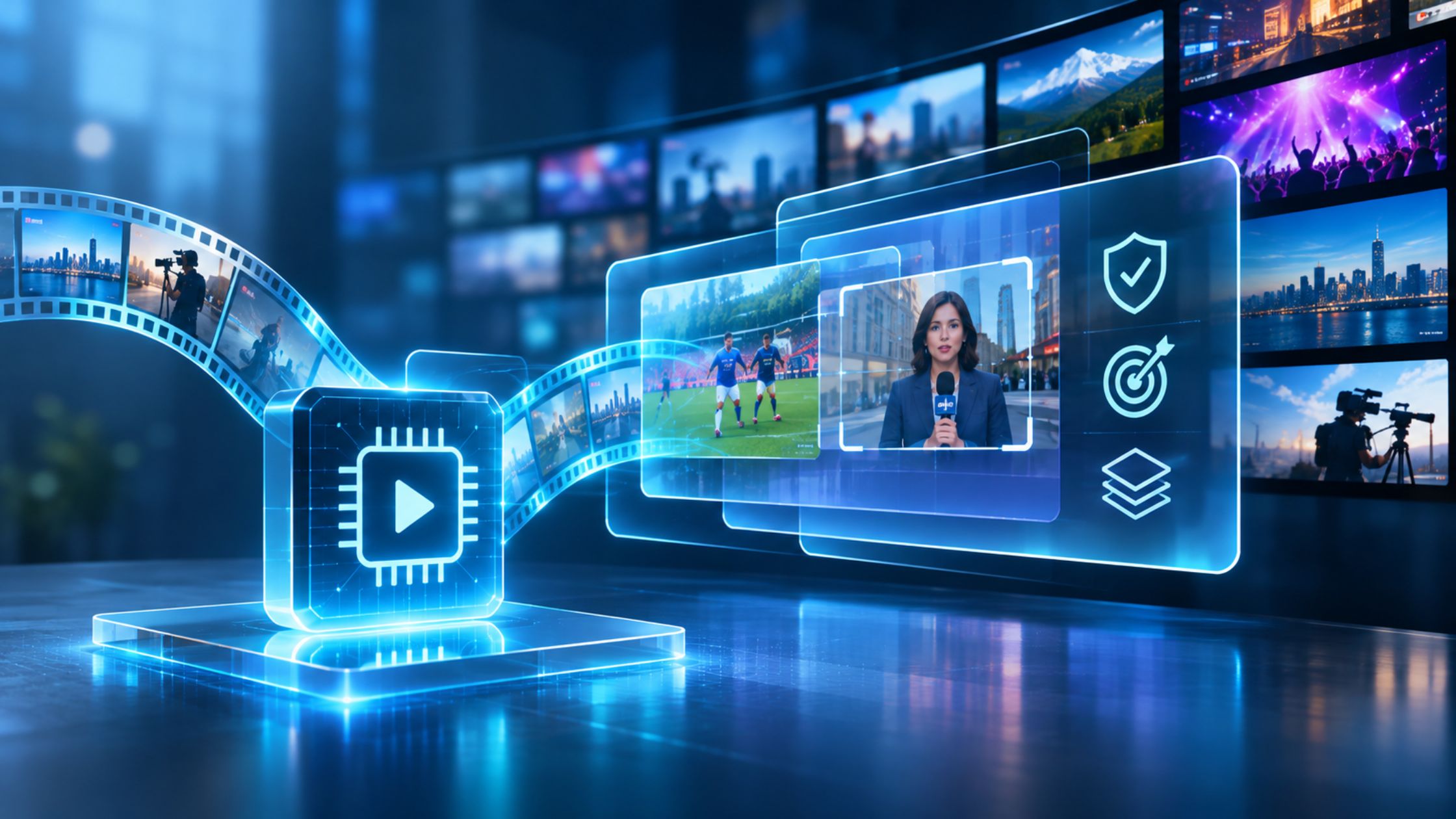
These gaps highlight a growing challenge for the streaming advertising industry. While audience data helps advertisers understand who may be watching, limited content information makes it harder to determine what viewers are watching when an advertisement appears. Scene-level artificial intelligence (AI) is emerging as a way to address this problem. Rather than relying exclusively on programme descriptions, channel classifications or metadata, these systems analyse the actual video to understand individual scenes. For advertisers and streaming platforms, this could create a more precise foundation for brand safety, contextual targeting and advertising decisions.
Brand safety traditionally focuses on preventing advertisements from appearing alongside harmful or inappropriate material, including graphic violence, hate speech and explicit content. Brand suitability takes this further by considering an advertiser’s specific values, audience and campaign objectives. The distinction matters because the context of a programme can change considerably within minutes. A news broadcast might move from conflict coverage to a financial report and then to a human-interest story. Applying a single classification to the entire programme could exclude suitable advertising opportunities along with unsuitable ones.
The limitations of programme-level metadata compound this problem. Wurl’s research found that genre labels were frequently fragmented, vague or inconsistent with the content being broadcast. Such discrepancies can make it difficult for advertisers to apply contextual targeting strategies across different streaming platforms. Scene-level analysis offers a more granular alternative. By evaluating what is actually happening on screen, AI systems can generate contextual signals that reflect individual moments rather than treating an entire programme as one advertising environment.
How Multimodal AI Understands Individual Scenes
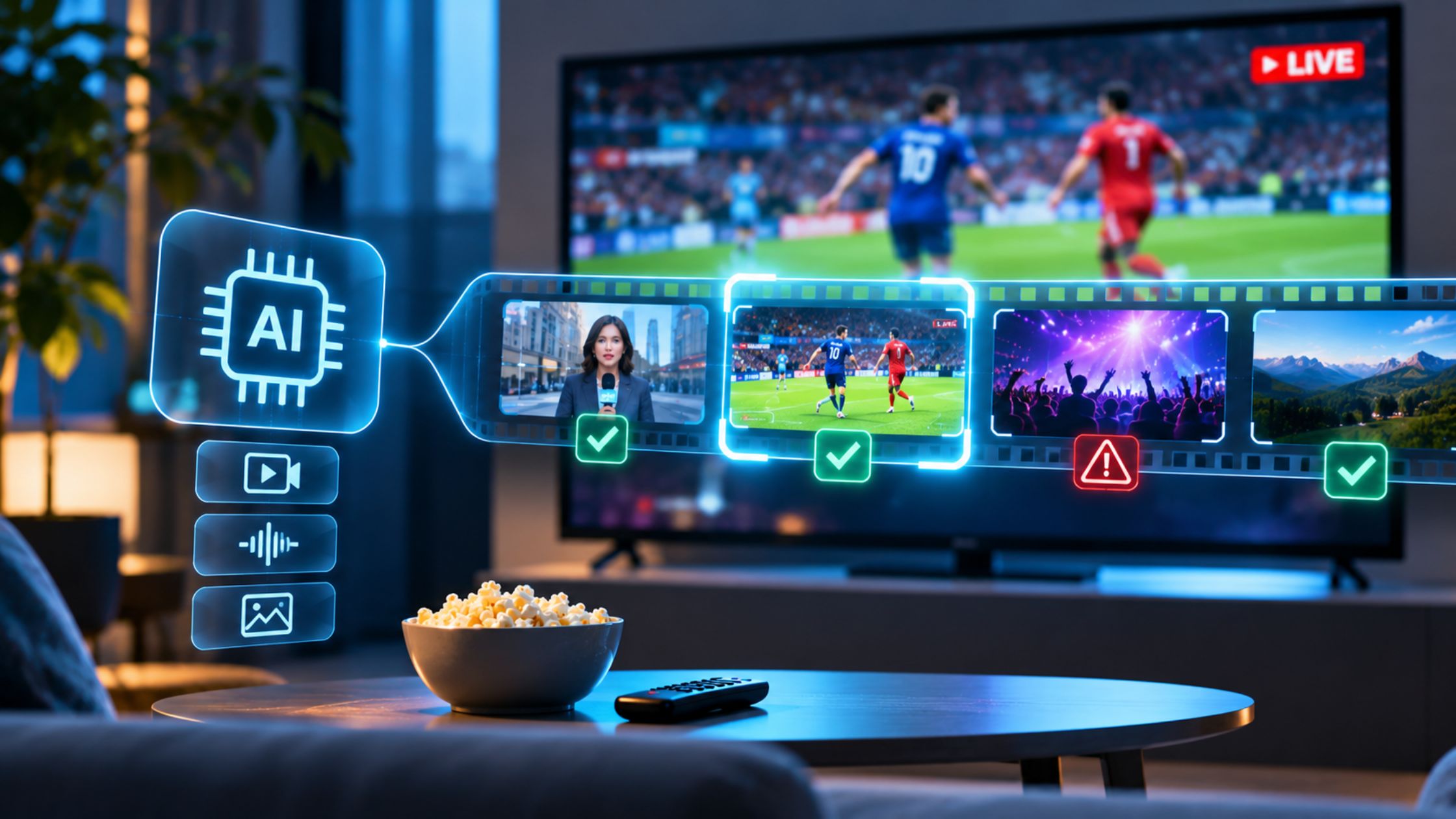
Scene-level video understanding relies on combining multiple sources of information rather than identifying isolated objects or keywords. A multimodal AI system can analyse visual elements, dialogue, background sounds, subtitles and on-screen text to interpret the context of a scene. This distinction is important. An image of a person holding a weapon, for example, could belong to a fictional film, a news report or a documentary. Visual recognition alone may not establish its meaning. Audio and surrounding context can provide additional information needed to assess its suitability.
The technology can therefore help platforms evaluate content against different advertising policies and suitability requirements. It also creates opportunities beyond advertising, including content moderation, video validation and media intelligence. However, generating contextual signals is only one part of the process. Those signals must also reach advertising platforms and buyers in a timely and consistent manner to influence actual ad-placement decisions.
Applying scene-level analysis to live broadcasting is more demanding than processing pre-recorded videos. Video-on-demand content can be analysed before distribution, whereas live broadcasts require systems to interpret continuously changing scenes as they appear.
Breaking news, live sports and other unpredictable broadcasts can shift between different subjects within seconds. AI systems must balance processing speed with contextual accuracy while determining when a scene requires additional examination.
The advertising industry is also working to improve the infrastructure supporting live streaming. On October 28, 2026, IAB Tech Lab released its Live Event Ad Playbook implementation guidance for public comment. The initiative aims to improve coordination between buyers, publishers and advertising technology providers through standardised forecasting and near-real-time audience signals.
Although LEAP focuses on advertising delivery and operational coordination rather than scene-level content analysis, it illustrates the industry’s broader effort to make live streaming advertising more scalable and responsive.
PYLER Applies Video Understanding AI to Live CTV
South Korean AI company PYLER is developing this technology for applications across digital video platforms and connected television. Its multimodal video understanding engine analyses visual, audio and textual signals to assess content safety and advertising suitability. The company presented a project developed with a global free ad-supported streaming television (FAST) provider at the NVIDIA Inception Grand Challenge 2026 APAC finals, where it was selected among the Top 10 finalists. The project focuses on analysing individual scenes in live CTV broadcasts, including dialogue, on-screen text, sound, brands, locations and actions. The objective is to help streaming platforms assess advertising suitability even when conventional signals distinguishing programming from advertisements are unavailable.
Explaining how the company approaches unpredictable live content, PYLER CEO Jaeho Oh told AsiaTechDaily:
“Live video presents a different challenge from pre-recorded content. Scenes change continuously, and systems need to interpret what is happening without relying entirely on predefined metadata or program signals. PYLER addresses this challenge through multimodal video understanding and efficient, context-aware classification. Our AI model analyzes visual, audio, and textual signals to interpret scenes and evaluate them against different safety and suitability criteria. For live applications, we are developing more efficient, probability-based approaches that can adapt to different evaluation criteria. When a result has low confidence or requires further analysis, additional models can be used rather than relying on a single classification decision. This approach is designed to balance speed, accuracy, and computational efficiency. It is particularly important for unpredictable content, such as breaking news, where the meaning of a scene can change rapidly.”
PYLER’s work is supported by its collaboration with NVIDIA. A June 2026 NVIDIA customer case study reports that the company’s infrastructure processes two million videos daily, reduced unsafe content exposure by 76.7% for major advertisers and achieved a tenfold reduction in operational costs. The case study also reports AI validation time of 0.011 seconds against a 30-second human-review benchmark. Oh clarified that these figures reflect PYLER’s broader video validation infrastructure rather than the end-to-end latency of a live-streaming deployment.
“Our NVIDIA-powered infrastructure has already demonstrated significant efficiency gains. According to NVIDIA’s published case study in June, PYLER reduced content validation time from a 30-second human-review benchmark to 0.011 seconds for AI validation. The same case study reported a tenfold reduction in operational costs. These figures reflect our broader video validation infrastructure rather than the end-to-end latency of a live streaming deployment. We are continuing to evaluate live-specific performance, including processing latency, classification accuracy, and the handling of ambiguous scenes. Our goal is to provide reliable, context-aware intelligence that allows platforms to apply their own standards with greater speed and consistency,” Oh said while conversing with AsiaTechDaily.
From Brand Protection to More Valuable Advertising Inventory
The commercial opportunity extends beyond preventing unsuitable placements. More accurate scene-level information could help advertisers avoid broad exclusions that remove entire programmes or genres from consideration, even when individual segments are suitable for their campaigns. For streaming platforms and FAST operators, better content signals could make inventory easier to classify and sell. For advertisers, contextual intelligence could support more relevant placements and improve visibility into where their campaigns appear.
However, the technology’s value will depend on more than classification capabilities. Low-latency processing, reliable contextual interpretation and integration with programmatic advertising systems will determine whether scene-level intelligence can influence decisions at scale. As streaming advertising becomes more sophisticated, understanding the content surrounding an impression could become as important as understanding the audience receiving it. PYLER’s work in live CTV reflects this shift towards more granular video intelligence. The next stage will be turning that intelligence into reliable, actionable signals across the streaming advertising ecosystem.
Quick Takeaways
- CTV advertising faces significant content transparency gaps, with 89% of analysed ad requests lacking a usable programme name, according to Wurl’s October 2026 report.
- Scene-level AI can analyse video, audio and text to assess content suitability more precisely than programme-level classifications.
- Live broadcasting presents additional challenges because scenes change unpredictably and require low-latency analysis.
- South Korean AI company PYLER is applying multimodal video understanding to live CTV through a project with a global FAST provider.
- PYLER’s NVIDIA-backed infrastructure reportedly processes two million videos daily, with a 76.7% reduction in unsafe content exposure for major advertisers.
- Scene-level intelligence could help advertisers improve brand safety while enabling streaming platforms to unlock more suitable advertising inventory.
Similar Articles