AsiaTechDaily – Asia's Leading Tech and Startup Media Platform

Beyond YouTube: How PYLER Is Expanding Video Understanding AI Across the Streaming Ecosystem
 by

The South Korean AI company is extending its multimodal video analysis technology into connected TV and live broadcasting, opening new applications for content intelligence, brand safety and contextual advertising.
As ad-supported streaming expands, advertisers are seeking more precise ways to understand the content surrounding their placements. Yet the information accompanying connected TV (CTV) advertising opportunities can remain incomplete. A recent analysis by streaming technology company Wurl found that 89% of ad requests lacked a usable program name, highlighting a gap between the growth of streaming inventory and the quality of content information available to advertisers.
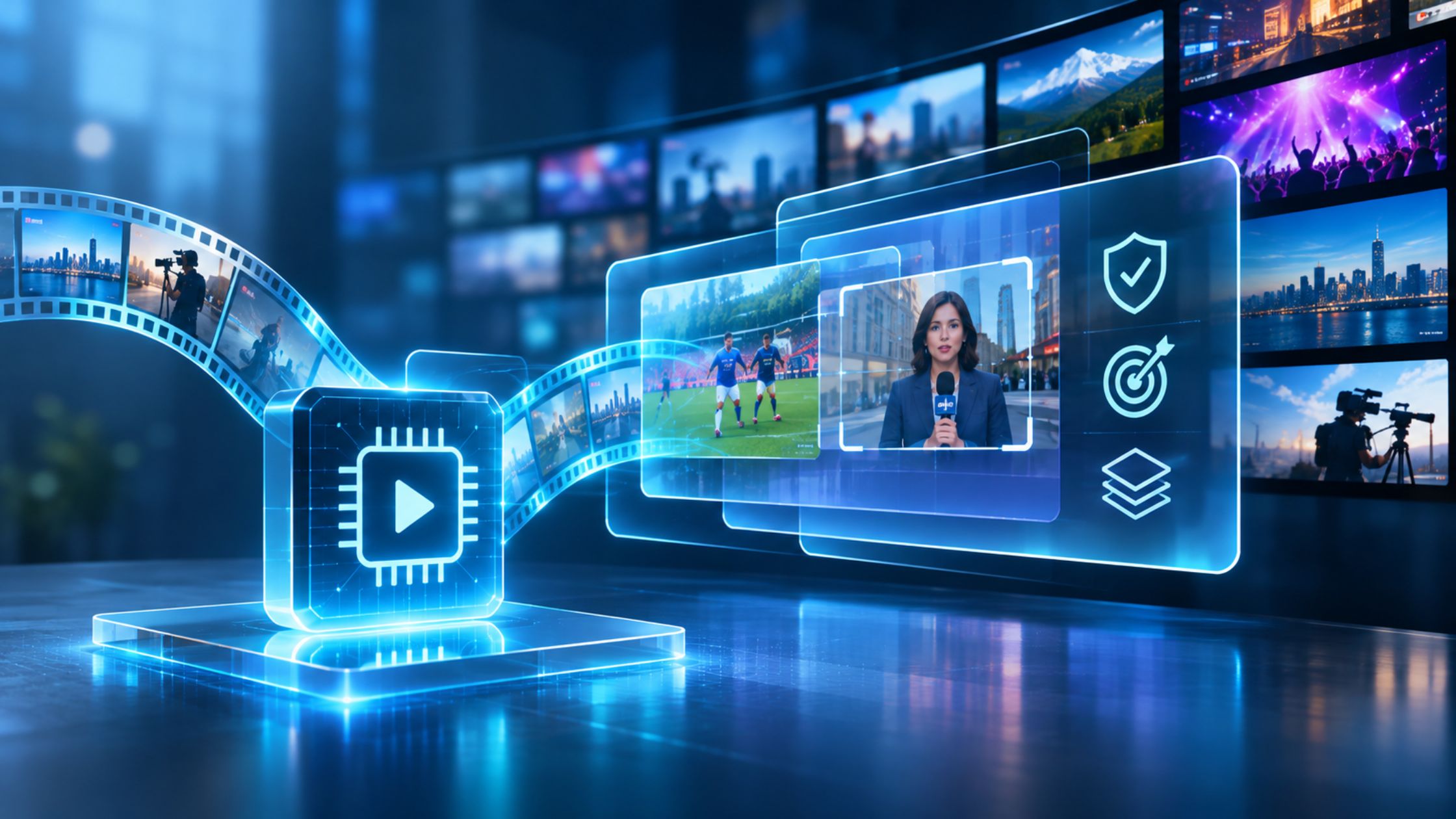
South Korean AI company PYLER is seeking to address this challenge through video understanding technology that analyses content at the scene level. Initially developed and commercialized in the YouTube ecosystem, the company’s technology is now being extended to connected TV, free ad-supported streaming television (FAST) platforms and live broadcasting.
The expansion also earned PYLER a place among the Top 10 finalists at the NVIDIA Inception Grand Challenge 2026 APAC finals, held in Singapore on September 22. The recognition reflects the growing range of applications for AI systems capable of interpreting video beyond individual objects or keywords.
PYLER’s initial work focused on understanding video content in the YouTube environment, where brands and platforms need to assess both contextual relevance and content suitability. Its technology supports two related applications: contextual targeting, which helps advertisers identify suitable content for campaigns, and safety filtering, which helps prevent advertisements from appearing alongside potentially harmful or inappropriate material. Unlike conventional systems that rely primarily on metadata or keyword detection, video understanding AI can combine visual, audio and textual information to interpret what is happening within a video. This allows the technology to identify context that may not be evident from a title, description or category.
Explaining the company’s development, PYLER CEO Jaeho Oh told AsiaTechDaily:
“Our initial focus was YouTube, where we developed and commercialized video understanding technology in one of the most diverse and challenging content environments. We built capabilities in two areas: contextual targeting, which helps brands find suitable content for their campaigns, and safety filtering, which helps them avoid potentially harmful or inappropriate placements. This experience gave us more than a working AI model. It allowed us to build practical expertise in processing large volumes of video, interpreting complex context, and applying different standards across customers.
“We now see opportunities to bring these capabilities to other parts of the video ecosystem. These include connected TV and FAST streaming services, broadcasters, content producers, and intellectual property owners.”
The broader opportunity lies in applying the same underlying intelligence across different formats and distribution environments. As video consumption becomes increasingly fragmented across platforms, content owners and advertisers need systems that can interpret material consistently, even when the technical and commercial requirements differ.
Bringing Scene-Level Intelligence to Live Streaming
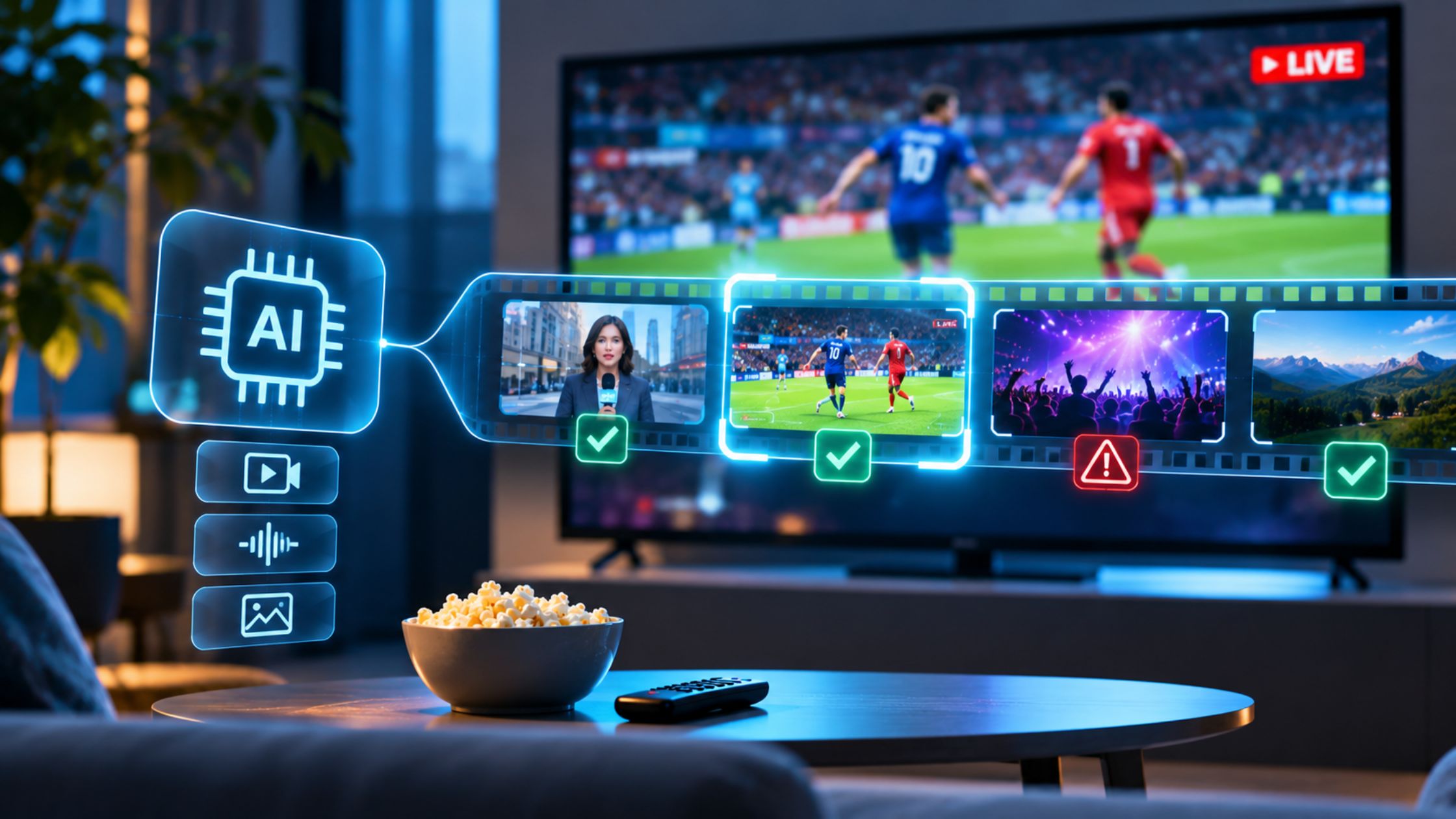
One of PYLER’s latest applications is in CTV live broadcasting, where it is working with a global FAST provider. The project focuses on analysing live video scene by scene to determine content safety and advertising suitability.
The distinction between video-on-demand (VOD) and live broadcasting is significant. VOD content can generally be analysed before distribution, allowing platforms to identify relevant scenes and assess their suitability in advance. Live broadcasts, however, introduce unpredictable footage and require content to be interpreted as it appears.
The challenge becomes more pronounced when streaming signals that distinguish programming from advertisements are missing or incomplete. In such cases, platforms may have limited information about the content surrounding an advertising opportunity.
PYLER’s video understanding engine analyses dialogue, on-screen text, sound, brands, locations and actions to interpret individual scenes. By assigning safety and suitability assessments at this level, the system aims to help platforms identify advertising opportunities within live content that might otherwise be treated as a single, undifferentiated broadcast.
The approach could also create more granular advertising inventory. Rather than evaluating an entire programme under one broad classification, platforms can assess individual segments according to their context. This is particularly relevant to live news and other broadcasts in which the nature of the content can change rapidly.
Video Understanding as a Layer of Digital Media Infrastructure
The expansion into CTV reflects a wider shift in how video intelligence can be used across the digital media ecosystem. For advertisers, contextual understanding can support more relevant placements and brand protection. For streaming platforms and broadcasters, it can help with content validation, moderation and the organisation of video libraries.
PYLER’s work with NVIDIA also provides a technical foundation for these applications. The company’s published account of its AI development describes the use of multimodal representations that combine visual, audio and textual information, segmenting videos into semantic moments that can be indexed and retrieved for downstream applications.
NVIDIA’s published customer case study reports that PYLER’s platform processes two million videos daily and has reduced unsafe content exposure by 76.7% for major advertisers. These are company-specific results presented by NVIDIA, rather than independently audited industry-wide benchmarks, but they indicate the scale at which the technology is being applied.
Building International Applications
PYLER’s selection among the Top 10 at the NVIDIA Inception Grand Challenge marks its second consecutive recognition in an NVIDIA-led programme, following its performance at AI Day Seoul in 2025. The APAC competition brought together more than 500 AI startups, with PYLER progressing through the finalist stages before being selected among the final 10 companies. The selected startups receive opportunities to participate in NVIDIA global events, access technical support and pursue demonstrations with partner companies.
For PYLER, the next phase will involve translating these opportunities into partnerships and commercial applications across additional video environments.
“Our recognition at NVIDIA’s Inception Grand Challenge has helped create opportunities to engage with international technology and industry partners. The next step is to translate these connections into practical applications. Over the next 12 to 18 months, our priority is to deepen partnerships, validate additional use cases, and develop repeatable commercial models. We want to expand where our technology can create measurable value rather than enter new markets simply for the sake of expansion,” Oh said while conversing with AsiaTechDaily.
As streaming services, broadcasters and digital platforms manage increasingly diverse video libraries, the ability to interpret content at a granular level is becoming more relevant to advertising, moderation and distribution. PYLER’s move beyond YouTube places it within this broader development, with CTV and live broadcasting offering new environments in which its technology can be applied.
The longer-term opportunity will depend on how effectively video understanding can become part of everyday media infrastructure. If PYLER can extend its existing capabilities across platforms while establishing repeatable commercial deployments, its technology could play a role in shaping how the next generation of digital video is analysed, monetized and trusted.
Quick Takeaways
- PYLER is expanding its video understanding AI beyond YouTube into connected TV, FAST streaming and live broadcasting.
- Its multimodal technology analyses video, audio and text to support contextual advertising, brand safety and content suitability.
- A project with a global FAST provider applies scene-level analysis to live broadcasts, helping identify more granular advertising opportunities.
- PYLER was selected among the Top 10 finalists at the NVIDIA Inception Grand Challenge 2026 APAC finals.
- The company plans to deepen international partnerships, validate new use cases and develop repeatable commercial models over the next 12 to 18 months.
Similar Articles