AsiaTechDaily – Asia's Leading Tech and Startup Media Platform

When AI Makes Every Ad Easy to Produce, Creative Judgment Becomes the Bottleneck
 by
Byungho Lim
by
Byungho Lim

Generative AI is reducing the time and cost of producing advertising variations, but as creative supply expands, marketers face a harder question: which ideas deserve attention, testing and media investment?
For much of the advertising industry, creative production has traditionally been constrained by time, cost and capacity. A campaign could require weeks of concept development, production, editing and localization before marketers had multiple versions to test. Generative AI is rapidly changing that equation. The constraint is increasingly shifting from how much creative a brand can produce to how effectively it can evaluate what it produces. The scale of that change is already visible. Google and Kantar research found that 57% of marketers use AI for creative production and 45% use it to create campaign variants. Yet only 46.2% of marketers surveyed said they had analysis in place to measure creative effectiveness, while 43% said they did not.
The imbalance is becoming more consequential as advertising platforms themselves automate creative generation. Alphabet said advertisers used Gemini to create nearly 70 million creative assets through AI Max and Performance Max in the fourth quarter of 2025.
The implication is not simply that brands will produce more advertising. It is that the value chain around advertising is changing. When producing another creative variation becomes relatively easy, deciding which version should receive attention, testing and media dollars becomes a more important business problem.
AI is removing the old production constraint
Generative AI has moved beyond assisting with copy or brainstorming. Advertising platforms are increasingly incorporating AI into the production and optimization process, allowing marketers to generate variations and adapt creative for different audiences and environments. The Interactive Advertising Bureau’s 2025 Generative AI Playbook for Advertising identifies content creation, campaign optimization and measurement among the major applications of the technology.
Google’s advertising business is also moving toward this model. Its research with Kantar describes AI-assisted pre-testing in which early creative concepts can be evaluated against established effectiveness principles before a campaign goes live. The objective is to help marketers identify weaknesses earlier, rather than waiting for post-launch performance data. That represents an important change in the economics of experimentation. If creating another version of an advertisement costs relatively little, marketers can generate more options than they could realistically evaluate through conventional processes.
The result is a paradox. AI can make creative production more efficient while making creative selection more difficult.
The problem becomes particularly visible as businesses localize campaigns across markets. India, for example, is increasingly being used by global companies as a base for AI-enabled marketing operations. Reuters reported in May that Kimberly-Clark had reduced content creation time from 24 days to two hours using an AI platform developed in India. Other companies operating through Indian global capability centers are using AI for product imagery, influencer selection, localization and campaign optimization. For marketers serving Asia’s highly fragmented consumer markets, the ability to produce multiple language, audience and platform variations can be valuable. But it also means the number of potential creative combinations can grow rapidly.
The measurement gap is becoming the next bottleneck
The industry’s existing measurement infrastructure was largely designed around campaign outcomes. Marketers can track impressions, clicks, conversions, revenue and return on advertising spend. Those metrics remain important, but they often answer a different question from the one created by generative AI.
They can tell a marketer what happened after an advertisement was distributed. They do not necessarily explain which elements of the creative caused the difference, why one variation retained attention while another did not, or which version should receive additional budget before the campaign scales.
Google and Kantar’s research highlights this gap. Eight in 10 marketers surveyed considered creative quality an important driver of effectiveness, yet fewer than half had analysis in place to measure its impact. Google also noted that less than a quarter of marketers were using any single technology-enabled tool for creative measurement.
That suggests the industry has developed faster ways to make creative than to understand it.
Atique Bandukwala, Founder and CEO of Vidopix, described this shift while conversing with AsiaTechDaily, arguing that the fundamental problem was never simply a lack of creative supply:
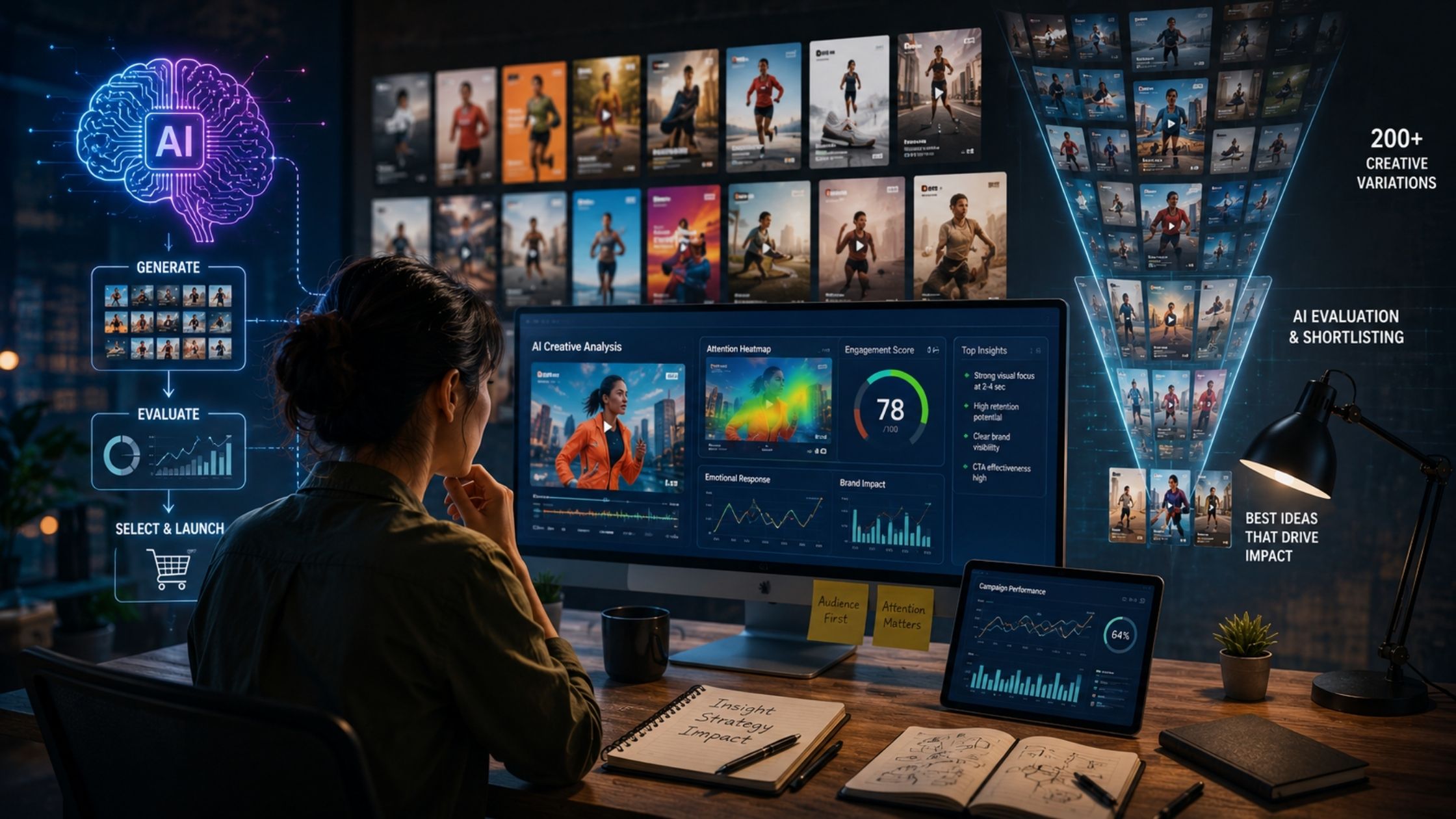
“What has happened is that everyone got so excited about being able to produce content at speed that nobody stopped to ask whether producing more was actually the problem in the first place. It was not. Brands have always had access to creative talent and production capability. What they never had was a reliable way of knowing, before they spent the money, whether a particular piece of content was going to land with the audience or just disappear into the feed. And now that you can generate 200 versions of an ad in an afternoon, that gap has become even more painful because you are sitting on all this material and you still do not know which one deserves the media budget. We built Pixi at Vidopix specifically because we kept seeing this play out with brands we were talking to. They would finish a campaign, put it out, wait for performance data, and then try to course correct after the money had already been spent. Pixi sits right before that moment. It runs frame by frame diagnostics on the creative, maps where attention is likely to hold or drop off, simulates how different audience personas might respond, and gives the team something concrete to base their decision on before a single rupee or dollar goes into media. It does not replace the creative instinct, but it gives that instinct a foundation of evidence, which I think is what has been missing from the process for a very long time.”
The broader significance of this argument is that pre-launch creative intelligence is becoming more important as the number of available creative options increases. The traditional sequence has been relatively straightforward: create, launch, measure and optimize. AI could introduce another layer before media spending: generate, diagnose, test, select, launch and then measure. That does not mean predictive creative tools can determine with certainty which advertisement will succeed. Audience behavior remains affected by factors such as media context, timing, pricing, brand strength and competitive activity. The more realistic opportunity is to reduce uncertainty around creative decisions before substantial resources are committed.
Attention is becoming a more formal part of the equation
The industry is also moving toward more sophisticated ways of understanding whether advertising is actually being noticed. In November 2025, the Interactive Advertising Bureau and Media Rating Council finalized an attention measurement framework developed with input from more than 200 experts across brands, agencies, publishers and measurement companies. The framework covers data-signal approaches, visual and audio tracking, physiological and neurological observation, and panel or survey-based methods.
The distinction matters because an impression does not necessarily represent attention. The IAB and MRC framework separates viewability, which establishes whether an advertisement had an opportunity to be seen, from attention, which examines the likelihood that it was actually noticed or engaged with. It also emphasizes that attention should complement, rather than replace, delivery and outcome metrics.
This gives creative teams another dimension to consider. The question is no longer simply whether an advertisement was delivered to the intended audience. It increasingly becomes whether its design, message, format and context are capable of securing and maintaining attention. AI could potentially help marketers analyze these dimensions across hundreds of creative variations, but that also makes the quality of the underlying measurement more important.
There is another risk as production becomes abundant: creative sameness. If thousands of advertisers use similar generative models and optimization techniques, the market could become saturated with technically polished but increasingly interchangeable advertising. The ability to produce more versions does not automatically produce stronger ideas.
That makes human creative judgment more relevant, not less. The most valuable role for AI may therefore be to expand the range of possibilities while helping teams eliminate weaker options. Creative strategy still determines what a brand should communicate, why it should matter to a particular audience and what makes the message distinctive.
This is particularly relevant to Asia, where marketers often operate across multiple languages, cultures and consumer segments. AI can make localization and experimentation easier, but the additional volume increases the need to understand which adaptations genuinely improve relevance rather than simply multiplying assets.
The marketing workflow is changing
The emerging model is likely to be less about replacing creative teams and more about changing where their time is spent. Instead of manually producing every variation, teams can increasingly focus on ideas, positioning, brand identity and creative direction. AI can handle parts of production and analysis, while media teams can use those insights to determine where and when different assets should be tested.
That could also change how marketing organizations evaluate efficiency. Producing hundreds of assets is not necessarily efficient if only a small fraction contributes to business outcomes. The more useful measure may become the quality of the feedback loop between creative development, audience response and media performance.
Generative AI is solving a longstanding advertising constraint by making creative production faster, cheaper and more scalable. But abundance creates its own problem. When a brand can produce 100 versions of an advertisement in an afternoon, producing another version is no longer necessarily the difficult part. The difficult part is knowing which of those 100 ideas deserves attention, which should be tested, and which merits a larger share of the media budget.
That shifts the competitive question from who can produce the most creative to who can make the best decisions about creative. For marketers, agencies and advertising technology companies across Asia, that distinction could become increasingly important. AI is unlikely to eliminate creative judgment. Instead, it may make judgment more valuable by surrounding it with an unprecedented volume of machine-generated choices. The next advertising bottleneck, therefore, may not be content at all. It may be the ability to distinguish useful creative from abundant creative before the market decides for you.
Quick Takeaways
- AI is solving advertising’s production bottleneck, not its decision-making bottleneck. Brands can now generate hundreds of creative variations quickly, but determining which ones deserve media investment is becoming harder.
- Creative measurement is lagging behind creative generation. Google and Kantar found that 57% of marketers use AI for creative production, while only 46.2% have analysis in place to measure creative effectiveness.
- The value is shifting from producing more assets to selecting better ones. As the cost of creating variations falls, pre-launch testing, creative diagnostics and audience insight become increasingly important.
- Attention is becoming a more important metric. An ad being delivered or viewed does not necessarily mean it captured attention. The industry is developing more sophisticated frameworks to measure this distinction.
- More AI-generated content could also create more creative sameness. If brands rely on similar models and workflows, producing more variations will not necessarily result in greater differentiation.
- Asia is an important market for this shift. The growth of AI-enabled marketing operations in India and other Asian markets is making large-scale localization and creative experimentation easier, increasing the need for stronger selection and measurement.
- The role of creative teams is likely to change rather than disappear. AI can expand production and analysis, while human teams remain responsible for ideas, positioning, brand identity and strategic judgment.
- The emerging advertising workflow is moving from “create, launch, measure” toward “generate, evaluate, select, launch, measure.” The competitive advantage may increasingly come from the quality of this feedback loop.
- The broader takeaway: When creative becomes abundant, creative judgment becomes scarce. The brands that benefit most from generative AI may not be those producing the most ads, but those that can identify the right creative before spending heavily to distribute it.
Similar Articles