AsiaTechDaily – Asia's Leading Tech and Startup Media Platform

U.S. Pushes AI Footprint in Southeast Asia Through Thailand E-Commerce Pilot
 by
by

The initiative aims to bring advanced U.S. AI capabilities to Southeast Asia’s e-commerce sector through a scalable pilot in Thailand
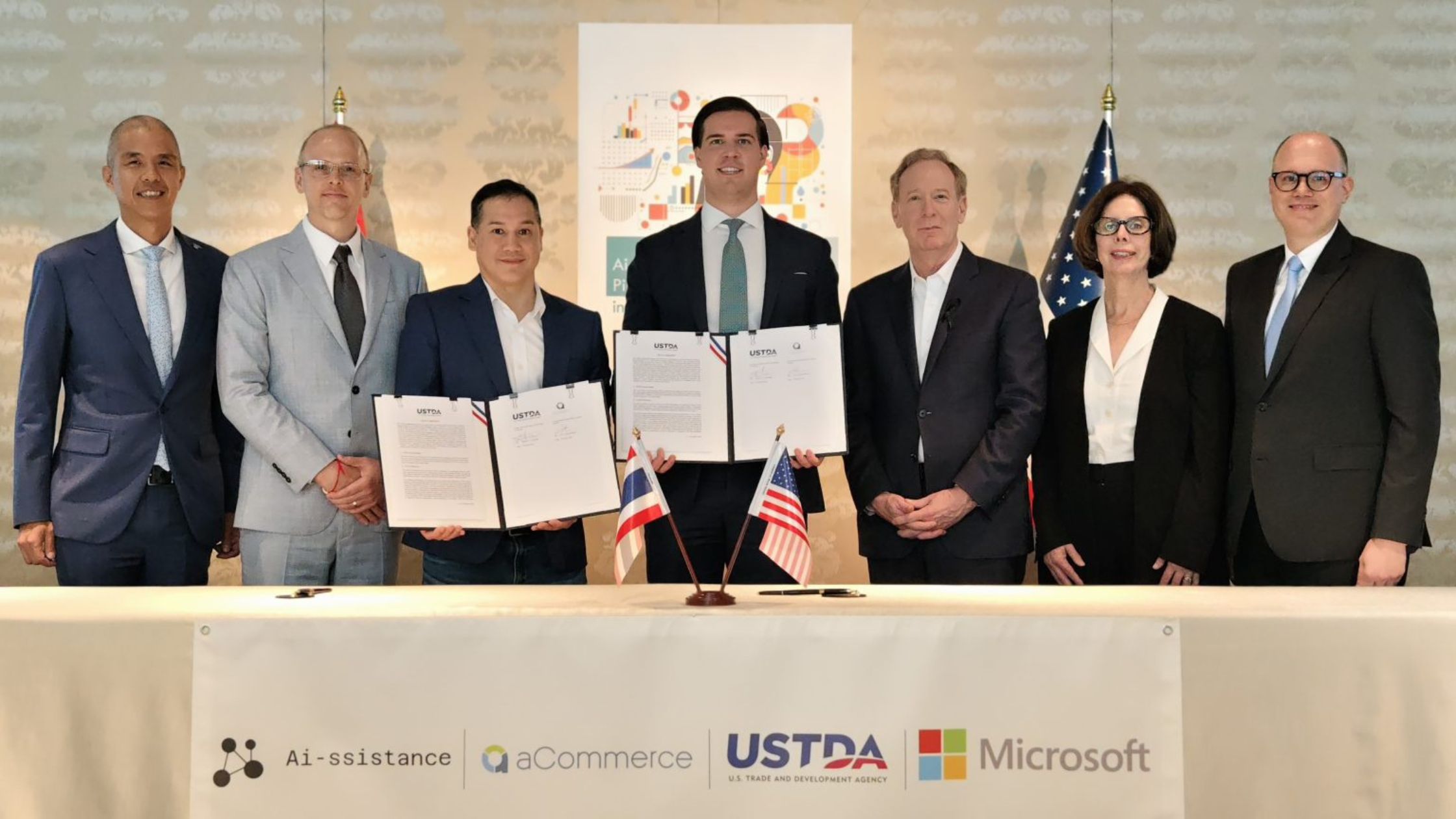
The U.S. Trade and Development Agency (USTDA) is stepping up efforts to embed American artificial intelligence technologies into Southeast Asia’s fast-growing digital economy, launching a pilot project in Thailand that reflects both commercial ambition and strategic intent. Through a newly signed agreement with Thailand-based e-commerce enabler aCommerce, USTDA will fund a feasibility study to integrate advanced U.S. generative AI and cloud solutions into regional online retail infrastructure. The pilot will be led by Washington-based Ai-ssistance, with cloud support from Microsoft Corporation.
While framed as a commercial technology deployment, the initiative is more accurately understood as part of a broader U.S. strategy to shape digital ecosystems in Southeast Asia—particularly as competition with China intensifies across infrastructure, platforms, and standards.
A Strategic Entry Point into Southeast Asia’s Digital Economy
Southeast Asia’s e-commerce market, projected to exceed hundreds of billions in value this decade, has become a key battleground for technological influence. Regional platforms and sellers have long relied on a mix of local solutions and dominant Chinese ecosystems, particularly those linked to players like Alibaba.
USTDA’s approach is distinct: rather than building platforms, it is embedding U.S.-developed technologies into existing regional infrastructure. By partnering with aCommerce—one of the region’s largest e-commerce enablers serving multinational and local brands—the agency is effectively inserting American AI capabilities directly into operational workflows.
The pilot will introduce tools such as dynamic content generation, AI-powered shopping assistants, and sales automation systems designed to enhance merchant performance. If successful, the deployment could expand across aCommerce’s footprint in Thailand, Indonesia, Malaysia, the Philippines, and Singapore.
This “platform-within-a-platform” strategy allows the U.S. to scale influence without competing head-on with entrenched regional giants.
Beyond Technology: Exporting Governance Models
USTDA is also positioning the initiative as a vehicle for exporting what it describes as “democratic AI principles,” including transparency, accountability, and cybersecurity.
“By facilitating the use of this U.S. technology in Thailand, USTDA is advancing America’s global AI leadership while delivering high-quality solutions to our overseas partners,” said Thomas R. Hardy, the agency’s Deputy Director.
This framing underscores a deeper geopolitical layer: the contest is not only about technological capability, but also about governance models. U.S.-backed systems are being promoted as alternatives to what policymakers often characterize as more centralized or surveillance-oriented frameworks associated with some Chinese platforms. In practice, however, adoption will likely hinge less on ideology and more on performance, cost, and ease of integration—areas where incumbents already have strong advantages.
Scaling Ambitions—and Structural Challenges
USTDA has emphasized that the Thailand pilot is designed as a scalable template rather than a standalone project.
According to the agency, the initiative is built around three core pillars: trust in U.S. technologies, scalability through aCommerce’s regional network, and long-term expansion of AI partnerships across Southeast Asia.
Addressing how the agency intends to ensure long-term competitiveness as its AI tools enter Southeast Asia’s e-commerce landscape, a USTDA spokesperson told AsiaTechDaily pointing to a combination of trust, scalability, and continued regional engagement.
“First, this is a partnership built on trust and advanced U.S. technologies that our partners in Southeast Asia are eager to adopt. The solutions we’re deploying reflect core American principles of transparency, accountability, and cybersecurity.
Second, this pilot project offers significant scalability potential. aCommerce is Southeast Asia’s largest e-commerce enabler, and the company serves a diverse portfolio of multinational and regional brands. Successful deployment through the pilot could lead to replication across Thailand, Indonesia, Malaysia, the Philippines, and Singapore.
Finally, this pilot represents just the beginning of USTDA’s engagement in AI in Southeast Asia. We intend to scale our AI work throughout the region and see this as a template for future partnerships. We also intend to continue supporting innovative U.S. technology solutions that help our partners compete and grow in the region.”
A central narrative of the initiative is its potential to empower small and medium-sized enterprises (SMEs) with advanced digital tools. By lowering barriers to AI adoption—through automation, content generation, and intelligent sales tools—the project aims to help smaller sellers compete more effectively with large-scale platforms.
Yet the competitive dynamic is more complex. While U.S. tools may enhance merchant capabilities, they are entering an environment already shaped by deeply integrated ecosystems, logistics networks, and consumer habits tied to dominant regional players.
In that sense, the project may be less about displacing incumbents and more about diversifying the technological stack available to Southeast Asian businesses.
A Test Case for U.S. Digital Trade Strategy
More broadly, the initiative reflects how the U.S. is evolving its approach to digital trade and technology exports. Rather than focusing solely on market access or infrastructure financing, agencies like USTDA are increasingly acting as catalysts—funding early-stage technical work that enables American companies to enter and scale in emerging markets.
For companies like Ai-ssistance, the pilot represents a pathway into Southeast Asia’s e-commerce backbone. For U.S. policymakers, it offers a test case for how AI technologies can be deployed internationally in ways that align with both commercial and strategic objectives.
The outcome of the Thailand pilot will therefore be closely watched—not just for its technical success, but for what it reveals about the viability of U.S.-led alternatives in one of the world’s most contested digital regions.
Quick Takeaways
- USTDA is using AI as a strategic entry point into Southeast Asia’s digital economy, embedding U.S. technologies within existing e-commerce infrastructure rather than building competing platforms.
- The Thailand pilot with aCommerce is designed as a scalable model, with potential expansion across key regional markets including Indonesia, Malaysia, and Singapore.
- Beyond commercial deployment, the initiative reflects a broader U.S. push to shape digital ecosystems and standards, positioning its AI stack as an alternative to dominant regional players.
- The project emphasizes “trusted AI” principles such as transparency and accountability, though real-world adoption will likely depend more on cost, performance, and ease of integration.
- If successful, the pilot could open new pathways for U.S. AI and cloud providers—including firms like Microsoft Corporation—to scale in Southeast Asia.
- Long-term competitiveness remains uncertain, as entrenched platforms and ecosystems continue to hold structural advantages across the region.
Similar Articles