AsiaTechDaily – Asia's Leading Tech and Startup Media Platform

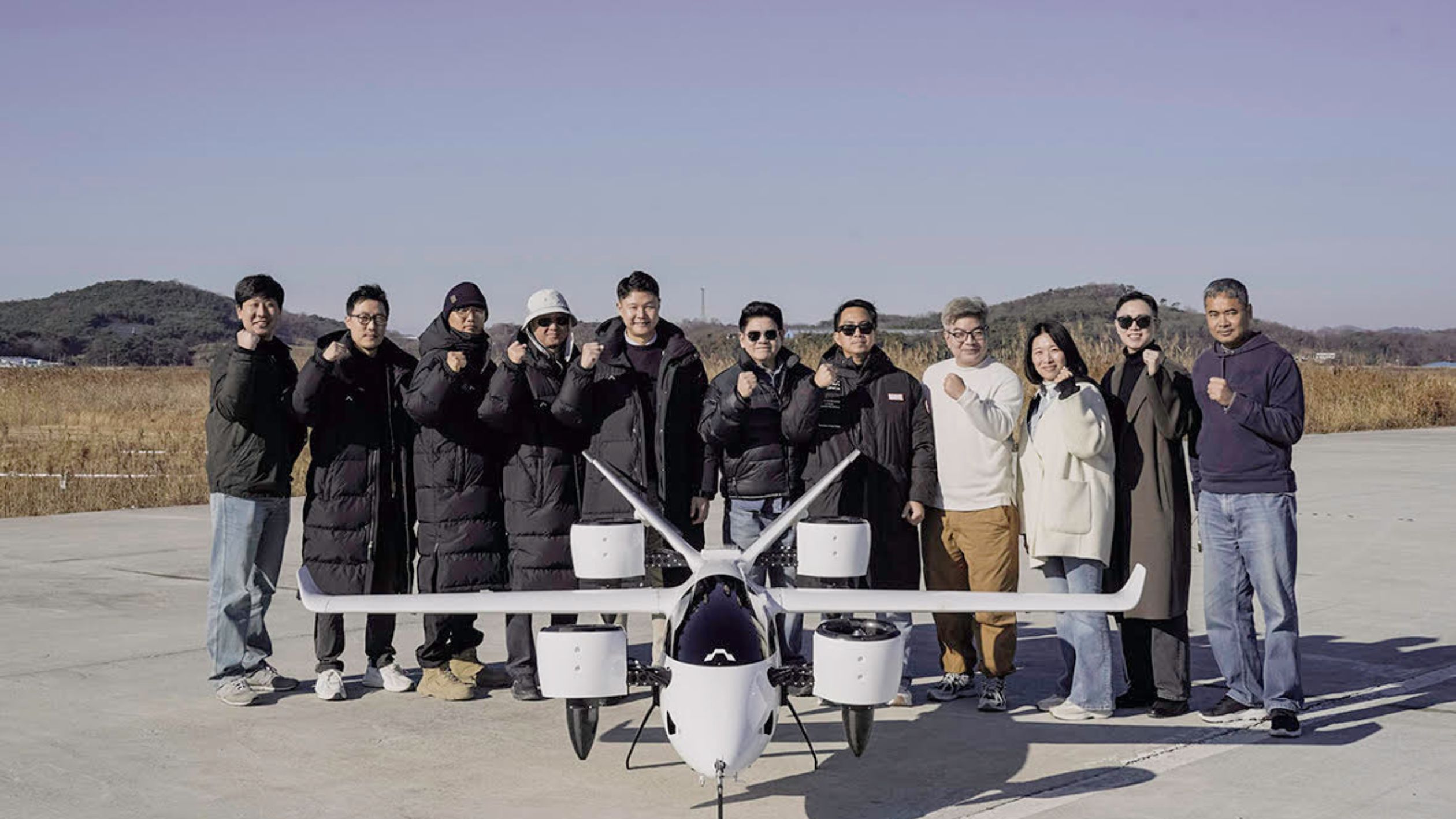
Airbility Leads Multi-Partner Push for UAV-AI Public Safety Infrastructure in Thailand
 by
Byungho Lim
by
Byungho Lim

Four-party partnership reflects a broader shift toward integrated drone, telecom, and AI infrastructure across Southeast Asia
South Korea-based Airbility Inc. has signed a four-party Memorandum of Understanding (MoU) with Thailand’s NT iBuzz Co., Ltd. and SmartOkO Thailand Co., Ltd., alongside Singapore-headquartered KILSA Global Co., Ltd., to collaborate on deploying UAV-based public safety and border security systems in Thailand. The agreement brings together capabilities across unmanned aerial platforms, telecommunications infrastructure, and AI-powered analytics—an approach that reflects a broader evolution in how drone technologies are being operationalized across government and security use cases.
While UAV deployments are not new in Southeast Asia, many have historically been limited to pilot projects or single-use cases. The structure of this partnership suggests a shift toward integrated systems, where aerial platforms are embedded within a wider operational stack that includes connectivity and real-time data processing.
Airbility, founded in 2023 by engineers from Hyundai Motor Company and South Korea’s Agency for Defense Development, develops high-speed eVTOL-based UAV platforms designed for mission-critical operations such as intelligence, surveillance and reconnaissance (ISR), counter-drone activities, and disaster response.
Under the MoU:
- Airbility will provide UAV platforms and flight systems
- NT iBuzz will support secure communications and data transmission infrastructure
- SmartOkO Thailand will deliver AI-based video analytics and computer vision capabilities
- KILSA Global will coordinate project execution and public-sector engagement
This division of roles reflects an attempt to address a common bottleneck in UAV adoption: the gap between hardware capability and operational deployment.
Use cases and deployment focus
The partnership will begin with pilot and demonstration projects across Thailand, focusing on a set of public-sector applications where real-time visibility and rapid response are critical.
These include border surveillance, where UAVs can monitor remote or difficult-to-access areas more efficiently than ground patrols; law enforcement support, where aerial systems can assist in crowd monitoring and incident response; and disaster management, where drones can be deployed quickly to assess damage, locate affected populations, and support rescue operations. The systems will also be used to monitor critical infrastructure and restricted zones, such as energy facilities or transportation networks, where continuous oversight is essential.
What ties these use cases together is not just the presence of drones, but the need for real-time, actionable intelligence. This is where the integration with telecommunications infrastructure becomes central. By enabling secure, high-speed data transmission, the system allows live video feeds and operational data to be shared instantly with command centers and relevant agencies.
AI-based analytics further enhance this capability. Instead of relying on manual monitoring, computer vision systems can automatically detect anomalies, identify patterns, and flag potential threats—whether it’s unusual movement along a border, structural damage after a natural disaster, or unauthorized access to restricted areas. Post-mission, the same data can be analyzed to improve response strategies and operational planning.
Why Thailand is emerging as a testbed
Thailand’s selection as the initial deployment market reflects both policy direction and institutional readiness. Governments across Southeast Asia have been investing in digital infrastructure tied to national security, including smart border systems, surveillance networks, and disaster response capabilities. Thailand, in particular, has taken steps to modernize its public safety infrastructure while maintaining openness to foreign technology partnerships.
In an exclusive response to AsiaTechDaily, the company said:
“Thailand has been actively investing in national security and smart border infrastructure, and the Thai government has shown strong openness to adopting advanced technologies from international partners. The presence of NT, a state-owned telecom enterprise, as a key stakeholder gave us a credible and scalable foundation to build upon for real-world public safety deployment.”
The involvement of a state-linked telecom entity is significant. In many markets, UAV deployment at scale is constrained not by hardware limitations but by connectivity, regulatory frameworks, and coordination across agencies. A national telecom partner can help address several of these challenges simultaneously.
A model designed for regional replication
Beyond Thailand, the structure of the partnership points to a potentially repeatable model for other Southeast Asian markets.
Rather than a bilateral or vendor-client arrangement, the four-party framework distributes responsibilities across technology, infrastructure, analytics, and regional coordination. This approach may reduce implementation friction, particularly in markets where public-sector procurement and cross-border collaboration can be complex.
The company indicated that this structure is intentionally modular. As it told AsiaTechDaily:
“We designed this partnership as a modular framework that can absolutely be adapted to other Southeast Asian markets. The core structure — combining a UAV platform provider, a national telecom partner, an AI analytics company, and a regional business coordinator — addresses needs that are common across the region. We are already exploring similar models in Vietnam and the Philippines.”
This suggests that Thailand may function as an initial deployment environment, with learnings potentially applied to other ASEAN markets with similar requirements.
Broader industry implications
The structure of the partnership points to a deeper shift in how UAV technologies are being positioned within public safety systems. Increasingly, the competitive edge is no longer defined by the performance of the drone itself, but by how effectively it is integrated into a wider operational ecosystem.
In this context, UAVs are becoming one component within a layered architecture that combines secure connectivity, data infrastructure, and real-time analytics. The involvement of a telecom-linked entity such as NT iBuzz Co., Ltd. underscores how critical communications networks have become—not just for data transmission, but for enabling coordinated, large-scale deployments across agencies and geographies.
At the same time, the growing reliance on AI-driven analytics reflects a practical constraint: the volume and complexity of aerial data generated by UAV operations are beyond the scope of manual processing. As a result, computer vision and automated analysis are shifting from value-added features to baseline requirements for operational viability.
Perhaps more notably, the partnership reflects a move away from single-vendor deployments toward multi-stakeholder models. Governments in the region are increasingly assembling consortia that combine specialized capabilities—platforms, infrastructure, analytics, and execution—rather than relying on a single provider. This approach may offer greater flexibility and scalability, but also introduces new challenges around coordination, interoperability, and accountability.
Taken together, these trends suggest that the UAV sector is evolving from a hardware-led market into one defined by systems integration and institutional alignment—particularly in public-sector and security-driven use cases.
Outlook: from pilots to sustained deployment
The immediate focus of the partnership will be on pilot programs and demonstration initiatives. As with many UAV-related projects globally, the transition from pilot to full-scale deployment will be a key test.
Success will likely depend on factors beyond technology performance, including regulatory alignment, inter-agency coordination, and long-term funding models.
More broadly, the agreement illustrates how UAV technologies are being repositioned—from standalone tools to integrated infrastructure supporting national security and public safety. Whether this model proves scalable across Southeast Asia will depend on how effectively it can navigate the region’s diverse regulatory and operational environments.
Quick Takeaways:
- Shift to integrated systems: The deal reflects a move from standalone drones to combined UAV, telecom, and AI infrastructure.
- Collaborative deployment model: A four-party structure highlights growing reliance on multi-stakeholder partnerships.
- Thailand as early testbed: Policy support and telecom involvement make it a strong launch market.
- AI and connectivity at the core: Real-time data transmission and analytics are key to operational use.
- Focus on public safety use cases: Initial deployments target borders, disaster response, and infrastructure monitoring.
- Scalability still uncertain: Long-term success depends on regulation, coordination, and funding.
Similar Articles