AsiaTechDaily – Asia's Leading Tech and Startup Media Platform

Southeast Asia Has the Agricultural Conditions. Why Doesn’t It Have the Investment Conditions?
 by
by

The region has the agricultural scale, climate pressures and growing biologicals market to attract more capital, but fragmented farms, uncertain farmer economics, regulatory complexity and long commercialization cycles continue to constrain institutional investment
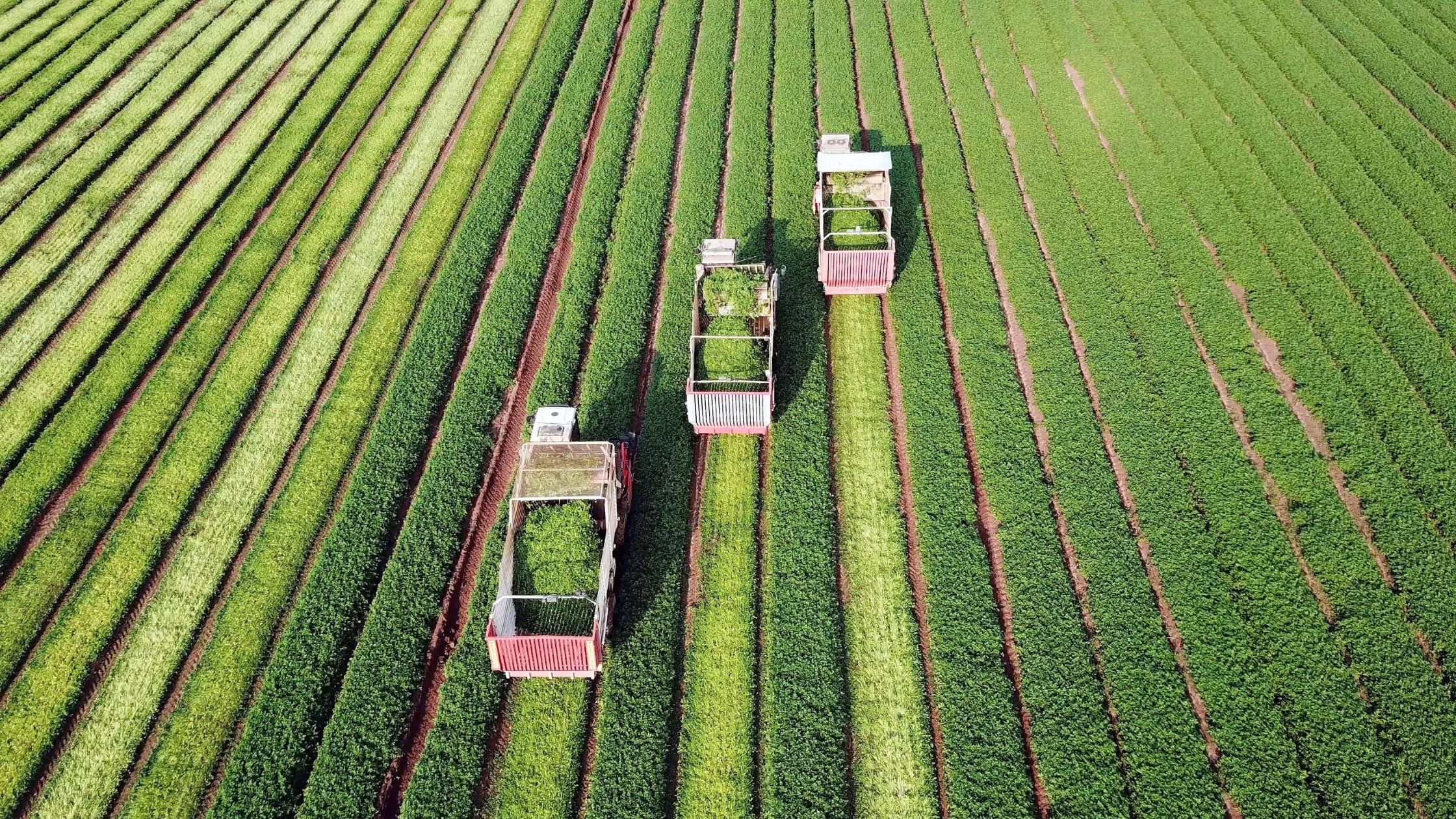
Southeast Asia’s agricultural sector presents a paradox for investors. The region has a large agricultural base, major global commodity production and growing pressure to improve productivity while adapting to climate change. Yet the characteristics that make the opportunity significant also make agricultural technology difficult to finance and scale.
The region’s agrifood systems face soil degradation, biodiversity loss, water pollution and climate-related risks, while smallholder farmers remain central to production. A June 2026 analysis by the ISEAS-Yusof Ishak Institute found that regenerative practices such as biofertilizers, agroforestry, biochar and precision agriculture could improve soil health and resilience, but adoption remains constrained by transition costs, limited advisory services, uncertain short-term returns and weak market incentives.
Agrifood technology is not an overlooked sector globally. Investors continue to deploy capital into agricultural biotechnology, automation, alternative proteins, farm management software and supply-chain technologies. What has changed is the standard investors apply to those businesses.
Agricultural startups operate in physical environments where product development can require multiple growing seasons, commercial validation can take years, and outcomes vary according to crop, soil, weather and farming practices. That makes the conventional venture model of rapid customer acquisition and relatively low marginal costs difficult to reproduce.
The distinction is becoming particularly relevant in Southeast Asia. The region’s agricultural technology opportunity is large, but investment is concentrated around businesses where commercial value can be demonstrated relatively quickly, including logistics, traceability, financial services and supply-chain infrastructure.
For technologies that operate directly on farms, the investment case is more complicated.
A biological input, for example, must demonstrate that it works in the field, generate sufficient economic benefit for the farmer, achieve repeat purchases and maintain viable margins while navigating manufacturing and regulatory requirements. That creates a longer chain between technological validation and investment returns.
Tropical agriculture creates a different technology problem
Agricultural biologicals illustrate the mismatch particularly clearly. Much of the industry’s historical development and investment has focused on temperate agricultural systems in North America and Europe. Southeast Asia, by contrast, has different crops, soil conditions, weather patterns, farming practices and farm economics.
Hester Spiegel, Founding Partner at Epic Angels, argued while conversing with AsiaTechDaily that this creates both an investment challenge and an opportunity:
“Absolutely. There is an interesting mismatch: tropical agriculture produces a huge share of the world’s rice, palm oil, cassava, rubber and sugarcane, yet much of the innovation and venture capital in agricultural biologicals has historically been directed toward temperate agriculture in the US and Europe.
“That makes tropical agriculture both an enormous challenge and, in our view, an overlooked investment opportunity. The solutions cannot simply be imported from Western markets. Tropical soils, crops, climate conditions, farming practices and farmer economics are different. Companies that build specifically for those realities can create very meaningful competitive advantages.”
The regional market already shows demand for biological products. Mordor estimates that crop nutrition accounted for nearly 60% of the Asia-Pacific agricultural biologicals market in 2025, while row crops represented more than 80% of the market.
But a large market does not automatically translate into venture-scale opportunity. The critical issue is whether companies can develop products suited to tropical conditions and then distribute them economically across fragmented farming markets.
Smallholders make the last mile expensive
Southeast Asia’s agricultural structure is one of the biggest differences between the region and the markets where many agritech business models were first developed. Smallholders operate across millions of farms with different plot sizes, crops and production practices. ISEAS notes that regenerative agriculture is highly knowledge-intensive and context-specific, while access to agricultural advisory services remains limited in many markets. For an agritech company, that creates a difficult commercial equation.
A technology may be scientifically effective, but the company still needs to reach farmers, demonstrate the benefit, provide technical support and convince growers to pay for the product. If each farmer requires a separate sales and advisory relationship, customer acquisition costs can quickly undermine the economics.
This is one reason partnership-based models are increasingly important. Agritech companies can work through cooperatives, food companies, distributors and other organizations that already have relationships with farmers. The investment implication is significant. Investors are not evaluating only whether a product works. They are evaluating whether the distribution system around the product can scale.
Investors need evidence beyond promising science
That is where the investment thesis becomes more demanding. Spiegel said institutional investors need several forms of evidence before agricultural biologicals can attract substantially more capital:
“For institutional capital to follow though, the sector needs more evidence. Investors need to see repeatable results from the field, attractive economics for farmers, reliable gross margins and scalable distribution – more than just promising science. They also need credible paths through regulation, manufacturing and working capital. Living Roots is interesting to us precisely because we are beginning to see that transition from promising technology to a repeatable commercial model.”
The sequence is important. For software, product-market fit can often be demonstrated through customer growth and recurring revenue. For agricultural biologicals, product-market fit requires evidence that a biological intervention produces a sufficiently consistent outcome across farms and seasons.
The economics then have to work for three different participants: the farmer, the distributor and the technology company. That is particularly difficult during the transition period. ISEAS notes that regenerative practices can require new equipment, seeds, cover crops and other upfront investments, while returns may not appear immediately. Farmers may also face short-term yield declines during the transition. Those risks make patient capital and de-risking mechanisms more important than they would be for a conventional software startup.
The financing gap extends beyond startups
The problem is larger than venture capital. Agriculture requires capital at multiple levels, from farm-level adoption to manufacturing infrastructure and distribution networks. Yet climate and agricultural finance remains heavily dependent on public and development institutions in emerging markets.
Southeast Asia is beginning to respond by developing financing mechanisms around climate-smart and regenerative agriculture. ISEAS has called for greater support for agri-biologicals, regional research into soil health and microbiology, shared metrics for measuring regenerative outcomes, farmer training and financial mechanisms that can reduce transition risk. The challenge is measurement as much as money. If investors cannot reliably compare soil health, yield improvements, input savings or carbon outcomes across projects, it becomes harder to price risk and allocate capital. The absence of consistent metrics therefore limits the development of an investable market. This is particularly important for biologicals, where performance can vary substantially by crop and location.
Southeast Asia may need a different agritech investment model
The result is a mismatch between what agriculture requires and what conventional venture capital is designed to provide. A typical technology startup seeks to minimize physical infrastructure and working capital. An agricultural technology company may need to invest in field trials, manufacturing, inventory, distribution and farmer education before revenue scales. That does not make the sector unattractive. It means the capital structure may need to evolve.
Spiegel believes the next stage of agritech investment in the region will increasingly focus on integrated systems rather than standalone products:
“I believe the next wave of agritech investment in this region will increasingly be about systems rather than individual products: combining biology, data, local manufacturing and precision agriculture. Once more companies demonstrate that these models can scale commercially, institutional capital will follow.”
That proposition is already visible in the broader regional ecosystem. Companies are increasingly combining agricultural inputs with data, financing, logistics and market access rather than treating technology as a standalone product. The same logic applies to biologicals. A microbial or biological formulation may be scientifically differentiated, but its commercial value depends on the surrounding system that gets it to farmers, measures its results and finances adoption.
The missing ingredient is investability
Southeast Asia therefore does not necessarily have an agricultural demand problem. It has an investability problem. The region has large agricultural markets and growing pressure to improve productivity and resilience. Its agricultural biologicals market is expanding, while policymakers are increasingly discussing regenerative agriculture and climate-smart production. But fragmented farms, uncertain farmer economics, regulatory differences and physical-world validation make the path from scientific innovation to scalable business substantially more difficult.
The next phase of investment will depend on whether companies can build a stronger evidence base across five areas: field performance, farmer economics, commercial repeatability, operational scalability and eventual investor returns.
If those conditions improve, Southeast Asia could become more than a large end market for agricultural technologies developed elsewhere. It could become a source of technologies designed specifically for tropical agriculture.
That is ultimately the investment opportunity. The region does not need capital simply because its agricultural market is large. It needs business models and financing structures capable of converting that agricultural scale into predictable, measurable and repeatable commercial outcomes. Until that happens, the gap between Southeast Asia’s agricultural conditions and its investment conditions will remain one of the region’s biggest agritech challenges.
Quick Takeaways
- Strong reputation is not translating into broad visibility: 61% of U.S. consumers find Japanese brands appealing, but recognition remains concentrated in established categories.
- Electronics and automotive lead: Japanese brands have 48% visibility in electronics and 47% in automotive, compared with only 22% in fashion and 14% in travel.
- Travel has the biggest discovery gap: 73% of U.S. consumers cannot identify a Japanese travel brand, pointing to a visibility challenge rather than a negative perception of Japanese products.
- Positive country-of-origin perceptions have limits: Consumers may associate Japan with quality, durability and innovation without connecting those attributes to specific brands outside familiar categories.
- Localization priorities are misaligned: 52% of U.S. consumers say product availability and clear English-language communication make international brands feel relevant, while only 33% of Japanese marketers prioritize store and channel availability.
- Gen Z offers a growth opportunity: Gen Z consumers are 1.3x more likely to find Japanese brands “very appealing,” suggesting existing affinity that marketers can convert into brand discovery.
- The broader challenge is media visibility: In a fragmented U.S. media environment, Japanese brands entering newer categories need sustained exposure across the channels where consumers actually discover products and brands.
Similar Articles