AsiaTechDaily – Asia's Leading Tech and Startup Media Platform

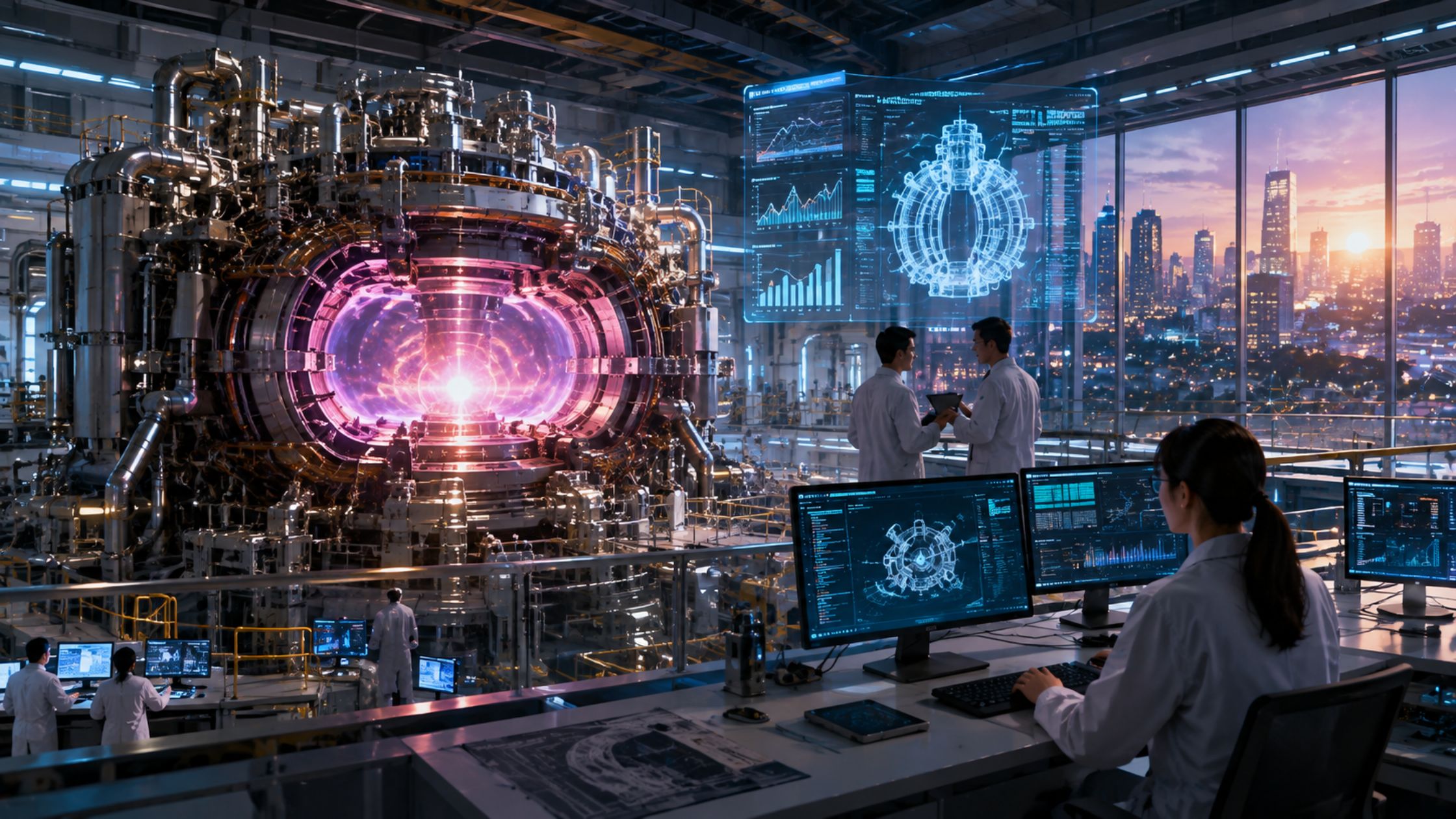
Fusion Energy Is Leaving the Lab. Can Startups Deliver the World’s Next Clean Energy Breakthrough?
 by
by

After decades as one of science’s most ambitious research pursuits, fusion energy is entering a new commercial phase. Venture-backed startups, governments, and industrial partners are racing to transform laboratory breakthroughs into scalable power infrastructure, but engineering, regulation, and economics may prove more challenging than the science itself.
For decades, fusion energy occupied a unique place in the global energy conversation. It promised virtually limitless carbon-free electricity, abundant fuel resources, and none of the long-lived radioactive waste associated with conventional nuclear fission. Yet despite enormous scientific progress, commercial fusion remained perpetually just beyond reach, confined largely to government laboratories and multinational research collaborations.
That narrative is beginning to change. Over the past several years, private investment in fusion startups has accelerated dramatically, with companies raising billions of dollars to move beyond experimental reactors toward commercial power plants. Governments are introducing regulatory frameworks tailored to fusion technologies, utilities are signing early partnerships with developers, and industrial manufacturers are preparing supply chains for an industry that, until recently, existed primarily in research papers.
The shift reflects more than growing optimism around clean energy. Rising electricity demand driven by artificial intelligence, industrial electrification, and energy security concerns has renewed interest in technologies capable of delivering reliable, carbon-free baseload power. According to the Fusion Industry Association, private fusion companies have collectively attracted more than US$9 billion in investment globally, while governments in the United States, Europe, Japan, China, South Korea, and the United Kingdom continue expanding public support for fusion research and commercialization. The question facing the industry today is no longer whether fusion belongs in the laboratory. It is whether startups can transform one of science’s greatest engineering achievements into a commercially viable business.
Fusion Is Entering Its Commercial Era
The current momentum surrounding fusion is fundamentally different from previous decades of scientific research. Instead of focusing solely on proving the physics, many companies are now working toward licensing, manufacturing, supply chain development, and commercial deployment. This transition marks a significant milestone for an industry that historically relied almost entirely on publicly funded research programs.
Recent developments illustrate how quickly the landscape is evolving. Commonwealth Fusion Systems recently secured an additional US$1 billion in funding while advancing plans for its first commercial fusion power plant in Virginia. Helion Energy has expanded manufacturing capacity after raising substantial private capital and signing a landmark power purchase agreement with Microsoft. Meanwhile, Type One Energy is progressing regulatory work with the Tennessee Valley Authority as it moves toward commercial deployment.
These milestones demonstrate that investors are increasingly evaluating fusion companies not only on scientific progress but also on their ability to build scalable businesses capable of supplying electricity to national grids. For founders, this represents an important shift. Scientific breakthroughs remain essential, but commercial success now depends equally on engineering execution, manufacturing capability, regulatory readiness, and long-term partnerships with utilities and governments.
Why Investors Are Looking at Fusion Differently
For much of its history, fusion struggled to attract venture capital because commercialization timelines extended well beyond traditional investment horizons. Today, that perception is changing. Several factors have reshaped investor sentiment, including advances in superconducting magnet technology, improved plasma confinement, stronger public-private collaboration, and growing confidence that commercial fusion systems may be achievable within the next decade.
Equally important is the global demand for reliable clean electricity. Artificial intelligence infrastructure, hyperscale data centers, advanced manufacturing, and industrial decarbonization are significantly increasing electricity consumption worldwide. While renewable energy continues to expand rapidly, governments and industries are also seeking stable, always-available sources of low-carbon power that complement intermittent renewable generation.
In an earlier conversation with AsiaTechDaily, Kid Parchariyanon of SeaX Ventures observed that fusion was beginning to transition beyond pure scientific research as both private and public investment accelerated.
“Fusion is starting to move from the research phase to the commercialization phase, with significant private investment accelerating development. We’re seeing this with Type One Energy, as they’re making strides in producing commercialized fusion energy. Beyond that, we’re even starting to see governments step up support as they recognize that fusion could be a critical part of the clean energy discussion in the coming years.”
His observation has become increasingly relevant as governments and institutional investors begin viewing fusion not simply as a scientific experiment but as a potential component of long-term energy infrastructure.
The Hardest Problems Are No Longer Scientific
Although recent breakthroughs have strengthened confidence in fusion’s technical feasibility, commercialization presents an entirely different set of challenges. Operating a successful fusion power plant requires far more than sustaining plasma reactions. Companies must manufacture highly specialized superconducting magnets, develop materials capable of withstanding intense neutron exposure, secure reliable fuel supplies, satisfy evolving regulatory requirements, and construct facilities that can operate economically for decades.
Unlike many software startups, fusion companies cannot iterate rapidly after launch. Development cycles extend over many years, capital requirements reach billions of dollars, and every engineering milestone requires extensive validation before commercial deployment. As a result, competitive advantage increasingly depends on execution rather than scientific discovery alone. The startups leading today’s fusion race are not simply publishing research. They are building manufacturing ecosystems, establishing industrial partnerships, and preparing for large-scale infrastructure deployment.
Another defining feature of fusion’s evolution is the growing role of governments in enabling commercialization rather than simply funding research. The U.S. Department of Energy has introduced roadmaps designed to accelerate commercial fusion development during the 2030s. At the same time, regulators are developing licensing frameworks specifically tailored to fusion technologies, recognizing that they present different safety and operational characteristics from conventional nuclear fission.
Across Asia, governments continue expanding investments in advanced energy technologies as part of broader industrial and energy security strategies. Japan has long maintained leadership in fusion research through international collaborations such as ITER. South Korea continues investing in superconducting fusion research while strengthening domestic capabilities in advanced manufacturing. China has significantly expanded its fusion research infrastructure, and India continues supporting long-term fusion development through both international partnerships and domestic scientific programs.
This growing public support reflects an important reality: commercial fusion is unlikely to emerge through private investment alone. Its development increasingly depends on sustained collaboration between startups, research institutions, utilities, manufacturers, and governments.
Can Startups Build the Next Energy Platform?
Fusion companies are no longer competing solely against scientific uncertainty. They are competing against the realities of infrastructure deployment. To succeed, startups must simultaneously demonstrate technological reliability, commercial viability, regulatory compliance, manufacturing scalability, and long-term cost competitiveness. Achieving all of these objectives will require capabilities that extend well beyond scientific excellence.
Several priorities now define the industry’s next phase:
- Scaling manufacturing while reducing production costs.
- Building utility partnerships and securing grid integration.
- Establishing resilient supply chains for specialized components.
- Navigating regulatory approval across multiple markets.
- Demonstrating economically competitive electricity generation.
Ultimately, fusion’s commercial future will depend not on isolated laboratory achievements but on the industry’s ability to integrate science, engineering, finance, and infrastructure into a sustainable business model.
Fusion energy has entered one of the most important transitions in its history. Decades of scientific research have laid the foundation, but the industry’s future will now be determined by commercialization. The companies leading this new phase are no longer defined solely by their ability to sustain fusion reactions. They are increasingly judged by their capacity to manufacture complex systems, navigate regulation, secure industrial partnerships, and deliver reliable electricity at commercial scale.
For Asia’s startup ecosystem, the implications extend well beyond energy. Fusion represents the maturation of deep-tech entrepreneurship itself, where success depends not only on groundbreaking research but also on patient capital, multidisciplinary collaboration, and long-term execution. As electricity demand continues to rise alongside artificial intelligence, industrial electrification, and global decarbonization efforts, the next defining breakthrough may not be proving that fusion works. It may be proving that startups can build an entirely new generation of clean energy infrastructure around it.
Quick Takeaways
- Fusion energy is transitioning from scientific research to commercial development. Venture-backed startups are increasingly focusing on building commercial power plants, manufacturing capabilities, and utility partnerships rather than solely proving the underlying science.
- Private investment and government support are accelerating the sector. Fusion companies have collectively attracted billions of dollars in funding, while governments are introducing regulatory frameworks and commercialization roadmaps to support the industry’s next phase.
- The biggest challenge is no longer achieving fusion, but commercializing it. Startups must overcome engineering, manufacturing, supply chain, regulatory, and economic hurdles before fusion can become a practical source of large-scale electricity.
- Exclusive: In an earlier conversation with AsiaTechDaily, Kid Parchariyanon of SeaX Ventures observed that fusion energy was beginning to shift from the research phase toward commercialization, driven by growing private investment and increasing government recognition of fusion’s long-term role in the clean energy transition.
- AI and industrial electrification are strengthening fusion’s business case. The rapid growth of data centers, advanced manufacturing, and electrified industries is increasing demand for reliable, carbon-free baseload power, creating new opportunities for fusion developers.
- Governments are becoming commercialization partners, not just research sponsors. Public agencies are increasingly supporting licensing, regulatory development, demonstration projects, and industry collaboration to accelerate the deployment of commercial fusion technologies.
- Fusion represents one of the ultimate deep-tech commercialization challenges. Success will depend not only on scientific innovation but also on a startup’s ability to execute across engineering, infrastructure, manufacturing, financing, and long-term industrial partnerships.
Similar Articles