AsiaTechDaily – Asia's Leading Tech and Startup Media Platform

Econili Secures Vynn Capital Investment to Strengthen Battery Recycling Operations
 by

The investment brings Econili’s total funding to RM8 million, with the Malaysian recycler planning to use the latest capital to secure additional battery feedstock and increase processing throughput at its existing facilities.
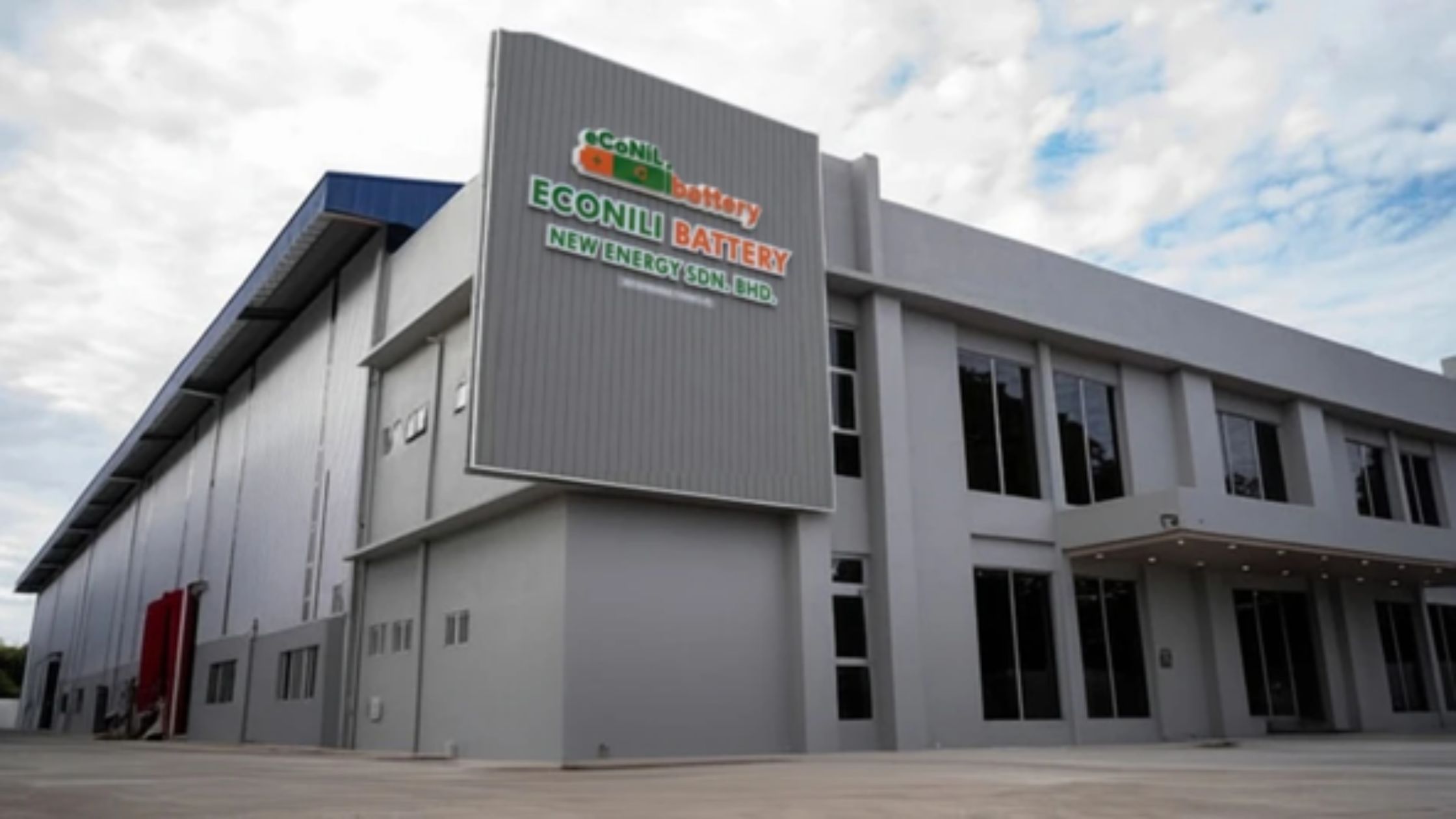
Vynn Capital has led an extension funding round in Econili Battery New Energy, a Malaysian lithium-ion battery recycler and black-mass refinery, bringing the company’s total funding raised to RM8 million as it seeks to increase processing throughput and strengthen its access to battery feedstock. The latest investment amount was not disclosed. The funding follows an earlier round led by Kumpulan Modal Perdana (KMP) and will be deployed as working capital to secure additional end-of-life batteries and battery production scrap for Econili’s existing processing facilities in Ipoh, Perak.
The investment comes as Malaysia develops its battery recycling industry alongside the expansion of electric vehicles and battery manufacturing. The country’s growing industrial ecosystem could create opportunities for recovering lithium, nickel and cobalt, although the availability of recyclable materials and the economics of processing remain important considerations for operators.
Malaysia generated 13,743.15 metric tonnes of battery waste classified under SW103 between 2021 and 2025, according to figures reported by Bernama citing the Ministry of Natural Resources and Environmental Sustainability. The category includes several battery types and is not limited to electric vehicle batteries.
Econili targets higher throughput at existing facilities
Econili is a lithium-ion battery recycler and the country’s first licensed mineral recovery plant. Its operations in Ipoh include battery treatment capacity of 24,000 metric tonnes and critical-mineral recovery capacity of 12,000 metric tonnes.
The company processes end-of-life lithium-ion batteries and battery manufacturing scrap to recover materials including lithium, nickel and cobalt. These minerals are used in the production of cathode active materials, which form a key component of batteries for electric vehicles and energy-storage systems.
The company’s processing model combines mechanical shredding with hydrometallurgical refining. Mechanical processing produces black mass, an intermediate material containing valuable battery metals, which is subsequently refined to recover usable mineral compounds. Econili’s two-stage process produces lithium carbonate, mixed hydroxide precipitate and lithium phosphate, according to the company. It says the recovered materials are supplied to Tier-1 global supply chains through a cost-efficient operating model.
The company also claims its operating costs are 30% to 50% lower than those of Western peers. However, it has not disclosed comparative operating data, recovery yields or customer-level sales figures to independently substantiate the claim.
Battery recycling depends on feedstock availability
Recyclers require consistent access to batteries and production scrap, while collection, transportation, sorting and processing determine how efficiently material can move through the supply chain. Working capital can help operators secure feedstock, but the commercial impact depends on the quantity and quality of material available and the economics of recovering it.
Malaysia’s battery recycling market is still developing. Bernama reported estimates that approximately 40,000 electric vehicle batteries could require recycling in Malaysia by 2030, rising to 330,000 by 2040 and 870,000 by 2050. The projections assume an eight-year battery lifecycle and are based on EV registration trends. These estimates point to a longer-term opportunity rather than an immediate supply of recyclable EV batteries. Battery manufacturing scrap is also important because it can provide recycling feedstock before vehicles reach the end of their operating lives.
Econili’s stated focus on both battery waste and production scrap reflects this distinction. Its ability to secure material from different sources will be relevant to how effectively it uses its existing capacity.
Malaysia’s role in critical-mineral recovery
The expansion of battery manufacturing and electric mobility is increasing attention on the recovery of critical minerals. Recycling offers a way to return materials from discarded batteries and manufacturing waste into industrial supply chains, reducing the need to rely exclusively on newly mined resources.
Southeast Asia is also seeking a larger role in battery processing and supply chains as manufacturers diversify sourcing and production locations. Malaysia’s industrial base and proximity to regional battery markets provide a potential advantage, although developing a competitive recycling industry will require reliable feedstock, commercially viable processing and compliance with environmental regulations.
Econili is among the operators handling scheduled battery waste under Malaysia’s SW103 framework. The company says it is one of five licensed battery-recycling operators compliant with the protocol. Its hydrometallurgical process is designed to recover minerals for reuse in battery-related manufacturing. Econili says the method enables high recovery rates while consuming less energy and producing lower emissions than conventional processes. Those environmental performance claims have not been independently quantified in the announcement. The company aims to develop Malaysia into a black-mass processing hub, recovering critical materials and supplying them back into Asia’s battery value chain.
Vynn Capital sees opportunity in mobility and circular supply chains
Vynn Capital’s investment reflects its focus on companies operating across mobility, travel and supply chains. The firm sees battery recycling as part of the broader transition toward circular industrial systems, where materials can be recovered and reused rather than discarded.
Speaking with AsiaTechDaily, Vynn Capital Founding and Managing Partner Victor Chua said:
“Econili represents the kind of company we believe can redefine how industries think about growth and sustainability. As Southeast Asia continues to develop into one of the world’s most important economic regions, the transition towards a more circular economy is becoming both an environmental imperative and a significant commercial opportunity. We see tremendous potential for Econili to build solutions that can create meaningful impact at scale, particularly across the mobility ecosystem. What gives us further conviction is the strength and execution capabilities of the founding team. We are excited to partner with them as they build from Malaysia and pursue a much larger regional opportunity.”
The investment also reflects the importance of execution in an industry where future demand does not automatically translate into available material or profitable operations.
Econili was founded by Dr. Jayden Goh, whom the company describes as a pioneer in lithium-ion battery recycling since 2014. The company says its recovered materials are supplied to global supply chains, although it has not named customers or disclosed sales volumes.
Goh said:
“With global end-of-life battery volumes projected to surge from 1.1 million tonnes today to over 20 million tonnes by 2040, the demand for localised, cost-efficient refining capacity is virtually limitless. Econili is currently looking for strategic opportunities and expanding its capital footprint, actively bringing external investment into Malaysia to position the nation as a premier hub for sustainable battery recycling innovation.”
Econili’s latest funding is directed toward strengthening its existing operations rather than announcing a new plant or a disclosed increase in processing capacity.
Quick Takeaways
- Vynn Capital led an extension funding round in Econili Battery New Energy, bringing the Malaysian battery recycler’s total funding to RM8 million.
- The latest investment amount remains undisclosed. Econili will use the capital as working capital to secure additional battery feedstock and increase processing throughput at its existing facilities in Ipoh, Perak.
- Econili reports annual battery treatment capacity of 24,000 metric tonnes and critical-mineral recovery capacity of 12,000 metric tonnes.
- The company recovers lithium, nickel and cobalt from end-of-life batteries and battery manufacturing scrap using mechanical processing and hydrometallurgical refining.
- Malaysia generated 13,743.15 metric tonnes of SW103 battery waste between 2021 and 2025, highlighting the country’s developing battery recycling market.
- Vynn Capital’s investment reflects growing interest in battery recycling as Southeast Asia strengthens its mobility, circular economy and critical-mineral supply chains.
- Econili’s expansion will depend on securing reliable feedstock, increasing facility utilization and maintaining commercially viable mineral recovery operations.
Similar Articles