AsiaTechDaily – Asia's Leading Tech and Startup Media Platform

Epic Angels Invests in Pakistan’s Oraan as Fintech Expands From Savings Circles to Gold and Overseas Markets
 by
by

The undisclosed investment, joined by returning investors WaveMaker and i2i Ventures, will support Oraan’s gold savings product, gold inventory and expansion into new markets through technology licensing.
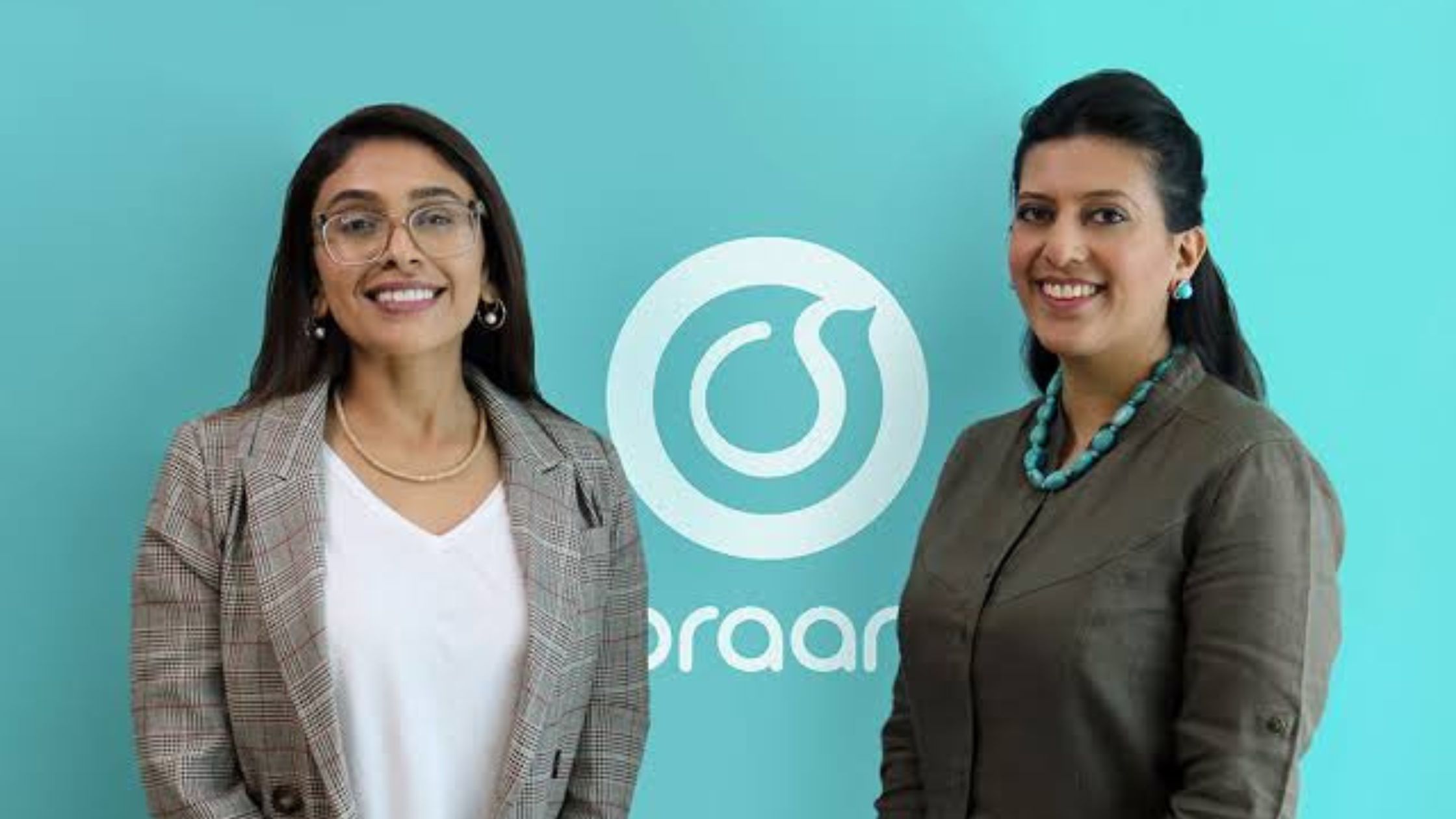
Epic Angels has invested in Oraan, a Pakistan-based fintech that digitizes informal women-led savings circles, known locally as committees, and has expanded its offering into credit and gold savings. The investment amount was not disclosed. WaveMaker and i2i Ventures, both existing investors in Oraan, also participated in the round. According to the company, the new capital will be used to expand its gold savings product, build its gold inventory and support expansion into new markets. The investment also marks a return for Epic Angels, which first backed Oraan in 2021.
Oraan was founded by Halima Iqbal in 2018 after her experience in investment banking in Canada and encountering barriers to accessing formal financial services in Pakistan. Its model is based on committees, a form of rotating savings and credit association, or ROSCA, in which members contribute a fixed amount regularly and take turns receiving the pooled sum. For people outside the formal banking system, the mechanism can provide access to a lump sum without relying on conventional credit histories.
Oraan says an estimated 60 million Pakistani women already participate in such informal savings circles, with billions of dollars moving through the system each year. The company’s proposition is therefore less about persuading consumers to adopt an unfamiliar financial product and more about moving an existing financial behavior onto a digital platform.
That distinction is particularly relevant in a country where formal financial access remains limited. The World Bank estimates that Pakistan had about 105.7 million adults without an account in 2024. The broader policy environment also points to the size of the financial-inclusion challenge. In June 2025, the Asian Development Bank approved a $350 million Women-Inclusive Finance Sector Development Program for Pakistan, including $300 million in policy-based financing and $50 million for credit facilities and guarantees. The program aims to reach more than two million women.
From savings circles to gold
Oraan is now extending the model beyond pooled savings. The company launched its gold savings product in November 2025, allowing customers to purchase fractional gold through price-locked monthly installments. Oraan says the product has grown nearly 75-fold during its first seven months. The new investment will allow the company to expand the product and build its gold inventory.
The move also places Oraan within a broader shift toward digital and fractional access to gold as a savings or investment product in Asian markets. However, digital gold platforms have increasingly faced questions around custody, audits, disclosures and consumer protection, making the infrastructure behind such products as important as the digital interface.
For Oraan, gold represents a different financial proposition from committees. While the savings-circle model provides access to pooled liquidity, gold introduces an asset-ownership component to the platform. Iqbal described the company’s approach while conversing with AsiaTechDaily:
“Women in Pakistan were never waiting for financial products, they were waiting for the financial system to catch up to how they already save. Committees/ROSCAs gave us their trust, gold gave them ownership, and now our technology is travelling to markets far beyond Pakistan. This round lets us do more of all three. Epic Angels backed us in 2021 when few believed a women-led fintech in Pakistan could scale, and having them double down means everything,” said Iqbal, founder and CEO of Oraan.
Oraan is also taking its technology beyond Pakistan
The company’s next stage of expansion is not limited to adding products in its home market. Oraan said it has signed an agreement to license its savings and credit platform to a bank in the region, potentially bringing its technology to millions of customers in another market. The company has not disclosed the bank or the country involved.
The licensing approach could allow Oraan to expand its technology without recreating its entire consumer and operational infrastructure in every market. For a fintech built around a financial behavior that is deeply connected to local culture and trust, that distinction could become important as it moves internationally. The underlying challenge is that financial inclusion remains highly uneven across Asia, while financial behaviors, regulation and banking infrastructure vary significantly between countries. A technology platform can potentially be transferred more easily than the local operating model surrounding it.
Why Epic Angels is investing again
Epic Angels, which describes itself as the largest female-only investment collective investing across APAC and Latin America, has more than 850 female angel investors and says it has made 52 investments to date. It positions its network around backing early-stage, female-led companies and providing capital alongside a global investor community.
Maaike Doyer, founding and managing partner at Epic Angels, said the investment thesis was centered on the trust already embedded in Oraan’s model:
“Access to credit for women in Pakistan isn’t really a technology problem, it’s a trust problem, and Oraan solved it by digitizing something millions of women already use and believe in, rather than trying to replace it. We first backed Oraan in 2021, and we’re proud to continue supporting Halima and her team as they bring savings, credit, and now gold to more women, and we look forward to supporting their growth by leveraging our global collective of investors,” said Doyer.
Epic Angels’ return is also notable given the evolution of Oraan since its previous investment. In 2021, Oraan raised $3 million in a round led by Wavemaker Partners and Zayn Capital, with i2i Ventures among the participating investors.
A broader test for Pakistan’s fintech ecosystem
Oraan’s latest investment comes as Pakistan continues to address a substantial financial inclusion gap through both policy and private-sector initiatives. ADB has identified limited access to finance as a major barrier to women’s economic participation and has supported programs aimed at expanding credit and financial services. The challenge for fintechs is increasingly moving beyond simply creating digital access. Products also need to fit existing financial behaviors, establish trust and provide sufficient utility for customers who may have limited interaction with traditional banks.
Oraan’s strategy reflects that shift. Its original model digitized an informal savings mechanism, its gold product adds an asset-based savings option, and its licensing agreement suggests the company is beginning to treat its technology itself as an exportable product. For Pakistan’s fintech ecosystem, the development illustrates a broader possibility: some of the most scalable digital financial products may not come from replacing informal systems with conventional banking products, but from building technology around the ways people already save, borrow and build financial security.
The next test for Oraan will be whether that model can retain its relevance as it moves from a highly localized financial behavior into new markets with different regulations, financial habits and customer expectations.
Quick Takeaways
- Epic Angels has invested in Pakistan-based fintech Oraan, alongside returning investors WaveMaker and i2i Ventures. The investment amount was not disclosed.
- The new funding will support Oraan’s gold savings product, gold inventory and international expansion.
- Oraan digitizes committees, or rotating savings circles (ROSCAs), an informal savings mechanism widely used by Pakistani women.
- Financial inclusion remains a major challenge in Pakistan: only 11.9% of women had an account in 2024, compared with 42.3% of men, according to World Bank data.
- Oraan says an estimated 60 million Pakistani women participate in informal savings circles, highlighting the scale of the financial behavior it is targeting.
- Gold is becoming a new layer of Oraan’s offering. Launched in November 2025, its fractional gold savings product has reportedly grown nearly 75-fold in seven months.
- Oraan has also signed an agreement to license its savings and credit technology to a regional bank, potentially extending the model to millions of customers outside Pakistan.
- Epic Angels is returning as an investor, having first backed Oraan in 2021 when the fintech raised $3 million.
- The investment highlights a broader fintech opportunity: digitizing trusted informal financial practices rather than forcing underserved consumers into entirely new financial behaviors.
- Oraan’s international expansion will test whether a model built around Pakistan’s savings culture can be adapted to different regulations, financial behaviors and banking systems across Asia.
Similar Articles