AsiaTechDaily – Asia's Leading Tech and Startup Media Platform

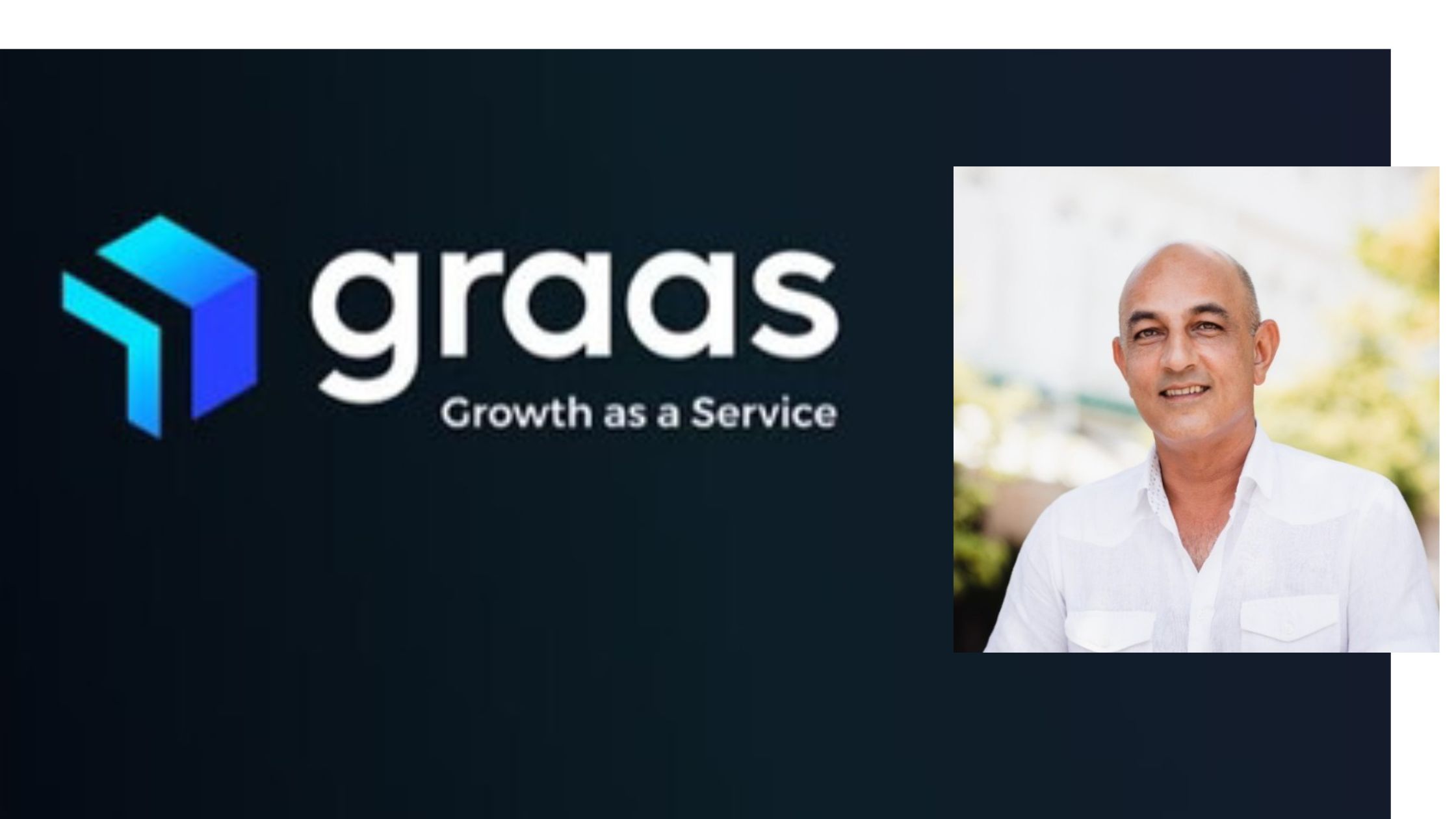
Graas Raises $17M Series B, Acquires Trustana to Build Data Layer for Agentic Commerce
 by
by

Singapore-based retail AI company will combine Trustana’s product data capabilities with its Commerce Knowledge Graph as retailers move from AI experimentation toward agent-driven commerce
Singapore-headquartered retail commerce AI company Graas has raised US$17 million in Series B funding and acquired Singapore-based product data platform Trustana, combining product data enrichment with its Commerce Knowledge Graph as it expands its push into agentic AI for enterprise retail.
The funding round was led by LemmaTree, an investment firm founded by Temasek, with participation from Integra Partners, Tin Men Capital, The Xander Group, Incred Wealth and Orzon. The acquisition brings Trustana’s product enrichment and data unification capabilities into Graas’ Commerce Knowledge Graph, which the company is positioning as the foundation for its Agent Foundry, a platform for deploying AI agents across commerce workflows.
Retailers have accumulated large volumes of product, customer, inventory and transaction data, but those datasets often sit across different systems and formats. Trustana was built around this product-data problem. Its platform can ingest information from ERPs, PIMs, supplier feeds, PDFs and images, then unify and enrich the resulting product records into structured profiles. The company also provides data lineage and source-level context for enriched attributes.
That capability becomes more relevant as retailers move toward agentic commerce. An AI agent recommending a product needs more than a product name and description. It may need to understand specifications, category, availability, pricing, customer context and relationships between products before it can make a useful recommendation.
Graas is betting on the combination of data and agents
The acquisition gives Graas access to a product-data layer that it can connect with its existing Commerce Knowledge Graph. The company says enterprise customers will be able to combine product data with customer and transaction information and deploy agents capable of conversing, recommending and selling through text, voice and vision.
Ashwin Puri, Co-founder and Chief Business Officer of Graas, told AsiaTechDaily that the company’s competitive position will depend on combining these components rather than relying on a single technology.
“It’s the combination, not any single piece. Big tech can build agent infrastructure, but agents are only as good as the data feeding them. Our edge is unifying product, now enriched by Trustana, customer, and transaction data into one knowledge graph, ontology layer, and domain-specific agents trained on live commerce workflows across categories like agriculture, pharma, fashion, and consumer durables. That vertical depth and proprietary transaction data are harder to replicate than the agent tooling layer itself.”
The strategy puts Graas in a different position from companies building general-purpose AI models or agent infrastructure. Rather than competing directly on the underlying model, the company is betting that vertical commerce data and domain-specific workflows can become the more defensible layer.
That distinction is increasingly relevant as major technology companies build their own agentic commerce infrastructure. Deloitte describes the emerging model as one in which agents can increasingly operate across discovery, recommendations, inventory, pricing, fulfillment and customer service, shifting competitive advantage toward connected data and interoperable systems.
From ecommerce automation to an enterprise commerce graph
The acquisition also represents the latest step in Graas’ evolution. Founded in 2022 by Ashwin Puri and Prem Bhatia, Graas initially focused on data and automation for ecommerce businesses. In 2025, Graas raised more than US$9 million in a pre-Series B round led by Tin Men Capital to expand Agent Foundry and develop autonomous agents for ecommerce operations. At the time, Graas said the platform was designed to help brands make decisions across sales, advertising, pricing, margins and inventory.
The latest round and Trustana acquisition broaden that strategy toward the underlying data infrastructure required by enterprise commerce agents. Trustana’s product platform already handles use cases including product categorization, data enrichment, channel preparation and AI-ready product content. Its platform is designed to create structured product data that can be used across commerce channels and AI agents. The combination therefore moves Graas beyond simply building agents that act on existing commerce data. It is also seeking to control more of the process through which that data is unified, enriched and made usable.
$17M will fund technology and regional expansion
Graas said the new capital will be focused primarily on growth after the company turned profitable in the fourth quarter. While conversing with AsiaTechDaily, Puri said the company plans to invest in its technology foundation while expanding its commercial teams across several markets.
“With the company turning profitable in Q4, the capital we raised in this round is to focus on growth. Key investment areas for us will be tech investments in our Knowledge Graph and Ontology and scaling our GTM and sales teams across India, South East Asia, Australia and the Middle East. Our goal is to 2X the business by 2028.”
The geographic expansion is also supported by the acquisition. Graas’ existing customer base includes Schneider Electric, DKSH, Mars Wrigley, Puma, Victoria’s Secret, Unilever, Canon, PI Industries and Haleon, while Trustana brings relationships with multi-brand retailers including David Jones, Mitre 10, Chemist Warehouse and Toys”R”Us.
Together, the companies’ customer bases extend across Southeast Asia, Australia and the Gulf Cooperation Council region, giving Graas a broader enterprise footprint as it expands its commercial operations.
The data problem could determine whether agentic commerce scales
The acquisition reflects a broader challenge facing enterprise AI. Building an agent that can generate a response is increasingly straightforward. Building one that can act reliably on a company’s actual commercial environment is more difficult. Retailers operate across product catalogs, supplier systems, inventory platforms, customer databases and transaction systems. If those systems contain inconsistent or incomplete information, an agent can inherit those weaknesses.
Trustana’s technology is therefore strategically relevant to Graas because product information represents one of the first layers an agent needs to understand. Trustana says its platform can maintain product attributes with provenance, confidence and source context, while connecting information from multiple enterprise systems. The question for Graas is whether connecting that product layer with customer and transaction data will create a meaningful performance advantage over retailers building agentic capabilities directly on large technology platforms.
The next phase is proving the data advantage
Graas now has two immediate challenges following the funding and acquisition: integrating Trustana’s product-data capabilities into its broader commerce platform and demonstrating that the combined system produces measurable outcomes for enterprise customers. The company’s stated target is to double the business by 2028 while expanding its technology and go-to-market operations across four regions. Its customer base also gives it exposure to multiple commerce categories, from FMCG and apparel to pharmaceuticals, agriculture and consumer durables.
The broader market is moving in the same direction. AI agents are beginning to influence how products are discovered, compared and recommended, while retailers are preparing for a gradual transition toward more autonomous commerce. But the industry remains far from a world where consumers routinely delegate entire purchases to AI. That leaves Graas with a relatively specific proposition to prove. The value of its platform will depend less on whether it can build another AI agent and more on whether better-connected product, customer and transaction data enables those agents to make better decisions and deliver measurable commercial results. The Trustana acquisition strengthens the data foundation behind that strategy. The next test is whether that foundation can become a durable advantage as retailers, cloud providers and other technology companies compete to define the infrastructure of agentic commerce.
Quick Takeaways
- Graas has raised US$17 million in Series B funding led by LemmaTree, an investment firm founded by Temasek.
- The round also includes Integra Partners, Tin Men Capital, The Xander Group, Incred Wealth and Orzon.
- Graas has simultaneously acquired Singapore-based Trustana, an AI-native product data platform.
- The acquisition brings Trustana’s product enrichment and data unification capabilities into Graas’ Commerce Knowledge Graph.
- Graas plans to use the combined data layer to strengthen its Agent Foundry, enabling AI agents to converse, recommend and sell through text, voice and vision.
- The company says the key advantage is not the AI agent alone, but the combination of product data, customer data, transaction data, ontology and domain-specific agents.
- Graas plans to invest the new capital in its Knowledge Graph and ontology technology and expand its go-to-market and sales teams across India, Southeast Asia, Australia and the Middle East.
- Graas says it became profitable in Q4 and is targeting 2X business growth by 2028.
- The acquisition expands Graas’ customer base with retailers including David Jones, Mitre 10, Chemist Warehouse and Toys”R”Us, alongside existing customers such as Schneider Electric, DKSH, Mars Wrigley, Puma, Victoria’s Secret, Unilever, Canon and Haleon.
- The combined business will have a broader footprint across Southeast Asia, Australia and the GCC.
- Trustana’s product-data technology addresses a major challenge for enterprise AI: incomplete, fragmented and inconsistent product information across systems such as supplier catalogs, ERPs and PIMs.
- The broader market is moving toward agentic commerce, but retailers still face challenges moving AI projects from experimentation into production.
- The key question for Graas: whether its connected product, customer and transaction data can give its AI agents a meaningful advantage over general-purpose agent infrastructure being developed by Big Tech.
Similar Articles