AsiaTechDaily – Asia's Leading Tech and Startup Media Platform

Cambodia Startup Showcase Yields Early Deals, Tests Ecosystem Depth
 by
Byungho Lim
by
Byungho Lim

A joint initiative by Khmer Enterprise, 2080 Ventures, and Seedstars brought together 19 startups in Phnom Penh, with outcomes pointing to improving investor access and early signs of cross-border traction.
Startup showcases are common across emerging markets, often aimed at giving founders visibility. In Cambodia, however, limited access to investors and international networks has meant that such events do not always translate into funding or market expansion.
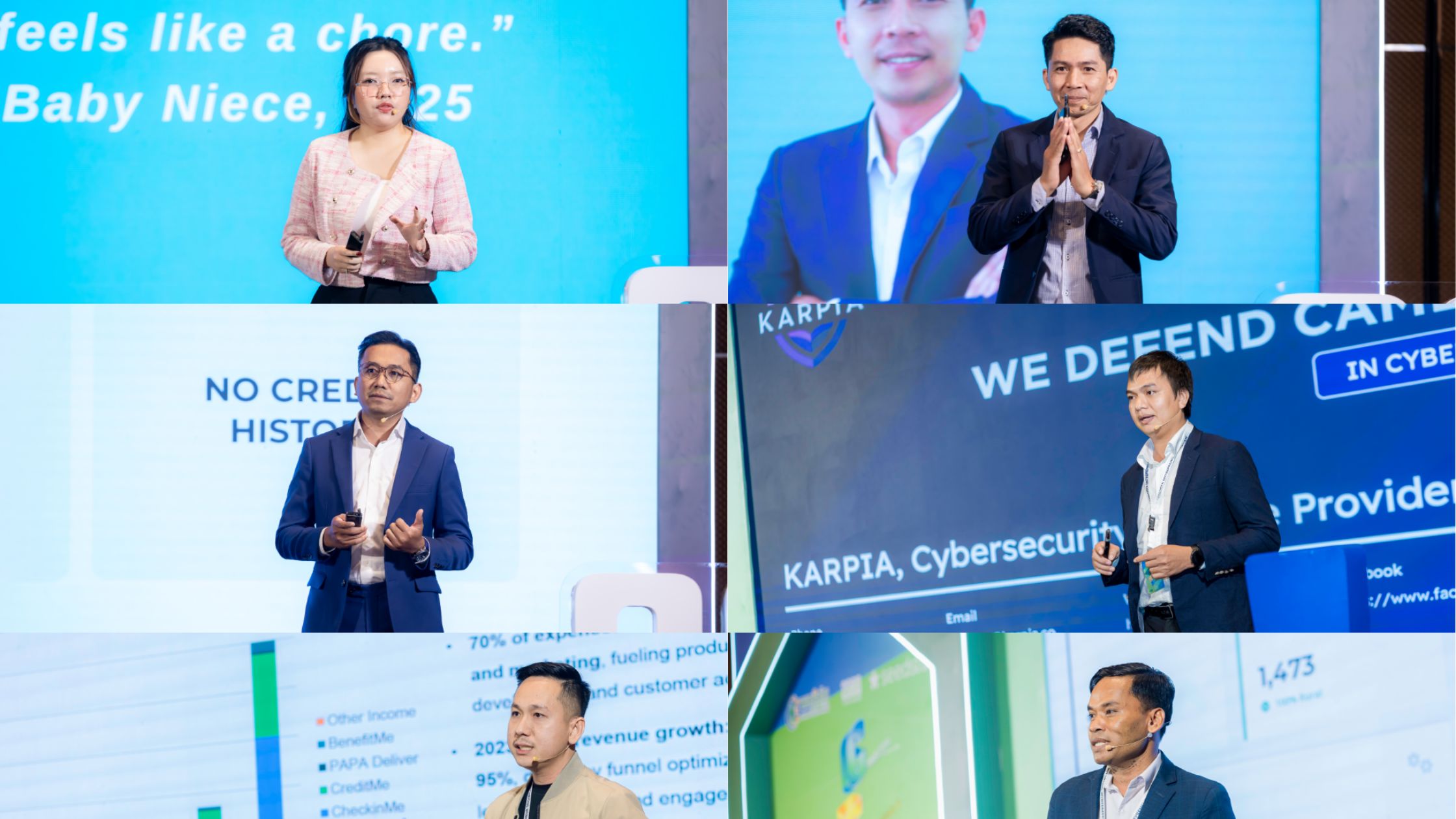
The Cambodia Entrepreneur Showcase, held in Phnom Penh, attempted to address that gap by combining pitching sessions with direct investor engagement. Nineteen startups from programs including the Cambodia Startup Launchpad and Cambodia Accelerator Program participated across sectors such as fintech, agritech, SaaS, and healthtech.
The format reflects a broader effort within the ecosystem to move beyond visibility-driven events toward more outcome-oriented engagement.
Two developments stood out from the showcase.
- OneDash secured an initial investment from 2080 Ventures, indicating some level of investor confidence in early-stage Cambodian startups.
- Kingdom Hub Agro reached an export agreement worth approximately $500,000 with a European partner, pointing to growing, though still limited, international market access for local SMEs.
These outcomes remain modest in scale but are notable in context. Cambodia’s startup ecosystem has historically seen fewer publicly visible deals compared to regional peers such as Vietnam or Indonesia.
Addressing Structural Gaps
Organizers positioned the showcase as a way to reduce fragmentation between founders and investors—a commonly cited constraint in Cambodia’s ecosystem.
“Today’s showcase marks a milestone for Cambodia’s startup ecosystem, connecting founders with investors where investments and export deals take place,” said H.E. Dr. Chhieng Vanmunin, CEO of Khmer Enterprise.
While such initiatives can improve access, structural challenges remain. Early-stage ecosystems often face constraints around investor depth, mentorship availability, and pathways to follow-on funding.
Role of International Partners
Khmer Enterprise, established by the Royal Government of Cambodia, plays a central role in coordinating ecosystem development. Its mandate includes deploying financial and non-financial support, mobilising resources, and working with partners to strengthen entrepreneurship and innovation capacity across the country.
On the private sector side, 2080 Ventures operates as a venture-building and acceleration firm focused on helping early-stage startups improve execution, prepare for investment, and expand across borders. Its involvement in Cambodia reflects a growing interest among international investors in identifying early-stage opportunities in frontier markets.
Meanwhile, Seedstars brings a broader global network, with operations spanning more than 90 emerging markets. Its programs typically focus on connecting startups to capital, mentorship, and international exposure, positioning local founders within a wider global ecosystem.
Together, these actors illustrate how Cambodia’s startup development is being shaped through a combination of government-led support and externally driven expertise, rather than purely organic market growth.
The involvement of external partners such as 2080 Ventures and Seedstars reflects an ongoing reliance on international networks to support ecosystem development. 2080 Ventures, which announced its investment in OneDash during the event, is positioning itself as an early-stage partner focused on helping startups scale toward ASEAN markets.
“Our mission is to turn Cambodian early-stage startups into scalable ventures ready for ASEAN and beyond,” said Timur Daudpota, Founding Partner at 2080 Ventures.
Seedstars, which operates across multiple emerging markets, has been supporting Cambodian startups through accelerator programs focused on business development and investor connections.
“The founders who came through this program are building real businesses that address real market needs,” said Tom Sebastian, International Ventures Ambassador to Seedstars.
The showcase also highlighted a group of startups selected for further regional exposure, including participation in international events. While this may improve visibility, it does not necessarily guarantee funding outcomes.
For Cambodia, the key challenge remains pipeline consistency—ensuring that more startups can reach investment-ready stages and sustain growth beyond initial support programs.
At the same time, expanding into international markets, as seen with Kingdom Hub Agro, will depend on factors such as product competitiveness, regulatory readiness, and operational scale.
Gradual Progress, Not Yet a Breakthrough
The Cambodia Entrepreneur Showcase points to incremental progress rather than a clear inflection point for the ecosystem. The emergence of an investment deal and an export contract indicates that some startups are beginning to move beyond early-stage validation into commercially relevant activity.
However, these outcomes remain isolated rather than systemic. A single investment or export agreement, while meaningful, does not yet signal a consistent pipeline of startups capable of attracting capital or expanding into international markets at scale.
For Cambodia, the next phase of development will depend less on one-off successes and more on repeatability. This includes:
- A steady flow of startups reaching investment readiness
- Increased participation from regional and institutional investors
- More companies demonstrating the ability to scale beyond the domestic market
Without these conditions, early wins risk remaining exceptions rather than indicators of broader momentum.
In that context, the showcase reflects a transition underway—from ecosystem building, which focuses on programs and participation, toward early signs of commercial validation, where startups begin generating revenue, securing funding, and entering new markets.
Whether this transition holds will depend on the ecosystem’s ability to sustain these outcomes over time. That, in turn, will require deeper capital pools, stronger founder support systems, and clearer pathways from early traction to scalable growth.
Quick Takeaways
- The Cambodia Entrepreneur Showcase brought together 19 startups, aiming to improve direct access to investors and partners in a still-fragmented ecosystem.
- The event produced two tangible outcomes: an investment in OneDash by 2080 Ventures and a $500,000 export deal to Europe by Kingdom Hub Agro.
- These developments suggest early signs of commercial traction, though deal activity remains limited compared to more mature Southeast Asian markets.
- The initiative reflects a broader effort led by Khmer Enterprise, alongside global partners, to build investor confidence and strengthen startup pipelines.
- International players such as Seedstars and 2080 Ventures continue to play a key role in providing capital access, mentorship, and cross-border exposure.
- Sustainability remains the key question—whether isolated wins can translate into consistent deal flow, follow-on funding, and regional scaling.
Similar Articles