AsiaTechDaily – Asia's Leading Tech and Startup Media Platform

Toku Takes Makimoto Beyond Transcription with New Speech AI Orchestration Tool
 by

The Singapore-headquartered CX platform has launched a visual builder that connects transcription, summarisation and call tagging, allowing developers to create and test speech AI workflows while keeping processing within Singapore.
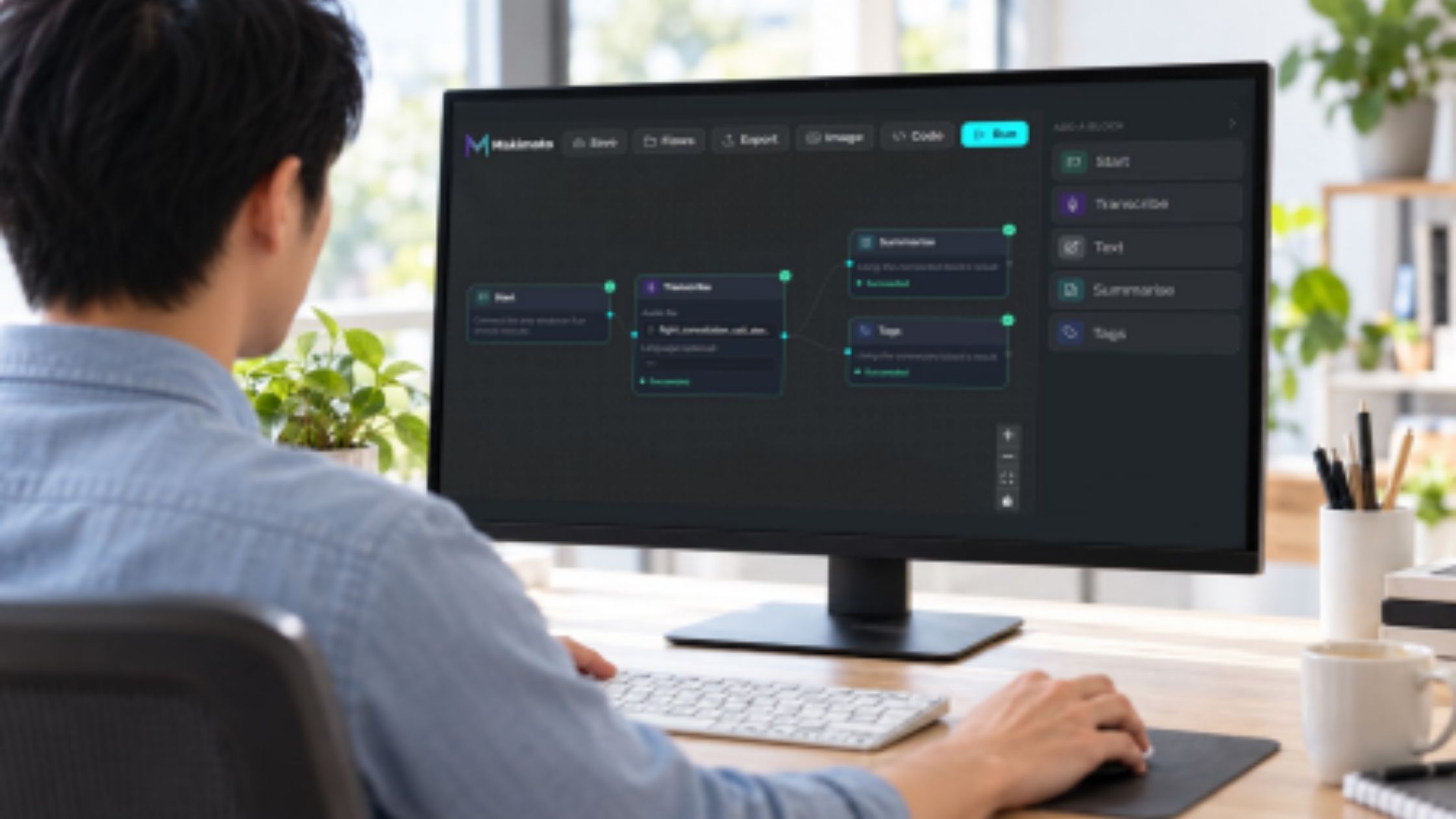
Singapore-headquartered Toku Ltd. (SGX: TKU) has launched Makimoto Flows, a visual builder that allows developers to assemble and customise speech AI pipelines through a single interface. Announced on October 21, the tool extends the company’s Makimoto initiative beyond transcription by connecting transcription, summarisation and call-tagging capabilities into configurable workflows, with every processing stage running in Singapore. Makimoto Flows allows developers to build speech AI pipelines by connecting individual blocks on a visual canvas. Its current capabilities include Transcribe, which converts recorded audio into text using Toku’s Kawa API; Summarise, which generates a topic and short summary from the transcript; and Tags, which classifies calls across seven categories, including customer sentiment.
Developers can test each stage using recorded calls, inspect individual outputs and rerun components after making adjustments to compare results. The Chained Analysis starter template combines the three capabilities into a ready-to-use workflow. Developers can also export completed pipelines as ready-to-run Python code and integrate them into their own applications.
The company identifies call recaps and call triage as potential applications. By allowing developers to configure how different stages interact, Flows provides an orchestration layer between individual AI services and the applications built around them.
This distinction is important as enterprise speech AI requirements become more complex. Transcription provides a textual record of a conversation, but businesses often need additional processing to identify recurring issues, classify customer interactions and generate structured information for customer service operations. Connecting these capabilities into a single workflow can reduce the need to build and maintain separate integrations for each stage.
Data residency and control over processing
A central feature of Makimoto Flows is that every processing step takes place in Singapore. Audio recordings, transcripts and the resulting analysis therefore remain within the country under the managed service’s current architecture. This addresses an important consideration for enterprises adopting AI to process customer conversations. Recordings may contain personal, financial or commercially sensitive information, making data storage, processing locations and third-party access relevant to technology procurement decisions.
Singapore’s Personal Data Protection Act does not impose a blanket requirement for all personal data to remain within the country. However, its Transfer Limitation Obligation requires organisations transferring personal data overseas to ensure that prescribed standards of protection are maintained. In this context, in-country processing can give businesses greater control over data flows and simplify certain governance considerations. For Toku, Singapore-based processing is also part of Makimoto’s broader positioning as conversational AI infrastructure designed for Asia-Pacific markets, where regulatory and data-handling requirements vary.
Building a composable AI architecture
Makimoto Flows builds on an initiative Toku introduced in April 2026 to develop composable conversational AI infrastructure for the region. Its development has progressed through several releases. Kawa, a Singapore-hosted transcription API, became available on July 1, establishing the initiative’s transcription layer. Summarisation and tagging endpoints followed in September, with Flows now providing a visual interface to combine these capabilities.
The architecture reflects a broader challenge for enterprises adopting AI: models and providers continue to evolve, making flexibility an important consideration when building long-term systems. A composable approach allows developers to modify individual components without necessarily redesigning the entire workflow.
“Developers should have control over how their voice AI works, from the models they use to the way each stage connects. That is the principle behind Makimoto. Flows puts the orchestration layer in front of them: they can build a pipeline, run a recorded call through it and see what each step produces before anything reaches their customers. Models will keep changing. The ability to compose them, and to know where they run, is what lasts,” said Thomas Laboulle, Founder and CEO of Toku, while conversing with AsiaTechDaily.
The company plans to extend the pipeline with audio preparation capabilities, beginning with noise filtering. These additions are intended to give developers greater control over how recordings are processed before transcription.
Makimoto complements Toku’s existing customer experience platform, which brings together voice, messaging and digital channels for enterprises operating across multiple markets. The initiative is operated through Makimoto Technology Pte Ltd, a wholly owned subsidiary of the Toku Group. The launch also comes as Toku expands its enterprise operations internationally. In October, the company announced a contact-center deployment for delivery platform Glovo across 21 markets in Europe, Central Asia and Africa, followed by an expansion of its foodpanda support operations into Cambodia and Laos. These deployments illustrate the multi-market enterprise environment in which Toku is developing its customer experience and AI capabilities.
Makimoto Flows is available through makimoto.ai. Developers can create a free account, use the Chained Analysis template and test sample or personal call recordings. Each account includes 1,000 free minutes, and feedback can be submitted directly through the developer portal. As enterprises increasingly seek to turn customer conversations into structured business information, the ability to connect speech recognition with analysis and classification will become an important part of AI infrastructure. For Toku, Makimoto’s next phase will depend on whether its composable architecture can give developers the flexibility to adapt workflows while maintaining control over how and where customer data is processed.
Quick Takeaways
- Toku has launched Makimoto Flows, a visual builder that lets developers create and customise speech AI pipelines.
- The platform connects transcription, summarisation and call tagging, allowing developers to test individual stages and compare outputs.
- All processing takes place in Singapore, keeping audio recordings, transcripts and analysis within the country.
- Developers can export workflows as Python code and integrate them into applications such as call recaps and call triage.
- Makimoto Flows extends Toku’s open-source initiative beyond transcription, following the launches of Kawa and its summarisation and tagging APIs.
- Toku plans to introduce audio preparation capabilities, beginning with noise filtering, as part of Makimoto’s development roadmap.