AsiaTechDaily – Asia's Leading Tech and Startup Media Platform

Living Roots Raises Fresh Backing to Scale Biological Crop Inputs Across Tropical Agriculture
 by
by

Thailand-based agritech startup expands into India and Indonesia as investors increasingly look at biological inputs and regenerative agriculture for Southeast Asia’s fragmented farming systems
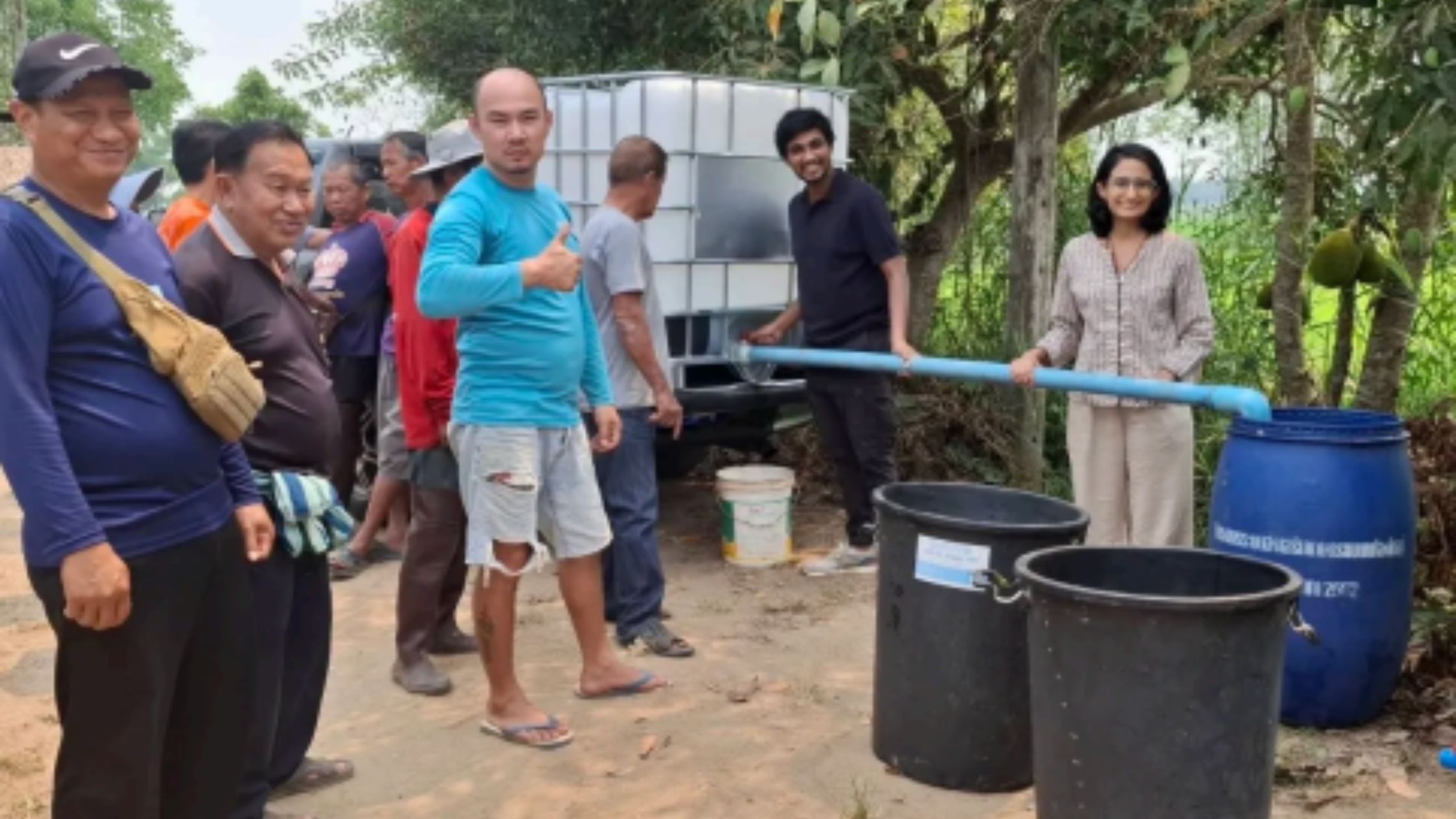
Thailand-based agritech startup Living Roots has secured continued backing from Epic Angels to scale biological crop inputs across Southeast Asia. The investment is the investor collective’s second investment in the company, following a 2025 bridge round. The new capital will be used to expand the team, increase field deployment and build local manufacturing capacity.
Living Roots has deployed its products across more than 5,000 acres and works with more than 1,000 smallholder farmers in Thailand, India and Indonesia. The company reports average yield improvements of 25% to 30% compared with conventional fertilizer programs among participating farmers.
Living Roots is a Thailand-based agritech company that designs biological crop inputs for tropical agriculture through its AI platform, Hypha. The company manufactures its products locally from regional feedstock and distributes them through partnerships with agribusinesses, cooperatives and food companies across Southeast Asia and India. For press related queries, please contact [email protected]. Living Roots is focused on a segment of agricultural technology that has historically received less attention than conventional crop inputs. The company says much of the investment in agricultural biologicals has focused on temperate row crops in the US and Europe, while tropical farming systems have remained comparatively underserved.
The distinction matters because agricultural conditions vary significantly by crop, soil and climate. Living Roots was founded by Avika Narula and Abhi Agarwal, two computer scientists who moved from software engineering into farming in Thailand after encountering soil degradation firsthand. The company develops biological crop inputs, which it calls “crop protocols,” using its Hypha AI platform to adapt formulations according to crop type, soil conditions and growth stage.
Its products are manufactured locally from regional feedstock and distributed through agribusinesses, cooperatives and food companies rather than through direct sales to individual farmers. That partnership-led approach is particularly relevant in Southeast Asia, where fragmented smallholder markets can make direct customer acquisition expensive and operationally difficult.
The broader regional evidence points to both an opportunity and a challenge. ISEAS identifies biofertilizers, precision agriculture and other biological and regenerative practices as potential tools for improving soil fertility and reducing dependence on chemical inputs. However, it also highlights transition costs, limited advisory services, uncertain short-term returns and weak market incentives as barriers to adoption.
From field validation to commercial scale
For Living Roots, the latest investment represents a shift from proving the technology toward scaling its deployment. Avika Narula, co-founder and COO of Living Roots, said the company has expanded into two additional countries since Epic Angels’ initial investment and has increasingly worked with agribusinesses and enterprises that can reach farmers through established networks.
“Epic Angels backed us when we were still proving the science worked in the field. Since then we have expanded into two new countries and started working with agribusinesses and enterprises across the global south, who reach far more farmers than we ever could on our own. Having Epic Angels come back for a second round tells us we are building the right thing, and this one lets us put our crop protocols in front of many more farmers.”
The company’s route to market is significant because scaling biological agriculture requires more than developing an effective formulation. Manufacturing, farmer education, distribution and consistent field performance all have to work together. That is also where the investment thesis becomes more demanding. Hester Spiegel, Founding Partner of Epic Angels, told AsiaTechDaily that Living Roots had already crossed several hurdles that typically make agritech investments difficult.
“Agritech is hard, and we don’t underestimate that. What makes Living Roots attractive is that they have already crossed several of the hurdles that typically make us cautious: they have a product that works in the field, customers willing to pay for it, and a scalable route to market. Since our first investment in 2025, we have watched them grow to US$1.65 million in annual revenue, demonstrate average yield improvements of around 35% across more than 5,000 acres, and expand from Thailand into India and Indonesia. That execution gave us confidence to invest again.”
Spiegel’s reference to approximately 35% yield improvement differs from the 25% to 30% figure cited in the company’s latest announcement. The figures should therefore be treated as separate claims rather than combined into a single performance metric.
The economics of scaling regenerative agriculture
The biggest question for Living Roots is whether its field-level results can remain consistent as deployment expands across different crops and markets. Spiegel identified several risks that Epic Angels considered before investing again, including manufacturing requirements, working capital, customer concentration, consistency of field results and the regulatory and operational complexity associated with international expansion. Those challenges reflect wider constraints facing regenerative agriculture in Southeast Asia. ISEAS notes that many regenerative practices are knowledge-intensive and highly dependent on local conditions. Farmers can also face higher transition costs and uncertain returns, while agricultural policies in some markets continue to favor conventional input-intensive systems.
For biological input companies, this creates a different scaling equation from software. A product must demonstrate repeatable agronomic outcomes while also achieving manufacturing efficiency and building distribution economics that work for farmers and agricultural enterprises. Living Roots’ partnership model attempts to address part of that equation. Rather than building a direct sales organization for thousands of individual smallholders, it works through organizations that already have relationships with farmers. Epic Angels considers that model one of the company’s advantages because it can expand distribution without requiring Living Roots to acquire every farmer itself.
A larger regional investment opportunity
The timing of the investment reflects a broader shift in Southeast Asian agriculture. Climate change is increasing pressure from droughts, floods and heatwaves, while soil degradation and inefficient resource use are threatening long-term agricultural productivity, according to the FAO. At the same time, the region is beginning to develop investment frameworks around climate-smart agriculture. The US$2.6 billion pipeline identified by six Southeast Asian governments does not directly represent funding for biological inputs, but it indicates the scale of capital being considered for agricultural resilience.
For Living Roots, the immediate task is narrower: expand its field operations, strengthen local manufacturing and establish that its biological crop protocols can deliver commercially repeatable results across multiple markets. The second investment from Epic Angels suggests that the company has made enough progress to justify another round of capital. But the larger test will come with scale. Tropical agriculture is highly diverse, and the barriers to regenerative adoption extend beyond technology to farmer economics, distribution, regulation and access to financing. If Living Roots can maintain its reported field performance while navigating those constraints, its expansion could provide a useful test case for whether biological crop inputs can move from localized trials toward broader commercial adoption across Southeast Asia.
Quick Takeaways
- Living Roots has secured fresh backing from Epic Angels, marking the investor’s second investment in the Thailand-based agritech startup.
- The company plans to use the new capital to expand its team, increase field deployment and develop local manufacturing capacity.
- Living Roots has deployed its biological crop inputs across 5,000+ acres and works with 1,000+ smallholder farmers across Thailand, India and Indonesia.
- The company reports 25% to 30% average yield improvements compared with conventional fertilizer programs among participating farmers.
- Epic Angels’ Hester Spiegel separately cited around 35% average yield improvement across more than 5,000 acres, so the two figures should be treated as separate reported metrics.
- Living Roots uses Hypha, an AI engine that combines a knowledge graph built from 2 million+ scientific papers, protein-structure models and 1.2 million field data points, according to co-founder Avika Narula.
- Hypha uses plant sap and soil diagnostics to identify field-level limitations and inform formulations based on crop, soil condition and growth stage. Human experts finalize formulations and field trials determine whether they work.
- Living Roots argues that its data-driven approach can address a limitation of conventional biological formulation, which often relies on relatively static products developed for temperate agricultural systems.
- The company distributes through agribusinesses, cooperatives and food companies, rather than relying solely on direct farmer acquisition.
- Epic Angels said it was encouraged by Living Roots’ field performance, paying customers and scalable route to market, as well as reported annual revenue of US$1.65 million.
- The major scaling risks include manufacturing capacity, working capital, customer concentration, consistency of field results, regulation and execution across new markets.
- Southeast Asia presents a significant but difficult market for regenerative agriculture, with smallholders accounting for roughly four out of five farms in the region.
- The broader opportunity is moving beyond replacing conventional fertilizers. The key question is whether biological inputs can deliver consistent agronomic and economic results across highly variable tropical farming conditions at commercial scale.
Similar Articles