AsiaTechDaily – Asia's Leading Tech and Startup Media Platform


Thailand’s Amity Robotics Raises US$7 Million to Scale Physical AI Across Hospitality and Retail
 by
by

Backed by East Ventures, 500 Global, and AlteriQ Global, the funding will accelerate the expansion of Amity Robotics’ AI-powered concierge platform and support the launch of its first mobile robot as physical AI gains commercial traction across global markets.
Thailand-based Amity Robotics has announced the close of a US$7 million seed round comprising equity and debt financing to expand its physical AI platform. The equity portion of the round was led by East Ventures, with participation from 500 Global, while the debt financing was led by AlteriQ Global.
The capital will support the company’s ambition to build a globally competitive physical AI and robotics company from Thailand while accelerating commercial deployments of its AI-powered concierge platform across Southeast Asia and international markets. While generative AI has largely been associated with chatbots and digital assistants, physical AI is emerging as a new area of enterprise adoption where AI systems interact directly with people in real-world environments.
At the center of Amity Robotics’ platform is ARC Base, a static AI concierge kiosk designed for hotels, shopping malls, and other high-traffic venues. The platform combines conversational AI with the company’s proprietary Robotic Operating System to provide multilingual customer assistance while enabling businesses to automate repetitive frontline interactions.
The company said ARC Base is now deployed across more than 30 properties in Singapore, Thailand, Malaysia, Indonesia, Hong Kong, the UAE, and Saudi Arabia, with its first customer deployment in Europe scheduled for July. Its customers include major shopping mall operators such as Pavilion Kuala Lumpur, Siam Piwat, The Mall Group, and Pacific Place Jakarta, alongside global hospitality brands including IHG Hotels & Resorts, Accor, and Shangri-La Hotels and Resorts.
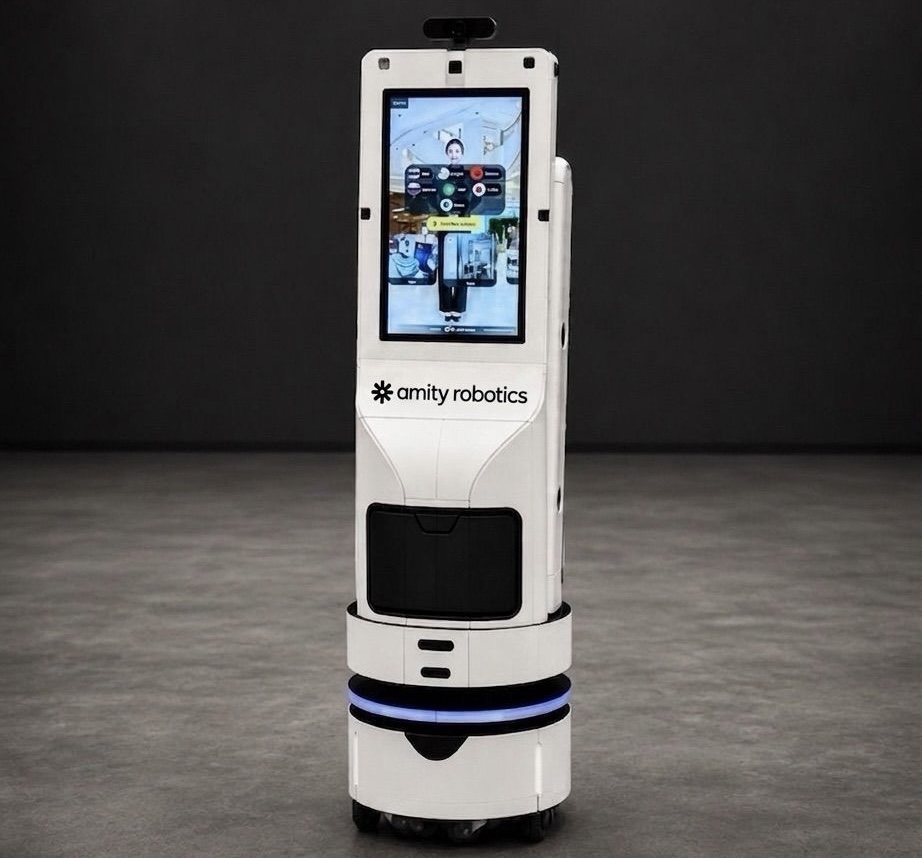
Unlike many robotics companies that remain in pilot phases, Amity Robotics is already deploying its technology in commercial environments where customer interaction, multilingual communication, and service consistency are critical.
Why Physical AI Is Gaining Momentum
The funding comes as enterprises increasingly look beyond digital AI assistants and explore AI applications capable of supporting physical operations. Hospitality, retail, airports, and other public venues continue to face labor shortages, rising customer service expectations, and growing demand for multilingual assistance. These operational challenges are creating new opportunities for AI systems that can support employees while maintaining consistent service around the clock.
While conversing with AsiaTechDaily, Lionel Chin, Chief Operating Officer of Amity Robotics, said advances in AI capabilities and changing workforce dynamics have created the right conditions for broader commercial adoption.
“We believe the technology and the need have finally lined up. AI can now handle the messiness of real environments, including multiple languages, interruptions, and unscripted conversations. At the same time, hospitality and retail are facing labor shortages they cannot simply hire their way out of.
While chatbots and phone assistants are convenient, they are still not close to the human experience customers expect. A physical AI concierge that can greet a guest in their own language at midnight, answer questions accurately, and free staff to focus on higher-value work fundamentally changes the economics of operating a physical space.”
His comments reflect a broader shift taking place across enterprise AI, where organizations are increasingly evaluating how intelligent systems can augment frontline operations rather than simply automate digital workflows.
Expanding Beyond Hospitality
The company’s roadmap extends beyond hotels and shopping malls. Amity Robotics is preparing to launch ARC Move, its first mobile robot, which will build upon the company’s existing AI platform by actively approaching, assisting, and guiding visitors throughout large commercial properties. Alongside its proprietary Robotic Operating System, the company is also investing in Edge AI technologies that enable faster response times and greater autonomy by processing intelligence closer to the device itself.
According to Chin, hospitality and retail represent only the beginning of a much larger opportunity for physical AI.
“Anywhere large numbers of people move through a space and need services on the spot offers significant opportunities, including transport hubs, healthcare, aged care, and public spaces. The common thread is not the industry itself. It is the pattern of high visitor volumes, repetitive frontline interactions, and workforces that cannot scale fast enough to meet demand.
Hospitality and retail are our starting points, not the ceiling. We are already engaging with convention centers and metro stations to support their customer service requirements.”
The expansion into these sectors reflects a growing recognition that physical AI could play a broader role across public-facing industries where customer assistance, navigation, and information services remain labor intensive.
Building a Robotics Company From Southeast Asia
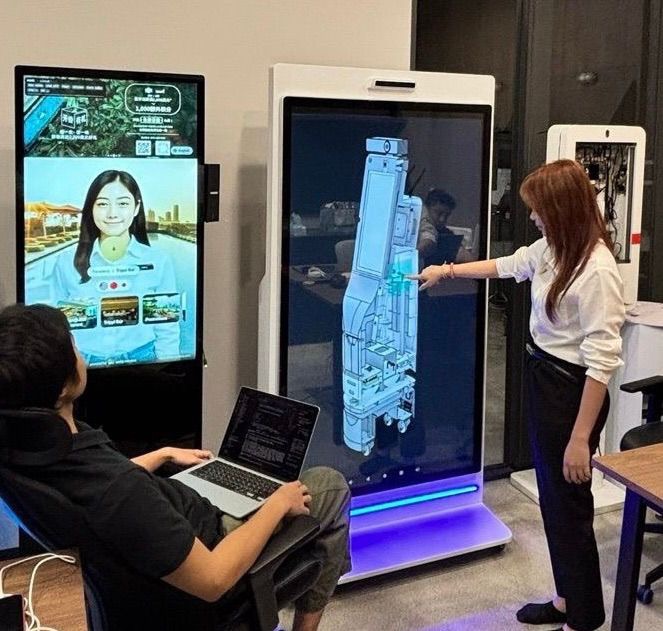
The investment also highlights Southeast Asia’s growing role in developing globally competitive AI technologies. Amity Robotics designs and assembles its own robotic systems while developing proprietary software that powers voice interactions, movement, and customer engagement. The company is affiliated through a common major shareholder with AI company Amity, which recently raised US$100 million in Series D financing, although the two businesses operate independently. According to the company, the new capital will support product development, deepen integrations with existing customers, expand into new markets with similar multilingual and labor dynamics, and strengthen operational capabilities.
While conversing with AsiaTechDaily, Chin said long-term success will be measured not only by geographic expansion but also by customer adoption and sustained operational value.
“Our priorities over the next 12 to 18 months are to deepen the product where we already win, expand into markets with similar frontline labor and multilingual dynamics, and scale the team without compromising quality.
We want to increase the utility of our platform by continuing to improve our offering for existing customers. Success is not simply about deploying more robots. It is about proving that each deployment delivers measurable value and that customers continue to expand their use of the platform rather than churn. Customer renewal and expansion are what define real scale.”
Physical AI Enters Its Commercial Phase
For years, physical AI remained largely confined to research laboratories and demonstration projects. Today, improving AI models, advances in edge computing, and increasing demand for automation are enabling robotics companies to move into commercial deployment across industries where customer interaction and operational efficiency are equally important.
Amity Robotics’ latest funding reflects growing investor confidence that physical AI is entering a new stage of market maturity. Rather than focusing solely on experimental robotics, investors are increasingly backing companies that have demonstrated commercial adoption and are building platforms capable of scaling across multiple industries and international markets.
As enterprises continue integrating AI into both digital and physical environments, the next chapter of artificial intelligence may be defined not only by smarter software but also by intelligent systems that interact directly with people in the spaces where they work, shop, travel, and stay.
Quick Takeaways
- Thailand-based Amity Robotics has raised US$7 million in seed funding, with equity led by East Ventures and participation from 500 Global, alongside debt financing from AlteriQ Global, to accelerate the development of its physical AI platform.
- The company’s AI concierge platform, ARC Base, is already deployed across more than 30 properties in seven markets, serving major shopping malls and global hotel brands as physical AI moves beyond pilot projects into commercial deployment.
- Amity Robotics plans to expand its platform with ARC Move, a mobile AI robot designed to assist and guide customers in large public spaces, while continuing to invest in its proprietary Robotic Operating System and Edge AI technologies.
- Physical AI is gaining momentum across hospitality, retail, and other high-traffic environments, driven by labor shortages, multilingual customer service needs, and growing demand for AI-powered operational support.
- The investment underscores Southeast Asia’s growing role in enterprise AI and robotics, as regional startups increasingly develop commercially deployed physical AI solutions for global markets rather than focusing solely on digital AI applications.
Similar Articles