AsiaTechDaily – Asia's Leading Tech and Startup Media Platform

Hyundai’s Go Green Hackathon showcases youth-led climate innovation beyond the classroom
 by
by

The fifth edition of Hyundai’s annual Go Green Hackathon brought together its largest cohort of students to date to develop climate adaptation solutions, reflecting a broader shift toward collaborative innovation between industry, academia, and government.
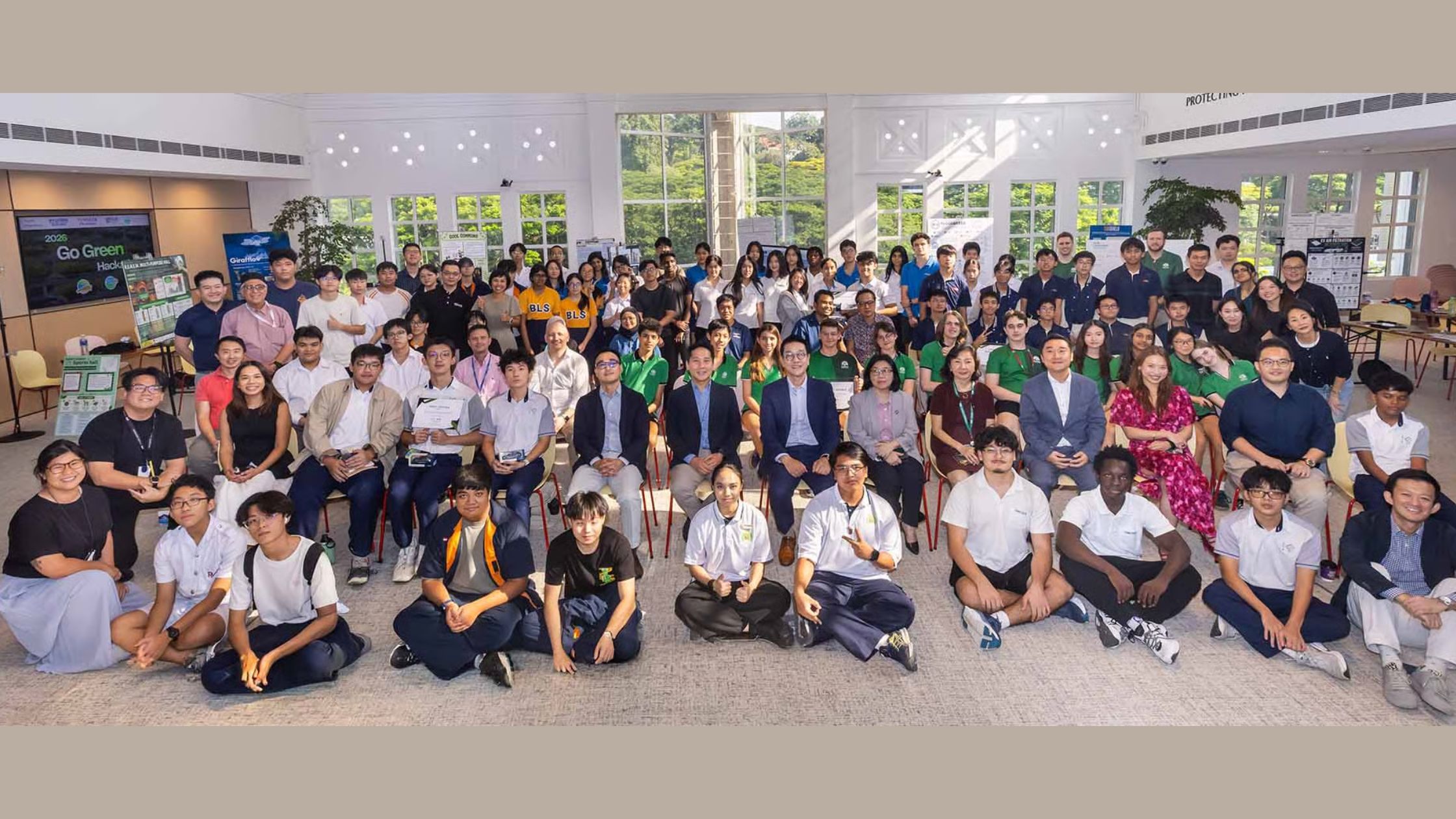
Hyundai Motor Group Innovation Center Singapore (HMGICS) and Hyundai CRADLE Singapore recently concluded the fifth edition of their annual Go Green Hackathon, bringing together a record 91 students across 25 teams from nine local and international schools to develop practical solutions for climate adaptation. Held for the first time at Temasek Shophouse, the program was organized in conjunction with Singapore’s Go Green SG 2026 campaign, in partnership with Temasek Foundation and with support from the National University of Singapore (NUS).
Unlike previous editions, this year’s hackathon centered on climate adaptation, challenging students to rethink how community spaces and future mobility solutions can help cities respond to rising temperatures, flooding, and other climate-related risks. Participants spent two months developing concepts that addressed two key challenges: designing multi-purpose public spaces that double as heat adaptation measures and transforming vehicles into mobile safe spaces during extreme weather events.
The initiative comes as Singapore places greater emphasis on climate resilience through its Year of Climate Adaptation and the development of its first National Adaptation Plan, following findings from the Third National Climate Change Study that underscore the growing impact of extreme weather on communities and infrastructure. Against this backdrop, the hackathon reflects a broader shift in how corporations, governments, and academic institutions are collaborating to explore practical responses to climate-related challenges.
While corporate hackathons have become common across the technology sector, Hyundai says its program is intended to serve a broader purpose than student engagement or corporate social responsibility. In an exclusive conversation with AsiaTechDaily, HMGICS Chief Executive Officer Dr. Park Hyun Sung said the initiative forms part of the organization’s long-term strategy to cultivate future talent while encouraging youth-led innovation that addresses real-world urban resilience and mobility challenges.
Beyond a CSR initiative
While corporate hackathons have become increasingly common, HMGICS says the program is designed to be more than an employee engagement or corporate social responsibility initiative. During an exclusive conversation with AsiaTechDaily, Dr. Park Hyun Sung, Chief Executive Officer of HMGICS, said the hackathon has evolved into the organization’s flagship innovation and education program.
“The Hackathon is much more than a one-off CSR or education initiative. It is HMGICS’s flagship innovation and education program that reflects our commitment to growing alongside Singapore by nurturing and empowering youth, driving innovation with community impact, and encouraging youth-led ideas that contribute to public safety, resilience, and sustainability.
Now in its fifth edition, the program has expanded beyond traditional mobility topics to address broader societal and environmental challenges, providing a practical platform for students to collaborate with public agencies, academia, and industry mentors to transform real-world concerns into actionable concepts that may help shape future urban and mobility solutions.”
The comments reflect a broader trend in corporate innovation. Rather than relying solely on internal R&D or venture investments, companies are increasingly building open innovation ecosystems that connect students, researchers, startups, public institutions, and industry experts to explore emerging technologies and societal challenges.
For Hyundai, the hackathon complements a wider innovation strategy. HMGICS serves as the Group’s global testbed for advanced manufacturing, robotics, artificial intelligence, and software-defined factory technologies, while Hyundai CRADLE Singapore works with startups developing next-generation mobility solutions through corporate venture and open innovation programs.
Turning climate challenges into practical solutions
Participants worked with mentors from HMGICS and NUS throughout the two-month program before presenting their solutions to a panel of judges from government, industry, and academia. Projects were evaluated on relevance, feasibility, innovation, and potential impact.
Among the winning concepts were HeatSync, developed by students from the Institute of Technical Education College Central, which proposed a terracotta-based evaporative cooling shelter for public spaces, and License to Chill from the German European School Singapore, which introduced smart adaptive vehicle windows designed to reduce cabin temperatures during extreme heat. Other winning teams explored flood-resilient transportation systems, AI-enabled road safety, and climate-responsive community spaces, illustrating how mobility, urban design, and sustainability are increasingly intersecting.
Beyond the competition itself, students also participated in learning journeys to HMGICS, Gardens by the Bay, and the National Environment Agency’s Centre for Climate Research Singapore. Their projects will later be showcased during a public exhibition at Temasek Shophouse to encourage wider community engagement with climate adaptation.
Climate adaptation becomes a mobility challenge
Dr. Park believes the emphasis on adaptation reflects a changing reality for cities and mobility companies alike.
“Mitigation remains critical, but climate change is no longer a distant problem as cities like Singapore are already living with the impacts of climate change. It is happening now and youths today will be the ones living with its impact in decades to come.
By engaging youths and grounding the hackathon in two real-world problem statements, we aim to raise stronger climate awareness among youths, and seek to reimagine how vehicles, infrastructure and community spaces can function as part of a broader climate adaptation toolkit. Together with our partners, we hope to build a pipeline of future-ready thinkers that are equipped to advance sustainable innovation meaningfully and contribute towards a more resilient future for Singapore.”
The focus on adaptation signals a broader evolution in mobility innovation. As climate risks become more frequent across Asia, vehicle technologies, public infrastructure, and urban spaces are increasingly being designed not only for efficiency and sustainability, but also for resilience.
Since its launch in 2022, Hyundai’s annual Go Green Hackathon has engaged more than 330 students, with plans to expand participation in the coming years. While the event concluded in June, it highlights how companies are increasingly combining education, public-private collaboration, and open innovation to cultivate future talent while exploring practical responses to complex climate challenges. As governments and industries place greater emphasis on adaptation, initiatives that connect young innovators with real-world problem solving may become an increasingly important part of Asia’s innovation ecosystem.
Quick Takeaways
- Hyundai Motor Group Innovation Center Singapore (HMGICS) and Hyundai CRADLE Singapore concluded the fifth edition of the Go Green Hackathon, bringing together 91 students across 25 teams from nine local and international schools to develop climate adaptation solutions.
- The hackathon focused on climate adaptation rather than mitigation, challenging students to design solutions for heat-resilient community spaces and smart vehicle-based safe spaces during extreme weather events, aligning with Singapore’s Year of Climate Adaptation.
- HMGICS views the program as more than a CSR initiative. In an exclusive interview with AsiaTechDaily, CEO Dr. Park Hyun Sung said the hackathon serves as the organization’s flagship innovation and education program aimed at nurturing future-ready talent and fostering youth-led solutions with real-world community impact.
- The initiative reflects a growing trend toward open innovation, bringing together industry, academia, government, and young innovators to address emerging challenges in mobility, urban resilience, and sustainability.
- Winning projects tackled practical climate resilience challenges, including passive cooling systems for public spaces, smart vehicle technologies for extreme heat and flooding, and AI-enabled mobility safety solutions, demonstrating the growing intersection of climate tech and future mobility.
- Participants received mentorship from HMGICS and the National University of Singapore (NUS) and took part in learning journeys at HMGICS, Gardens by the Bay, and Singapore’s Centre for Climate Research, extending the program beyond the competition itself.
- According to Dr. Park, climate adaptation is becoming an increasingly important innovation priority, with companies needing to rethink how vehicles, infrastructure, and community spaces can contribute to building more resilient cities as climate impacts intensify.