AsiaTechDaily – Asia's Leading Tech and Startup Media Platform

Google Cloud and Southeast Asian governments back agentic AI startups with new regional innovation corridor
 by
by

New regional accelerator signals a shift from generative AI experimentation toward commercially viable AI agents, as Google Cloud deepens partnerships across Southeast Asia
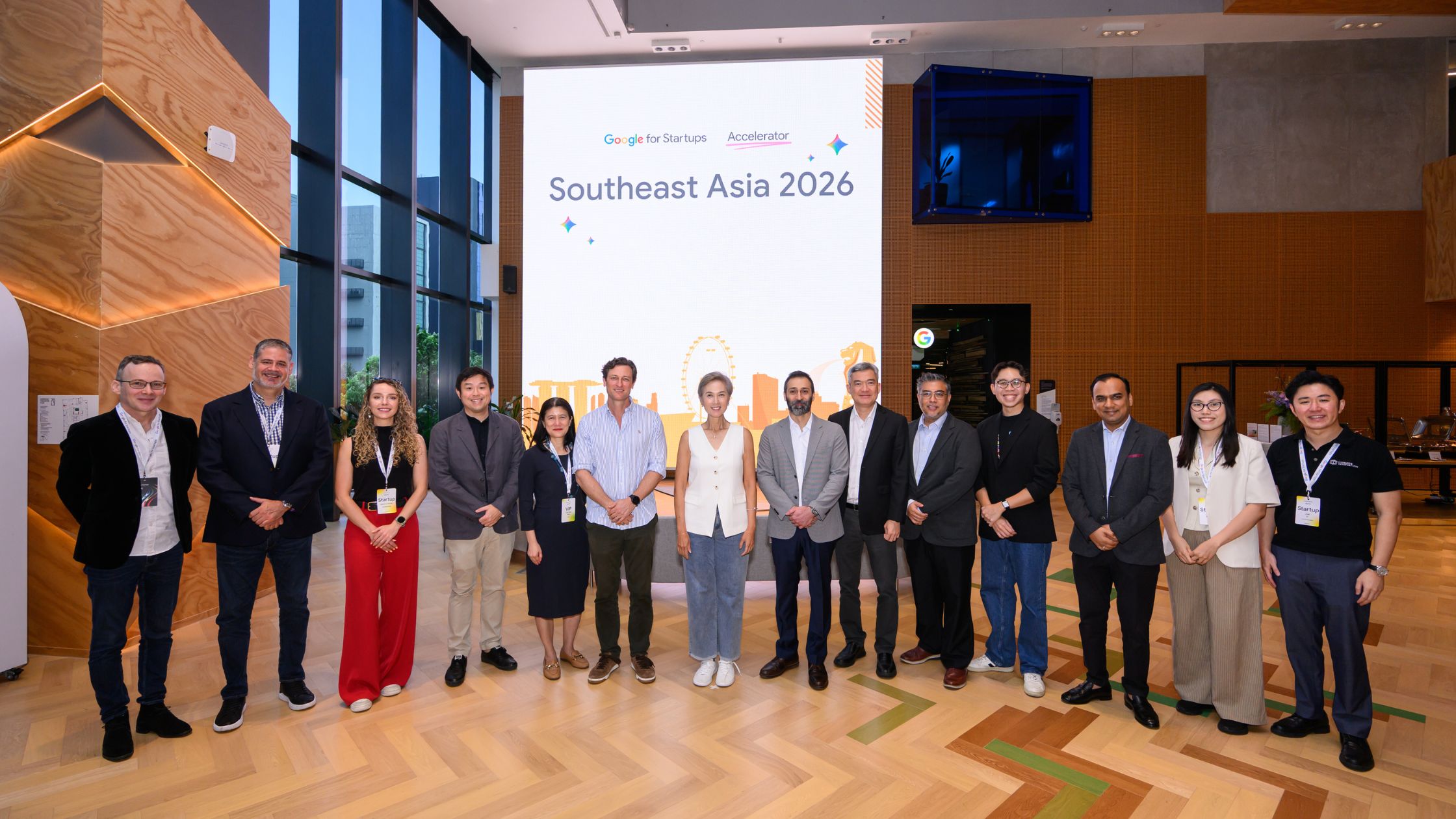
Google Cloud recently launched a new Southeast Asia-focused accelerator for startups building agentic AI applications, deepening partnerships with government-backed innovation agencies in Singapore, Indonesia, and Vietnam as competition intensifies to develop the next generation of AI companies. The new Google for Startups Accelerator: Southeast Asia, announced in collaboration with Enterprise Singapore (EnterpriseSG), Indonesia’s Ministry of Communication and Digital Affairs (Komdigi), Vietnam’s National Innovation Center (NIC), and the Startup and Innovation Hub of Ho Chi Minh City (SIHUB), will support 25 Seed to Series B startups through a three-month, equity-free program beginning in August 2026.
The initiative comes as major technology companies increasingly shift their focus from generative AI applications toward agentic AI systems capable of autonomously performing tasks, interacting with enterprise software, and orchestrating complex workflows. Through technical residencies in Singapore and Silicon Valley, engineering support from Google Cloud and Google DeepMind teams, and access to up to US$350,000 in cloud credits, the program aims to help startups commercialize AI products while scaling beyond their home markets.
Applications are now open for an inaugural cohort of 25 startups that will participate in a three-month, equity-free accelerator beginning in August 2026. The program targets Seed to Series B startups across six Southeast Asian markets and combines technical support, cloud infrastructure access, engineering mentorship, and investor engagement through residencies in both Singapore and California. For Google Cloud, the accelerator represents more than another startup support program. It reflects a broader effort to cultivate a pipeline of AI-native companies capable of building commercially viable agentic systems while strengthening Southeast Asia’s position in the rapidly evolving AI economy.
From generative AI to agentic AI
The launch comes amid a broader industry transition. Over the past two years, much of the AI ecosystem has focused on generative AI applications that create text, images, code, and multimedia content. Increasingly, however, technology companies are investing in AI agents that can perform actions rather than simply generate responses. These systems can retrieve information, interact with enterprise software, execute workflows, coordinate with other AI agents, and automate business processes with varying levels of autonomy. Industry leaders increasingly view agentic AI as a key driver of enterprise adoption, moving organizations beyond experimentation toward operational deployment.
Google Cloud’s accelerator reflects that shift. The program focuses specifically on founders building agentic AI products and includes training in disciplines such as agentic coding, AI context engineering, large language model operations (LLMOps), and multi-agent system orchestration. Participating startups will also gain access to Google Cloud technologies including Tensor Processing Units (TPUs), Agentic Data Cloud, Gemini Enterprise Agent Platform, and Google Antigravity. The company says selected startups will also receive early access to emerging AI models and enterprise tooling, allowing them to test and build on technologies before broader commercial release.
Building an AI startup corridor between Southeast Asia and Silicon Valley
While startup accelerators are not new, Google Cloud is positioning this initiative as a cross-border innovation corridor rather than a traditional mentorship program. Participants will undergo an in-person California residency that includes technical sessions at Google’s Mountain View and San Francisco campuses, alongside engagement with venture capital firms and startup networks across Palo Alto and Sand Hill Road. The objective is to expose founders to global technology ecosystems while helping them benchmark products against international standards.
Since 2018, Google-backed accelerator programs have supported more than 200 startups across Southeast Asia, helping them raise approximately US$6.6 billion in funding and create more than 11,300 jobs. Alumni include companies operating across healthcare, fintech, logistics, enterprise software, and digital services. Yet one recurring concern among startup ecosystems globally is that access to Silicon Valley often results in talent migration, intellectual property relocation, or the movement of corporate structures closer to international investors.
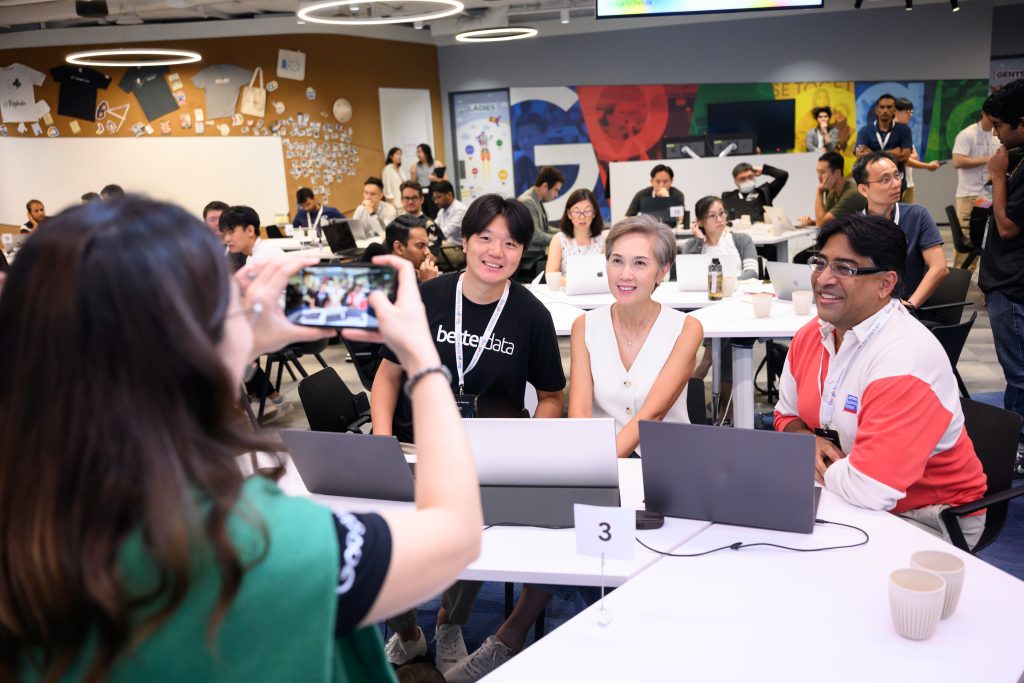
While conversing with AsiaTechDaily, Thye Yeow Bok, Head of Southeast Asia and South Asia Startup Ecosystem Programs at Google Cloud, said the accelerator has been designed around international expansion rather than relocation.
“Google for Startups Accelerator: Southeast Asia functions as a practical bridge between regional startups and Silicon Valley. The program is designed to help startups develop, commercialize, and scale agentic solutions that address Southeast Asia’s market challenges and realities, specifically in high-impact sectors prioritized by local governments, such as agriculture, education, healthcare, financial services, and logistics. It focuses on enabling startups to expand into new markets while maintaining core operations in their home countries,” he said.
According to Yeow Bok, solutions developed for Southeast Asia’s scale and operational complexity could eventually find relevance in other emerging markets, including Latin America and Africa.
He pointed to Malaysian healthcare platform HealthMetrics as an example. After participating in a Google accelerator residency in California, the company used lessons from Silicon Valley to refine its business model while continuing to expand from Southeast Asia, ultimately securing investment from regional investors and growing into markets such as Indonesia and Singapore.
“Our program fundamentally balances two environments,” he said. “Silicon Valley exposure allows founders to enhance their products while factoring in global benchmarks and state-of-the-art technologies. At the same time, longer-term engineering support, skilling bootcamps, and go-to-market resources remain anchored in Southeast Asia through Google’s Asia Pacific headquarters and our local public-private partnerships.”
The economics challenge facing agentic AI startups
While agentic AI has become one of the most discussed themes in the technology sector, many startups continue to grapple with a less visible challenge: profitability. Building AI products often requires significant spending on compute infrastructure, model inference, data processing, and cloud services. As startups adopt increasingly sophisticated agent architectures, operational costs can escalate rapidly. Google Cloud’s accelerator attempts to address this challenge directly. Selected companies will be eligible for up to US$350,000 in cloud credits through the Google for Startups Cloud Program, alongside engineering support designed to improve AI efficiency and cost management.
Bok said many startups continue to hold misconceptions about how AI systems should be built and scaled.
“Two of the most common industry misconceptions we see among organizations, both large enterprises and startups, are: first, that you need to run the heaviest, most expensive model for every single task, and second, that you need to train your own model from scratch.”
He explained that Google Cloud engineering teams work directly with founders to improve token economics and reduce unnecessary compute expenditure.
“Through hands-on architectural and engineering reviews, we help startups enforce rigorous token economics. This includes model routing, where routine tasks are assigned to faster and more cost-effective models while more expensive reasoning models are reserved for complex use cases. We also emphasize grounding instead of training, helping startups use Retrieval-Augmented Generation to deliver highly accurate, context-aware AI without the cost of building proprietary models from scratch.”
Additional techniques include context caching, lean LLMOps practices, and application-level token controls designed to prevent runaway inference costs. The focus reflects a growing recognition across the industry that sustainable AI businesses will depend not only on model performance, but also on efficient infrastructure utilization and commercially viable unit economics.
Vietnam’s growing ambitions in advanced AI
The accelerator also highlights the increasingly important role Vietnam is playing within Southeast Asia’s AI ecosystem. NIC and SIHUB are among the program’s key partners, providing local support and ecosystem access for Vietnamese startups. According to Google Cloud, these organizations will help connect startups with industrial testbeds and enterprise deployment opportunities while Google provides access to advanced AI infrastructure.
The collaboration builds on previous Google initiatives in Vietnam. According to the company, more than 500 Vietnamese startups have already participated in programs under the “AI for the Future” initiative. Bok said the partnership could prove particularly important for startups working on embodied AI and industrial automation applications.
“For applications like embodied AI or physical AI, we are reducing the need for startups to procure and integrate on-premises physical hardware on their own by giving them direct access to Google Cloud’s advanced infrastructure. Vietnamese startups can tap Google Cloud’s global AI Hypercomputer and provision Tensor Processing Units and advanced GPU clusters, allowing them to design and run complex, compute-heavy architectures using the same state-of-the-art infrastructure available in more mature markets.”
He added that Google Distributed Cloud can help bridge the gap between centralized cloud infrastructure and real-world industrial environments requiring low-latency deployment.
A new phase for Southeast Asia’s AI ecosystem
Google Cloud’s latest initiative arrives as Southeast Asian governments, investors, and technology companies intensify efforts to build globally competitive AI ecosystems. Singapore has continued expanding national AI investments and ecosystem support, while Indonesia and Vietnam have accelerated efforts to strengthen domestic AI capabilities and digital infrastructure. At the same time, competition among global cloud providers to attract AI startups has intensified as the market shifts from experimentation toward commercial deployment.
Against that backdrop, the accelerator offers insight into how one of the world’s largest cloud providers views the next stage of AI innovation. Rather than focusing solely on foundation models, Google Cloud is betting that the next generation of value creation will come from startups capable of building practical agentic systems that solve real-world business problems. The challenge for Southeast Asia’s founders will be turning those technological capabilities into scalable, sustainable companies. If successful, the region’s next wave of AI startups may be defined not by their ability to build models, but by their ability to commercialize them.
Quick Takeaways
- Google Cloud has launched the Google for Startups Accelerator: Southeast Asia, a new program aimed at helping Seed to Series B startups build and commercialize agentic AI products while connecting them with Silicon Valley resources and investors.
- The initiative is backed by Enterprise Singapore, Indonesia’s Komdigi, Vietnam’s NIC, and SIHUB, creating a regional innovation corridor between Southeast Asia and Silicon Valley.
- The three-month, equity-free accelerator will support 25 startups, offering access to Google Cloud’s AI infrastructure, engineering expertise, up to US$350,000 in cloud credits, and technical residencies in Singapore and California.
- The program reflects Google Cloud’s broader bet on agentic AI, as the industry shifts from generative AI applications toward autonomous systems capable of performing tasks, orchestrating workflows, and interacting with enterprise software.
- While conversing with AsiaTechDaily, Google Cloud said the initiative is designed to help startups expand globally while keeping core operations rooted in Southeast Asia, addressing concerns around talent and intellectual property migration.
- Google Cloud is also emphasizing AI profitability and sustainable unit economics, helping founders optimize token consumption, model usage, and infrastructure costs as agentic AI applications become more compute-intensive.
Similar Articles