AsiaTechDaily – Asia's Leading Tech and Startup Media Platform

Beyond the Model: BEYOND Expo 2026 Showed That Innovation Is Now an Ecosystem Competition
 by
by

As artificial intelligence moves beyond software into robotics, infrastructure, hardware, and real-world deployment, BEYOND Expo 2026 highlighted how Asia is positioning itself at the center of the next stage of technological transformation.
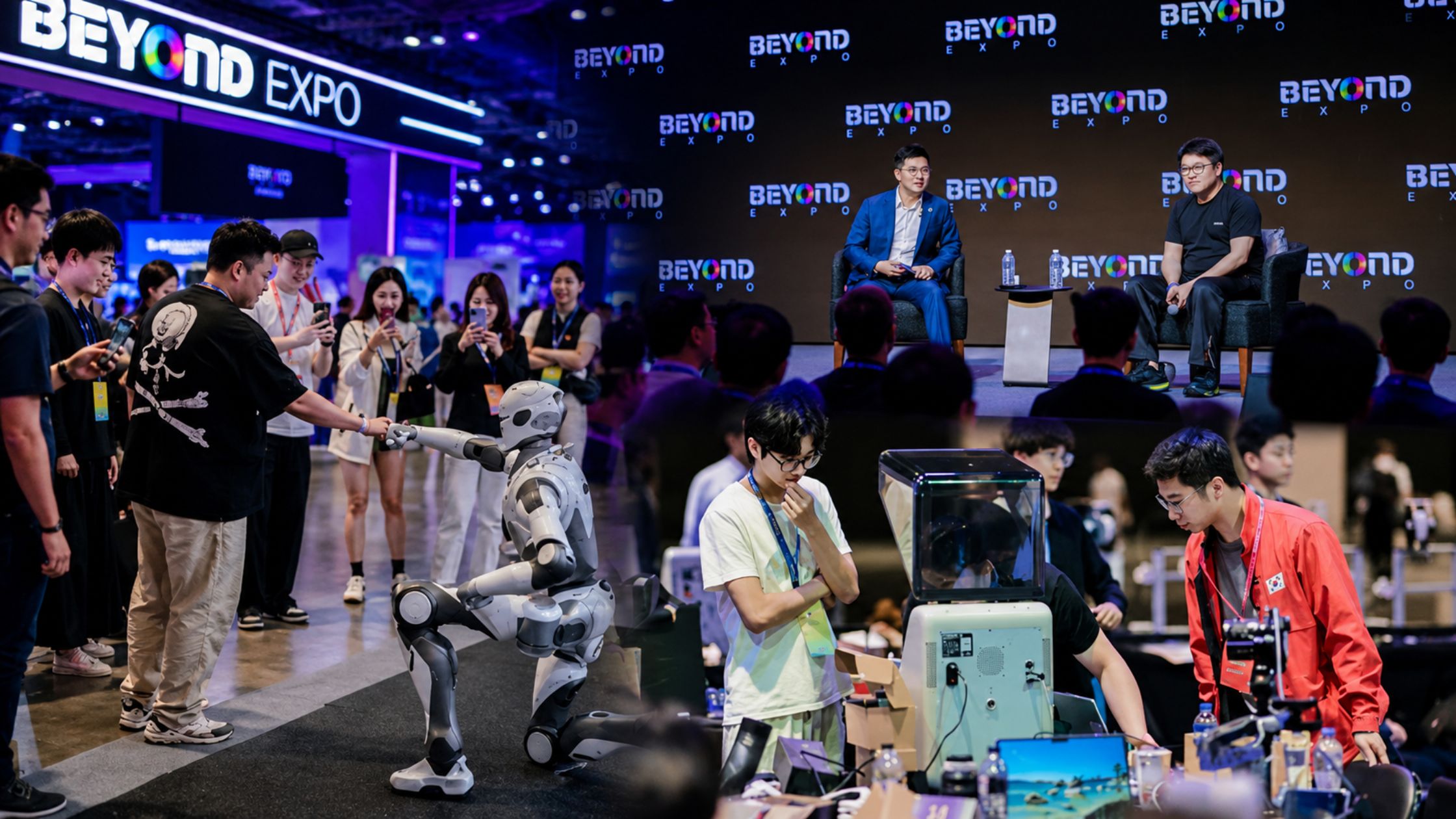
For much of the past three years, the global artificial intelligence conversation has revolved around foundation models, generative AI platforms, and increasingly powerful software systems. At BEYOND Expo 2026 in Macau, a different narrative took shape. Held under the theme “AI: Digital to Physical,” the sixth edition of the event brought together nearly 800 exhibitors, 400 speakers, over 400 media organizations, hundreds of investors, and participants from more than 100 countries and regions at The Venetian Macao’s Cotai Expo from May 27 to 30. The event featured more than 220 sessions spanning robotics, embodied intelligence, AI infrastructure, healthcare, consumer technology, cloud computing, startup ecosystems, creator economies, and international investment.
Yet beyond the scale of the event, a larger shift emerged. Across keynote sessions, startup showcases, investment forums, and industry discussions, the focus moved steadily away from AI as a standalone software capability and toward AI as a real-world system embedded within machines, devices, infrastructure, manufacturing environments, and operational workflows. The transition may appear subtle, but it represents one of the most consequential developments currently reshaping the global technology industry. The next stage of AI is no longer solely about intelligence. It is increasingly about deployment.
What Happened at BEYOND Expo 2026?
The event functioned as a multi-layered innovation platform where artificial intelligence, robotics, venture capital, cloud infrastructure, creator economies, manufacturing ecosystems, healthcare technologies, and cross-border collaboration were discussed as increasingly interconnected parts of the same technology landscape.
Held from May 27 to 30 at The Venetian Macao, the event brought together nearly 800 exhibitors, more than 400 speakers, investors, startup founders, policymakers, researchers, and corporate leaders from over 100 countries and regions. More than 220 sessions took place across seven main stages and multiple summit tracks.
What stood out was the breadth of the programming.
Rather than focusing exclusively on AI models or software innovation, the event explored how emerging technologies are increasingly converging with physical systems, industrial infrastructure, consumer products, investment ecosystems, and global markets.
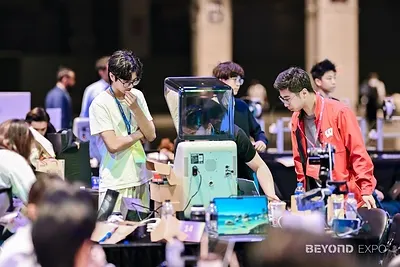
Some of the event’s major sessions and forums included:
- Physical AI Summit, which focused on robotics, embodied intelligence, autonomous systems, edge AI, intelligent manufacturing, and real-world deployment of AI technologies.
- Digital AI Summit, where discussions examined foundation models, AI agents, enterprise AI adoption, deployment infrastructure, and next-generation AI applications.
- Global Investment Summit, which brought together more than 900 investors, over 150 technology companies, and representatives from more than 200 unicorn firms to discuss capital flows, industrial transformation, and emerging technology opportunities.
- BEYOND Wealth Summit, which explored frontier technology investments, family offices, wealth management, impact investing, and long-term capital allocation strategies.
- Korea Technology Forum, Japan Technology Forum, Asia-Europe Technology Forum, and Asia-Latin America Technology Forum, where policymakers, investors, founders, and ecosystem leaders discussed startup globalization, industrial cooperation, and cross-border innovation partnerships.
- SheTech Women’s Technology Summit, which focused on women-led innovation, entrepreneurship, leadership, and inclusion across emerging technology sectors.
- AI Beauty & Health Summit, where discussions centered on AI-driven healthcare systems, personalized wellness technologies, digital diagnostics, wearable devices, and consumer health innovation.
- Web3 + AI Forum, which explored how decentralized technologies and artificial intelligence may intersect across digital infrastructure, finance, creator economies, and next-generation internet platforms.
- Founder Talks, BGlobal Summit, Gen Z Forum, SportsTech Forum, and developer-focused gatherings such as ClawCon Macao, which examined startup building, creator communities, AI-native products, commercialization strategies, and the growing overlap between developers, founders, creators, and emerging technologies.
The Opening Ceremony itself reflected the event’s broader direction.
Speakers included Deepu Talla, Vice President of Robotics and Edge AI at NVIDIA; Felix Zhang, Founder and CEO of Pudu Robotics; Xu Chi, Founder and CEO of XREAL; Matt White, Global CTO of AI at The Linux Foundation; and global investors and ecosystem leaders working across robotics, infrastructure, spatial computing, and next-generation hardware.
Meanwhile, the exhibition floor showcased humanoid robots, AI-powered hardware, autonomous systems, intelligent manufacturing platforms, AI wearables, smart devices, healthcare technologies, robotics platforms, and spatial computing products. More than 1,000 technology products were displayed across AI, robotics, mobility, healthcare, clean energy, fashion technology, sports technology, and Web3 sectors.
The Rise of Physical AI
Months before the event opened, BEYOND Expo’s organizers had already signaled where they believed the industry was heading. The 2026 theme, “AI: Digital to Physical,” was built around the idea that artificial intelligence is moving beyond chatbots and digital interfaces into what researchers and companies increasingly describe as embodied or physical AI — systems that perceive, reason, and act within the real world rather than operating solely in software. Sessions across the event highlighted sectors including humanoid robotics, autonomous mobility, AI-integrated wearables, enterprise AI agents, intelligent manufacturing systems, smart infrastructure, and robotics-driven automation.
The emphasis reflects a growing industry consensus that the next major challenge for AI is not generating content, but interacting with the physical world. Unlike software systems operating in controlled digital environments, physical AI systems must perform reliably within dynamic, unpredictable, real-world conditions — introducing far greater complexity around safety, accuracy, and operational resilience.
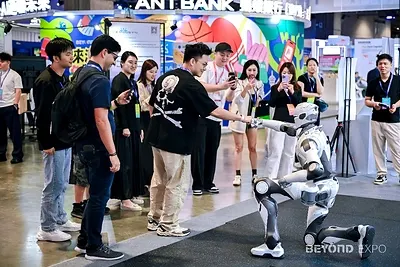
The prominence of NVIDIA reinforced this direction. The Opening Ceremony featured a lineup that included Deepu Talla, Vice President of Robotics and Edge AI at NVIDIA; Felix Zhang, Founder and CEO of Pudu Robotics; Mark Nicholas Cutis, Senior Advisor at the Abu Dhabi Investment Council; Xu Chi, Founder and CEO of XREAL; and Matt White, Global CTO of AI at The Linux Foundation.
In his keynote, Talla offered an unambiguous assessment of where the industry is headed.
“We should all start working on physical AI robotics because it’s quite simply the largest and most exciting opportunity for the next 10 to 20 years in the history of humanity,” he said.
His presence at the event was no coincidence. NVIDIA has been aggressively building its physical AI ecosystem throughout 2026. At its GTC conference in March, the company unveiled new Cosmos world models, Isaac simulation frameworks, and GR00T N models designed to accelerate the transition to intelligent robotics — partnering with robotics leaders across industrial, surgical, and humanoid applications. NVIDIA’s physical AI revenue has already exceeded $9 billion over the trailing twelve months, up from $6 billion in fiscal 2026, a 50% increase in quarterly run rate. The company is partnering with leading robotics firms globally to power production-scale physical AI deployment across factories, hospitals, and logistics operations. The message across BEYOND Expo was clear: the industry’s attention is shifting from AI that generates information to AI that performs actions.
Asia’s Advantage May Be Moving Beyond Manufacturing
One of the most important signals from BEYOND Expo 2026 was the changing perception of Asia’s role within global innovation. For decades, Asia’s technology story was often framed around manufacturing capacity, supply chains, hardware production, and consumer scale. At BEYOND Expo, the conversation increasingly focused on commercialization and deployment.
The event repeatedly showcased companies operating at the intersection of software intelligence and physical systems. Robotics firms, AI hardware developers, autonomous mobility companies, wearable technology startups, healthcare innovators, and industrial automation providers occupied central positions throughout the exhibition and summit programs.
As AI moves into robotics, consumer devices, industrial systems, and infrastructure, competitive advantage increasingly depends on the ability to connect research, engineering, manufacturing, distribution, and operational deployment into a single ecosystem. In many respects, Asia already possesses many of those ingredients.
The Greater Bay Area in particular has increasingly become a testing ground for this model. The Shenzhen-Hong Kong-Guangzhou innovation cluster topped the WIPO 2025 Global Innovation Index — the first time it had ranked first globally — reflecting the region’s rapid progress in combining manufacturing capabilities, startup ecosystems, supply chains, engineering talent, venture capital, and rapid commercialization cycles within a single innovation corridor. BEYOND Expo’s GBA Innovation Tour was specifically designed to showcase these advantages to international participants.
The result is a growing shift in how the region positions itself. Rather than serving solely as a production base for global technology companies, Asia is increasingly positioning itself as a deployment engine for emerging technologies.
Startups Are Facing a New Commercialization Challenge
While AI dominated many conversations, a deeper question surfaced repeatedly throughout the event: how do technologies scale beyond demonstrations? The answer appeared across multiple forums — from startup discussions and investment panels to crowdfunding sessions and creator economy conversations. Increasingly, successful innovation is not determined solely by technical capability. It depends on validation, distribution, infrastructure, partnerships, community building, and market access.
This was particularly evident during discussions involving crowdfunding platforms from Japan, Taiwan, and South Korea. Representatives argued that crowdfunding is no longer primarily a financing tool. Instead, it has evolved into a mechanism for international market testing, customer discovery, product validation, and community formation.
For many founders, the challenge is no longer building the product. It is understanding how and where that product can scale. The shift reflects a broader reality facing startups globally: commercialization is becoming as complex as innovation itself. Categories seeing strong traction in international crowdfunding markets include AI-powered consumer devices, smart wearables, AI glasses, and connected hardware — exactly the product segments on display throughout the BEYOND Expo exhibition floor.
Infrastructure Is Becoming the Real Battleground
Another major theme throughout the event involved infrastructure. While much public attention remains focused on AI applications, discussions involving cloud providers, enterprise technology platforms, and AI deployment systems pointed toward a less visible but increasingly important layer of the industry.
As AI systems expand into businesses, devices, and industrial operations, infrastructure is becoming a strategic differentiator. This includes cloud architecture, AI deployment environments, edge computing, data governance, compliance systems, and distributed operational networks. The importance of this layer reflects a broader shift occurring across enterprise technology. The challenge is no longer simply training models or building AI applications. It is operating increasingly complex AI systems reliably across multiple markets, regulatory frameworks, and infrastructure environments.
This challenge becomes even more significant as organizations adopt multi-model AI environments, autonomous agents, robotics systems, and physical AI deployments. Infrastructure is increasingly becoming the foundation upon which the next generation of AI businesses will be built — and one of the less glamorous but most consequential barriers to scaling internationally.
The Creator and Developer Economy Is Becoming Part of the Technology Ecosystem
One of the more unexpected themes emerged from sessions focused on creators and developers. Historically, creators and startups were treated as separate industries. At BEYOND Expo, those boundaries appeared increasingly blurred. The ClawCon Macao session — an AI community meetup connecting developers, creators, product builders, and emerging technologies — exemplified this convergence. Discussions highlighted how creators are evolving into business operators managing communities, intellectual property, digital products, brand partnerships, e-commerce channels, and AI-enabled workflows.
One speaker summarized audience development with a simple observation: “Short form is the front door. Long form is the house.”
While framed in the context of content creation, the principle extends well beyond media. Across technology industries, attention is increasingly abundant while trust and sustained engagement remain scarce. The ability to build communities, retain users, and develop long-term loyalty is becoming a competitive advantage for startups and creators alike.
Products alone are no longer sufficient. Communities increasingly function as growth engines. Innovation Is Becoming an Ecosystem Competition Perhaps the most important lesson from BEYOND Expo 2026 was that innovation is becoming less about isolated technologies and more about interconnected ecosystems.
Throughout the event, discussions repeatedly linked artificial intelligence, robotics, cloud infrastructure, manufacturing, creator economies, venture capital, startup ecosystems, government policy, and international partnerships. Rather than operating independently, these sectors increasingly function as components of larger innovation systems.
This was particularly evident during international forums involving Korea, Indonesia, Europe, Latin America, and Greater China. During one of the international forum sessions, Indonesian Ambassador to China and Mongolia Djauhari Oratmangun offered a pointed summary of the shift underway.
“The future belongs to partnerships. We need to move beyond traditional buyer-seller relationships and create innovation ecosystems where countries, businesses, entrepreneurs, and institutions work together to solve challenges and create opportunities.”
His remarks reflected a broader reality facing the global technology sector. As geopolitical competition intensifies and technology supply chains fragment, innovation leadership may depend less on individual breakthroughs and more on the ability to connect talent, infrastructure, capital, manufacturing, research, and markets across borders. The competition is increasingly shifting from companies to ecosystems.
Looking Beyond the AI Hype Cycle
BEYOND Expo 2026 arrived during a period when artificial intelligence remains the dominant force shaping global technology markets. Yet the event’s most important message may have been that the industry is beginning to move beyond the first phase of the AI cycle. The initial wave focused on models. The second wave focused on applications. The next wave appears increasingly focused on deployment.
Across robotics, infrastructure, autonomous systems, AI hardware, industrial operations, creator economies, and startup ecosystems, the conversation is shifting toward implementation. How does AI operate in the physical world? How does it scale across industries? How does it create economic value? And how do innovation ecosystems support that process?
Those questions appeared repeatedly throughout BEYOND Expo 2026. The answers remain uncertain. However, the direction of travel was unmistakable. The next chapter of technological transformation may not be defined by who develops the most powerful model. It may increasingly be defined by who can most effectively deploy intelligence into real-world systems, industries, and global markets — and who builds the ecosystems to support that deployment at scale. If BEYOND Expo 2026 offered a glimpse into the future, it is one where AI becomes less visible as software and more embedded within the infrastructure, products, machines, and ecosystems that shape everyday life.
Quick Takeaways
- BEYOND Expo 2026 highlighted a growing shift in the AI industry from model development toward real-world deployment, with robotics, embodied intelligence, AI agents, and intelligent hardware taking center stage.
- The event’s theme, “AI: Digital to Physical,” reflected an emerging industry consensus that the next phase of artificial intelligence will be defined by its ability to operate in physical environments rather than solely within digital interfaces.
- Asia is increasingly positioning itself not only as a manufacturing hub but also as a commercialization and deployment engine for emerging technologies, leveraging its strengths in hardware, supply chains, engineering, and scaling.
- Physical AI emerged as one of the event’s dominant themes, with discussions spanning robotics, autonomous systems, smart devices, industrial automation, healthcare technologies, and intelligent infrastructure.
- Startups are facing a new commercialization challenge, where success depends not only on technological innovation but also on market validation, distribution, community building, infrastructure readiness, and ecosystem participation.
- Crowdfunding platforms are evolving beyond fundraising tools into mechanisms for testing international demand, validating products, and building early customer communities before market expansion.
- Infrastructure is becoming a critical competitive differentiator as AI adoption grows. Cloud architecture, edge computing, compliance, data governance, and deployment environments are increasingly determining how effectively AI systems scale.
- The Creator Summit underscored how creators are increasingly operating like startup founders, building communities, intellectual property, products, and AI-enabled businesses rather than simply producing content.
- Cross-border collaboration was a recurring theme throughout the event, with speakers emphasizing partnerships and ecosystem building as essential drivers of innovation and international growth.
- BEYOND Expo 2026 suggested that the next technology race may be less about developing the most advanced AI models and more about deploying intelligence effectively across industries, products, infrastructure, and global markets.