AsiaTechDaily – Asia's Leading Tech and Startup Media Platform

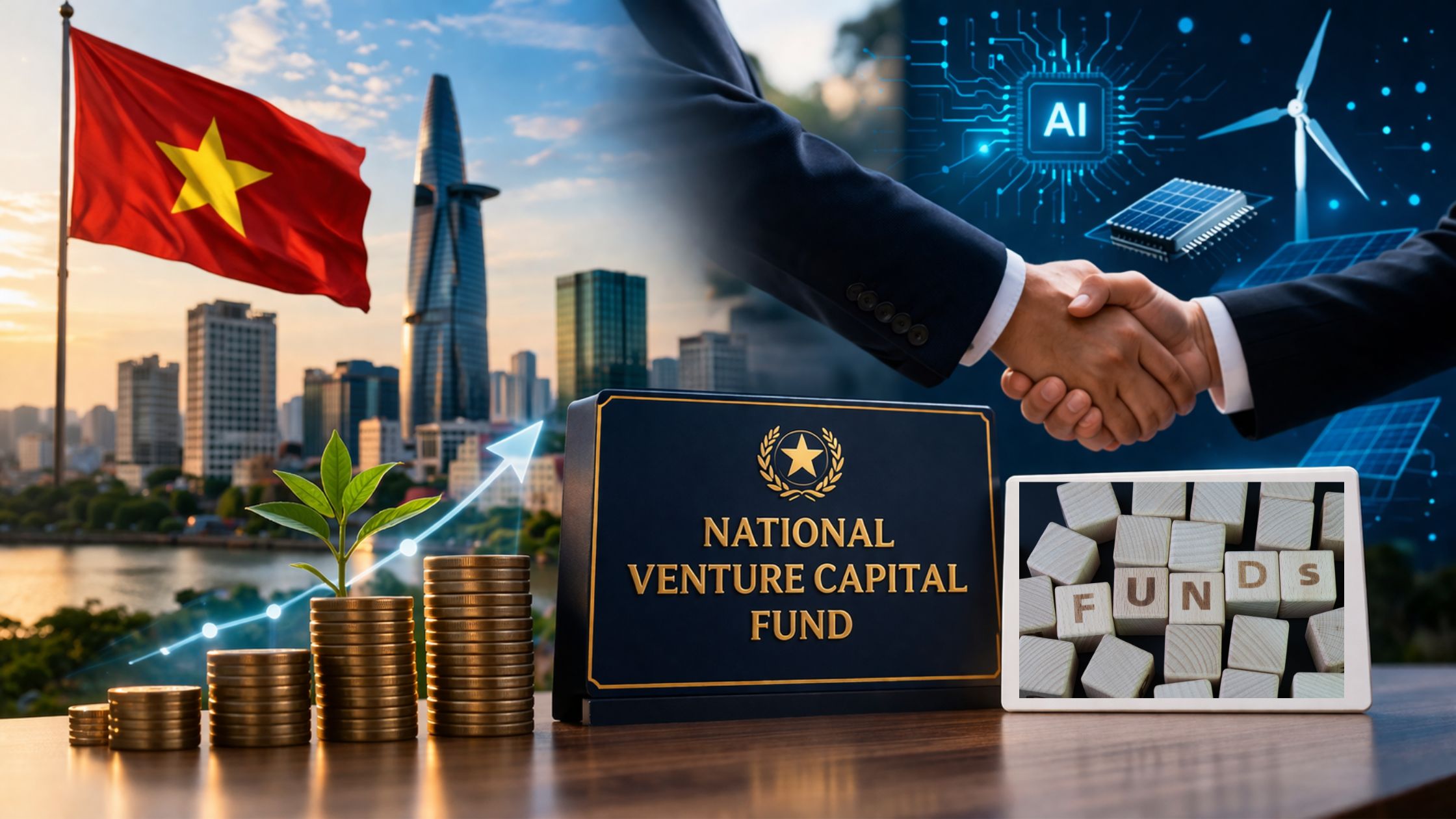
Vietnam Moves to Institutionalise Venture Capital as Gobi Partners Signals Interest
 by
by

Gobi Partners’ proposed participation in Vietnam’s national venture capital fund reflects a broader shift toward state-backed capital formation, as the country seeks to close funding gaps and attract global investors into its startup ecosystem.
Vietnam is entering a new phase in the development of its startup ecosystem, moving beyond regulatory support toward direct involvement in capital formation. The government is in the process of establishing a national venture capital fund under Decree 264/2025, with initial state funding of around VND 500 billion (approximately $19 million). Over time, the fund is expected to scale to as much as VND 2,000 billion, supported by additional contributions from private investors.
This marks a structural shift. For years, Vietnam’s role in the startup ecosystem has largely been limited to enabling policies, tax incentives, and innovation programs. The creation of a state-backed fund suggests that the government is now positioning itself as an active participant in how capital is allocated—particularly in early-stage and strategic sectors.
Rather than operating as a standalone government fund, the initiative is structured to function as a co-investment platform. The state’s role is to provide anchor capital that can draw in private investors, including international venture capital firms.
This approach is designed to address a key weakness in Vietnam’s ecosystem: limited domestic institutional capital. By sharing investment risk with private partners, the government aims to make early-stage investments more attractive while also increasing the overall pool of available funding.
At the same time, the co-investment structure allows Vietnam to retain some influence over how capital is deployed—particularly in sectors aligned with national priorities—without fully crowding out private decision-making.
Gobi Partners’ Interest Signals External Validation
Within this context, the interest shown by Gobi Partners is significant. Founded in 2002, Gobi has built a track record of investing across emerging markets in Asia, often working alongside government-linked initiatives. Its experience in cross-border investment and ecosystem development positions it as more than just a source of capital.
During discussions with Vietnamese officials on March 19, Gobi’s leadership outlined potential areas of collaboration, including investment, incubation, and market linkage. The firm also proposed connecting companies from its existing portfolio to opportunities in Vietnam, particularly in high-tech industries.
This suggests that its potential role could extend beyond financial participation to include network access, operational support, and international market integration—all of which remain underdeveloped in Vietnam’s ecosystem.
Strategic Focus Reflects Industrial Policy Goals
The sectors highlighted in discussions—semiconductors, artificial intelligence, big data, and new energy—are closely aligned with Vietnam’s broader economic strategy.
These are not simply high-growth industries; they are areas where Vietnam is seeking to build long-term competitiveness. As global supply chains shift and demand for advanced technologies increases, the country is attempting to move up the value chain from manufacturing to innovation-driven growth.
By directing capital into these sectors, the government is using venture investment as a tool of industrial policy. The objective is not only to support startups, but to shape the development of entire industries that can contribute to sustainable economic expansion.
Deputy Minister Vu Hai Quan’s emphasis on improving policy frameworks, attracting investment, and developing skilled talent underscores this integrated approach.
Addressing Structural Weaknesses in Startup Funding
Despite its growing reputation as a startup hub, Vietnam continues to face persistent funding challenges.
The ecosystem has relied heavily on foreign venture capital, particularly from regional hubs such as Singapore and South Korea. While this has enabled growth, it has also resulted in gaps—especially at the early stage, where domestic funding remains limited.
The national venture capital fund is intended to address these issues by creating a more stable and predictable source of capital. By combining public funding with private investment, the model aims to reduce risk while improving access to financing for startups.
This is particularly important for deep-tech sectors, where development timelines are longer and capital requirements are higher.
Part of a Broader Regional Shift
Vietnam’s move reflects a wider trend across Asia, where governments are taking a more active role in venture capital ecosystems. Countries such as Singapore, Malaysia, and Indonesia have already established state-linked investment platforms to support innovation. These models typically combine public funding with private sector participation, creating hybrid structures that balance policy objectives with market dynamics.
Vietnam’s approach follows a similar path but is still at an early stage. Its success will depend on how effectively it can attract experienced venture partners and build trust among private investors. During the March 19 meeting, both sides explored multiple areas of potential cooperation, including:
- Co-investment into startups through the national fund
- Startup incubation and support programs
- Development of regulatory sandbox frameworks
- Linking Gobi’s portfolio companies to Vietnam’s market
- Building value chains in sectors such as AI, semiconductors, and energy
These discussions indicate that the partnership, if formalised, could operate across multiple layers of the ecosystem rather than being limited to capital deployment alone.
Still Early, with Execution as the Key Variable
Despite the positive signals, the initiative remains in its early stages. Several key aspects—including the fund’s final structure, governance, and deployment timeline—have yet to be finalised. Similarly, Gobi Partners’ involvement is still exploratory, with no confirmed commitment at this stage. The effectiveness of the initiative will ultimately depend on execution. This includes the ability to attract sustained private capital, deploy funds efficiently, and support startups in scaling both domestically and internationally.
Vietnam’s proposed national venture capital fund represents a shift from supporting startups to actively shaping the system in which they operate. By combining state capital with private investment and international partnerships, the country is attempting to build a more structured and resilient funding ecosystem. This approach reflects a growing recognition that innovation requires not just talent and ideas, but also coordinated capital and institutional support. Gobi Partners’ interest provides an early signal of external confidence. Whether this translates into long-term impact will depend on how effectively Vietnam can turn policy intent into a functioning investment platform.
Quick Takeaways
- Gobi Partners has expressed interest in joining Vietnam’s proposed national venture capital fund, signaling early engagement between global investors and a state-backed initiative.
- The fund, structured under Decree 264/2025, will start with about $19 million in state capital and is expected to scale through public–private co-investment.
- Vietnam is shifting from policy support to capital deployment, positioning itself as an active participant in funding startups rather than just an enabler.
- The initiative focuses on strategic sectors such as semiconductors, AI, big data, and new energy—reflecting broader industrial policy goals.
- Gobi’s potential role goes beyond funding, including startup incubation, cross-border market access, and ecosystem integration.
- The move aims to address structural gaps in early-stage funding and reduce reliance on foreign capital, while still attracting international partners.
- Execution remains the key factor, with uncertainties around fund structure, governance, and investor participation still unresolved.
Similar Articles