AsiaTechDaily – Asia's Leading Tech and Startup Media Platform

U-KNOCK 2026 Japan Summit: Korean Webtoons, Drama, and K-Pop Companies Seek Co-Production and Licensing Deals in Tokyo
 by
by

The KOCCA-backed summit will connect 15 Korean content companies with Japanese investors, media groups, and platform operators as the industry increasingly shifts from content exports toward intellectual property partnerships and cross-border collaboration.
South Korea’s content industry has evolved into one of the country’s most influential export sectors, generating a record USD 14.08 billion in exports in 2024 as Korean dramas, webtoons, music, animation, and digital content continue to attract global audiences. As the industry matures, attention is increasingly turning toward how intellectual property is financed, adapted, licensed, and commercialized through international partnerships rather than simply exported as finished products. Against this backdrop, 15 Korean content companies will travel to Tokyo next month for U-KNOCK 2026 in Japan Summit, a three-day business event focused on building new Korea-Japan collaborations across content creation, investment, and distribution.
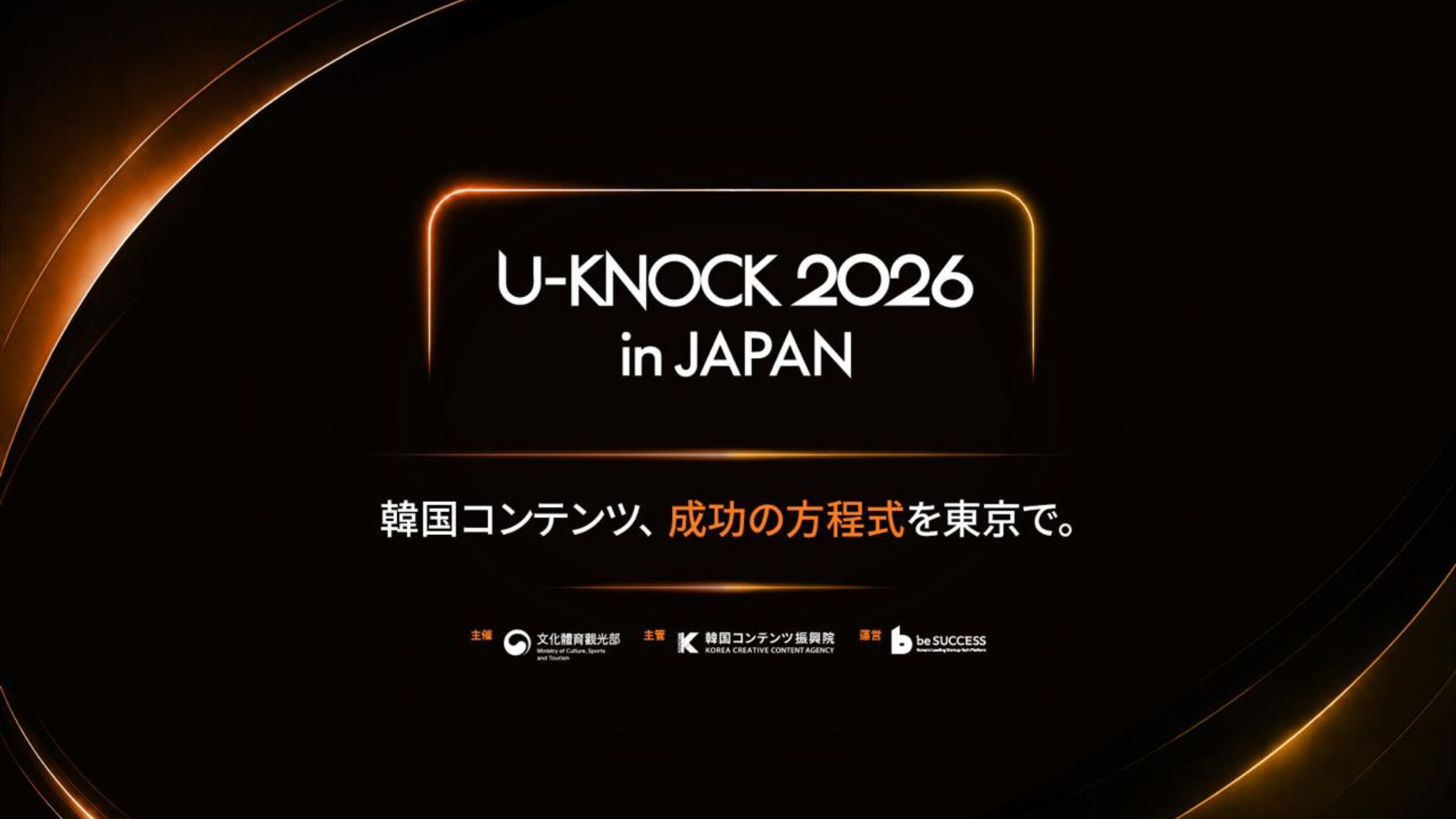
Hosted by South Korea’s Ministry of Culture, Sports and Tourism, organized by the Korea Creative Content Agency (KOCCA), and operated by beSUCCESS Media Group, the summit will take place from July 7 to 9 in Tokyo. The event is designed to bring together Korean content companies and Japanese media organizations, production houses, platform operators, publishers, and investors to explore opportunities in co-production, licensing, investment, and market expansion. The summit follows KOCCA’s broader internationalization efforts through the U-KNOCK platform, which has previously connected Korean content companies with global investors and entertainment industry stakeholders in markets including the United States.
What to Expect at U-KNOCK 2026
The U-KNOCK 2026 in Japan Summit will take place across two venues in Tokyo, combining industry discussions, company presentations, and curated business matching sessions designed to facilitate partnerships between Korean and Japanese content stakeholders.
The summit will open on July 7 at Tokyo Innovation Base with a public insight session focused on trends shaping South Korea’s content industry and emerging examples of Korea-Japan collaboration. Organizers have positioned the opening day as an opportunity for media professionals, investors, content executives, and industry observers to gain a deeper understanding of how Korean content companies are expanding internationally and adapting to changing market dynamics.
Activities will then move to Mandarin Oriental Tokyo for the second and third days, where the emphasis shifts toward business development. Participating Korean companies will present their businesses, intellectual property portfolios, and expansion strategies through dedicated pitch sessions, while a series of one-on-one meetings will connect them with Japanese media groups, production studios, platform operators, publishers, distributors, and investors.
Unlike consumer-facing entertainment conventions, U-KNOCK is structured as a business-focused summit where deal-making, partnership exploration, and investment discussions take center stage. The event’s format reflects a broader trend across the global entertainment industry, where content companies increasingly rely on cross-border partnerships to scale intellectual property and reach new audiences.
What’s in It for Japanese Companies and Investors?
While the summit is designed to support the international expansion of Korean content companies, it also offers Japanese stakeholders access to one of Asia’s most dynamic content ecosystems. For media companies and production studios, the event provides opportunities to identify intellectual property that could be adapted for local audiences or developed through joint production arrangements. Korean webtoons, in particular, have become a significant source of content for television dramas, animation projects, and streaming originals, creating opportunities for Japanese partners seeking proven stories with established fanbases.
For investors and strategic corporate partners, the summit offers visibility into emerging content businesses operating across webtoons, fandom platforms, content technology, animation, and digital entertainment. As entertainment increasingly converges with technology and platform-driven business models, investors are paying closer attention to companies that can generate and monetize intellectual property across multiple formats and markets.
The summit’s curated business matching format is intended to accelerate these conversations by bringing together decision-makers from both countries around specific partnership opportunities, whether in licensing, distribution, co-financing, technology collaboration, or intellectual property development.
Beyond Content Exports
The significance of the Tokyo summit lies in how it reflects the changing nature of Korea’s content industry. For much of the past decade, Korean entertainment companies expanded internationally by exporting completed content. Television dramas were licensed to overseas broadcasters and streaming platforms, K-pop agencies expanded through touring and distribution agreements, and webtoon publishers sold adaptation rights abroad. While these models remain important, industry stakeholders are increasingly seeking deeper partnerships that allow them to participate throughout the value chain.
Co-production agreements, joint investment structures, intellectual property development partnerships, and platform collaborations are becoming increasingly important as Korean content companies seek sustainable growth in overseas markets. The theme of U-KNOCK 2026 — “Korea’s Content, the Formula for Success—in Tokyo” — reflects this transition from content exports to long-term strategic collaboration.
Japan represents a particularly important market in this evolution. As one of the world’s largest entertainment economies and a global leader in manga, animation, character licensing, publishing, and fandom-driven business models, Japan offers Korean companies access not only to consumers but also to sophisticated intellectual property ecosystems and commercialization networks. Industry observers have increasingly noted that Korean companies are approaching Japan as a strategic partner for co-creation and investment rather than solely as an export destination.
A Cross-Section of Korea’s Content Industry
The 15 participating companies represent a broad spectrum of South Korea’s content ecosystem, reflecting how the country’s creative industries have expanded beyond traditional entertainment categories.
The participating companies include:
- Webtoons and web novels: Mstoryhub, Monster Ryot, TOYOU’S DREAM
- Drama and screen content: Whynot Media, EVEN ENT, WEMAD
- Animation: Studio Gale, Studio Eon
- K-pop, performance, and fandom businesses: Deepstudio, Emotionwave, Connected Stage, HJ Culture
- Content distribution and licensing: FASTVIEW
- Education and learning: Glorang
Several of the participating companies have already established operations or content distribution partnerships in Japan, while others are actively seeking expansion opportunities in the market. Together, they showcase the increasing diversity of Korea’s content sector, where intellectual property now spans storytelling, digital platforms, fan engagement technologies, education content, and multimedia franchises.
The inclusion of companies operating across multiple content formats is particularly notable given the growing importance of IP expansion strategies. A successful webtoon today can evolve into a television series, animation project, merchandise business, gaming property, or international licensing opportunity. This convergence of content formats has become one of the defining characteristics of Korea’s creative economy and a key attraction for international investors and strategic partners.
Building a Marketplace for Intellectual Property
While public attention often focuses on the cultural impact of Korean entertainment, U-KNOCK 2026 is fundamentally structured as a business development platform. The event will feature public insight sessions, company presentations, investor engagement opportunities, and curated business matching programs. The goal is to facilitate direct conversations between Korean content creators and Japanese stakeholders interested in investment, licensing, distribution, and co-production opportunities.
Business matching sessions scheduled for Days 2 and 3 will provide participants with opportunities to engage in one-on-one meetings with prospective partners. In addition to participant-selected meetings, organizers will also facilitate introductions based on specific business interests and strategic objectives.
This format mirrors a broader trend across the global content industry, where dedicated intellectual property marketplaces are becoming increasingly important. As competition for premium content intensifies and platforms seek differentiated offerings, events that connect content owners with investors, distributors, and production partners are playing a growing role in shaping international entertainment partnerships.
The summit’s emphasis on intellectual property commercialization is also consistent with KOCCA’s broader efforts to support Korean content companies as they pursue international growth opportunities through licensing, co-financing, and global distribution partnerships. Previous U-KNOCK initiatives have similarly focused on connecting Korean creative businesses with overseas investors, studios, and media companies.
Kim Joo-ryung to Headline Opening Day
The summit’s public-facing component will begin on July 7 at Tokyo Innovation Base with an insight session examining current trends in Korea’s content industry and examples of successful Korea-Japan collaboration.
One of the event’s highlights will be a special keynote conversation featuring actress Kim Joo-ryung, who gained international recognition through her portrayal of Han Mi-nyeo (Player 212) in the global Netflix hit Squid Game. The session, titled “The Formula Behind Korean Content’s Success,” will explore the factors behind the Korean content industry’s global rise.
While the summit remains primarily business-oriented, the participation of a recognizable figure from one of Korea’s most internationally successful productions underscores the growing global visibility of Korean entertainment and its ability to attract industry attention beyond traditional media circles.
The Next Phase of Korea-Japan Content Collaboration
U-KNOCK 2026 arrives at a time when both Korea and Japan are reassessing how content businesses can collaborate in an increasingly globalized entertainment landscape. For Korean companies, Japan offers access to mature intellectual property markets, experienced production ecosystems, and sophisticated commercialization capabilities. For Japanese companies, partnerships with Korean creators provide exposure to globally recognized content development models and rapidly growing entertainment franchises.
The summit’s focus on webtoons, animation, drama, fandom platforms, content technology, and licensing reflects the industry’s growing recognition that future growth will depend not only on creating successful content but also on building international networks capable of scaling intellectual property across multiple markets and formats.
As Korean content companies continue expanding their global footprint, events such as U-KNOCK are becoming increasingly important as platforms where business relationships are formed, investment opportunities are explored, and future collaborations take shape. More than an industry gathering, the Tokyo summit offers a glimpse into how the next phase of Korea’s content globalization may be defined less by exports alone and more by shared ownership, co-creation, and long-term strategic partnerships across Asia’s entertainment ecosystem.
Quick Takeaways
- Eftsure has launched in Singapore, expanding its payment verification infrastructure into a major regional treasury and trade hub.
- The launch comes amid continued business email compromise (BEC) targeting corporate payments. Singapore recorded 377 BEC cases and S$35.3 million in losses in 2025.
- In the first months of 2026, at least 66 BEC cases involving requests to change vendor payment accounts resulted in at least S$19 million in losses, according to Singapore Police.
- A recent case saw a Singapore-based commodity trading company transfer US$6.6 million to a fraudulent overseas account after scammers impersonated its legitimate supplier.
- PayNow Corporate already allows recipient-name verification through UENs, but Eftsure argues that enterprise payment environments extend beyond a single payment rail and include cross-border transfers, vendor payments, payroll and other workflows.
- Eftsure’s platform is designed to continuously verify vendor and payment data, rather than relying only on one-time checks during vendor onboarding.
- Its verification process combines business identity checks, anomaly detection and expert analyst review, with coverage across more than 190 countries and territories.
- Eftsure says AI is making impersonation and fraudulent payment instructions easier and cheaper to produce, increasing the need for independent verification of payment data.
- The company also positions payment verification as a way to identify errors and duplicate payments, extending the use case beyond fraud prevention.
- The Singapore launch follows Eftsure’s expansion from Australia and New Zealand into the US and Europe, including its 2025 combination with French payment verification company Sis ID.
- Eftsure says it supports more than 4,000 organizations and safeguards hundreds of billions of dollars in B2B payments annually.
- The broader takeaway: corporate payment security is increasingly shifting from simply asking whether a payment is authorized to asking whether the recipient is actually the intended payee.
Similar Articles