AsiaTechDaily – Asia's Leading Tech and Startup Media Platform

The AI Challenge in ESG: Why Faster Carbon Reporting Must Also Be More Accountable
 by
Byungho Lim

As businesses turn to artificial intelligence to automate carbon accounting and sustainability disclosures, data quality, transparent methodologies and human oversight are becoming critical to ensuring that faster reporting does not compromise credibility.
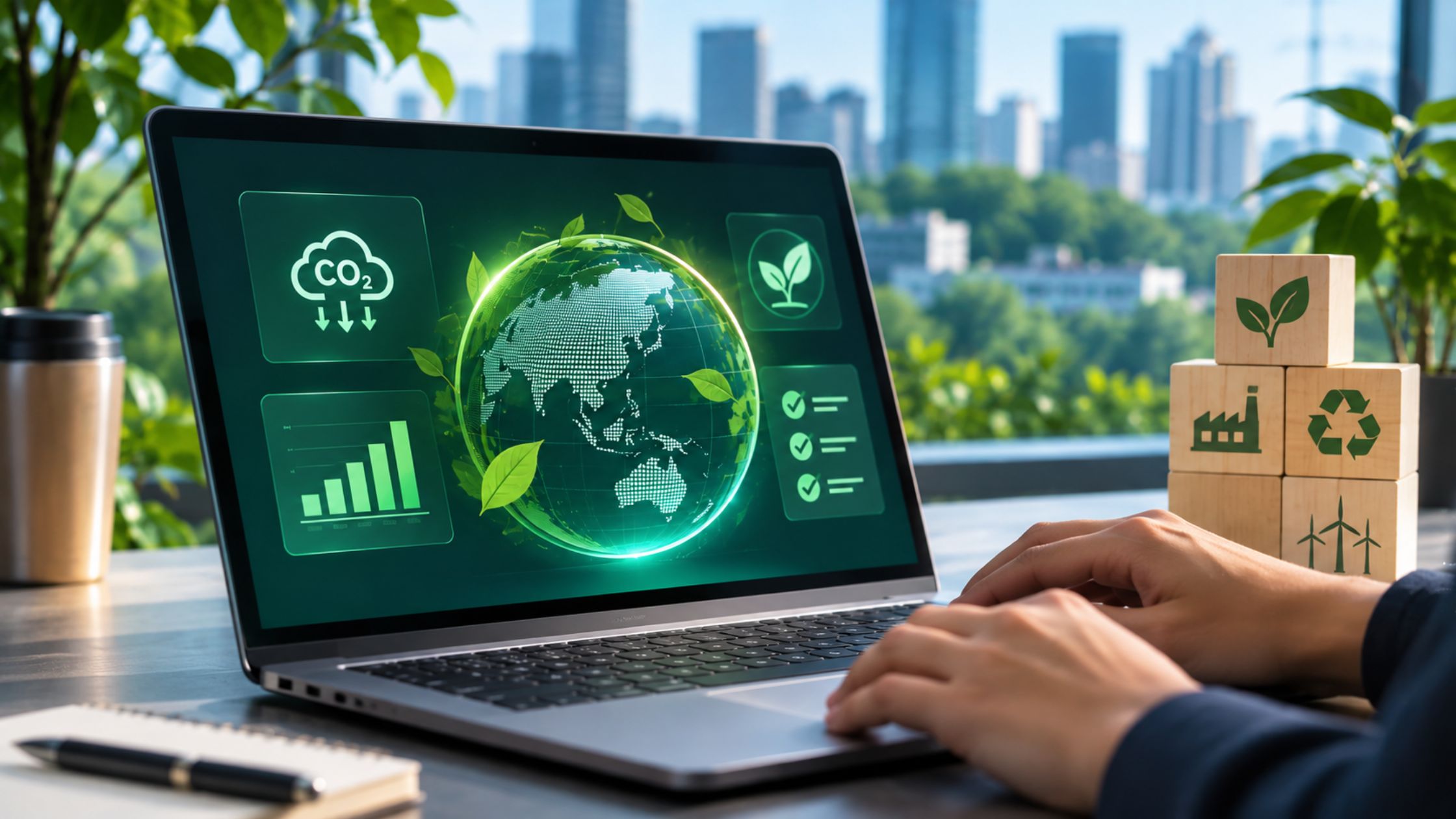
Artificial intelligence is changing how companies collect, process and communicate environmental information. From extracting emissions data from operational records to matching emission factors and preparing sustainability reports, AI-powered platforms are increasingly being positioned as a way to reduce the time and cost associated with carbon accounting. However, as businesses adopt these tools, a more fundamental question is emerging: can faster reporting also produce more reliable environmental information?
The concern is significant as sustainability disclosures face greater scrutiny from investors, regulators, customers and assurance providers. A 2026 study by the International Federation of Accountants (IFAC), the American Institute of CPAs and the Chartered Institute of Management Accountants found that 75% of large global companies obtained assurance on at least some sustainability disclosures in 2024. The findings point to growing demand for information that can be examined and substantiated, rather than accepted solely on the basis of corporate reporting.
For businesses, the challenge is no longer limited to calculating emissions. They must also demonstrate where the underlying data originated, which methodologies were applied and whether the resulting figures can withstand independent scrutiny.
Carbon accounting involves processing information from multiple sources, including supplier declarations, energy consumption records, product specifications, transportation data and emission-factor databases. For manufacturers with complex supply chains, collecting and reconciling this information can be labour-intensive. AI can automate several parts of this process, including document extraction, data classification, emissions calculations, anomaly detection and report preparation. Yet automation does not eliminate the risks associated with incomplete information or unsuitable assumptions. In some cases, it can make those problems harder to identify.
A study published in Business Strategy and the Environment in May 2026 examined the influence of generative AI on sustainability disclosures. Its findings suggested that AI-generated content could perpetuate greenwashing, while participants perceived such disclosures as more positive and credible than actual corporate disclosures. The research highlights a potential contradiction: technology designed to improve reporting could also make unsupported environmental claims more convincing.
The reliability of AI-generated carbon information therefore depends on the quality of its inputs and the transparency of its calculations. When supplier data is unavailable, for example, a system may need to use estimates or industry benchmarks. Such estimates can be useful, but they should be clearly identified, supported by appropriate assumptions and distinguished from verified measurements.
Why Accountability Is Becoming a Business Requirement
The shift towards more structured sustainability reporting is increasing the importance of data governance and assurance. The International Auditing and Assurance Standards Board’s International Standard on Sustainability Assurance (ISSA) 5000, effective for relevant reporting periods beginning on or after December 15, 2026, establishes requirements for assurance engagements covering different forms of sustainability information, including greenhouse gas emissions.
Meanwhile, the GHG Protocol and the International Organization for Standardization are working towards greater alignment between corporate greenhouse gas accounting standards. The initiative reflects an effort to reduce fragmentation and improve consistency in how organisations measure and report emissions.
These developments have implications for Asian businesses, particularly manufacturers and exporters connected to international supply chains. Singapore’s sustainability reporting roadmap and the European Union’s Carbon Border Adjustment Mechanism (CBAM) are examples of how environmental information is becoming relevant to regulatory compliance and market access.
For Indian exporters in sectors covered by CBAM, for instance, the ability to calculate and substantiate embedded emissions can affect how they respond to requirements from European customers and authorities. In this environment, inaccurate or poorly documented data can create commercial and compliance risks.
Climate Seal’s Approach to Evidence-Led Automation
For climate-tech companies, the opportunity lies in making carbon accounting more efficient without removing the checks that establish credibility. Climate Seal, an AI-powered sustainability compliance platform, is approaching this challenge by connecting data processing, emissions calculations and evidence management within structured workflows.
While conversing with AsiaTechDaily, Michael Ma, Founder and CEO of Climate Seal, said the central problem behind greenwashing is the disconnect between environmental claims and verifiable evidence.
“I think the fundamental issue with greenwashing is that environmental claims are often disconnected from verifiable evidence. Our approach is to make that evidence part of the reporting process from the beginning. Climate Seal keeps records of the original data, calculation assumptions, emission factors, and changes made throughout the workflow. If information is missing or inconsistent, we want the system to flag it rather than produce a convincing-looking number. We believe companies shouldn’t just be able to claim they’re sustainable. They should be able to demonstrate it with transparent, traceable data.”
The company’s platform is designed to process product, supplier, environmental and operational information, helping users organise source documents, identify missing inputs, map data to relevant methodologies and prepare assessment reports. Its evidence ledger connects reported results with source information, calculations, assumptions and review decisions.
Climate Seal also positions its platform beyond product carbon footprint assessments, with workflows covering life-cycle assessments, corporate emissions, supplier data and selected sustainability compliance requirements. Its latest positioning emphasises an AI-agent architecture that can handle multiple stages of a project while allowing professionals to review methodology choices, resolve data gaps and approve outputs.
Making Speed and Credibility Work Together
The distinction is important. An AI-generated report is not automatically an independently verified report. By retaining source records and making calculations reviewable, platforms can help professionals examine how results were produced. However, the accuracy of the underlying information and the suitability of the methodology still require scrutiny. As AI becomes more deeply integrated into sustainability workflows, the role of consultants, auditors and internal sustainability teams is likely to evolve rather than disappear. Automation can reduce repetitive work, but decisions involving reporting boundaries, methodology selection, materiality and evidence sufficiency require professional judgement.
This is also where Climate Seal’s focus on sustainability consultants and LCA practitioners becomes relevant. By providing an AI-assisted delivery platform, the company aims to help professionals manage data-intensive assessments while retaining control over technical decisions and final review. For businesses adopting similar tools, the priority should be to evaluate not only how quickly a platform generates reports, but also whether it can explain its calculations, identify uncertainty and preserve an evidence trail.
AI has the potential to make carbon accounting more accessible, particularly for smaller manufacturers and businesses without large sustainability teams. But reducing the cost of reporting will have limited value if the resulting information cannot be trusted. The next stage of AI adoption in ESG will depend on whether technology providers can combine automation with transparent methodologies, reliable source data and meaningful human oversight. For companies such as Climate Seal, the opportunity is to make environmental assessments more efficient while strengthening the evidence behind them. Ultimately, the value of AI in sustainability reporting will not be measured simply by how quickly it produces a carbon footprint or compliance report. It will depend on whether businesses can explain, substantiate and defend the environmental information they disclose.
Quick Takeaways
- AI is accelerating carbon accounting and sustainability reporting, but faster reporting does not automatically mean more reliable data.
- Generative AI can also perpetuate greenwashing by making unsupported environmental claims appear credible.
- Growing sustainability assurance requirements are increasing the importance of transparent, traceable and verifiable emissions data.
- Climate Seal uses AI-powered workflows to process environmental data, track calculation assumptions and flag missing or inconsistent information.
- Its evidence-led approach connects reported results with source documents, emission factors and calculation records.
- Human oversight remains essential for reviewing methodologies, validating information and approving sustainability disclosures.
- The future of AI in ESG will depend on balancing automation and efficiency with accountability and trust.
Similar Articles