AsiaTechDaily – Asia's Leading Tech and Startup Media Platform

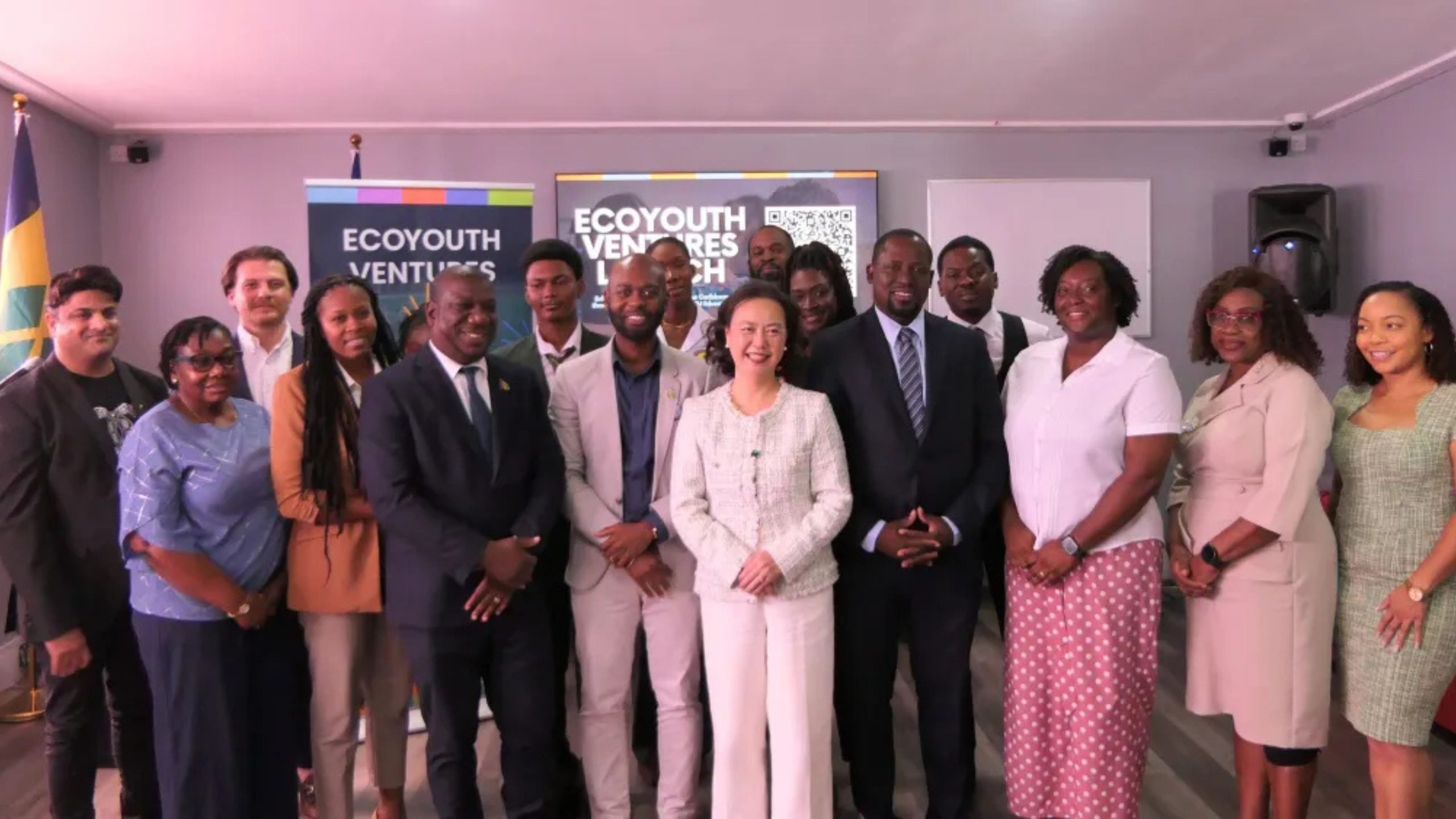
SVG Launches Regional Eco-Youth Ventures Project to Strengthen Youth-Led Environmental Innovation
 by
by

Why the Eco-Youth Ventures Project signals a deeper shift in how the Caribbean builds its future innovation pipeline
The Eco-Youth Ventures Project was officially launched in St Vincent and the Grenadines this week, positioning youth education as a strategic lever for long-term sustainability and economic resilience in the Caribbean. While framed as an environmental and education initiative, the programme reflects a broader regional push to link STEM skills, tourism, and climate innovation—areas increasingly relevant to startups, investors, and policymakers alike.
Implemented by the Pan American Development Foundation in partnership with the Republic of China (Taiwan) and the Government of St Vincent and the Grenadines, the two-year initiative spans SVG, St Lucia, and St Kitts and Nevis. In SVG alone, it will engage around 1,500 students and train 75 educators across 11 secondary schools—early indicators of scale that move the programme beyond a pilot phase.
At its core, Eco-Youth Ventures is designed to prepare young people to solve real-world problems tied to tourism and environmental protection using project-based STEM learning. For small island economies where tourism remains a primary revenue driver, the focus on sustainable tourism is as much an economic strategy as it is a climate one.
Unlike traditional classroom programmes, Eco-Youth Ventures connects students directly to applied challenges, encouraging them to think like problem-solvers and early-stage founders. This approach mirrors how innovation ecosystems elsewhere groom talent—long before startups are formally created.
Why This Matters for the Startup Ecosystem
For Caribbean economies, the Eco-Youth Ventures Project reflects a shift in how innovation capacity is being built. Rather than relying only on physical infrastructure such as ports, airports, and hospitals, policymakers are increasingly treating human capital as long-term economic infrastructure—especially in regions exposed to climate risk and tourism dependence.
By introducing students to applied STEM learning at an early stage, the programme creates a foundation for future startup activity. Participants are not only learning technical skills, but also how to identify problems, design solutions, and test ideas within real-world contexts such as sustainable tourism, agriculture, and environmental management. These are sectors where the Caribbean has both urgent needs and natural advantages.
From an innovation perspective, the initiative offers early exposure to the same capabilities that later underpin venture-backed companies, including:
- Green and climate-focused entrepreneurship
- Technology use cases tied to tourism and environmental resilience
- Product-led thinking rooted in STEM education
- Cross-border collaboration across small but connected markets
Over time, these capabilities increase the likelihood that young people progress into founders, skilled operators, or technical talent. For investors and ecosystem builders, this signals a deliberate effort to strengthen the upstream pipeline that feeds accelerators, incubators, and public–private innovation partnerships—well before capital is deployed.
Taiwan’s Strategy: Infrastructure Plus Talent
Delivering the keynote address, Taiwan’s Ambassador to SVG Fiona Fan described “connectivity” as the foundation of Taiwan’s long-standing engagement with the country. She referenced major infrastructure projects—including Argyle International Airport and the Kingstown Modern Port—as visible outcomes of that partnership.
However, she stressed that physical assets alone are not enough.
“True progress also requires investment in people,” Fan said, pointing to Taiwan-backed programmes supporting youth, women, and agriculture-tourism linkages.
She also announced that the Taiwan Scholarship Programme will open in February 2026, offering Vincentian students the opportunity to study in Taiwan—an education-to-economy pathway that strengthens long-term talent exchange.
Government Alignment Signals Long-Term Intent
The presence of senior ministers from agriculture, fisheries, tourism, and education at the launch underscored broad policy alignment. Minister of Tourism, Civil Aviation and Sustainable Development Kishore Shallow framed the initiative as a signal that environmental stewardship and economic growth are not competing priorities.
“Empowering young people in renewable energy, sustainable agriculture, and green enterprise is essential to safeguarding our future,” he said.
This framing matters. For investors and ecosystem builders, it signals that sustainability-focused innovation is likely to receive continued institutional support rather than remain a side initiative.
Chief Education Officer Kay Martin-Jack said the programme was an affirmation that young people are not passive beneficiaries of development, but active drivers of it. That philosophy aligns with global shifts toward entrepreneurship-led education models.
Minister of State for Education Lavern King echoed this view, highlighting the need for resilience and adaptability in small island states and reaffirming the government’s commitment to creating an enabling environment for youth-led ideas to scale.
What the Programme Actually Delivers
Eco-Youth Ventures will run over two years and focuses on students aged 14 to 16, as well as educators, across St Vincent and the Grenadines, St Lucia, and St Kitts and Nevis. PADF Education and Stakeholder Outreach Coordinator Kimeisha Bailey said the programme is designed to bridge skills gaps by applying STEM learning to real-world challenges.
The programme delivers value across several layers of the ecosystem:
- Real-world problem solving: Students work on tourism and environmental challenges drawn from their local economies, learning how to identify problems, test ideas, and develop workable solutions rather than hypothetical projects.
- Early product and innovation thinking: By tying STEM learning to sustainability and tourism use cases, participants are exposed to the same constraints—cost, feasibility, impact—that shape early-stage product development in startups.
- Educator capacity building: Teachers receive training that allows applied learning methods to be embedded into existing curricula, extending the programme’s influence beyond its formal two-year duration.
- Regional collaboration at small-market scale: The cross-country structure introduces students to collaboration across multiple markets, a critical skill in the Caribbean where innovation often requires regional rather than single-country scale.
The emphasis on market-relevant outcomes reflects a growing understanding that innovation ecosystems are built long before startups are formed. By focusing on skills, mindset, and collaboration, Eco-Youth Ventures mirrors approaches used by accelerators and venture studios—adapting them for an earlier stage in the talent pipeline.
A Long-Term Bet on Youth-Led Innovation
While Eco-Youth Ventures is not a startup programme in the traditional sense, it lays groundwork that many early-stage ecosystems lack: early exposure, regional thinking, and sustainability-first problem solving. For a region navigating climate risk, talent migration, and economic concentration, that foundation may prove as valuable as capital itself.
If sustained and scaled, initiatives like this could shape the next generation of founders, operators, and policymakers—long before they enter pitch rooms or boardrooms. And for the Caribbean, that may be the most strategic investment of all.
Quick Takeaways
- Early-stage talent building: Eco-Youth Ventures focuses on students well before startup formation, signalling a long-term approach to building the region’s innovation pipeline.
- STEM with market relevance: The programme links education directly to tourism and environmental challenges, encouraging practical problem-solving rather than academic learning alone.
- Regional-first design: By operating across SVG, St Lucia, and St Kitts and Nevis, the initiative recognises that scale in small markets often requires cross-border collaboration.
- Human capital as infrastructure: The project reflects a broader policy shift toward investing in people alongside physical assets like ports and airports.
- Signals for future ecosystems: While not a startup accelerator, the programme mirrors early elements of venture-building—applied learning, product thinking, and ecosystem alignment.
Similar Articles