AsiaTechDaily – Asia's Leading Tech and Startup Media Platform

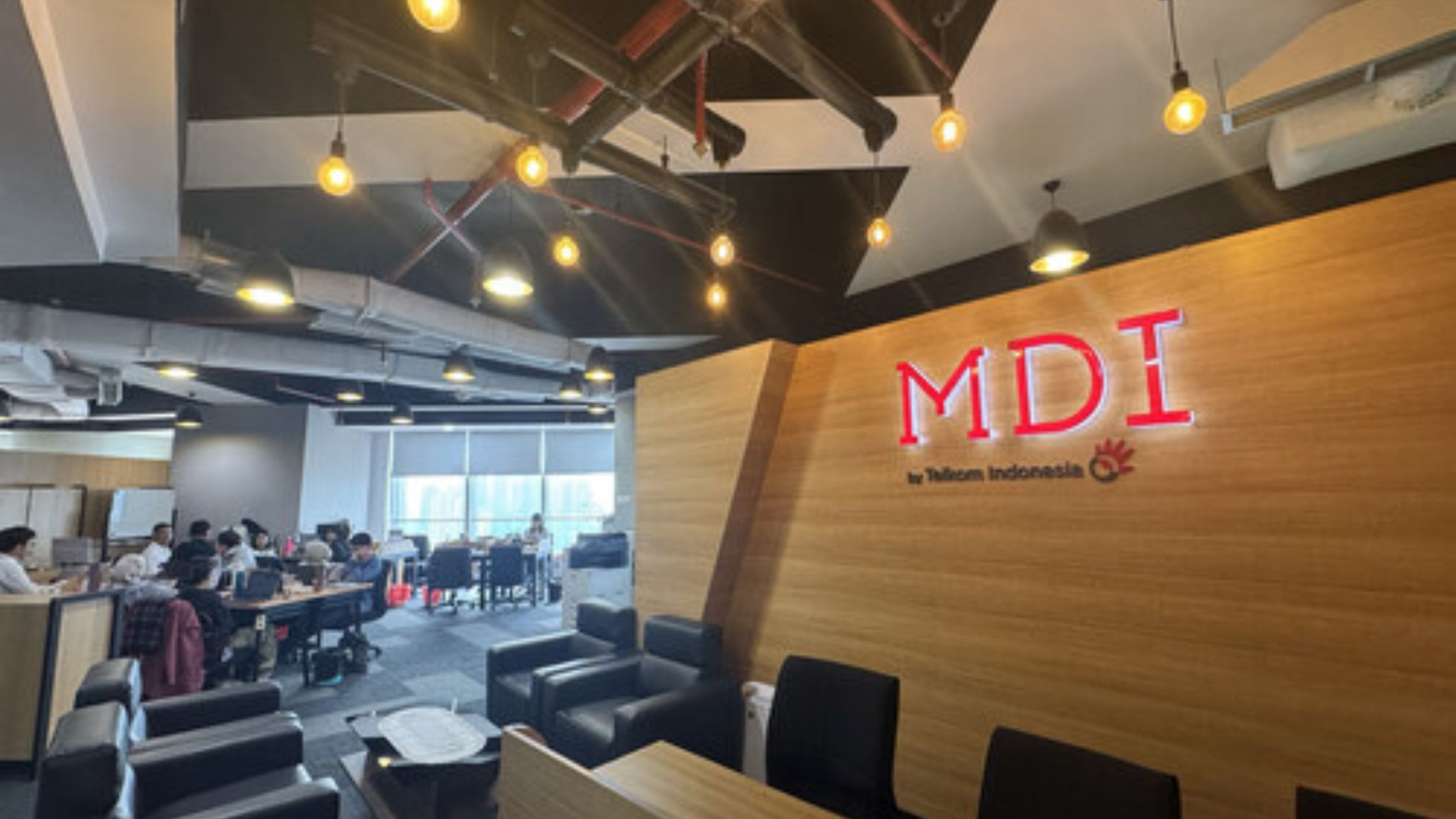
MDI Ventures Seeks Repeatable Enterprise Integration Model Across SOEs
 by
by

After backing AI, cybersecurity and blockchain startups, the Telkom-backed CVC is shifting focus toward structured enterprise integration, governance discipline, and repeatable collaboration across Indonesia’s SOE ecosystem.
Indonesia’s corporate venture capital arm MDI Ventures is entering a new phase. After actively investing across AI, cybersecurity, and blockchain in 2025 — including bets on companies such as Cyfirma — the Telkom-backed investor is now putting less emphasis on deal momentum and more on execution discipline. It is a broader reality in Southeast Asia’s venture market: capital is no longer the main differentiator. Execution is.
Backed by Telkom Indonesia, MDI Ventures is repositioning itself not just as a funding vehicle, but as a structured bridge between startups and Indonesia’s state-owned enterprise (SOE) ecosystem.
Investment Activity and Strategic Shift
Throughout 2025, MDI deployed capital across emerging technology sectors. But instead of focusing solely on new investments, the firm is now sharpening its strategy around extracting measurable value from existing portfolio companies.
According to Roby Roediyanto, Director at MDI Ventures, the challenge is not identifying promising startups — it is ensuring enterprise adoption actually happens.
“One of the biggest challenges when startups work with enterprises or SOEs is ensuring from the outset that the solutions truly address business needs and are executable,” Roby said. “MDI helps align enterprise needs with the most relevant portfolio solutions, then works closely with both sides to move the process from discussion to implementation and go-to-market.”
This is a critical distinction. Many corporate venture capital (CVC) units globally struggle to convert “synergy potential” into actual revenue-generating contracts. MDI appears to be institutionalizing that conversion process.
Enterprise Integration in Practice
One concrete example is the collaboration between Digiserve (a Telkom subsidiary) and Cyfirma.
Cyfirma’s cyber threat intelligence (CTI) capabilities have now been integrated into Telkom Solution’s enterprise offering. Instead of remaining a portfolio relationship on paper, the solution has been embedded into Telkom’s commercial pipeline.
The integration reportedly allows enterprise customers to:
- Detect cyber threats earlier
- Understand associated business risks
- Implement preventive measures proactively
The significance is not the product itself, but the pathway. The startup’s technology is distributed through Telkom’s established go-to-market channels — reducing friction for adoption and accelerating revenue realization.
For Indonesia’s startup ecosystem, this model matters. Enterprise procurement cycles are long, especially within SOEs. Structured alignment shortens that gap.
Beyond operational execution, MDI is framing governance and trust as strategic infrastructure. As a corporate venture arm operating within Indonesia’s SOE environment, scrutiny is high. Interactions among founders, corporates, regulators, and vendors can become complex — particularly when public-sector entities are involved.
To reinforce credibility, MDI Ventures: (1) Obtained ISO 37001 Anti-Bribery Management System (ABMS) certificatio, (2) Retained its Indonesia Trusted Company designation from the Indonesian Institute for Corporate Governance (IICG). These moves signal institutional maturity — especially at a time when global LPs are more cautious about governance standards in emerging markets. MDI also co-hosted Synergy Innovation Week 2025 with Indonesia Venture Capital Association (AMVESINDO), bringing together portfolio startups, Telkom Group entities, SOEs, and regulators.
A key session, the Ventures Forum, convened representatives from major regulatory and government bodies, including:
- Otoritas Jasa Keuangan (OJK)
- The Deputy Attorney General for Civil and Administrative Matters
- Ministry of National Development Planning (Bappenas)
- Ministry of Communication and Digital Affairs (Komdigi)
- The Ministry of Creative Economy
The presence of regulators alongside startups underscores a key point: innovation in Indonesia’s SOE ecosystem cannot scale without regulatory clarity.
Why This Matters for Southeast Asia
MDI’s repositioning comes amid tighter venture funding conditions across Southeast Asia. As growth capital becomes more selective, CVCs are under pressure to demonstrate tangible value creation — not just mark-to-market gains.
For corporate-backed funds, three risks typically emerge:
- Portfolio companies fail to integrate into corporate operations
- Synergy conversations remain pilot-stage experiments
- Governance gaps undermine long-term trust
MDI’s current strategy appears designed to address all three simultaneously. By formalizing synergy processes and embedding startups into Telkom’s distribution channels, the firm is moving from “strategic intent” to operational delivery. By emphasizing governance certifications and regulator engagement, it is building long-term institutional credibility.
Roby emphasized that the goal is not one-off collaborations.
“Our goal is not to generate one-off synergies, but to build a repeatable and scalable way of working,” he said. “That’s why we oversee the process from opportunity identification to impactful collaboration, while safeguarding integrity through consistent governance.”
The keyword here is repeatable. If MDI succeeds in creating a structured model that consistently converts portfolio solutions into SOE adoption, it could offer a template for other Southeast Asian CVCs seeking deeper enterprise impact.
The Bigger Question
The next phase will test whether this execution-driven approach translates into measurable financial returns — revenue growth for startups, cost efficiency or capability gains for SOEs, and stronger fund performance for LPs.
Indonesia’s innovation ecosystem is large, but enterprise adoption remains one of its biggest bottlenecks. If MDI can reduce that friction at scale, it would strengthen its role not just as an investor, but as a systems integrator within the national innovation architecture. For now, the message from Jakarta is clear: in a more disciplined venture environment, execution and trust may matter more than capital alone.
Quick Takeaways
- Strategic shift: MDI Ventures is moving from active deal-making toward structured portfolio value realization.
- Enterprise integration focus: The Telkom-backed CVC is prioritizing measurable outcomes — pilot-to-implementation conversion, defined go-to-market pathways, and scalable collaboration across SOEs.
- Execution over optics: The emphasis is on embedding startup solutions within Telkom Indonesia’s commercial channels rather than maintaining symbolic strategic partnerships.
- Governance as strategy: ISO 37001 certification and continued compliance positioning signal a push to institutionalize trust within Indonesia’s SOE ecosystem.
- Regulatory engagement: Collaboration with Indonesia Venture Capital Association and dialogue involving Otoritas Jasa Keuangan and other agencies indicates alignment with national innovation priorities.
- Broader implication: In a tighter funding environment, Indonesia’s corporate venture capital model appears to be entering a phase where execution discipline and governance credibility may matter more than capital deployment alone.
Similar Articles