AsiaTechDaily – Asia's Leading Tech and Startup Media Platform

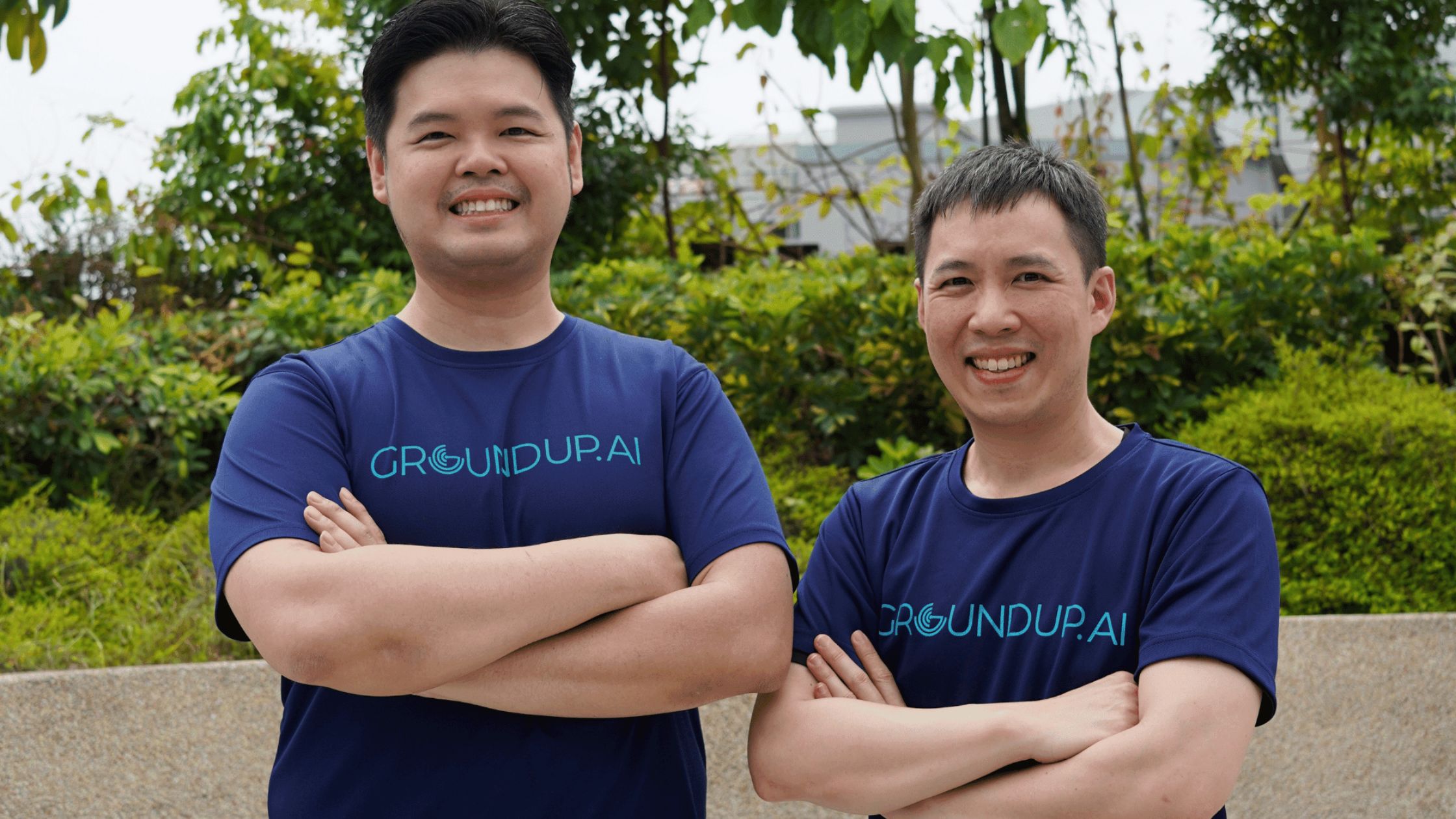
Groundup.ai Lands $10M Deal, Expands Role in Industrial AI Operations
 by
by

Singapore startup’s largest contract yet points to a shift from predictive alerts to decision-making systems in heavy industries
Singapore-based deep-tech startup Groundup.ai has secured a contract worth over $10 million, marking the largest deal in its history and signaling growing demand for more advanced AI-driven industrial systems.
The agreement involves deploying the company’s “cognitive maintenance” platform across multiple sites for a large, asset-heavy organisation. While the client has not been disclosed, the scale of the deal suggests adoption at an enterprise level, particularly in sectors such as manufacturing, maritime, or critical infrastructure.
The win comes less than a year after Groundup.ai raised $4.25 million in Series A funding, positioning the company at a point where early-stage technology is beginning to see wider commercial deployment. For years, industrial AI has largely focused on predictive maintenance—systems that detect anomalies and warn operators before machines fail.
Groundup.ai is positioning itself a step beyond that. Instead of simply identifying when something might go wrong, its system is designed to analyse root causes and recommend actions. This shift—from monitoring to decision support—is becoming increasingly relevant as industries look to reduce downtime, improve efficiency, and manage complex operations with fewer human interventions.
CEO Leon Lim framed the shift clearly:
“Global industries are no longer satisfied with just knowing when a machine might fail. They want a system that acts as a virtual expert to tell them how to ensure it never does.”
This reflects a broader movement across industrial sectors, where companies are seeking systems that can not only detect issues but also guide responses in real time.
Why this deal stands out
Large contracts are not unusual in industrial technology, but a few aspects make this one notable.
- It was secured after a competitive evaluation process, suggesting the technology has moved beyond early experimentation
- The deployment spans multiple sites, indicating operational trust at scale
- The customer is described as a major global player, pointing to enterprise-level adoption
Taken together, this suggests that Groundup.ai is transitioning from pilot-stage deployments to more embedded, long-term implementations. That transition is often where many industrial startups face their toughest challenges—moving from proof-of-concept to consistent, large-scale usage.
Speaking to AsiaTechDaily, the company indicated that the scale of the contract is also reshaping its internal positioning:
“This scale elevates Groundup.ai from a solution provider to a core infrastructure partner, empowering engineers to shift their focus from reactive maintenance to strategic, high-value growth.”
The comment reflects a broader shift in how industrial AI vendors are positioning themselves—not just as tools, but as part of the core operational layer within large organisations.
A growing focus on “physical AI” in Asia
Groundup.ai describes its approach as “physical AI,” combining industrial IoT, acoustic sensing, and machine learning.
This reflects a wider trend in Asia’s deep-tech ecosystem, where startups are increasingly focused on applying AI to real-world systems—factories, ships, and infrastructure—rather than purely digital environments. The company’s platform uses a library of thousands of machine “signatures” to detect and diagnose anomalies. Over time, the system is designed to improve its accuracy as it learns from operational data.
While the concept is still evolving, the underlying idea is straightforward: move from reactive maintenance toward systems that can continuously learn and improve operational reliability.
What this means for the industrial AI market
The contract points to a broader shift in how industrial companies are adopting AI.
Instead of investing in isolated tools, companies are beginning to look for integrated systems that can:
- Combine data from multiple machines and environments
- Provide actionable insights, not just alerts
- Scale across different facilities and geographies
This is especially relevant in asset-heavy industries, where even small improvements in uptime or efficiency can translate into significant cost savings.
However, challenges remain. Deploying AI in physical environments is complex. Systems must work reliably across different conditions, integrate with legacy infrastructure, and deliver measurable returns. Adoption cycles can also be long, as large organisations tend to move cautiously with mission-critical systems.
Groundup.ai’s recent growth has been supported by its Series A round in 2025, led by Tin Men Capital, with participation from Wavemaker Partners, SEEDS Capital, and HIVEN.
That funding appears to have helped the company move from development into larger-scale deployments—an important transition for deep-tech startups.
COO and co-founder Alex Wong highlighted the company’s focus on execution:
“Our mission has always been to turn data into decisions. This contract allows us to execute that mission at an unprecedented scale.”
The emphasis now shifts from building technology to delivering consistent performance across real-world operations.
Groundup.ai’s $10 million contract marks a significant milestone—not just in size, but in what it represents.
It suggests that industrial companies are becoming more comfortable adopting AI systems that go beyond monitoring and into decision-making. It also highlights how startups in Asia are increasingly contributing to this shift.
At the same time, large contracts bring higher expectations. Delivering consistent results across multiple sites, maintaining reliability, and proving long-term value will be critical.
For Groundup.ai, this deal is both validation and a test. It shows that the market is ready to explore more advanced forms of industrial AI. Whether those systems can deliver at scale is what will define the next phase.
Quick Takeaways:
- Groundup.ai secured a $10M+ contract, its largest deal to date, marking a shift toward larger enterprise deployments.
- The project involves multi-site rollout for a major global, asset-heavy organisation.
- The company is moving beyond predictive maintenance to “cognitive maintenance”—systems that diagnose issues and guide actions.
- The deal signals growing demand for AI-driven decision support in industrial operations.
- According to the company, the scale is helping it evolve into a “core infrastructure partner”, not just a solution provider.
- The contract follows its $4.25M Series A (2025), indicating a transition from product development to execution.
- More broadly, it reflects a trend where industrial AI in Asia is shifting from pilots to real deployments at scale.
Similar Articles