AsiaTechDaily – Asia's Leading Tech and Startup Media Platform

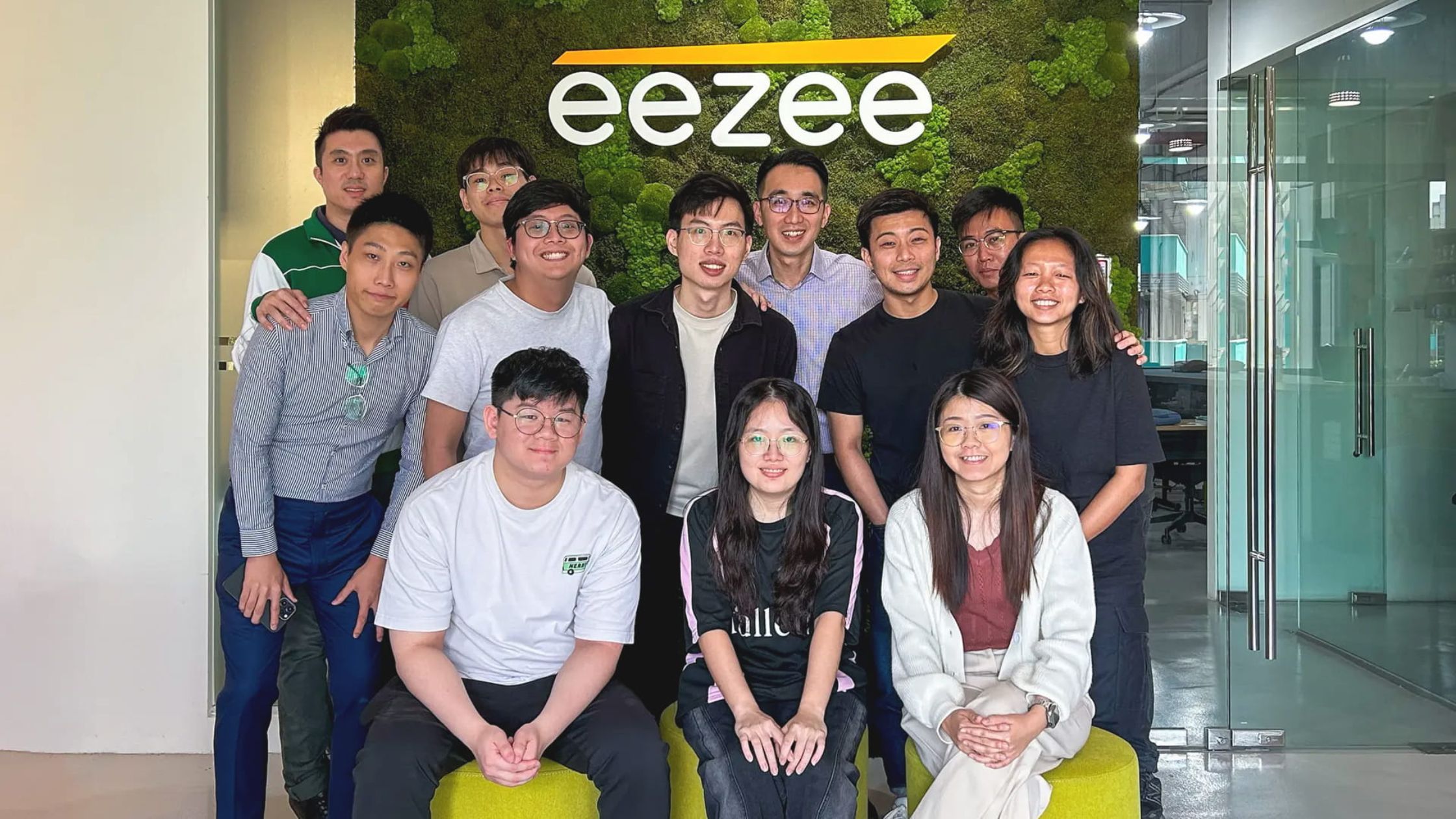
Eezee Raises US$5M to Scale AI Procurement Across Southeast Asia — Can Tail-End Spend Be the Next SaaS Frontier?
 by
by

Backed by Korea Investment Partners, the Singapore-based startup is betting that AI can modernize one of the most overlooked enterprise functions in the region.
Singapore-based procurement platform Eezee has secured US$5 million in a pre-Series B funding round as it pushes deeper into Southeast Asia and accelerates development of its AI-powered procurement tools.
The round was led by Korea Investment Partners Southeast Asia, with existing investors Kickstart Ventures and Wavemaker Ventures participating. The round was oversubscribed and also drew several strategic investors, according to the company.
The fresh capital will fund regional expansion and product development, particularly for its AI-driven procurement tools RFQBot and ProcureFlow. Eezee has also formally entered Thailand, adding to its existing presence in Singapore, Malaysia, Indonesia and the Philippines.
Enterprise procurement remains one of the largest operational cost centres, yet it is still heavily manual in many companies across Southeast Asia. Most digital transformation efforts have focused on sales, marketing, or finance. Procurement — especially “tail-end spend,” which refers to small, low-value but high-volume purchases — often remains fragmented across emails, spreadsheets and disconnected vendors.
Eezee positions itself in this gap. Rather than competing in large enterprise contract management systems, the company focuses on automating repetitive, low-value purchases that consume time and administrative effort. According to the company, its platform can reduce procurement cycles from days to minutes while delivering cost savings of 20% or more. This focus on tail-end spend reflects a broader SaaS trend: targeting inefficient micro-processes inside large organizations that are often ignored by traditional enterprise software vendors.
AI-Driven Automation at the Core of the Strategy
Eezee’s AI tools — RFQBot and ProcureFlow — are designed to automate request-for-quotation processes and streamline vendor matching, pricing comparisons, and workflow approvals.
CEO and co-founder Logan Tan said procurement workflows have changed little in decades, but recent AI advances now allow both the “software layer” and physical movement of goods to be optimized together.
“Recent advances in AI now make it possible to reimagine both the software layer and the physical movement of goods,” Tan said. “With this latest round, we’re seeing a more mature market and significantly less education required around Eezee’s offering.”
The company has begun rolling out its AI tools across multiple markets in the first half of 2026.
In Southeast Asia, where supplier ecosystems are fragmented and procurement standards vary across countries, automation can deliver outsized efficiency gains — but scaling requires strong local execution.
Funding Secured Amid Regional Capital Slowdown
The funding comes at a time when Southeast Asia’s startup ecosystem is facing slower deal volumes, tighter capital markets, and greater scrutiny around governance and fraud.
Against that backdrop, Eezee said the round was oversubscribed. The company also reported:
- Operational profitability in Indonesia and Malaysia
- Continued quarter-on-quarter growth since early 2025
- Plans to reach group-level profitability in the second half of 2026
This emphasis on profitability is notable. In the current funding climate, investors are placing greater weight on capital efficiency and operational discipline rather than pure top-line expansion.
Shane Ang, Vice President at Korea Investment Partners Southeast Asia, said procurement remains “one of the largest yet least optimized enterprise functions globally,” adding that Eezee’s execution in a fragmented region stood out.
Strategic Backer with Regional Ambitions
Founded in 1986, Korea Investment Partners is one of South Korea’s largest venture capital firms by assets under management, with offices in Seoul, Singapore, Silicon Valley, Beijing and Shanghai. The firm has backed companies across AI, hardware, biotech and fintech sectors.
Its investment in Eezee signals continued Korean interest in Southeast Asia’s enterprise technology landscape, particularly in B2B infrastructure and industrial digitization.
Rather than consumer internet bets, capital is increasingly flowing into vertical SaaS, automation and supply-chain platforms that serve traditional industries.
Regional Expansion: The Thailand Entry
Eezee’s expansion into Thailand marks its fifth Southeast Asian market. The company is building a multi-country procurement network — an important factor in cross-border sourcing and supplier diversification.
However, expanding a procurement platform regionally is operationally complex. Supplier onboarding, logistics coordination, pricing standardization, and regulatory compliance differ significantly between markets. Execution — not just software capability — will determine whether Eezee can maintain margins while scaling. While generative AI dominates headlines, many investors are looking toward applied AI in enterprise operations.
Procurement sits at the intersection of:
- Supply chain
- Finance
- Vendor management
- Logistics
Automating these workflows can unlock measurable cost savings — a more tangible value proposition than consumer-facing AI experiments.
In Southeast Asia, where SMEs and mid-sized enterprises form a large portion of the economy, digital procurement adoption remains uneven. Platforms like Eezee are betting that the next phase of growth will come from enterprise-grade automation rather than marketplace expansion alone.
A Measured Path Forward
Eezee’s US$5 million raise is modest compared to mega-rounds seen in previous years. But in the current funding environment, disciplined capital deployment and path-to-profitability signals may matter more than headline size.
The company’s challenge now is twofold:
- Prove that AI can meaningfully transform procurement workflows at scale
- Expand regionally without sacrificing operational efficiency
If successful, Eezee could position itself as a foundational B2B infrastructure layer across Southeast Asia’s fragmented procurement ecosystem. If not, it will face pressure from both global enterprise software providers and emerging local competitors racing to apply AI to similar workflow inefficiencies. For now, the funding signals investor confidence in a less glamorous but potentially high-impact corner of enterprise technology — where automation meets industrial operations, and where cost savings are often more valuable than hype.
Eezee’s latest raise reflects a broader shift in Southeast Asia’s startup landscape: toward capital-efficient growth, applied AI, and enterprise-focused models with clear revenue paths. Rather than chasing consumer adoption, the company is targeting a longstanding inefficiency in enterprise procurement. The next test will be whether AI-driven tools can deliver sustainable operational improvements across multiple markets — not just incremental digitization, but structural transformation. In a tighter funding climate, that distinction will matter.
Similar Articles