AsiaTechDaily – Asia's Leading Tech and Startup Media Platform

Can Japan Reclaim Its Chip Edge? Inside Rapidus’ ¥267.6 Billion State Backed Funding Boost
 by
Byungho Lim
by
Byungho Lim

State backing deepens as Tokyo tightens oversight and private giants pile in to support 2-nanometer ambitions
Japan’s semiconductor bet, Rapidus Corporation, has secured ¥267.6 billion (about $1.7 billion) in fresh capital from the government and a broad coalition of private-sector companies, as Tokyo intensifies efforts to rebuild domestic chip manufacturing capacity.
According to the Ministry of Economy, Trade and Industry (METI), ¥100 billion of the latest round was invested through the Information-Technology Promotion Agency (IPA), while ¥167.6 billion came from 32 companies including Canon, Sony Group, SoftBank, Honda, Fujitsu and Toyota Motor, along with several major banks. The private contribution exceeded the company’s earlier ¥130 billion fundraising target for the fiscal year.
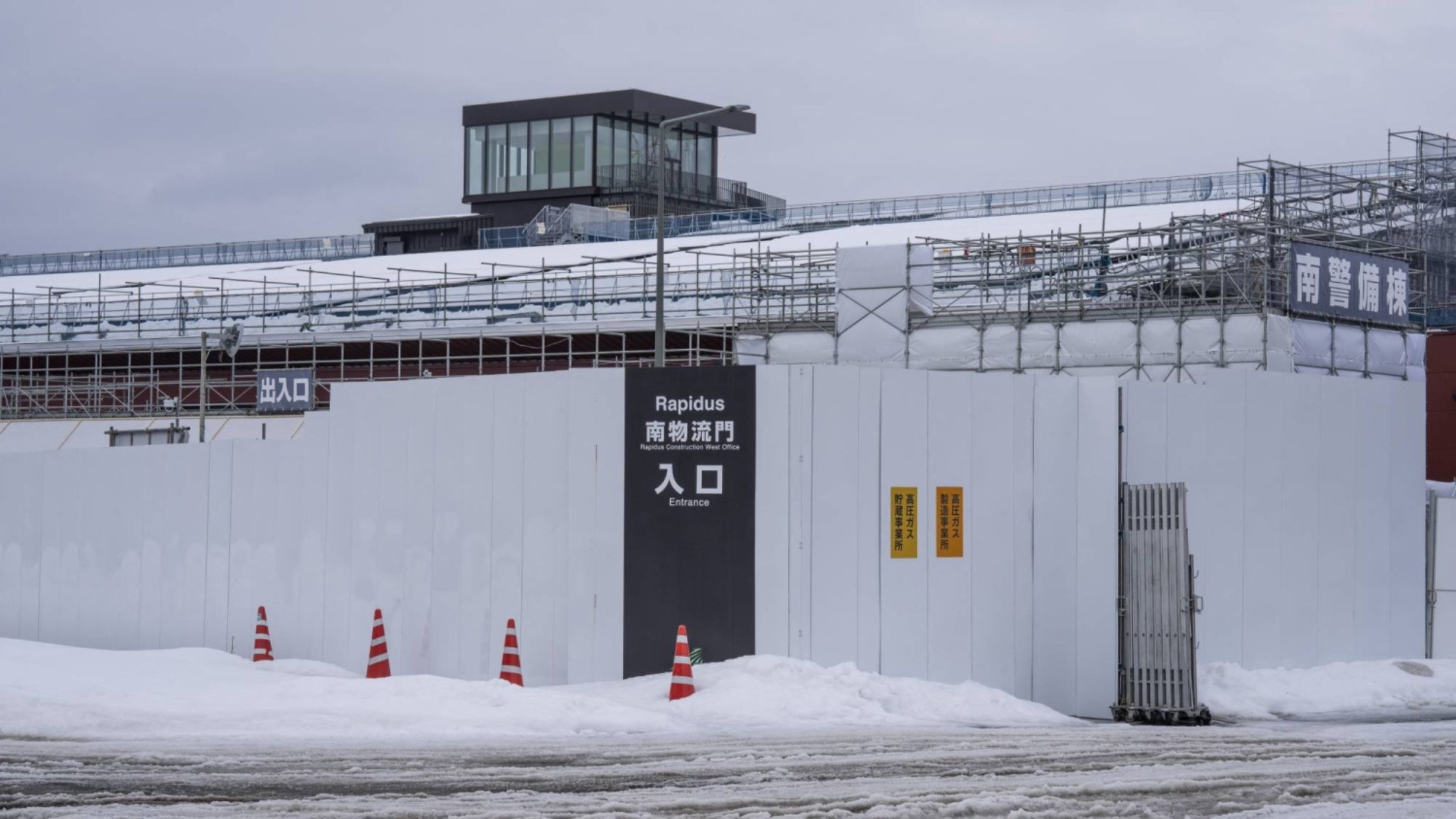
The funding supports Rapidus’ construction of a next-generation semiconductor foundry in Chitose, Hokkaido, where the company aims to mass produce advanced 2-nanometer logic chips by the second half of fiscal 2027.
A Stronger Government Hand, But Limited Control
With this round, the Japanese government becomes the largest single shareholder in Rapidus. However, its voting rights are initially capped at 11.5%. Officials say the limit is designed to avoid heavy-handed intervention and allow management to operate with flexibility.
At the same time, the government will hold a so-called “golden share,” giving it veto power over critical decisions such as dissolution or transfers of key technology. Authorities say the mechanism is intended to protect sensitive semiconductor know-how and guard against foreign influence.
Industry Minister Ryosei Akazawa framed the investment as strategically vital:
“This project constitutes a cornerstone of the government’s growth investment strategy and is a national undertaking that must succeed in order to serve Japan’s national interests.”
If certain nonvoting shares are converted, the government’s voting power could rise to about 40%. An additional ¥150 billion allocated in the next fiscal budget could potentially increase that influence further. Overall public support for Rapidus is expected to reach roughly $18 billion.
Why Rapidus Matters to Japan
Japan once dominated the global semiconductor industry in the 1980s but has since fallen behind Taiwan, South Korea and the United States in advanced logic manufacturing. Today, the country lacks domestic capacity to mass produce cutting-edge chips essential for artificial intelligence, high-performance computing and advanced defense systems.
Rapidus, founded in 2022, represents Tokyo’s most ambitious attempt to close that gap. The company began pilot production of 2-nanometer chips last year and is targeting commercial-scale output in 2027.
The broader context includes:
- Rising geopolitical tensions and export controls on advanced chips
- Growing demand for AI processors and high-performance computing
- A push by governments worldwide to secure supply chains
Japan is not acting alone. The government has also supported Taiwan Semiconductor Manufacturing Co.’s expansion in Kumamoto. However, Rapidus aims to leap directly into 2-nanometer production — a more technologically demanding goal.
The Scale of the Challenge
Despite the headline funding, Rapidus still faces a steep financial and technical climb. The company estimates it will require about ¥4 trillion to achieve full-scale 2-nanometer production through fiscal 2029. So far, around ¥1.7 trillion has been secured.
Major Japanese banks, including MUFG, Sumitomo Mitsui and Mizuho, are reportedly preparing to provide loans totaling around ¥2 trillion from fiscal 2027 onward.
Rapidus CEO Atsuyoshi Koike said the strong private participation reflects growing confidence:
“We intend to ensure that this leads firmly to the mass production of cutting-edge semiconductors in 2027.”
He added that investor understanding of the company’s roadmap has deepened, resulting in stronger-than-expected backing.
Industrial Policy, Reinvented
The funding structure signals a more assertive industrial policy from Tokyo. Unlike traditional subsidies alone, the state is taking an equity position — while keeping mechanisms in place to intervene if necessary.
For the startup and venture community, Rapidus presents a unique hybrid model:
- A state-backed venture with commercial ambitions
- Heavy participation from large corporate investors
- Long-term reliance on both equity and bank financing
This approach blends public funding, private capital and strategic oversight — reflecting how governments are reshaping industrial policy in response to global competition in critical technologies.
Can Rapidus Deliver?
The key question now is execution.
Building 2-nanometer chips requires extreme precision, advanced lithography tools and strong customer commitments. Competitors such as TSMC and Samsung already operate at global scale. Rapidus must prove it can not only develop competitive technology but also attract a stable base of international customers.
For Japan, the stakes extend beyond one company. Success would mark a significant return to advanced semiconductor manufacturing and strengthen the country’s position in AI-driven industries. Failure would raise questions about the effectiveness of state-led capital deployment in high-risk, high-cost technology sectors.
Rapidus’ ¥267.6 billion funding round underscores how central semiconductors have become to national strategy. The blend of government equity, private investment and protective oversight reflects Tokyo’s determination to rebuild advanced chip capabilities at home.
Yet capital alone does not guarantee competitiveness. Over the next three years, investors and policymakers will be watching closely to see whether Rapidus can translate political will and financial support into reliable, world-class semiconductor production.
For Japan’s tech ecosystem — and for the broader startup community observing state-backed innovation models — Rapidus may become a defining case study in how far public-private collaboration can go in reshaping a critical industry.
Quick Takeaways
- Rapidus raised ¥267.6 billion ($1.7 billion) from Japan’s government and 32 private-sector companies.
- The Japanese government becomes the largest shareholder, but voting rights are capped at 11.5%, with a “golden share” for strategic oversight.
- The company is targeting mass production of 2-nanometer chips by fiscal 2027 at its Hokkaido facility.
- Total funding needs are estimated at ¥4 trillion, meaning significant capital and execution milestones still lie ahead.
- The project reflects Japan’s broader push to regain competitiveness in advanced semiconductor manufacturing amid global supply chain tensions.
Similar Articles