AsiaTechDaily – Asia's Leading Tech and Startup Media Platform

As Consumer Habits Shift, Data Becomes FMCG’s Biggest Competitive Edge in South Korea
 by
by

Worldpanel by Numerator finds market value continued to grow despite declining purchase volumes, signaling a structural transformation driven by changing demographics, online retail, and increasingly personalized consumer behavior.
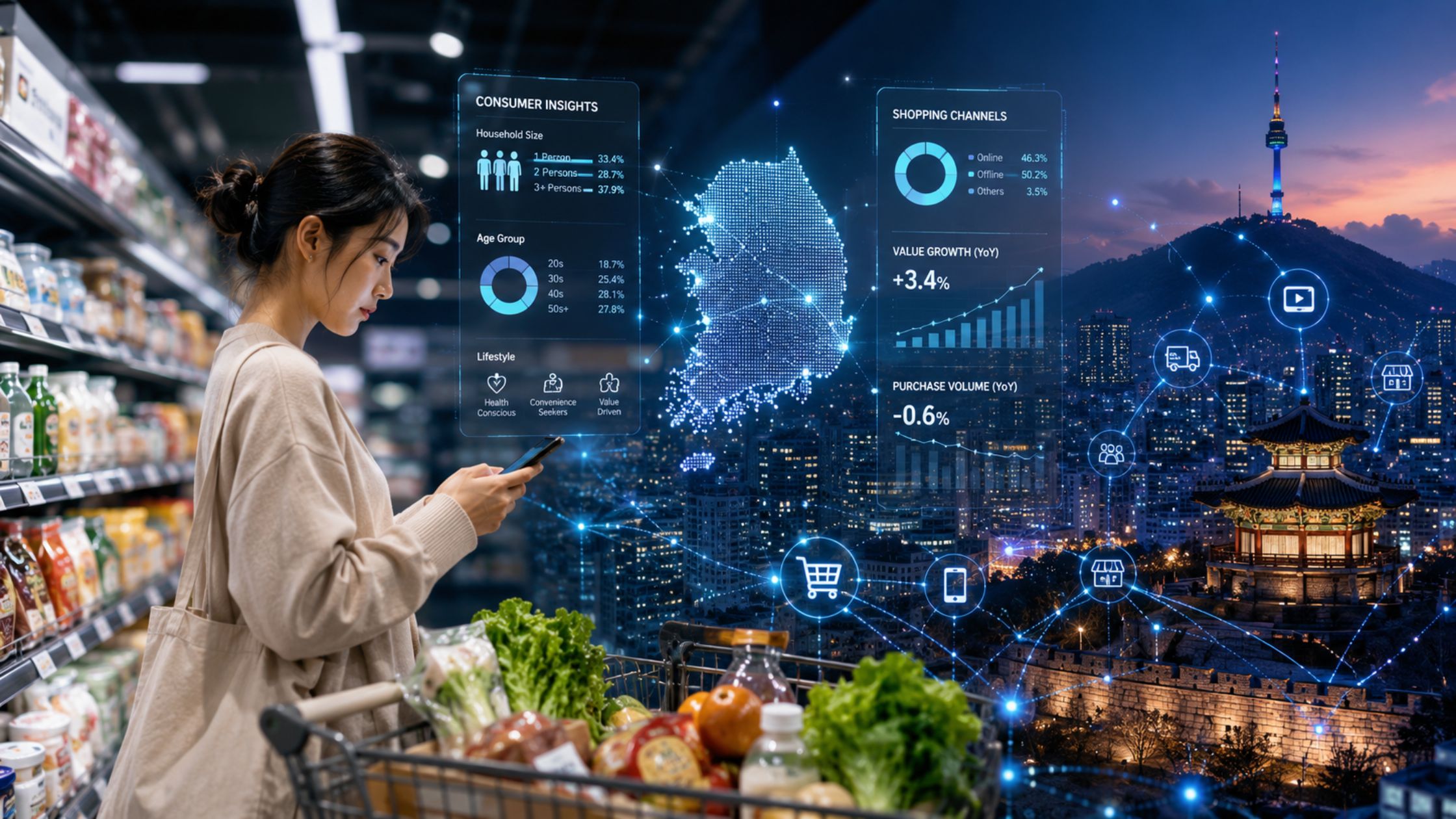
South Koreans are buying fewer consumer goods, yet spending more on them. At first glance, the numbers appear contradictory. FMCG purchase volumes fell 0.6% in 2025, while market value climbed 3.4%. But beneath that apparent disconnect lies a more significant story. Korean consumers are not simply cutting back amid economic pressures. They are becoming more deliberate about what they buy, where they shop, and what they consider worth paying for, signaling a lasting shift in one of Asia’s most sophisticated retail markets.
The findings, published in Worldpanel by Numerator’s “FMCG Market Changes and Strategic Outlook for 2026,” reflect broader demographic, economic, and technological shifts reshaping one of Asia’s most digitally advanced consumer markets. Rising living costs, the continued growth of single-person households, expanding e-commerce, and increasingly fragmented shopping behaviors are changing how brands compete, forcing companies to move beyond broad market strategies toward more targeted, data-driven decision-making.
The shift comes as South Korea continues to rank among the world’s most digitally connected economies, with one of the highest internet penetration rates globally and a mature e-commerce ecosystem led by platforms such as Coupang and Naver Shopping. Against this backdrop, understanding consumer behavior has become less about identifying average spending patterns and more about recognizing increasingly diverse customer segments with distinct lifestyles, purchasing habits, and channel preferences.
The report argues that South Korea’s FMCG market should no longer be evaluated through traditional growth metrics alone. While overall spending continues to rise, consumers are becoming more selective, intentional, and value conscious in their purchasing decisions. Rather than reducing consumption altogether, households are adjusting what they buy, how frequently they shop, and which channels they use. This shift reflects the combined impact of persistent inflationary pressures, evolving household structures, and changing lifestyle priorities.
“Consumers are not necessarily buying less overall, but they are becoming far more selective and intentional in their choices,” said Youngmi Lee, Managing Director for South Korea at Worldpanel by Numerator. “The market is shifting away from broad volume growth towards a more fragmented and value-driven model.”
The findings suggest that traditional assumptions about FMCG growth are becoming less reliable. Aggregate market averages increasingly mask significant differences across household types, shopping channels, product categories, and consumer lifestyles, requiring brands to adopt more granular approaches to market analysis.
Smaller Households Continue to Redefine Consumption Patterns
One of the strongest forces behind this transformation is South Korea’s changing demographic profile. As the number of single-person households continues to rise, consumers are placing greater emphasis on convenience, practicality, and products that fit increasingly busy lifestyles. Categories such as ready-to-eat meals, simplified meal solutions, and everyday essentials continue to benefit from these changing routines, while premium personal care products remain resilient as consumers maintain spending on self-care despite broader economic pressures.
The report found that FMCG spending among single-person households grew 6.6% year over year in 2025, substantially outperforming the 2.7% growth recorded by larger households. The trend is expected to continue into 2026 as demographic changes reshape household consumption.
This reflects a broader shift in South Korea’s consumer economy. Smaller households typically purchase different product sizes, shop more frequently, prioritize convenience, and demonstrate distinct brand preferences compared to larger families. For manufacturers and retailers, these differences are reshaping everything from product development and packaging strategies to promotional campaigns and inventory planning.
Online Retail Has Become a Core Driver of FMCG Growth
Digital commerce continues to strengthen its position within South Korea’s retail landscape. According to the report, online channels are capturing an increasing share of FMCG spending, with platforms including Coupang and Naver Shopping becoming central to product discovery and purchasing. Coupang alone recorded 3.7% value growth alongside a 0.9% increase in purchase count, reflecting sustained demand for online FMCG shopping despite an increasingly competitive retail environment.
The report also highlights an important characteristic of South Korea’s mature digital marketplace: consumer demand has become highly channel-fluid. Even temporary disruptions, such as the impact on Coupang following a data breach, highlighted how demand has become highly channel-fluid, with shoppers moving quickly between platforms rather than exiting online FMCG shopping altogether. This underscores that consumer loyalty increasingly lies with digital convenience rather than individual retail channels. This growing channel flexibility presents both opportunities and challenges for brands. While digital platforms offer greater consumer reach and richer behavioral data, they also intensify competition by making price comparisons, promotions, and alternative products more accessible than ever before.
AI and Consumer Data Are Becoming Strategic Differentiators
As consumer behavior becomes increasingly fragmented, brands are finding that traditional market research alone is no longer sufficient to understand purchasing decisions. The proliferation of digital shopping channels has generated vast amounts of consumer data, while advances in artificial intelligence and analytics are enabling companies to identify increasingly specific behavioral patterns across different customer segments. However, industry experts argue that technology alone does not provide meaningful competitive advantage without reliable purchasing data that reflects actual consumer behavior.
While conversing with AsiaTechDaily, Youngmi Lee said the growing complexity of South Korea’s FMCG market is making high-quality data increasingly valuable for business decision-making.
“One of the most important changes in South Korea’s FMCG market is that consumers can no longer be understood as one average group. Consumption patterns are becoming increasingly fragmented by household size, age, shopping channel, price sensitivity, and lifestyle.
In this environment, digital technologies, data analytics, and AI play an important role in helping brands understand highly segmented consumers more quickly and precisely. However, the most important point is not the technology itself, but how it is connected with reliable data, especially actual purchase data, to support better business decision-making.
For brands, it is becoming less sufficient to simply ask whether the market is growing or declining. They need to understand which consumers are buying less, which channels they are moving to, how they are responding to price and promotion, and how their personalized needs are changing. Ultimately, the value of AI and data analytics lies in helping brands better understand fragmented consumer behavior and translate those insights into product, pricing, channel, and communication strategies.”
Her comments reflect a broader shift taking place across consumer industries, where AI is increasingly being deployed not simply to automate processes but to generate deeper insights from increasingly diverse consumer data. As shopping behavior becomes more individualized, the ability to connect AI with trusted first-party purchasing data is emerging as a competitive advantage for brands seeking to respond quickly to changing market conditions.
The Future of FMCG Growth Will Be Powered by Consumer Intelligence
Beyond demographic shifts and digital commerce, the report identifies emerging consumer segments that are reshaping the FMCG landscape. Pet ownership has become an increasingly important growth driver, particularly in premium treats and functional supplements that align with consumers’ growing willingness to spend on personalized products and pet wellness. The report estimates that 29.2% of South Korean households owned pets in 2025, with the figure expected to exceed 30% by the end of 2026.
The expansion of the pet economy reflects a broader movement toward personalized consumption, where purchasing decisions are increasingly influenced by individual lifestyles rather than mass-market trends. Similar patterns are visible across health, wellness, premium food, and specialized personal care categories, reinforcing the need for brands to understand smaller, more distinct consumer groups instead of relying on generalized market averages.
The findings suggest that South Korea’s FMCG market is entering a phase where understanding consumer behavior is becoming more valuable than measuring market averages. Rising market value alongside declining purchase volumes reflects a marketplace where consumers are making increasingly deliberate decisions shaped by convenience, affordability, household composition, and digital shopping habits. For brands, the challenge is no longer simply reaching more consumers, but understanding why different consumer segments make different purchasing decisions.
This shift is also redefining the role of technology in retail. AI, advanced analytics, and first-party purchase data are moving beyond operational tools to become strategic assets that help brands identify emerging trends, anticipate changes in consumer demand, and personalize products, pricing, and marketing at scale. As shopping behaviors become more fragmented across digital channels, retailers will increasingly rely on technology not only to automate decisions but also to uncover the consumer insights that were previously hidden within vast amounts of transactional data.
South Korea has long served as a bellwether for digital commerce and retail innovation across Asia. The trends highlighted in the latest Worldpanel by Numerator report suggest that the next phase of FMCG competition will be won not by brands with the broadest reach, but by those that can combine trusted consumer data with intelligent technologies to respond faster to an increasingly personalized and digitally connected marketplace.
Quick Takeaways
- South Korea’s FMCG market grew 3.4% in value in 2025 despite a 0.6% decline in purchase volumes, signaling a structural transformation in consumer spending rather than a traditional market slowdown.
- Changing demographics and lifestyles are reshaping purchasing behavior. Spending by single-person households rose 6.6% year over year, significantly outpacing the 2.7% growth among larger households, driving demand for convenient meal solutions, everyday essentials, and premium personal care products.
- Online retail continues to strengthen its role in the FMCG sector. Platforms such as Coupang and Naver Shopping are becoming increasingly central to consumer purchasing, with Coupang recording 3.7% value growth and 0.9% growth in purchase count in 2025.
- While conversing with AsiaTechDaily, Youngmi Lee, Managing Director for South Korea at Worldpanel by Numerator, said AI and data analytics are becoming essential for understanding increasingly fragmented consumer behavior. She emphasized that the real value lies not in AI alone, but in combining it with reliable purchase data to guide product, pricing, channel, and communication strategies.
- The report concludes that future FMCG growth will depend on understanding micro-consumer behaviors rather than relying on broad market trends. As shopping habits become more personalized across household structures, digital channels, and lifestyle segments, brands that effectively leverage consumer insights will be better positioned to compete in South Korea’s evolving retail landscape.
Similar Articles