AsiaTechDaily – Asia's Leading Tech and Startup Media Platform


AI Agents Are Entering Marketplaces. The Hard Part Is Knowing What to Trust.
 by
by

As AI systems begin discovering talent, initiating transactions and coordinating human work, marketplaces need a trust layer built around identity, intent, execution and outcomes.
For years, online marketplaces have relied on a familiar trust mechanism: profiles, ratings, reviews and transaction histories. A buyer could inspect a seller, compare reviews and make a judgment before hiring. That model becomes more complicated when the buyer is no longer a person, but an AI agent acting on someone’s behalf.
The shift is already underway. Upwork’s new MCP server allows AI agents to search talent, post jobs, respond to invitations, review offers and manage contracts. However, binding financial actions still require human confirmation, showing that access to marketplace infrastructure is advancing faster than full delegation. That creates a new question for marketplaces: what information should an AI trust when deciding whom to hire, what to buy and whether an outcome is acceptable?
The rise of agentic marketplaces changes the role of reputation. A human can interpret context that is difficult to encode: whether a freelancer’s portfolio is relevant to a particular brief, whether a review appears credible, or whether a provider’s communication suggests reliability. An agent needs structured signals it can evaluate consistently.
Marketplaces are therefore beginning to rethink reputation itself. Upwork’s 2025 Marketplace Transparency Report said customers found existing scores, reviews and badges difficult to interpret and not always representative of actual performance. The company said it planned a refreshed reputation framework based more heavily on measurable performance, with credibility indicators designed for clients, freelancers and AI agents.
Fiverr is pursuing a similar direction from another angle. The company has described its evolution from traditional search toward agentic matching, using richer data and reasoning to create a recruiting-like experience for increasingly complex projects. Its roadmap envisions buyer agents that can help draft briefs, communicate with freelancers, curate candidates and eventually manage project execution. The marketplace is consequently becoming less like a directory and more like a decision system.
Trust Has to Follow the Agent
The implications extend beyond freelance platforms. Mastercard’s latest agentic commerce framework identifies five elements that need to be established for agent-led transactions: identity, intent, controls, trusted execution and intelligence. The framework is designed to establish who is acting, what the user authorized, what the agent can do and whether its actions can be monitored and held accountable.
The gap between technological capability and consumer confidence remains significant. Mastercard reported in August that only 10% of consumers surveyed were willing to let an AI agent complete a purchase autonomously, even as AI-assisted discovery becomes more familiar. This suggests that the next bottleneck for agentic marketplaces may not be finding more suppliers or building better agents. It may be creating enough evidence for users to delegate decisions without surrendering control.
When AI Starts Hiring Humans
The trust challenge becomes even more complex when agents interact directly with people. Emerging platforms are beginning to treat humans as an execution layer for AI systems, while established marketplaces are opening their talent networks to agents. That reverses the traditional marketplace relationship. Instead of a human searching for a service provider, an AI system can increasingly identify and coordinate human capabilities.
But giving software the ability to hire people also creates new attack surfaces. A 2026 empirical study of 303 bounties on RENTAHUMAN.AI found that 99, or 32.7%, originated through programmatic channels such as APIs or MCP. Researchers identified abuse involving credential fraud, identity impersonation, automated reconnaissance, social-media manipulation, authentication circumvention and referral fraud. The finding does not mean agentic marketplaces are inherently unsafe. It demonstrates something more fundamental: the same infrastructure that makes legitimate transactions easier to automate can also make malicious activity easier to scale.
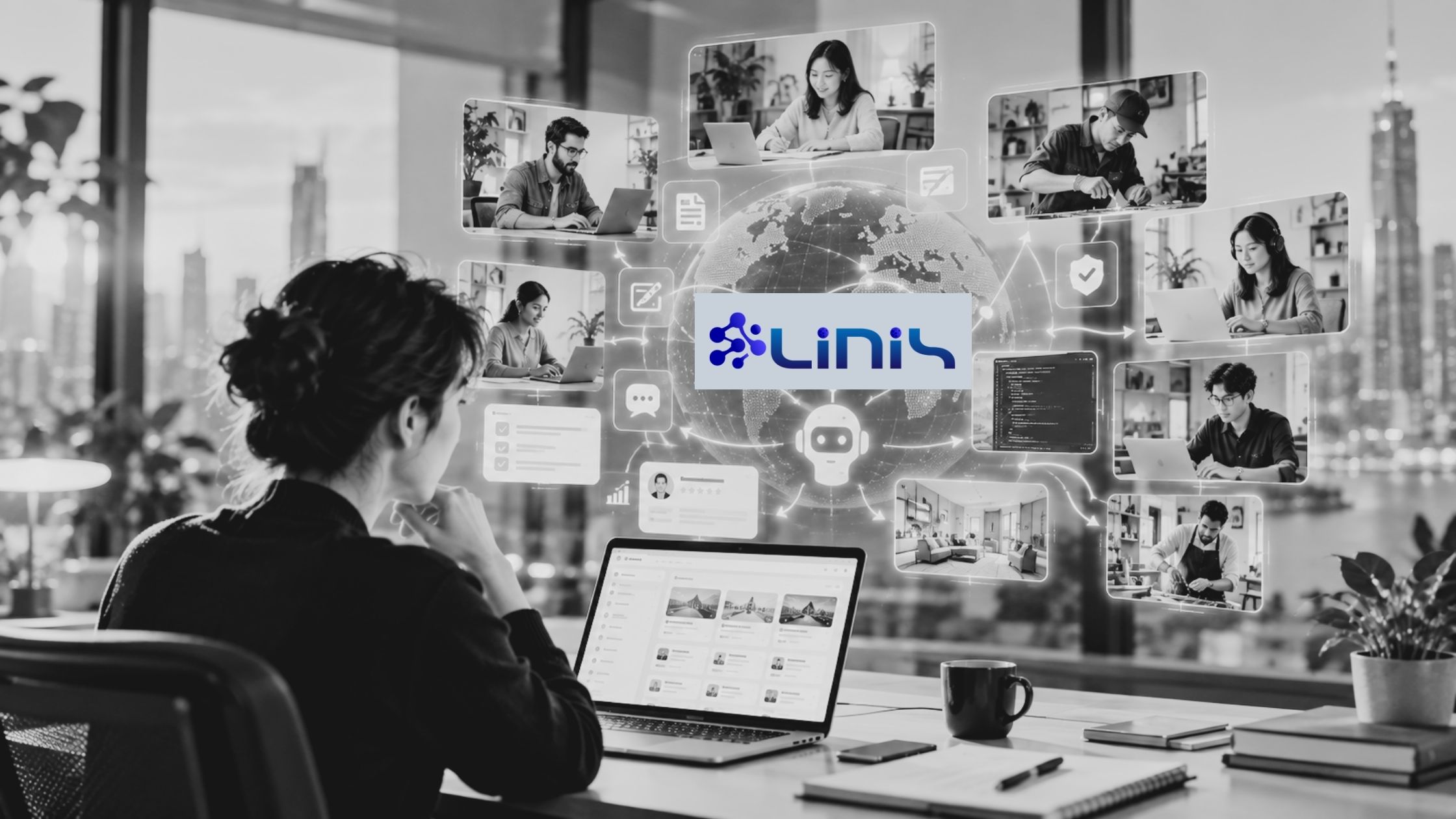
This is where the next generation of marketplace trust could move beyond reputation. While conversing with AsiaTechDaily, Radhouane Alaadeen K, Founder and CEO of TaskiLi and LINIS, described an approach that treats trust as part of the product architecture rather than simply a ratings feature:
“Trust is one of the areas we are trying to build into the product itself, rather than treating it as just a ratings problem. We have two important AI layers around the service. Before a user chooses a provider, AI Quality Detection looks beyond a simple star rating and analyzes the available information and signals around that provider. After the work is delivered, AI Supervision can review the result against what was actually requested. The goal is to answer a more important question than ‘Does this provider have good ratings?’, ‘Did they deliver what was agreed?’ We are also building the transaction around a structured agreement. The client / tasker conversation can be used to establish the actual requirements of the gig, which then gives AI Supervision a concrete basis for evaluating the final result. We are still early, so I wouldn’t claim that we have completely solved marketplace trust. Verification, payments, dispute handling, and broader safety mechanisms are part of the next stage of building the commercial marketplace.”
TaskiLi is the flagship venture of LINIS, which describes itself as an AI-focused venture builder. The company positions TaskiLi as a platform for managing complex workflows, while its current product site says the marketplace spans more than 4,100 categories and 200 million taskers and uses Texa AI for supervision. Those scale figures are company claims and should not be treated as independently verified marketplace measurements. The important concept in Radhouane’s response is not the specific technology claim. It is the movement from provider reputation toward transaction evidence. Instead of asking only whether someone has performed well historically, an AI-mediated marketplace could increasingly ask whether the provider’s capabilities match the requirement, what was actually agreed and whether the delivered work satisfies that agreement.
Trust Could Become the Marketplace Moat
That shift has strategic implications for marketplace companies. If AI makes talent discovery dramatically easier, having a large directory of providers may become less differentiated. Competitive advantage could increasingly come from the quality of the trust infrastructure surrounding those providers.
That could include:
- verified identity and capabilities
- richer performance signals
- explicit user authorization
- structured agreements
- fraud and anomaly detection
- outcome verification
- dispute resolution and auditability
Kakao’s planned AI Agent Marketplace in South Korea illustrates how quickly this infrastructure is becoming a platform-level concern. The company says its government-backed project will cover agent registration, verification, discovery, combination, execution and settlement, with security review, sandbox validation, hallucination controls and ongoing re-verification.
AI agents can already search marketplaces and increasingly interact with the systems that power them. The harder problem is deciding what an agent should believe before it acts. For marketplaces, trust may therefore evolve from a static score attached to a profile into a continuous system connecting identity, capability, authorization, execution and outcomes.
The winning infrastructure may not be the marketplace with the most providers or even the smartest matching model. It may be the one that gives an AI agent enough reliable evidence to make a decision, enough controls to prevent an unauthorized one, and enough accountability to explain what happened afterward. As AI moves from searching for people to acting on behalf of people, trust is becoming less of a marketplace feature and more of the infrastructure that makes agentic commerce possible.
Quick Takeaways
- AI agents are moving into marketplaces, shifting from simply recommending providers to searching talent, initiating jobs and managing parts of transactions.
- Traditional ratings may not be enough for AI-driven decisions. Agents need richer, machine-readable signals about identity, capabilities, performance and reliability.
- Trust is becoming an infrastructure problem. Identity, user intent, permissions, execution and accountability increasingly need to be verified throughout a transaction.
- AI can now become the buyer. Emerging platforms are enabling AI agents to hire and coordinate human workers, reversing the traditional human-to-marketplace-to-human model.
- More autonomy creates new security risks. APIs and MCP can make legitimate transactions easier to automate, but can also scale fraud, impersonation and other abuses.
- The next generation of marketplaces could move from ratings to outcome verification, comparing what was agreed with what was actually delivered.
- TaskiLi’s approach illustrates this shift: AI Quality Detection evaluates providers before hiring, while AI Supervision is designed to assess delivered work against the original requirements.
- The potential marketplace moat is changing. As AI makes discovery easier, competitive advantage could increasingly come from verification, fraud detection, structured agreements, outcome validation and dispute resolution.
- The central question is no longer only “Who should I hire?” but “Can my AI agent reliably decide, act and explain what happened?”
Similar Articles