AsiaTechDaily – Asia's Leading Tech and Startup Media Platform

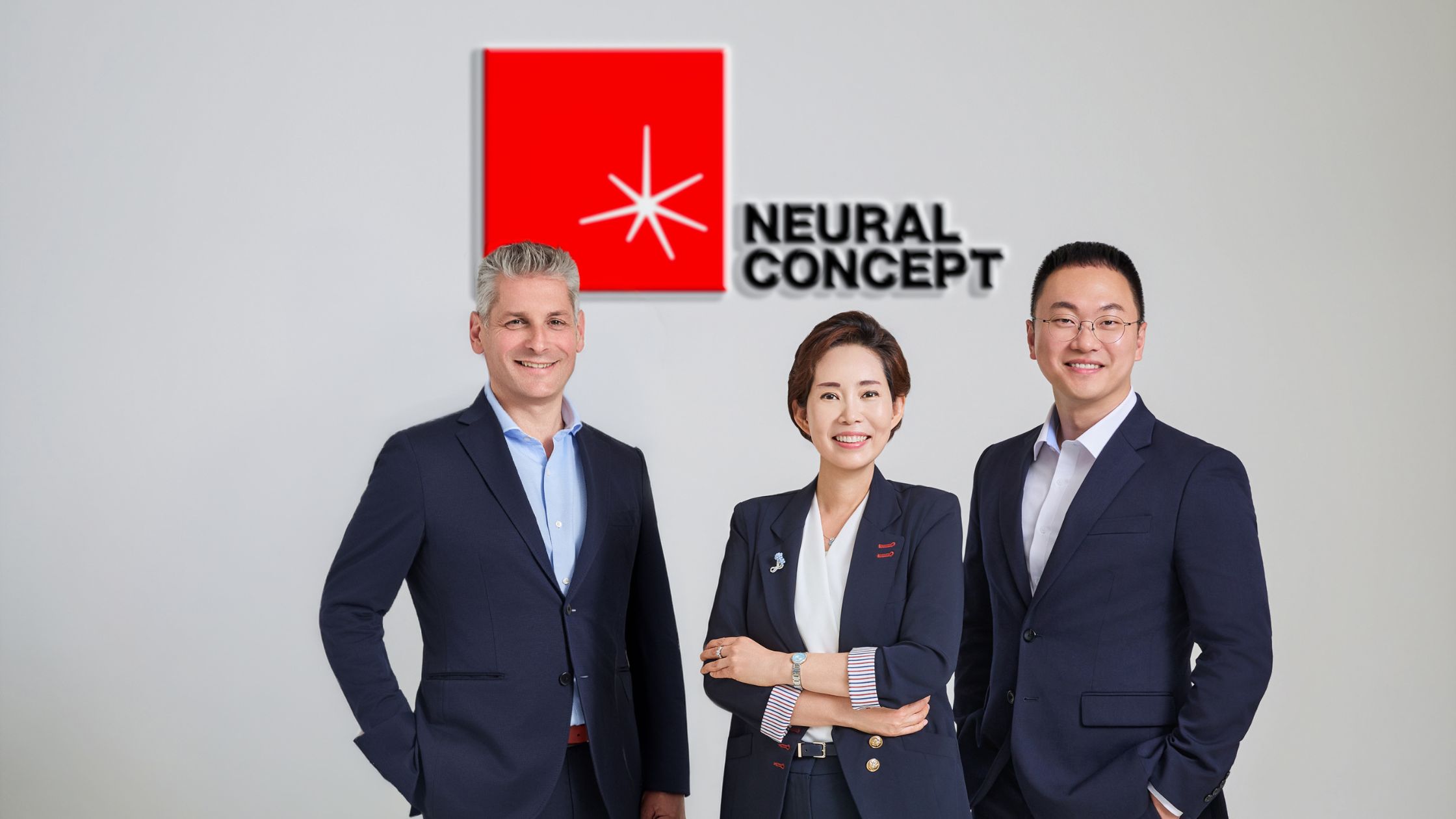
Neural Concept opens Seoul office to expand AI engineering operations across Asia-Pacific
 by
by

Swiss AI engineering firm deepens focus on Korea’s automotive, shipbuilding and semiconductor sectors as manufacturers push beyond experimental AI deployment
Swiss AI engineering company Neural Concept has opened its first Asia-Pacific office in Seoul, expanding its presence in South Korea as manufacturers across the region accelerate the adoption of AI-driven engineering and product development systems. The company announced on Monday that the Seoul office will serve as a regional base for deployment support, customer engineering and long-term manufacturing transformation projects across Asia-Pacific. The expansion comes as Korean industrial groups increase investments in artificial intelligence across automotive, shipbuilding, semiconductors, electronics and advanced manufacturing operations.
Neural Concept said demand from Korean manufacturers was a key driver behind the move, particularly as engineering teams seek to shorten development cycles while managing increasingly complex product architectures tied to electrification, simulation-heavy design and next-generation industrial systems.
The company already works with several global industrial customers, including Jaguar Land Rover and General Motors, and has also established relationships within Korea’s shipbuilding sector. In the announcement, Hanwha Ocean said Neural Concept’s platform showed potential to improve engineering workflows and accelerate AI adoption within design environments.
The Seoul launch also comes months after Neural Concept raised $100 million in Series C funding led by Growth Equity at Goldman Sachs Alternatives, as competition intensifies among enterprise AI firms targeting industrial and engineering applications.
While generative AI adoption initially centered around productivity software and consumer-facing tools, industrial companies are increasingly directing spending toward AI systems integrated into simulation, design and engineering workflows where efficiency gains can directly affect manufacturing costs and product development timelines.
That shift is becoming particularly important in South Korea, where the government and private sector are expanding investment into AI-enabled manufacturing under broader industrial modernization efforts such as the Manufacturing AI Transformation, or M.AX, initiative.
South Korea’s manufacturing ecosystem has become an increasingly attractive market for enterprise AI companies because of the country’s concentration of globally competitive engineering industries. Automotive, shipbuilding, semiconductors and electronics companies in Korea operate in highly simulation-intensive environments where engineering delays and redesign costs can have major commercial consequences.
Pierre Baqué, CEO and co-founder of Neural Concept, said the industrial sector is moving beyond isolated AI experimentation toward deeper operational integration. While conversing with AsiaTechDaily, Baqué said manufacturers are increasingly treating AI as part of long-term engineering infrastructure rather than a standalone software initiative.
“The shift we’re seeing is from digital engineering to intelligent engineering. Companies spent the last 30 years digitizing their processes, CAD, simulation and PLM, but those tools remained fragmented. Design, simulation, and validation stayed sequential, siloed and slow. Now, AI makes those loops continuous,” he said.
“What also unlocked production-scale deployment is that AI finally solved a problem that killed automation for decades, adaptiveness. Every time a product changed, rigid automation broke. AI learns from the product as it evolves, and that’s what makes scaling viable beyond the pilot. The question has shifted from ‘should we try AI?’ to ‘how do we own this capability across the enterprise?’”
The company claims its platform can help reduce late-stage redesigns and accelerate engineering timelines by integrating AI directly into simulation and development loops. However, large-scale deployment across industrial organizations remains technically and operationally challenging.
Automotive and shipbuilding lead adoption trends
Industrial AI adoption is advancing unevenly across sectors, with automotive companies emerging as some of the earliest large-scale adopters due to the growing complexity of vehicle development. Modern electric vehicles require significantly higher simulation workloads related to battery systems, aerodynamics, thermal efficiency, safety testing and software integration compared to traditional internal combustion platforms.
At the same time, the shift toward software-defined vehicles has increased pressure on manufacturers to shorten development cycles without compromising validation standards. According to Baqué, those pressures are making AI deployment increasingly necessary within automotive engineering operations.
While conversing with AsiaTechDaily, he said the automotive sector remains ahead of other industries in adopting engineering-focused AI systems, although Korea’s shipbuilding sector is also moving quickly.
“Automotive remains in the leading position, both globally and in APAC. The pace of electrification, safety regulation complexity, and the volume of simulation required per vehicle program make AI adoption a matter of survival for automotive,” Baqué said.
“Shipbuilding is moving fast too, particularly in Korea. Hanwha Ocean is a good example of an organization that understands what genuinely owning an AI transformation means, beyond the pilot phase. What distinguishes the fastest movers across sectors is the decision to embed intelligence into how engineering decisions are made, at every stage, continuously. The companies that get there first build a structural lead that compounds over time. Their engineers are becoming capable of things that simply weren’t possible before.”
Korean shipbuilders have increasingly explored AI-based optimization systems as demand grows for next-generation LNG carriers, autonomous vessels and fuel-efficient ship designs. Engineering complexity has also risen as environmental regulations tighten across the maritime industry.
Hanwha Ocean, said the platform demonstrated “promising capabilities” that could help accelerate design workflows and make AI deployment more practical for engineering teams.
Moving beyond the AI pilot phase
Despite growing enterprise AI spending globally, many industrial organizations continue to struggle with scaling AI projects beyond limited pilot programs. For large manufacturing companies, deploying AI across production-scale engineering systems often requires coordination across IT infrastructure, cybersecurity, procurement, engineering teams and executive leadership.
To strengthen its regional expansion strategy, Neural Concept appointed Dr. Eunjoo Lee as Board Advisor. Lee previously served as CEO of IBM Korea and Executive Vice President at Samsung SDS, where she worked on enterprise AI and digital transformation initiatives.
While conversing with AsiaTechDaily, Lee said many Korean enterprises approach AI deployment with greater operational caution than Silicon Valley firms, particularly in mission-critical industrial environments.
“Having spent nearly two decades in Silicon Valley and the past eight years leading enterprise technology businesses in Korea, I see an interesting difference in how companies approach technology adoption,” Lee said.
“Many Silicon Valley companies are comfortable adopting a promising technology and improving it over time. Korean engineering organizations tend to spend more time validating requirements, integration, governance and business value before making a commitment. That rigor is one of Korea’s genuine strengths. Korean engineers are among the most sophisticated users of technology in the world.”
Lee said one of the main barriers to enterprise AI scaling is that many projects begin without a clear operational roadmap for deployment across the organization.
“In my experience, the challenge is moving from experimentation to operationalization,” she said.
“Many Korean manufacturers are already quite advanced in their AI journey, with highly capable engineering teams and growing investments in AI, automation and digital engineering. One reason organizations get stuck in the pilot phase is that many projects begin without a clear path to production. A successful proof-of-concept is only one step. Production deployment requires alignment across engineering, IT, security, procurement and business leadership, as well as a clear business case and executive sponsorship. Too often, those elements are addressed after the pilot succeeds rather than before it begins.”
“The shift that needs to happen is to think about production from day one. AI should be treated as a core engineering capability tied to product development outcomes, not an isolated innovation project, and this is exactly how Neural Concept approaches every engagement. Once that mindset is established, Korean companies can scale remarkably fast.”
Industrial AI competition intensifies across Asia
Neural Concept’s expansion into Seoul reflects broader competition among global AI firms seeking footholds in Asia’s manufacturing economies. Unlike consumer AI software markets, industrial AI deployment often requires local engineering collaboration, integration support and long-term implementation partnerships. That has pushed many enterprise AI firms to establish direct regional operations closer to manufacturing customers.
South Korea is expected to remain a key market in that transition because of its concentration of advanced industrial sectors and its growing investments in AI-enabled manufacturing infrastructure. As manufacturers face rising pressure to accelerate product development while managing increasing engineering complexity, AI deployment is gradually shifting from isolated experimentation toward integration within core industrial systems.
For industrial companies, the next stage of AI adoption may depend less on general-purpose AI assistants and more on how effectively AI can be embedded into the engineering environments where products are designed, simulated and validated. Neural Concept’s Seoul expansion highlights how competition around that layer of industrial AI infrastructure is beginning to accelerate across Asia-Pacific.
Quick Takeaways
- Neural Concept has opened its first APAC office in Seoul to expand its AI engineering operations across Korea’s manufacturing sector.
- The company is targeting automotive, shipbuilding, semiconductor and electronics firms as industrial AI adoption accelerates in Korea.
- Neural Concept says manufacturers are moving beyond isolated AI pilots toward production-scale deployment in engineering workflows.
- While conversing with AsiaTechDaily, CEO Pierre Baqué said automotive and Korean shipbuilding companies are emerging as major adopters of engineering-focused AI systems.
- The expansion follows Neural Concept’s $100 million Series C funding round led by Goldman Sachs Alternatives.
Similar Articles