AsiaTechDaily – Asia's Leading Tech and Startup Media Platform

Reprogramming the Farm: How miFood Is Bringing AI Precision to Agriculture
 by
by

With plant-level precision and autonomous machines, miFood is pushing farming toward a data-driven, self-optimizing future.
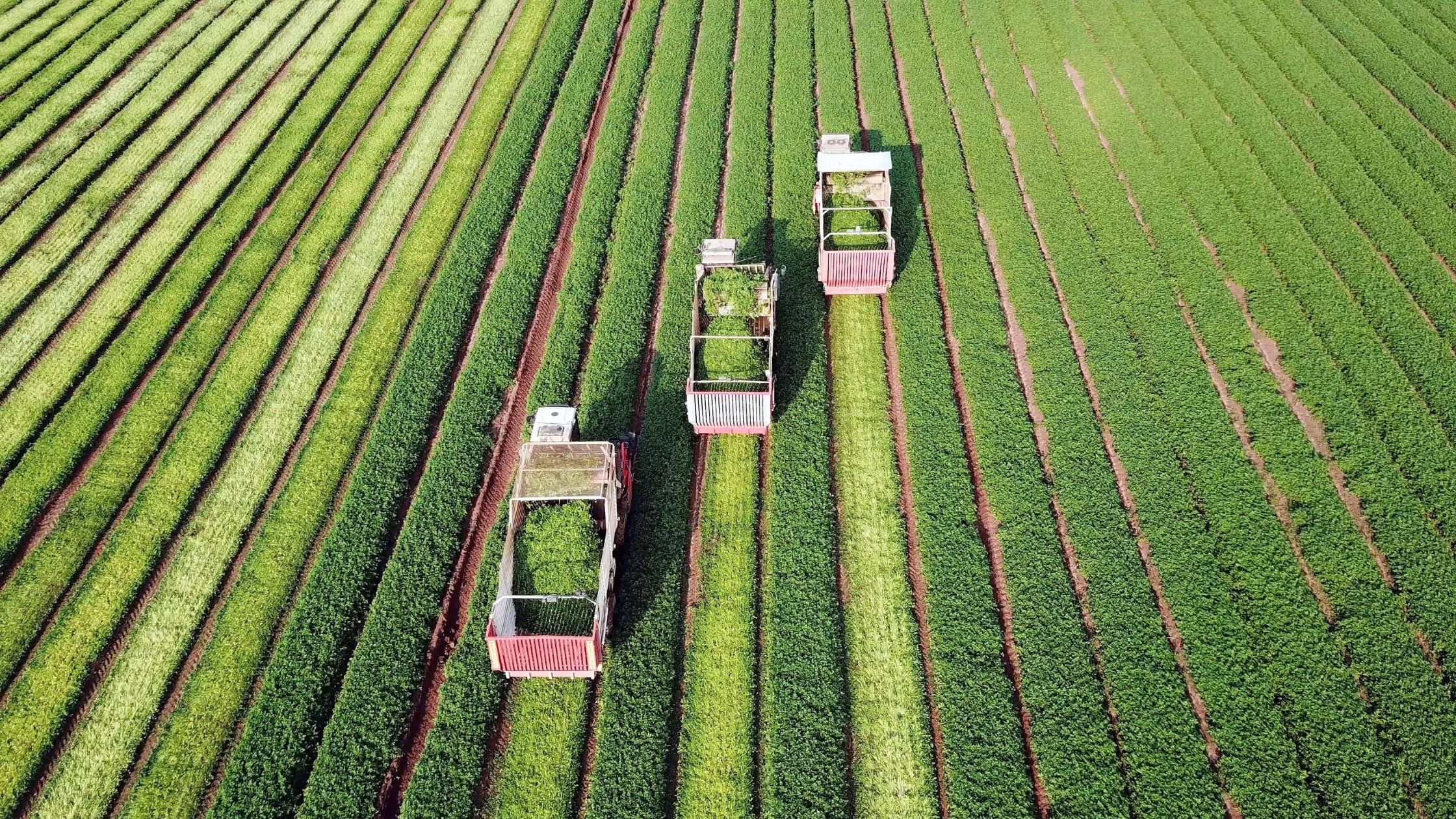
Farming has always been a game of variables—weather, labor, timing, and increasingly, uncertainty. But in recent years, one constraint has become impossible to ignore: there simply aren’t enough hands to do the work. Across global agricultural systems, labor shortages, rising costs, and food waste are converging into a structural crisis. Traditional machinery, built for scale rather than precision, struggles to respond to the growing need for efficiency at the level of individual crops. Into this gap steps a new category of companies attempting to rethink agriculture not as a field-level operation, but as a data-driven system. Among them, miFood is taking a distinctly technological approach—deploying AI-powered robotic workers designed to automate some of the most labor-intensive aspects of farming.
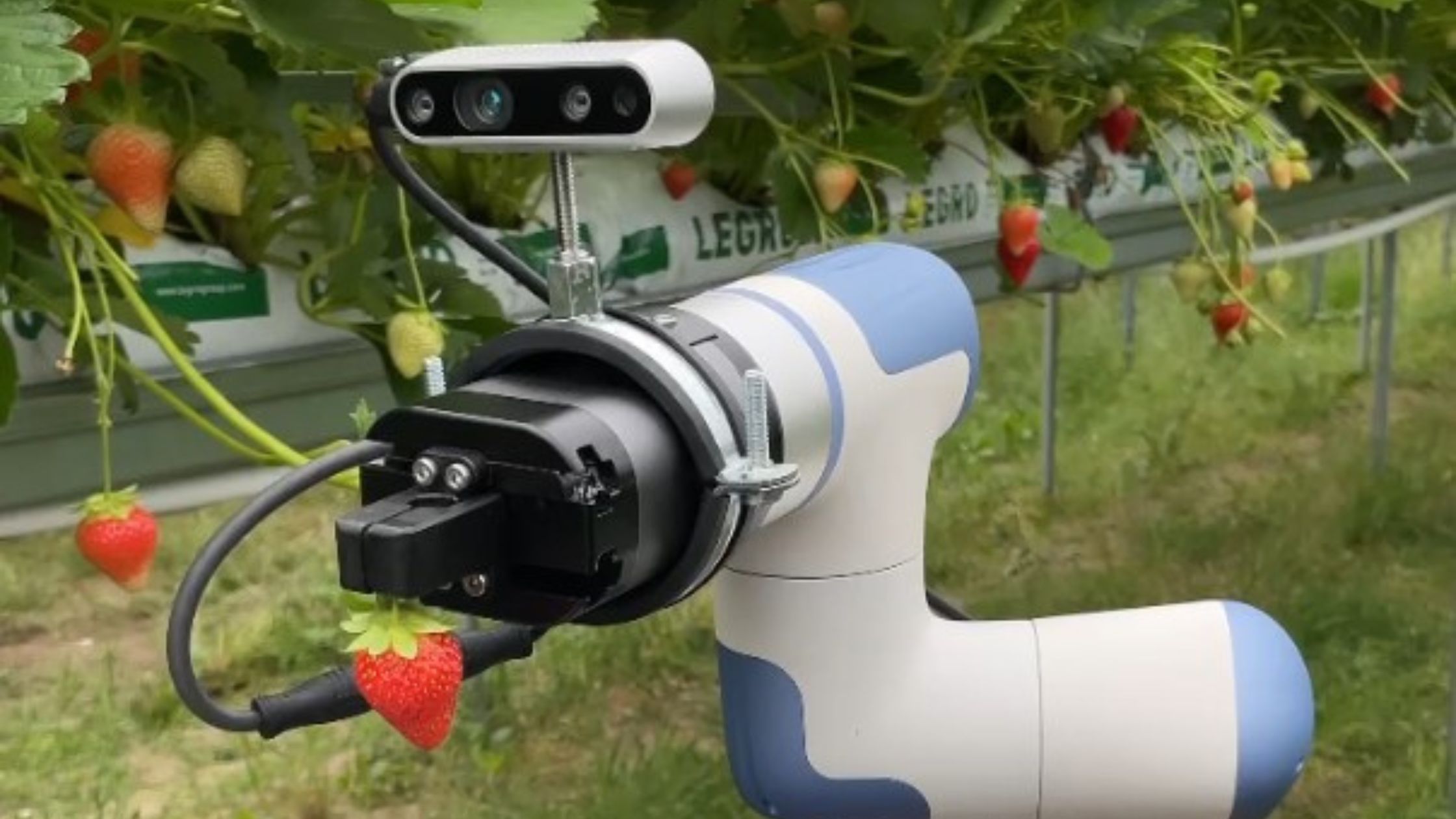
At the core of miFood’s proposition is a simple but ambitious idea: replace repetitive, precision-heavy farm work with intelligent machines capable of operating autonomously. The company’s robotic systems are built to handle harvesting and crop management tasks that have historically depended on seasonal labor. Using computer vision and AI, these robots identify ripe produce, navigate fields independently, and perform delicate picking without damaging crops.
According to miFood, this shift is not incremental—it is structural.
“Our system automates the labor-intensive and precision-driven process of harvesting, addressing critical challenges such as labor shortages and rising operational costs,” the company explains.
The scale of the problem they are targeting is significant. Agricultural sectors worldwide face persistent workforce gaps, with millions of roles going unfilled, while inefficiencies in harvesting continue to drive up waste and losses. miFood positions its technology as a direct response to these constraints—one that reduces reliance on human labor while increasing consistency in output.
Seeing the Field, Plant by Plant
What differentiates miFood’s approach is not just automation, but the level of precision it introduces into farming operations. Rather than treating farmland as a uniform surface, the company’s systems operate at what it describes as a plant-level intelligence layer. Its AI-powered vision system continuously scans crops, identifying ripeness, detecting obstacles, and adapting its actions in real time.
“Advanced computer vision allows the system to precisely identify produce and navigate complex environments autonomously,” miFood notes.
This shift from generalized farming to individualized crop management marks a fundamental change in how agricultural decisions are made. Instead of reacting to issues across an entire field, farmers can begin to act on highly localized, real-time data. Each robotic pass generates continuous datasets—tracking yield, crop health, and operational efficiency—turning farms into dynamic systems that can be monitored and optimized remotely.
Rewriting the Economics of Agriculture
Beyond the technological layer, miFood’s model is rooted in economics. Farming today operates under increasing cost pressure—from labor wages to input materials—while margins remain tight. Automation, in this context, is less about innovation and more about survival. miFood claims measurable impact across key cost centers:
- Reduction in labor costs by up to 50%
- Decrease in crop losses and food waste
- Increased harvesting speed and efficiency
- Lower emissions and reduced workplace risk
“Our goal is to increase productivity while reducing waste, costs, and environmental impact across every farm,” the company states.
The company also offers its technology through flexible deployment models, including robotics-as-a-service, allowing farms of different scales to access automation without significant upfront investment. This model reflects a broader shift in agri-tech, where capital-heavy equipment is increasingly being replaced by service-based infrastructure.
Toward the Autonomous Farm
Unlike many technology-first startups entering agriculture, miFood’s origins are tied closely to farming itself. The company traces its beginnings to founders with agricultural backgrounds who experienced firsthand the growing pressures within the industry—from labor instability to unpredictable yields.
“We are building solutions shaped by real farming challenges, not theoretical models,” the company emphasizes.
This grounding is reflected in how the technology has been developed—through iterative testing in real farm environments rather than controlled lab conditions. The result is a system designed not just for technical performance, but for operational reliability in unpredictable, real-world settings. miFood’s long-term vision extends beyond harvesting. The company is working toward a fully integrated, autonomous farming ecosystem—one where planting, monitoring, and harvesting are all managed through interconnected intelligent systems.
“Our platform continuously collects and analyzes data, enabling farmers to make better decisions and manage resources more efficiently,” miFood notes.
In this model, the role of the farmer evolves—from manual operator to strategic decision-maker, supported by real-time insights rather than intuition alone. It’s a shift that aligns with broader trends in agriculture, where sustainability, efficiency, and resilience are increasingly tied to data and automation.
A System-Level Shift in Food Production
What miFood ultimately represents is not just a new tool, but a new way of thinking about food production. As global demand rises and environmental constraints tighten, agriculture is being forced to transition from scale-driven practices to precision-driven systems. The ability to treat each plant as a data point—rather than part of a mass—could redefine how farms operate.
Whether that transformation happens at scale will depend on adoption, economics, and trust in automation. But the direction is becoming increasingly clear. For miFood, the bet is that the future of farming will not be built on more labor or larger machines—but on intelligence embedded directly into the field itself. And if that bet holds, the farm of the future may look less like a field—and more like a system.
Quick Takeaways:
- miFood is targeting farming’s biggest constraint: labor shortages
- AI-powered robots are automating precision harvesting
- Shift from field-level to plant-level intelligence
- Focus on reducing costs and minimizing waste
- Farms are becoming data-driven, autonomous systems
Similar Articles