AsiaTechDaily – Asia's Leading Tech and Startup Media Platform

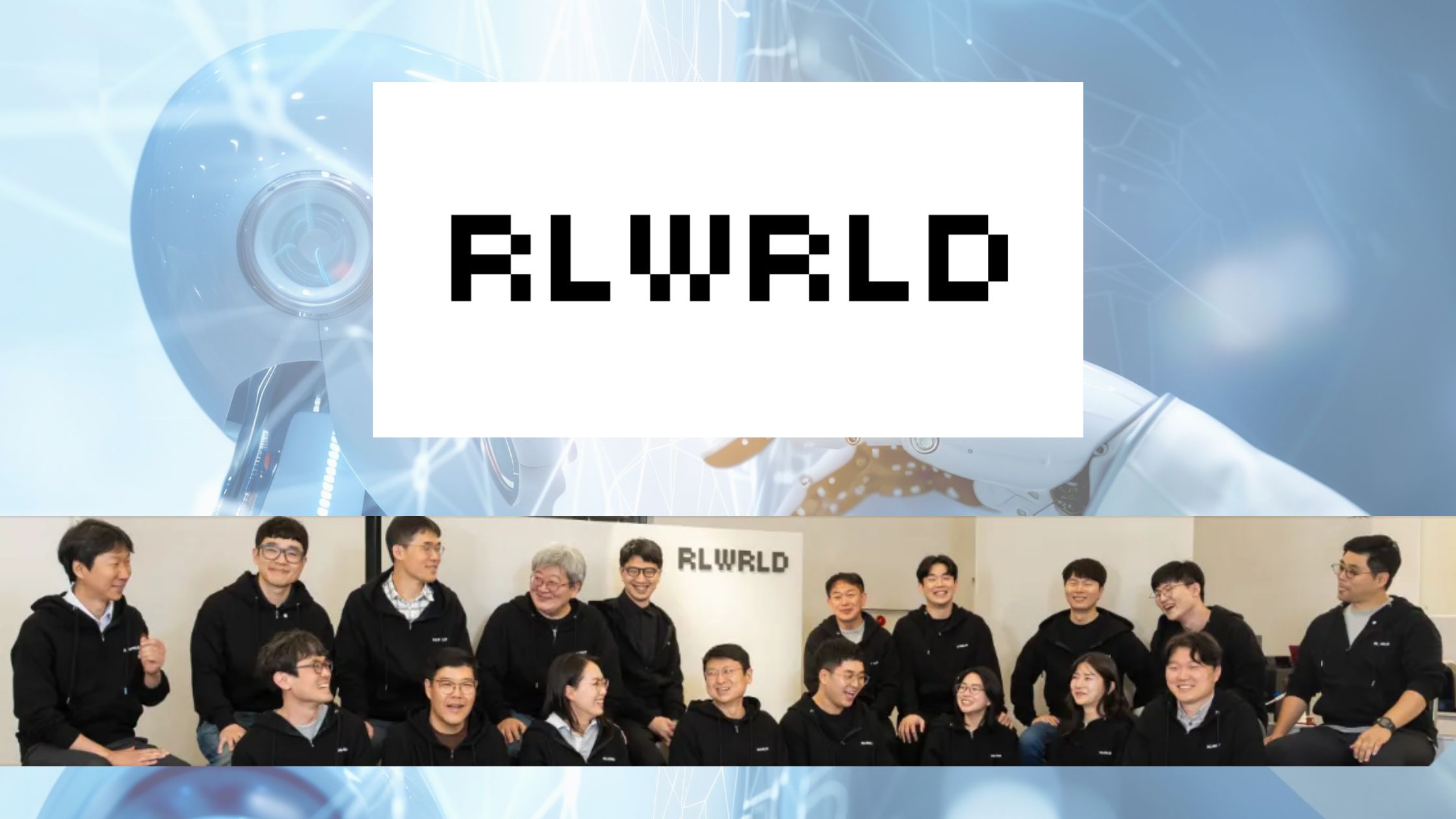
Beyond the Lab: Why RLWRLD’s $26M Seed 2 Is a Bet on Industrial Variability
 by
by

South Korean robotics AI startup RLWRLD has raised $26 million in a Seed 2 funding round, bringing its total seed capital to $41 million. The round positions the Seoul-based company among the more heavily capitalized early-stage players in what investors increasingly describe as the “physical AI” category.
But the significance of the round may lie less in its size and more in its structure. While much of the recent AI investment cycle has centered on large language models and generative systems, a parallel shift is underway toward embodied AI — systems capable of perceiving, reasoning, and acting within physical environments. For robotics startups, however, the core technical bottleneck remains unchanged: transferring models trained in simulation into unpredictable real-world settings.
RLWRLD is attempting to address that constraint by training directly inside active industrial environments rather than relying primarily on synthetic or clean-room simulation data.
Robotics developers have long struggled with the so-called “Sim-to-Real” gap — the performance degradation that occurs when a robot trained in a controlled simulation encounters dynamic lighting, irregular object placement, human movement, or sensor noise.
RLWRLD’s approach centers on collecting and training on data generated inside working logistics and manufacturing facilities. According to CEO Junghee Ryu, the company prioritizes deployment-first validation over laboratory benchmarks.
“Physical AI only matters if it works on real job sites,” Ryu said. “By testing our models in some of the toughest industrial environments, we’re building systems meant for real operations first.”
The company is developing Robotics Foundation Models (RFMs), designed to generalize across industrial manipulation tasks.
A Strategic Cap Table
The investor composition reflects that operational focus. The round was led by Headline Asia and Z Venture Capital, the investment arm of LY Corporation, which operates Yahoo Japan and LINE. Participating investors include:
- CJ Logistics
- Lotte Ventures
- Kakao Investment
- Hanwha Asset Management
Unlike traditional early-stage rounds dominated by financial venture capital, RLWRLD’s Seed 2 includes strategic corporate participants from logistics, retail, digital ecosystems, and manufacturing.
This structure provides more than capital. It gives RLWRLD access to deployment environments — warehouses, distribution centers, and production facilities — where its models can be trained and iterated under real operating conditions.
In robotics, access to operational data may prove as important as compute scale was in the large language model cycle.
The East Asian Context
RLWRLD’s industrial focus is closely tied to regional economic dynamics. South Korea and Japan face accelerating demographic decline and tightening labor supply across logistics and manufacturing sectors. Industrial automation has long been a policy and corporate priority, but increasingly the constraint is not hardware, but adaptable intelligence.
Akio Tanaka, Founding Partner at Headline Asia, pointed to demographic pressures as a structural driver behind the investment.
“In East Asia, where labor shortages are intensifying, RLWRLD’s ability to work closely with major industrial partners and accumulate real-world data forms a critical foundation,” he said.
For large operators such as CJ Logistics, the strategic priority appears less about automating isolated tasks and more about embedding decision-making intelligence across facilities.
A Different Bet Than General-Purpose Humanoids
Globally, robotics headlines have often centered on general-purpose humanoid systems under development by companies such as Figure AI and Tesla’s Optimus program.
RLWRLD’s strategy is narrower. Rather than pursuing full humanoid platforms, the company is focused on high-dexterity industrial tasks in structured but variable environments. The near-term objective appears to be operational reliability rather than general-purpose embodiment.
That distinction reflects a broader debate within robotics: whether economic value will first accrue in controlled industrial settings or in consumer-facing humanoid systems.
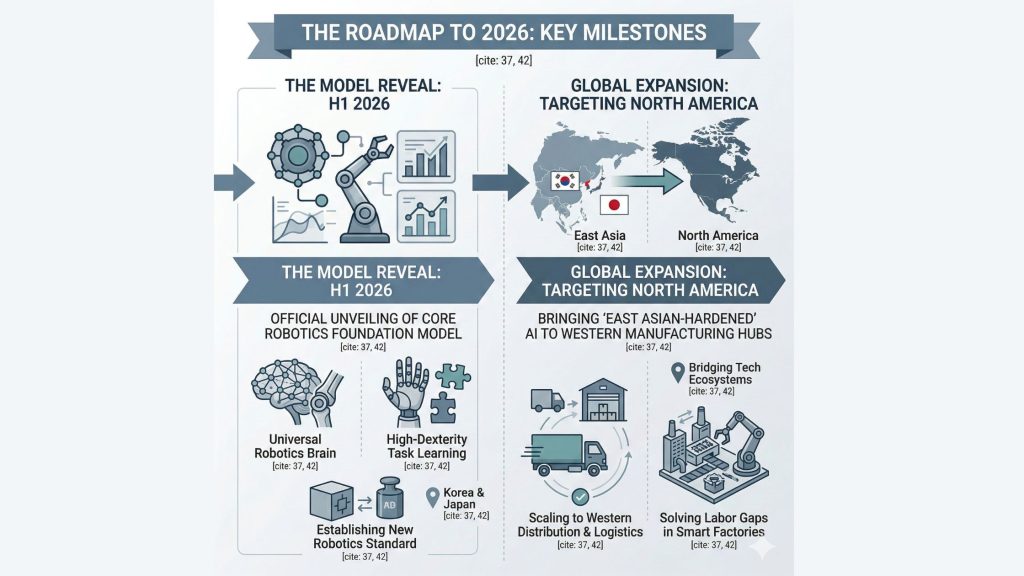
RLWRLD plans to officially unveil its core robotics foundation model in the first half of 2026. The company has also indicated intentions to expand into North America, positioning its systems for manufacturing and logistics markets outside Asia.
Whether training-first-in-production environments yields a durable competitive advantage remains to be seen. However, the funding round suggests that investors increasingly view access to live operational data — rather than laboratory performance metrics — as a key differentiator in industrial AI.
As capital shifts from language-based AI systems toward embodied intelligence, the companies best positioned may be those embedded directly inside factories and warehouses, where variability is not an edge case but the baseline condition.
Quick Takeaways:
- Massive Capital Injection: The $26M Seed 2 round brings RLWRLD’s total seed funding to $41M, an unusually high figure for a seed-stage startup, signaling immense investor confidence in its industrial AI approach.
- The “Anti-Lab” Philosophy: Unlike competitors who rely on clean-room simulations, RLWRLD trains its Robotics Foundation Models (RFMs) directly in “messy” real-world environments like active warehouses and factories.
- A “Data Moat” Strategy: By partnering with strategic investors like CJ Logistics and Lotte, RLWRLD gains exclusive access to live operational data—the “gold” required to train robots to handle unpredictable human interaction and changing light conditions.
- Strategic vs. Financial Backing: The round prioritizes “Coalition Partners” (SIs) over traditional VCs, ensuring that the technology is being validated on actual production floors from day one.
- East Asian Strength, Global Ambition: The startup is leveraging the manufacturing and logistics density of South Korea and Japan to build a dominant position before expanding into the North American market in late 2026.
- 2026 Product Launch: RLWRLD is on track to officially unveil its core robotics intelligence layer in the first half of 2026, targeting the logistics, manufacturing, and service sectors.
Similar Articles