AsiaTechDaily – Asia's Leading Tech and Startup Media Platform

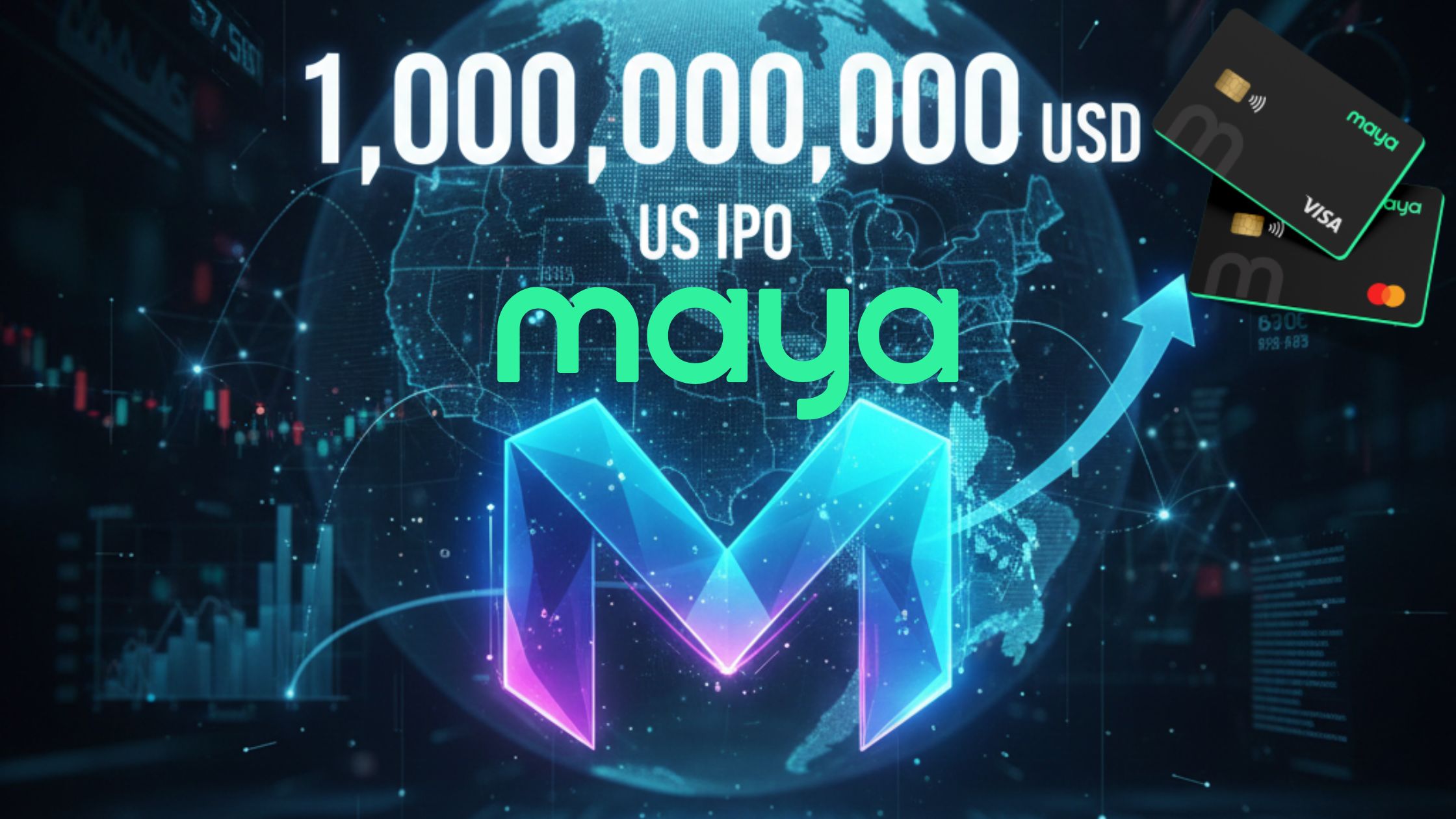
Maya Eyes Up to $1 Billion US IPO as Philippine Fintech Looks Beyond Home Market
 by
by

Bloomberg report signals potential overseas listing for the PLDT-backed digital bank, raising questions about valuation, market timing, and Southeast Asia’s IPO landscape.
Philippines-based digital bank Maya is exploring a potential initial public offering in the United States that could raise between $500 million and $1 billion, according to a Bloomberg report citing people familiar with the matter.
The company is said to be working with advisers on a possible listing that could take place as early as this year. However, discussions remain ongoing and details — including timing and deal size — may still change.
Maya declined to confirm the report, saying it does not comment on “market speculation” and that its priority remains expanding digital financial services in the Philippines.
If it proceeds, the move would mark one of the largest overseas listings by a Philippine fintech firm in recent years.
Why a US Listing?
A US IPO would provide Maya access to deeper capital pools and a broader base of institutional investors compared to the domestic market. For Southeast Asian technology firms, US exchanges often offer:
- Higher liquidity
- Wider analyst coverage
- Stronger global investor participation
- Potentially higher valuations for growth companies
Domestic markets in parts of Southeast Asia have lagged regional benchmarks in recent years. As a result, some high-growth firms are evaluating overseas listings to secure better pricing and capital depth.
In the Philippines, IPO momentum has been uneven. The securities regulator has indicated plans to ease free-float requirements to attract larger listings, but major tech IPOs remain limited.
From E-Wallet to Digital Bank
Maya operates as a licensed digital bank under the supervision of the Bangko Sentral ng Pilipinas. Originally launched as an e-wallet, the company has expanded into a full-service digital financial platform offering:
- Savings accounts
- Consumer and business loans
- Merchant payments
- Cryptocurrency trading within a regulated framework
This diversification has positioned Maya as one of the Philippines’ most integrated fintech ecosystems.
Maya has reported improving financial metrics in recent quarters. The company posted its third consecutive profitable quarter in Q3 2025, recording net income of PHP 532 million. Deposit balances rose 59% year-on-year to PHP 57 billion, while cumulative loan disbursements reached PHP 187 billion since launch.
According to data from parent company PLDT Inc., Maya’s digital bank had 5.4 million customers and disbursed 68 billion pesos ($1.2 billion) in loans in 2024 alone. The broader platform supports around nine million users and 2.4 million borrowers.
Global investors backing the firm include KKR, Tencent Holdings, and the International Finance Corporation, the private-sector arm of the World Bank.
The Crypto Question
One factor that may shape investor sentiment is Maya’s exposure to cryptocurrency trading.
While crypto services provide diversification and potential revenue upside, US public markets tend to scrutinize fintech firms with digital asset exposure more closely. Volatility, regulatory uncertainty, and compliance risks can influence valuation multiples.
For Maya, the challenge will be presenting a clear earnings story that balances growth with predictability — particularly as US investors increasingly prioritize profitability and governance discipline over pure expansion.
Competitive Landscape at Home
Maya is not alone in considering public markets. Rival fintech GCash, backed by Ant Group and Mitsubishi UFJ Financial Group, has also explored IPO options. However, GCash reportedly delayed its planned listing on the Philippine Stock Exchange until at least the second half of 2026. The delay highlights broader questions about local market conditions and valuation appetite for large technology offerings.
If Maya opts for a US listing, it could signal a shift in how Philippine tech firms view domestic exchanges — particularly if global investors offer stronger pricing. US IPO markets have shown signs of recovery in 2025, with listing volumes improving after a prolonged slowdown. That momentum could support companies seeking international capital. However, global macro conditions remain uncertain. Interest rates, geopolitical risks, and investor risk appetite will influence whether Maya can achieve its targeted fundraising range.
The company has stated that it remains well capitalized and continues to benefit from strong shareholder support. This suggests that any IPO decision would be strategic rather than urgent.
Valuation Questions and Regional IPO Context
For now, Maya’s potential IPO remains under consideration. If the company proceeds, the listing could strengthen its balance sheet, accelerate product expansion, and reinforce its position as one of Southeast Asia’s more mature digital banks.
But the decision also carries symbolic weight. A successful US IPO would signal growing confidence in Philippine fintech — while failure to price effectively could reinforce concerns about regional valuation gaps.
Ultimately, the outcome will depend on how convincingly Maya can present itself not just as a high-growth fintech, but as a disciplined, scalable digital bank ready for global scrutiny.
If Maya proceeds with a US listing, the key question will be valuation. Digital banks in emerging markets are typically assessed on a mix of metrics, including:
- Customer growth and active users
- Loan book expansion and asset quality
- Deposit growth and funding stability
- Path to sustained profitability
- Regulatory and governance standards
Maya has shown improving profitability and strong deposit growth, which may support investor confidence. However, US public markets have become more selective in pricing fintech listings. Investors now favor stable earnings, disciplined cost structures, and predictable revenue streams over aggressive growth alone.
Another factor is Maya’s crypto offering. While crypto trading can drive transaction activity, exposure to digital assets may lead investors to apply higher risk discounts, particularly if revenue becomes heavily linked to market volatility.
Regionally, several Southeast Asian tech firms have explored overseas listings over the past few years, seeking deeper liquidity and global institutional participation. However, performance post-listing has been mixed, with some companies facing valuation resets after debut.
For Maya, a US IPO would not only be a capital-raising event but also a market test. It would signal whether global investors view Philippine digital banking as scalable and investable at international valuation benchmarks.
Ultimately, the success of any offering will depend less on headline fundraising targets and more on how convincingly Maya presents its long-term profitability, risk management, and competitive positioning.
Quick Takeaways
- Potential $1B raise: Maya is exploring a US IPO that could raise between $500 million and $1 billion, according to a Bloomberg report.
- Overseas listing strategy: A US debut would provide access to deeper capital pools and a wider base of institutional investors compared to the Philippine market.
- Improving fundamentals: The company has reported consecutive profitable quarters, growing deposits, and expanding loan disbursements as it scales its digital banking operations.
- Strong backers: Maya is supported by investors including PLDT Inc., KKR, Tencent Holdings, and the International Finance Corporation.
- Market timing matters: While US IPO activity has shown signs of recovery, global macro conditions and investor appetite for fintech — particularly firms with crypto exposure — will influence valuation and deal size.
- Regional signal: If completed, the listing would underscore a broader trend of Southeast Asian tech firms seeking international exchanges amid mixed domestic IPO momentum.
Similar Articles