AsiaTechDaily – Asia's Leading Tech and Startup Media Platform

China Eases AI Chip Controls, Granting DeepSeek Conditional Access to Nvidia’s H200
 by
by

DeepSeek’s conditional access to Nvidia’s H200 highlights Beijing’s careful recalibration amid U.S. scrutiny
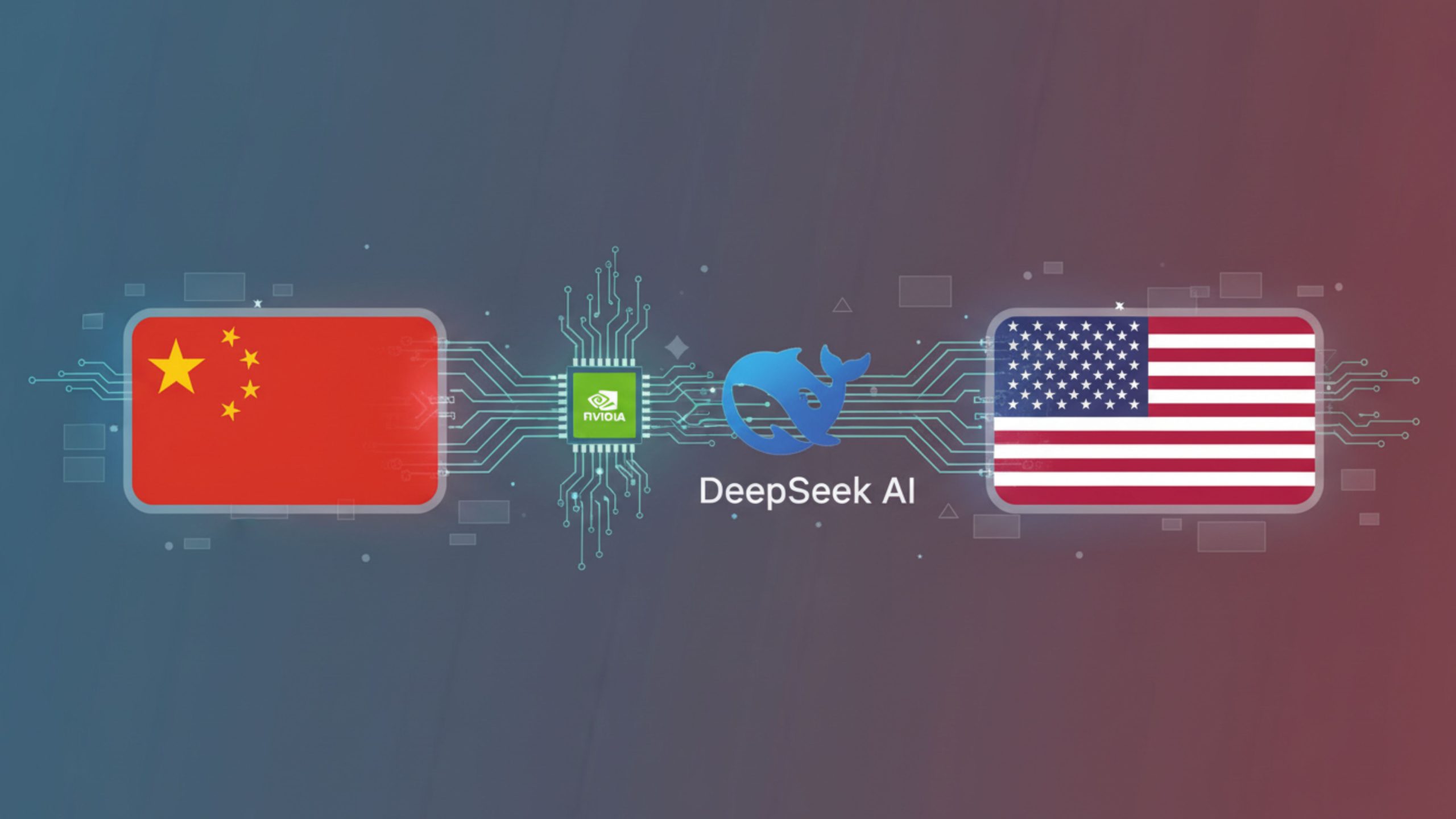
Chinese regulators have granted conditional approval for Hangzhou-based AI startup DeepSeek to purchase Nvidia’s H200 artificial intelligence chips, according to sources cited by Reuters. While the move falls short of a full clearance, it signals a notable shift in Beijing’s approach—allowing limited access to advanced U.S. chips for select AI players deemed strategically important.
The decision follows similar approvals for ByteDance, Alibaba, and Tencent, which were recently cleared to buy more than 400,000 H200 chips combined. Together, the approvals point to strong pent-up demand for high-performance AI hardware in China, even as authorities maintain tight regulatory oversight.
A Green Light With Conditions Attached
The approvals were issued by China’s Ministry of Industry and Information Technology and Ministry of Commerce, with final terms still being coordinated with the National Development and Reform Commission. The conditions—potentially covering usage restrictions, reporting requirements, or deployment limits—remain under discussion, reflecting a cautious and multi-agency approval process.
Nvidia CEO Jensen Huang said the company has not yet received confirmed orders from China, as regulators are still finalising licensing details.
“We believe the authorities are still working through the process,” Huang told reporters in Taipei, adding that Chinese customers remain eager to buy and that the H200 is “a good fit” for large-scale AI workloads.
Why the H200 Matters
The H200 sits at the centre of the current AI hardware debate because it represents the most powerful Nvidia chip that Chinese companies are still allowed to buy. Part of Nvidia’s Hopper generation, the H200 is designed for large-scale AI training and inference, particularly for models that require high memory bandwidth and sustained compute performance.
Although Nvidia has since unveiled its newer Blackwell chips, those processors remain off-limits to China under U.S. export controls. That makes the H200 the practical ceiling for Chinese AI developers looking to scale advanced models. For companies like DeepSeek, access to the H200 can significantly shorten training times, improve model quality, and reduce the cost of deploying AI systems at scale.
From Nvidia’s perspective, China is not a marginal market. Before tighter restrictions, it was one of the company’s largest sources of data centre revenue. Nvidia has previously estimated that U.S. export curbs led to roughly $8 billion in lost sales, highlighting how regulatory decisions now have a direct impact on earnings, growth forecasts, and investor expectations.
Taken together, the H200 is more than a product upgrade. It has become a strategic compromise—advanced enough to keep China’s AI sector competitive, but constrained enough to satisfy U.S. policymakers. How widely and under what conditions the chip is deployed will shape not only Nvidia’s near-term revenue, but also the pace of AI development in one of the world’s largest technology markets.
DeepSeek’s inclusion in the approvals adds complexity. Founded in 2024 and backed by High-Flyer Capital Management, the startup gained global attention in early 2025 with models such as DeepSeek-V3, which achieved high performance using significantly less compute than many U.S. rivals.
That efficiency has made DeepSeek one of China’s most closely watched AI startups—but also one of its most controversial.
On January 28, John Moolenaar, chair of the U.S. House Select Committee on China, alleged in a letter to the U.S. Commerce Secretary that Nvidia had helped DeepSeek refine models later linked to Chinese military applications. He urged strict enforcement of export controls, warning that H200 shipments could violate U.S. restrictions tied to national security.
A Deal Shaped by Geopolitics
Nvidia has not commented directly on DeepSeek’s clearance, highlighting the uncertainty surrounding cross-border AI hardware deals. Analysts note that Huang’s recent outreach in China—including a January visit emphasising Nvidia’s commitment to the market—may have helped stabilise discussions, but does not eliminate regulatory risk.
At a broader level, the approvals illustrate how AI chips have become strategic assets rather than standard commercial products. Decisions now involve multiple governments, security agencies, and political considerations on both sides of the Pacific.
Key dynamics at play include:
- China’s need to keep domestic AI firms globally competitive
- Beijing’s longer-term push for semiconductor self-reliance
- U.S. concerns over military and dual-use applications
- Nvidia’s balancing act between compliance and growth
A Partial Opening, Not a Reset
Taken together, the conditional approvals suggest a narrow easing rather than a policy reversal. Beijing appears to be selectively allowing access where it sees economic or strategic benefit, while maintaining leverage through conditions and delays. At the same time, U.S. authorities are signalling closer scrutiny, raising the risk that future shipments could face legal or political challenges.
For startups, investors, and AI companies watching from the sidelines, the message is clear: access to cutting-edge compute is no longer just about capital or customers. It now depends on navigating a complex web of regulation, geopolitics, and national security—where progress is measured in cautious steps, not clean green lights.
Quick Takeaways
- Selective easing, not a policy shift: China’s approval for DeepSeek is conditional, signalling a controlled opening rather than a broad relaxation of AI chip restrictions.
- H200 is the ceiling for now: The Nvidia H200 remains the most advanced AI processor currently allowed into China, making access strategically important for leading AI firms.
- Demand remains strong: Interest from Chinese companies continues despite delays, reflecting pent-up demand for high-end compute across the AI sector.
- Geopolitics shapes growth: AI chip sales are now driven as much by regulation and national security concerns as by commercial need.
- Implications for startups and investors: Access to advanced compute may increasingly depend on regulatory alignment, not just capital or technical capability.
Similar Articles