AsiaTechDaily – Asia's Leading Tech and Startup Media Platform

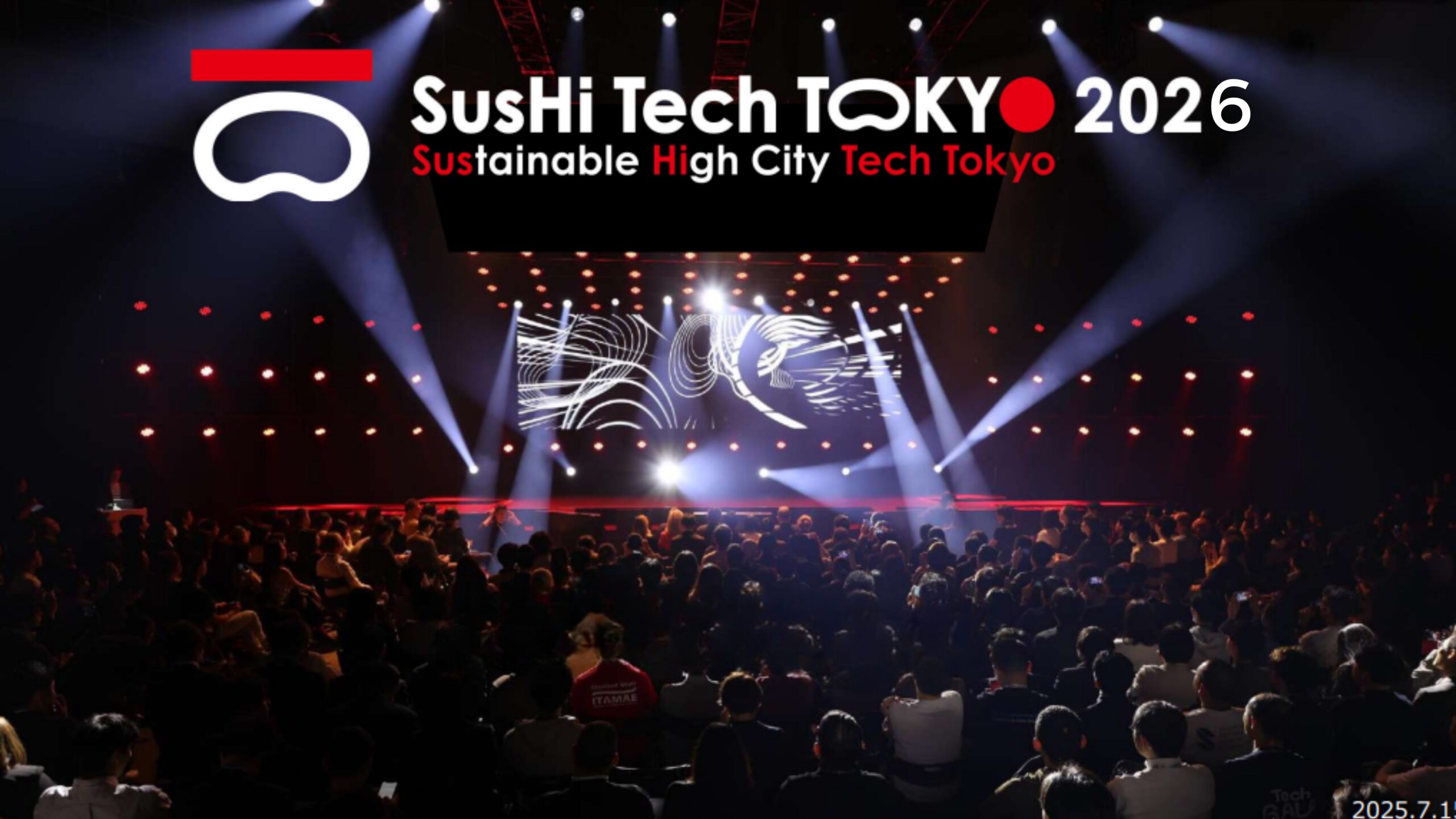
Pitch Contest Deadline Nears as SusHi Tech Tokyo 2026 Scales Global Participation
 by
by

Applications for the SusHi Tech Challenge 2026 pitch contest close tomorrow as global participation ramps up. With ticket sales live and global ambassador and partner event applications underway, Tokyo’s flagship innovation summit enters its execution phase—signalling a broader push to position the city as a gateway for Asian startups.
When the Tokyo Metropolitan Government first unveiled its plans for SusHi Tech Tokyo 2026, the ambition was clear: to position Tokyo as a global platform for solving urban challenges through advanced technology. Now, with ticket sales officially open and applications live for ambassadors and partner events, the conference is moving from announcement to activation—inviting the global startup ecosystem to take part in shaping its next chapter.
The latest update marks a significant moment for SusHi Tech Tokyo, Asia’s largest innovation conference. Beyond dates and themes, the organisers are opening concrete pathways for startups, investors, corporates, and ecosystem builders to engage, contribute, and co-create.
From policy ambition to ecosystem mobilisation
SusHi Tech Tokyo—short for Sustainable High City Tech Tokyo—has evolved into one of the most policy-driven innovation platforms in Asia. Organised by the Tokyo Metropolitan Government, the conference reflects Tokyo’s broader strategy to integrate startups into long-term urban development, rather than treating innovation as a standalone commercial activity.
Unlike many technology events that focus primarily on venture funding or product launches, SusHi Tech Tokyo is structured around real-world implementation. Its core mission is to bring together startups, investors, major corporations, universities, municipalities, and policymakers to address shared challenges such as climate resilience, urban mobility, digital infrastructure, healthcare, and aging populations.
The scale that gives SusHi Tech Tokyo global weight
The credibility of SusHi Tech Tokyo rests heavily on what it has already achieved. The 2025 edition of the conference set new benchmarks for participation and international reach, reinforcing its position as one of Asia’s most globally connected innovation events.
Some of the key outcomes from 2025 included:
- 607 startups exhibited, with 55% from overseas, demonstrating the event’s growing international profile.
- 47 corporate partners and 35 municipalities participated, strengthening the collaboration between private companies and city governments.
- Over 6,000 business meetings were conducted during the two business days.
- The speaker lineup included 355 experts, of which 45% were female and 50% were international, reflecting a strong commitment to diversity and inclusion.
- The first-ever Public Day attracted 14,000 students and families, expanding the event’s reach beyond professionals to engage citizens in technology and sustainability discussions.
These numbers matter. They signal that SusHi Tech Tokyo is not a domestically focused trade show, but a platform with sufficient gravity to attract global founders, venture capital firms, and city leaders. The opening of participation for 2026 builds directly on this momentum.
The 2025 conference covered a wide range of topics including artificial intelligence, quantum computing, food technology, and sustainable agriculture. It also hosted the G-NETS Leaders Summit, attended by representatives from more than 60 cities worldwide, reinforcing the event’s focus on global collaboration for urban innovation.
A structured three-day format of 2026 edition:
SusHi Tech Tokyo 2026 will take place from April 27 to April 29, 2026, again at Tokyo Big Sight (West Halls 1–4), with a format that reflects its dual focus on business outcomes and public engagement.
The first two days—April 27 and 28—are reserved for business attendees, including startups, investors, corporates, and ecosystem organisations. These days are designed for deal-making, pitching, and structured networking.
The third day, April 29, which falls on a public holiday in Japan, will be open to the general public free of charge. This Public Day expands the conference’s role beyond industry insiders, engaging students, families, and citizens in discussions around technology and sustainability.
This segmentation is intentional. It allows SusHi Tech Tokyo to function both as a serious B2B platform and as a civic initiative aimed at building public understanding of innovation—an approach that aligns with Tokyo’s policy-led model.
A major highlight: SusHi Tech Challenge 2026, its Jury and Global Scope
One of the centrepieces of SusHi Tech Tokyo 2026 is the SusHi Tech Challenge 2026, a global pitch competition focused on technologies that address urban and sustainability challenges. The contest is designed to surface startups working at the intersection of high technology and city-scale problem solving, aligning closely with the conference’s broader mission.
Interest in the competition has been strong. Organisers received 657 applications from startups across 46 countries and regions, underlining the international reach of the event. Following a preliminary screening process, 20 startups will be selected to advance to the semi-finals and finals, which will be held during the business days of SusHi Tech Tokyo 2026.
The competition carries a grand prize of ¥10 million, but organisers position the Challenge as more than a prize-led contest. A key draw is access to its judging panel, which includes prominent venture capitalists from Japan and overseas. Semi-finalists and finalists will have opportunities to interact directly with these judges, offering exposure to potential investors and partners at a stage when many startups are seeking validation and market access in Japan and beyond.

Application Details:
The competition will take place during the Business Days of SusHi Tech Tokyo 2026, with the semi-final scheduled for April 27, 2026, and the final on April 28, 2026, at Tokyo Big Sight (West Halls 1–4). All pitches and communication will be conducted in English, ensuring accessibility for international participants.
Who Can Apply
Startups applying to the SusHi Tech Challenge must meet several requirements, including:
- Possessing new technologies or business models with growth potential
- Having an existing product or service
- Alignment with the event’s theme of realising sustainable cities through high technology
- Availability to participate on-site throughout the two Business Days
- Ability to exhibit at a startup booth across all three event days
Application Timeline and Evaluation Process
- Application deadline: January 13, 2026 (23:59 JST)
- First evaluation: Late January to early February 2026 (document review)
- Second evaluation: Early March 2026 (pitch video assessment)
- Semi-final: April 27, 2026 (5-minute pitch + 3-minute Q&A)
- Final: April 28, 2026 (5-minute pitch + 3-minute Q&A)
Applications must be submitted in English via the official online form, with pitch materials uploaded as a single PDF or ZIP file under 10MB.
Apply here: https://sushitech-startup.metro.tokyo.lg.jp/en/recruiting-pitch/
Evaluation Criteria
Judges will assess startups based on:
- Social impact
- Economic impact
- Global scalability
- Presentation quality
For early- and growth-stage startups focused on urban technology, sustainability, and social impact, the SusHi Tech Challenge 2026 offers not only funding potential but a rare opportunity to engage directly with Japan’s public-private innovation ecosystem at scale.
Opening access to a global audience
SusHi Tech Tokyo 2026 is formally opening its doors to international participants. The organisers have designed a tiered ticketing structure to accommodate different audiences, from founders and investors to students.
Business tickets provide access to exhibition halls, pitch sessions, networking zones, and business matchmaking platforms. VIP options include access to exclusive lounges and invitation-only networking sessions with investors, speakers, and government representatives.
Importantly for Asia-based founders, Business Days will be conducted primarily in English, lowering barriers for international participation. This language policy, combined with Tokyo’s expanding startup support infrastructure, reflects a broader effort to make the city more accessible to global entrepreneurs.
Ambassadors as ecosystem connectors
One of the most notable elements of the latest announcement is the global ambassador programme. Rather than relying solely on centralised promotion, the Tokyo Metropolitan Government is recruiting ambassadors to help communicate the value of SusHi Tech Tokyo within their local ecosystems.
Ambassadors act as connectors—linking startups, investors, and innovation communities to the conference and, by extension, to Tokyo’s broader ecosystem. This decentralised approach mirrors strategies used by leading global events seeking to maintain relevance across multiple regions.
Among the ambassadors for SusHi Tech Tokyo 2026 is James Jung, founder and CEO of beSUCCESS. Jung is a well-known figure in Asia’s startup ecosystem, having spent more than a decade connecting founders, investors, and policymakers through media platforms and global innovation events.
His involvement is a part of SusHi Tech Tokyo’s growing engagement with the Korean and broader Asian startup communities.
Partner events: extending the conference beyond the venue
Another key development is the opening of partner event applications. The Tokyo Metropolitan Government is inviting organisations to host related events that complement the main conference, from networking sessions and workshops to cultural and city-experience programmes.
These partner events serve multiple purposes. They extend SusHi Tech Tokyo beyond the exhibition halls, create informal spaces for relationship-building, and allow participants to experience Tokyo as a city—not just as a conference venue. Events that showcase Tokyo’s food, music, and culture are explicitly encouraged, reinforcing the city-branding dimension of the initiative.
For startups and investors visiting Japan for the first time, these side events often provide the most valuable opportunities to build trust and context—elements that are essential in Japan’s relationship-driven business environment.
Why SusHi Tech Tokyo Follows a Different Playbook
Asia is no stranger to large technology events, from consumer-tech expos to investor roadshows. What distinguishes SusHi Tech Tokyo is its policy-embedded design.
Rather than focusing on startup valuation or rapid scaling alone, the conference is built around social implementation—the process of integrating new technologies into urban systems, public services, and infrastructure. This emphasis aligns closely with Japan’s strengths in manufacturing, mobility, and systems integration.
The result is an event where startups are not just pitching to investors, but also to municipalities and corporates capable of running pilots, procurement programmes, and long-term partnerships. For founders working in climate tech, mobility, AI for cities, or infrastructure, this model offers a different—and often more sustainable—path to scale.
Tokyo’s broader startup strategy in context
SusHi Tech Tokyo does not exist in isolation. It sits within a wider policy framework designed to revitalise Japan’s startup ecosystem and position Tokyo as a global innovation hub.
Under initiatives such as Tokyo Innovation Base (TIB) and Access to Tokyo (A2T), the city provides physical infrastructure, business support, and overseas consultation desks to help foreign startups enter the Japanese market. These programmes reduce friction around incorporation, hiring, and regulatory navigation—long-standing barriers for international founders.
Tokyo’s 10×10×10 Innovation Vision—aiming to increase startups, unicorns, and public-private partnerships tenfold—further illustrates the scale of ambition behind these efforts. SusHi Tech Tokyo functions as the flagship platform where these policies meet real actors from the global ecosystem.
Asia-wide relevance: why this matters beyond Japan
For AsiaTechDaily’s regional audience, SusHi Tech Tokyo 2026 should be viewed not simply as a Japanese event, but as part of a broader Asian innovation corridor.
Cities across Asia face shared challenges: rapid urbanisation, climate pressure, aging populations, and the need for resilient infrastructure. Tokyo’s attempt to convene cities, startups, and investors around these issues positions it as a potential connector between Asian innovation hubs and global markets.
For founders from Southeast Asia, India, and Korea, the conference offers a structured entry point into Japan’s corporate and municipal networks—often more difficult to access through traditional investor channels alone. For investors, it provides visibility into startups aligned with long-term policy priorities rather than short-term trends.
Looking ahead
As SusHi Tech Tokyo 2026 moves closer, the focus will increasingly shift from ambition to outcomes. The success of the next edition will be measured not just by attendance, but by partnerships formed, pilots launched, and startups that find a lasting foothold in Japan.
The opening of ticket sales, ambassador recruitment, and partner event applications marks an important step in that process. It signals that Tokyo is ready to move from planning to participation—and that it is actively inviting the global ecosystem to help shape the result.
SusHi Tech Tokyo 2026 represents more than another major tech conference on Asia’s crowded calendar. It reflects an evolving model of how cities can engage startups—as collaborators in solving public challenges, rather than simply as sources of economic growth. For Asia’s founders, investors, and ecosystem builders, the message is clear: Tokyo is not just hosting an event. It is building a platform, and it is now open for participation.
Applications for SusHi Tech Challenge pitch contest to end tomorrow. More details are available on the official event website.Quick Takeaways
- SusHi Tech Tokyo 2026 will take place April 27–29, 2026, at Tokyo Big Sight, with two Business Days followed by a Public Day.
- Ticket sales, ambassador recruitment, and partner event applications are now open as the conference enters its execution phase.
- The event is organised by the Tokyo Metropolitan Government, positioning Tokyo as a policy-led hub for startup and urban innovation.
- SusHi Tech Challenge 2026, the flagship pitch contest, will award a ¥10 million grand prize, with semi-finals and finals held during the Business Days.
- The conference continues to attract strong international participation, building on 2025 figures of nearly 58,000 attendees from over 100 countries.
- James Jung, founder and CEO of beSUCCESS, is among the official ambassadors, reflecting deeper engagement with Asia’s startup ecosystem.
- For startups and investors across Asia, SusHi Tech Tokyo 2026 offers access to Japanese corporates, policymakers, and city-level innovation programmes rarely available through traditional tech conferences.
Similar Articles