AsiaTechDaily – Asia's Leading Tech and Startup Media Platform

Startup Festival 2025 Shows How Vietnam’s Startup Ecosystem Is Broadening Beyond Major Cities
 by
by

From policy reform to grassroots innovation, the Hanoi event highlights both progress and pressure points in Vietnam’s startup journey
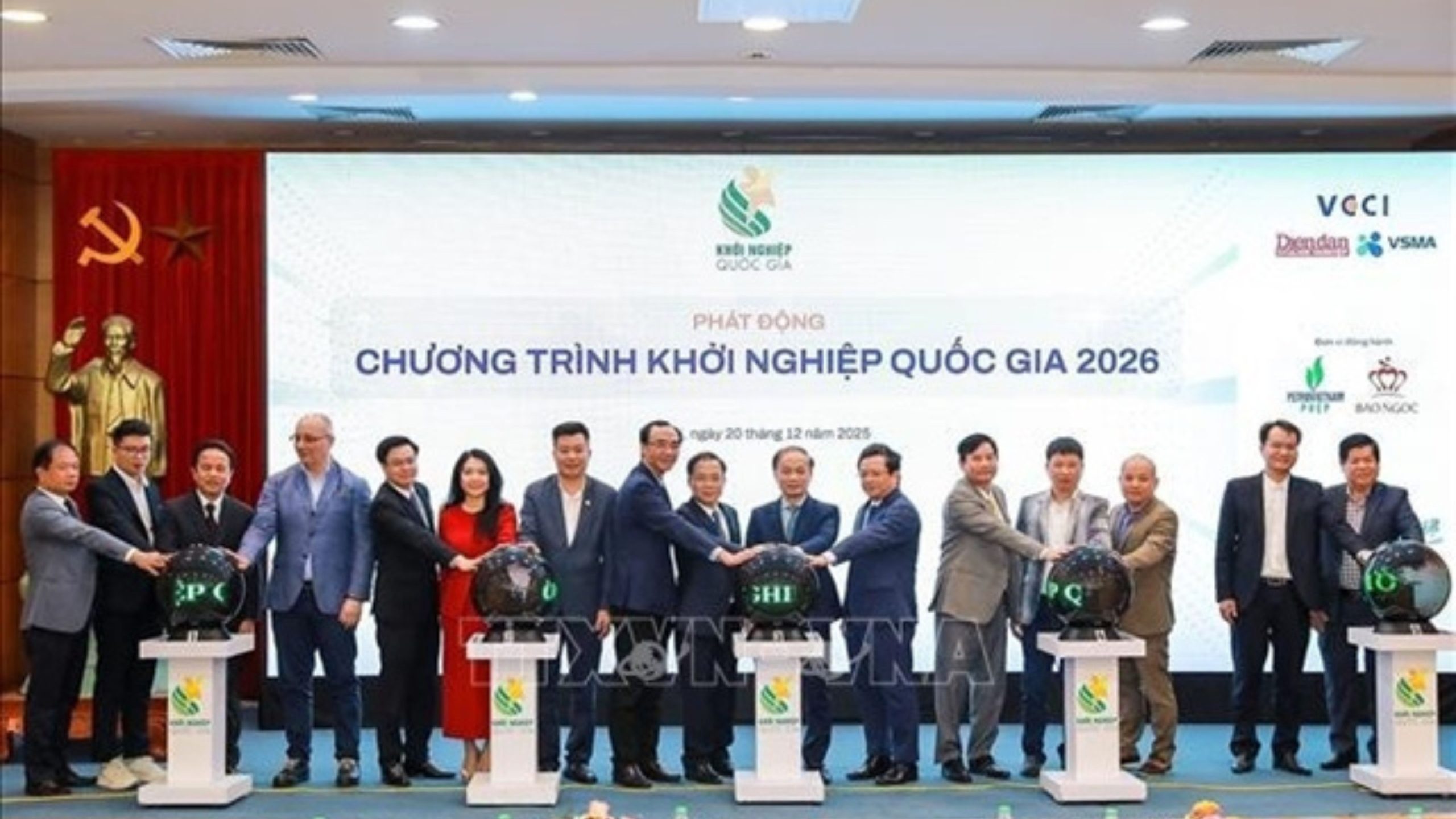
Startup Festival 2025, held in Hanoi on December 20, marked the culmination of a year-long national startup support program in Vietnam. The event functioned as a checkpoint for policymakers, investors, and founders to assess how the country’s startup ecosystem is evolving amid uneven global venture capital conditions.
The festival combined multiple objectives in a single forum: reviewing policy frameworks for venture capital development, recognizing standout startup projects of 2025, and formally launching the National Startup Program 2026. This structure reflects Vietnam’s approach to startup development—where ecosystem-building, policy coordination, and founder support are closely linked rather than treated as separate tracks.
Event draws policymakers, investors, and startup support groups
The festival was co-organised by Business Forum Magazine under the Vietnam Chamber of Commerce and Industry (VCCI) together with the National Startup and Innovation Advisory Council. Attendance included government representatives, founders, venture investors, universities, and startup support organisations.
This mix of participants is significant. Vietnam’s startup ecosystem is still shaped heavily by public-sector direction, particularly in early-stage funding, regulatory frameworks, and regional capacity-building. Events like Startup Festival serve as coordination points where policy intent and on-the-ground startup activity intersect.
Festival combines awards with networking and product showcases
Beyond awards and speeches, Startup Festival 2025 was designed as a matchmaking platform. Startups were introduced to entrepreneurs, mentors, investors, and coaches through structured networking sessions, product exhibitions, and meetings with support organisations.
For early-stage founders—especially those outside Vietnam’s major hubs such as Hanoi and Ho Chi Minh City—these connections can be as valuable as prize money. Many startups in emerging ecosystems struggle less with ideas and more with access: to capital, expertise, and markets. The festival attempted to address this gap by concentrating ecosystem actors in one place.
Vietnam maintains third place in Southeast Asia for startup investment
Speaking at the event, Bui Trung Nghia, Vice President of VCCI, said Vietnam remained one of Southeast Asia’s more active startup markets in 2025. According to figures cited at the festival, the country ranked third in the region for both deal volume and total investment value, behind only Singapore and Indonesia.
While these rankings suggest resilience, they also highlight Vietnam’s position as a mid-tier ecosystem—stronger than emerging peers, but still some distance behind regional leaders in terms of late-stage capital and global exits. The challenge ahead is less about volume and more about depth: scaling companies beyond early growth stages.
Startups from non-core provinces gain greater visibility
Organisers said Vietnam is home to close to 4,000 innovative startups and has seen the emergence of two additional tech unicorns. The festival also drew attention to a wider geographic spread of startups, including increased participation from remote and less-developed provinces.
For the first time, Son La Province reached the finals, while Bac Ninh returned after years of sustained ecosystem-building efforts. This shift matters because Vietnam’s startup activity has traditionally been concentrated in a few urban centres. Broader regional participation suggests that policy efforts to decentralise innovation support are beginning to show results, though long-term sustainability remains uncertain.
Awarded projects highlight focus on sustainability and applied technology
The awarded projects reflected two clear trends in Vietnam’s startup landscape.
- First prize went to BioWraps, which converts orange peels into sustainable bio-packaging, pointing to strong interest in circular economy and environmental solutions.
- Second prizes were awarded to BIOQ, producing vegan cosmetics from dragon fruit peels, and Sammax herbal tea, both blending sustainability with consumer markets.
- Third prizes went to Lang Muop (Loofah Village), CheckNow (a real-time management optimisation solution), and a project growing edible and medicinal mushrooms under solar panel roofs.
Several startups report overseas recognition and partnerships
Several startups featured at the festival are beginning to gain attention outside Vietnam. Projects such as Green Choice, focused on durian-based products, and GreenTech reported international recognition in 2025, including awards in Singapore and Dubai, along with networking opportunities in Japan.
While these achievements do not yet signal large-scale overseas expansion, they indicate that some Vietnamese startups are moving beyond domestic validation toward regional exposure—an important step in building globally competitive companies.
Judging panel notes strong feasibility alongside technology gaps
Members of the judging panel said many of the top projects demonstrated strong feasibility and clear market focus. Vu Thanh Thang, AI director at SCS Cyber Security JSC, noted that leading entries broadly fell into two groups:
- eco-friendly bio-products addressing environmental challenges
- technology-driven solutions in health and education with social impact
However, judges also pointed out that several projects still need to strengthen their technological depth, particularly in areas such as automation, data use, and artificial intelligence, if they are to scale effectively.
Access to capital remains a key issue for early-stage startups
Policy discussions during the festival repeatedly returned to the issue of startup financing. Nguyen Duc Hien, Deputy Head of the Central Policy and Strategy Committee, said access to capital remains a decisive factor for startup survival, especially in the early stages.
He highlighted recent regulatory efforts to diversify funding channels, including new frameworks governing national and local venture capital funds. These measures are intended to ease early-stage funding bottlenecks, particularly for startups aligned with green growth, digital transformation, and social impact goals.
Ecosystem growth continues amid structural challenges
Startup Festival 2025 presented a picture of an ecosystem that is expanding and diversifying, but still navigating structural challenges. Vietnam has built a broad base of startups, increased regional participation, and maintained investor interest despite global uncertainty. At the same time, gaps remain in late-stage capital, advanced technology adoption, and international scaling.
As Vietnam moves toward the National Startup Program 2026, the focus is likely to shift from ecosystem expansion to ecosystem maturity—helping promising startups move from recognition to resilience, and from local success to sustained growth.
Quick Takeaways
- Startup Festival 2025 was held in Hanoi on December 20, marking the close of Vietnam’s year-long national startup support programme.
- The event brought together policymakers, founders, investors, universities, and support organisations, and included policy dialogues, awards, and the launch of the National Startup Program 2026.
- Vietnam ranked third in Southeast Asia in 2025 for both startup deal volume and total investment value, behind Singapore and Indonesia.
- The country now has nearly 4,000 innovative startups and two new tech unicorns, according to figures shared at the event.
- Awarded projects reflected a focus on sustainability, local products, and applied technology, rather than deep tech alone.
- Startups from non-core provinces gained greater visibility, indicating broader geographic participation in the ecosystem.
- Access to early-stage capital remains a key challenge, with policymakers pointing to new venture capital frameworks to address funding gaps.
Similar Articles